Map reading Geography Worksheets for Ages 5-8
3 filtered results
-
From - To
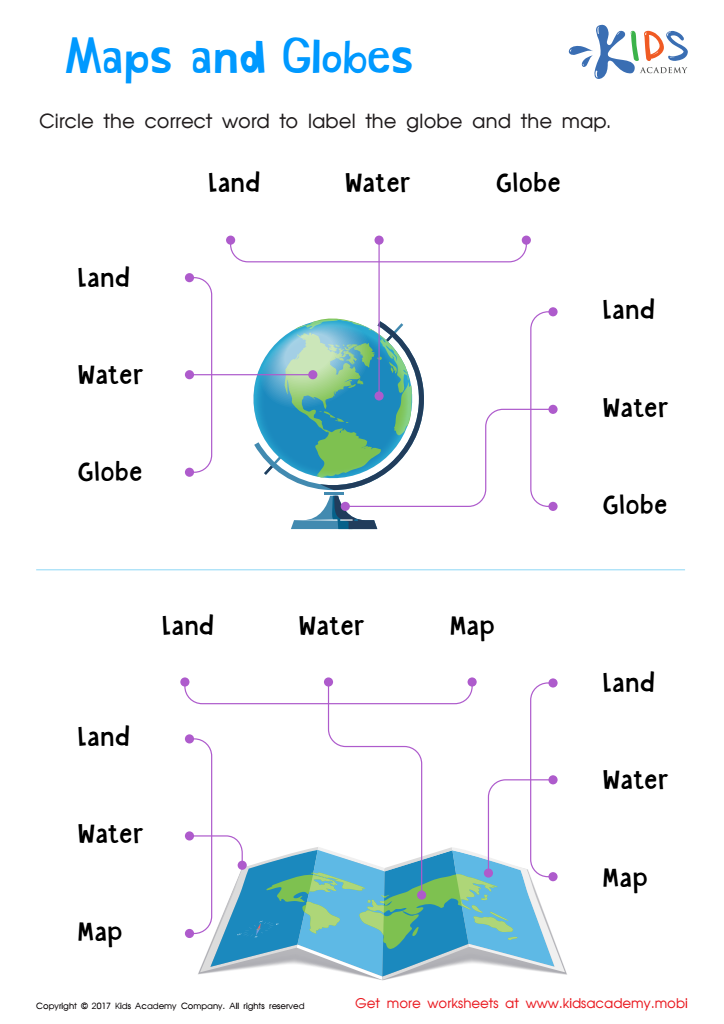
Discover our engaging "Map Reading Geography Worksheets for Ages 5-8" designed to spark your child's curiosity and enhance their navigational skills. Perfect for young adventurers, these printable worksheets make learning about maps fun and interactive. They’ll develop essential skills such as understanding symbols, following directions, and recognizing geographical features through hands-on activities and colorful visuals. Ideal for both classroom and home use, these worksheets align with early grade curricula and promote a strong foundation in geography. Help your child explore the world from the comfort of their own home with our intuitive, age-appropriate map reading resources.
 Assign to My Students
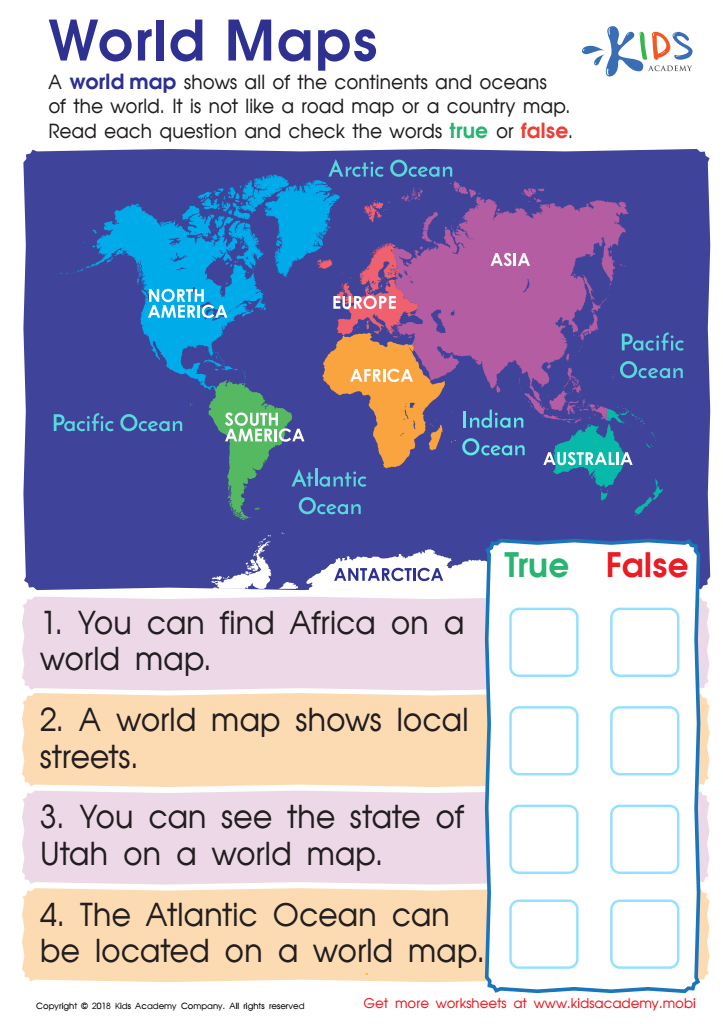
World Maps Worksheet
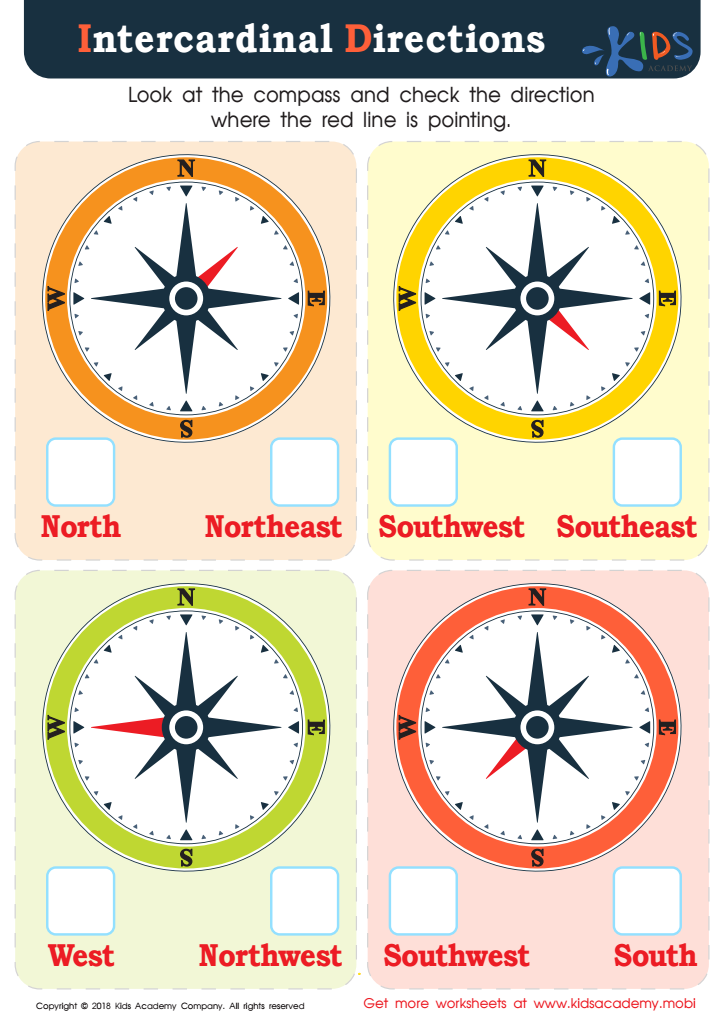
Intercardinal Directions Worksheet






Caring about map reading and geography for children ages 5-8 is crucial for several vibrant reasons. Firstly, it lays the foundation for spatial thinking and navigation skills, essential in a world where locating places geographically plays a vital role in understanding relationships and processes. Learning to read maps nurtures children’s ability to comprehend and organize information visually, which enhances cognitive growth.
For parents and teachers, incorporating geography fosters curiosity about the world and cultivates a global perspective, helping children appreciate diversity and cultural differences from a young age. Knowing about different places expands their worldview, making them more open-minded and emotionally intelligent individuals.
Geography lessons also align closely with other academic subjects. Reading maps improves mathematical skills as children encounter scales and learn to gauge distances. It fosters literacy, as kids interpret symbols and legends akin to interpreting text and stories.
Additionally, enhancing these skills early can spark a lifelong interest in various fields such as travel, history, and environmental studies. Encouraging this multi-faceted subject offers a holistic education approach, developing critical thinkers capable of connecting the dots of the world they inhabit. Thus, investing in map reading and geography for young children equips them with practical and profound skills for the future.