
Multiplication practice History Worksheets for Ages 5-8
8 filtered results
Difficulty Level
Grade
Age
-
From - To
Subject
Activity
Standards
Our engaging "Multiplication Practice History Worksheets for Ages 5-8" blend math and history to foster cross-disciplinary learning. Designed for young learners, these interactive worksheets feature simple multiplication exercises intertwined with fascinating historical themes, enhancing both numeracy and an early appreciation for history. Cheerful illustrations and age-appropriate activities ensure children stay motivated and entertained while mastering their multiplication facts. These expertly crafted resources are perfect for classrooms or home practice, making learning both effective and fun. Explore a unique educational journey that cultivates essential skills and a love for history in your child!
Favorites
With answer key
Interactive
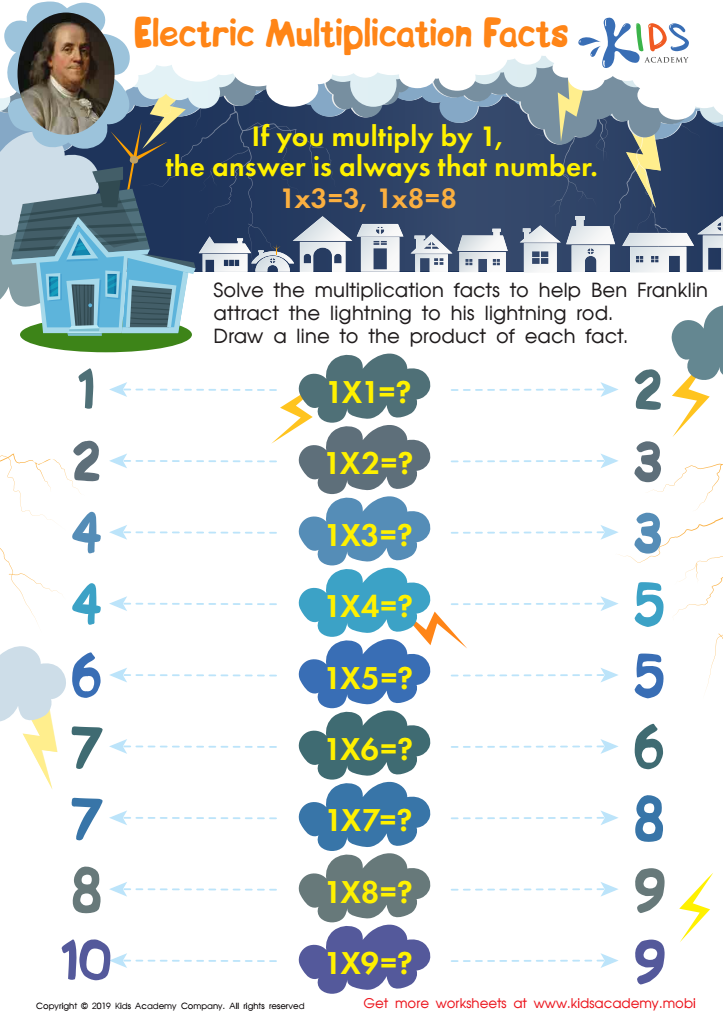
Electric Multiplication Facts Worksheet
Assisting your kids with math homework has no limits. After mastering addition and subtraction, the next step is multiplication. Initially, it can be intimidating. However, with the right tips and worksheets like this one, they'll see it's not so tricky. Show them how multiplying by 1 keeps the number the same. Use the tracing sheet to help them work through multiplication facts.
 Assign to My Students
Electric Multiplication Facts Worksheet
Worksheet
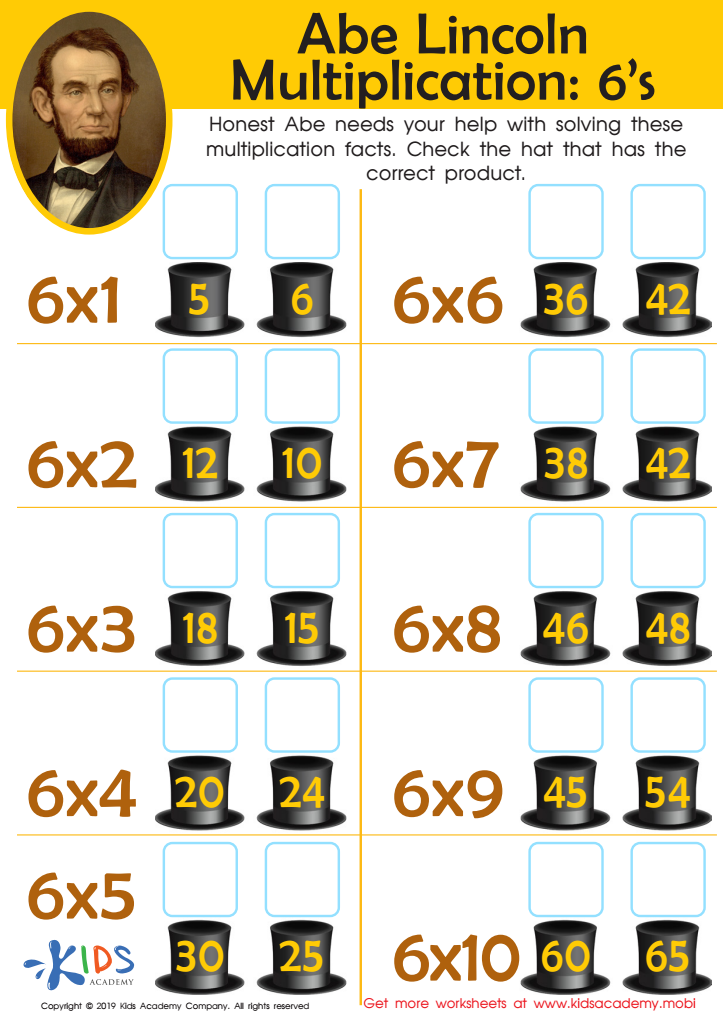
Abe Lincoln Multiplication: 6’s Worksheet
Abraham Lincoln is a key figure in US history. Remind your kids of his contributions and challenge them with this multiplication worksheet! Ask them to solve the facts in the picture and check the hat with the correct product.
Abe Lincoln Multiplication: 6’s Worksheet
Worksheet
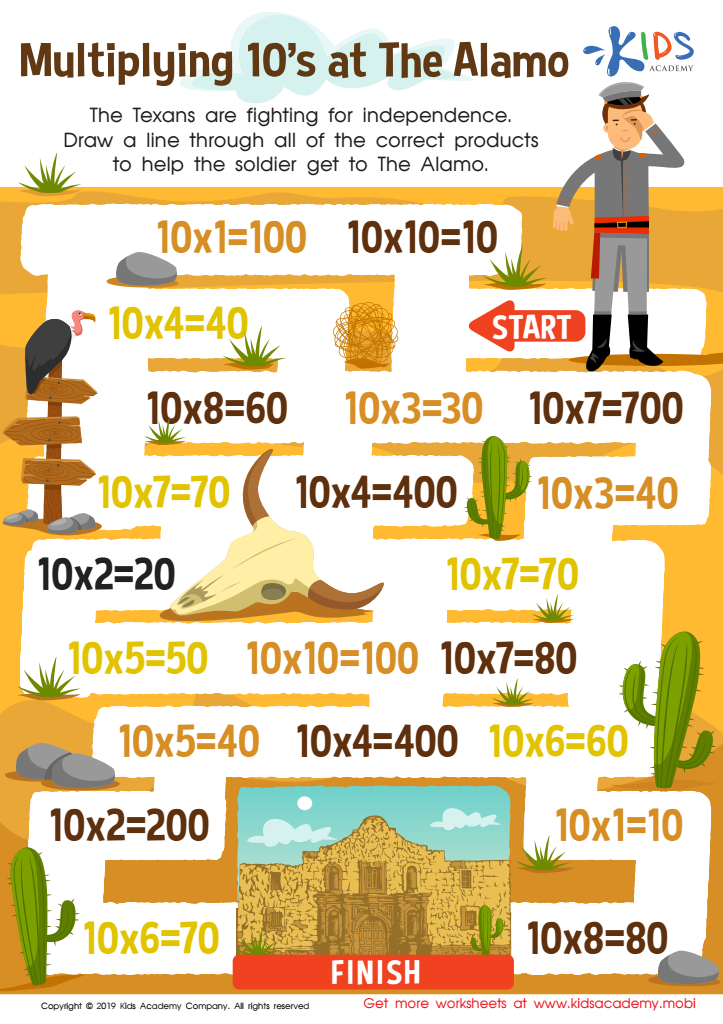
Multiplying 10’s at The Alamo Worksheet
Teach your kids easy tricks to simplify any multiplication problem. For example, when multiplying any number by 10, the result will always end in a zero. To help the Texans in this worksheet, draw a line through all of the correct products to get them to The Alamo.
Multiplying 10’s at The Alamo Worksheet
Worksheet
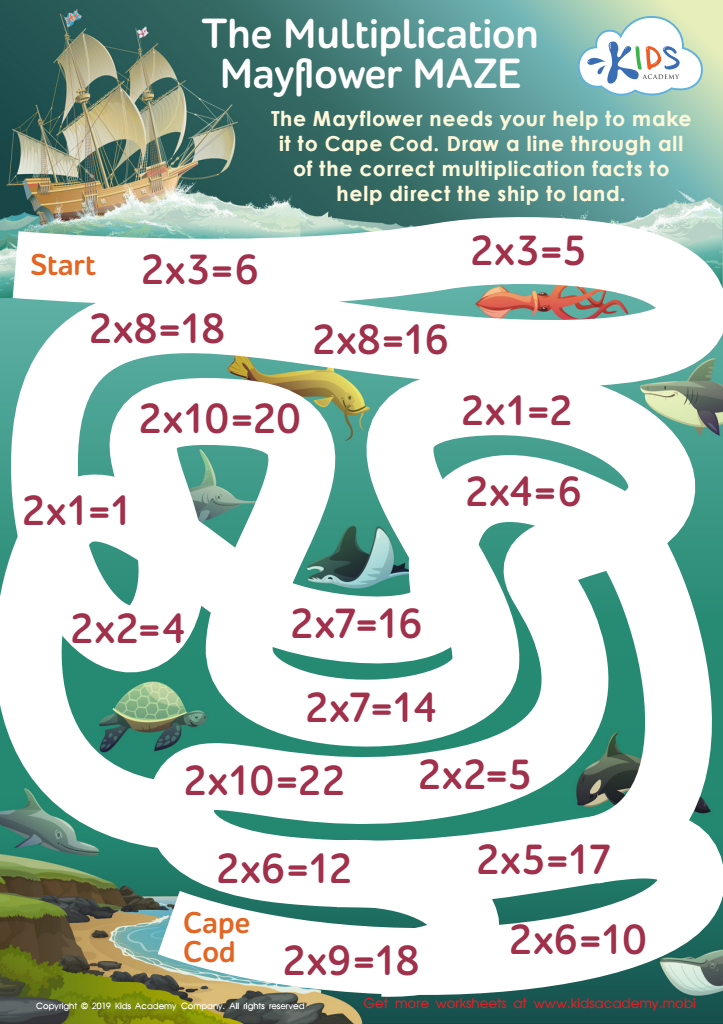
The Multiplication Mayflower Maze Worksheet
Math may not be a favorite subject but it must be tackled. To get minds engaged, use colorful, fun worksheets like this one. Ask students to draw a line connecting all the correct multiplication facts to help the Mayflower get to Cape Cod.
The Multiplication Mayflower Maze Worksheet
Worksheet
Multiplying with Betsy Ross Worksheet
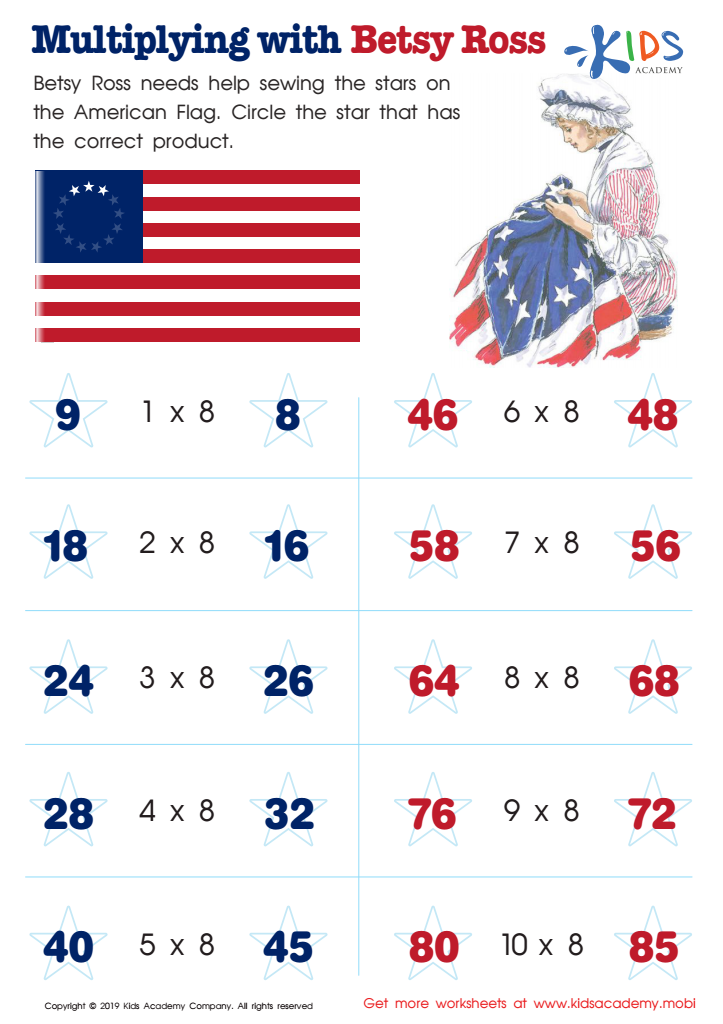
Before getting into the worksheet, have your students take a quick history lesson on Betsy Ross. Ask them if they know her role in American history. On the printout, ask your kids to identify what Betsy Ross is doing - sewing the stars on the American Flag. Have them circle the star that has the correct pattern.
Multiplying with Betsy Ross Worksheet
Worksheet
Multiplying 1’s With the Power of Peanuts Worksheet
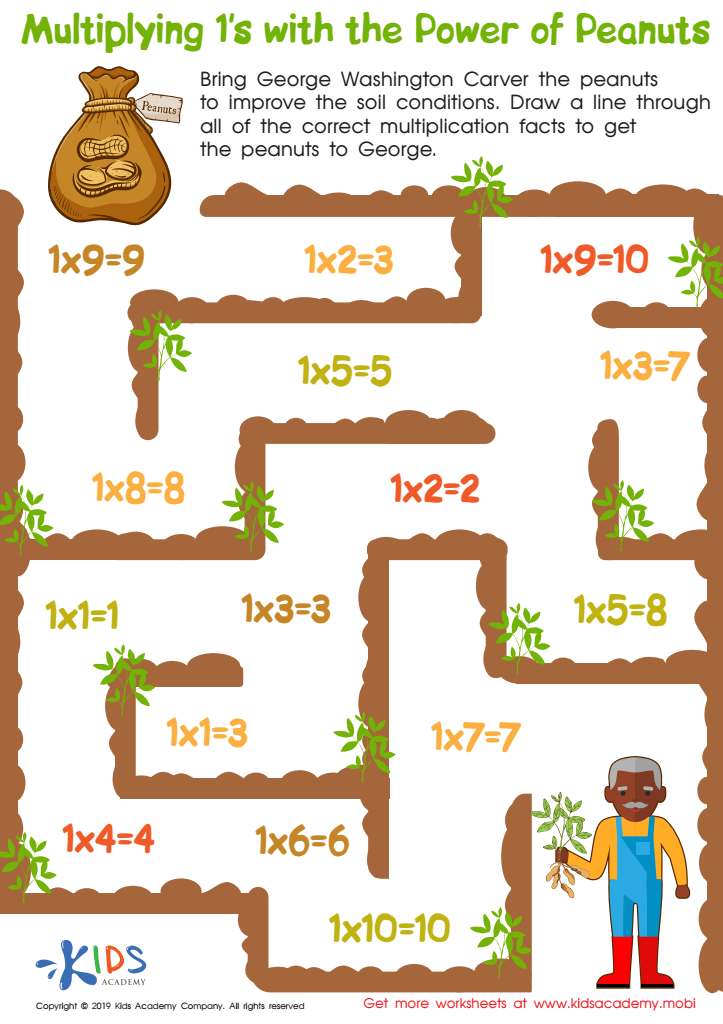
Help your kids learn about George Washington Carver with this fun worksheet! Assist them in bringing peanuts to Carver by drawing a line through the correct multiplication facts. Introduce them to Carver's genius creations and show them how he used peanuts to improve the soil condition.
Multiplying 1’s With the Power of Peanuts Worksheet
Worksheet
Multiplying With Corn Stalks Worksheet
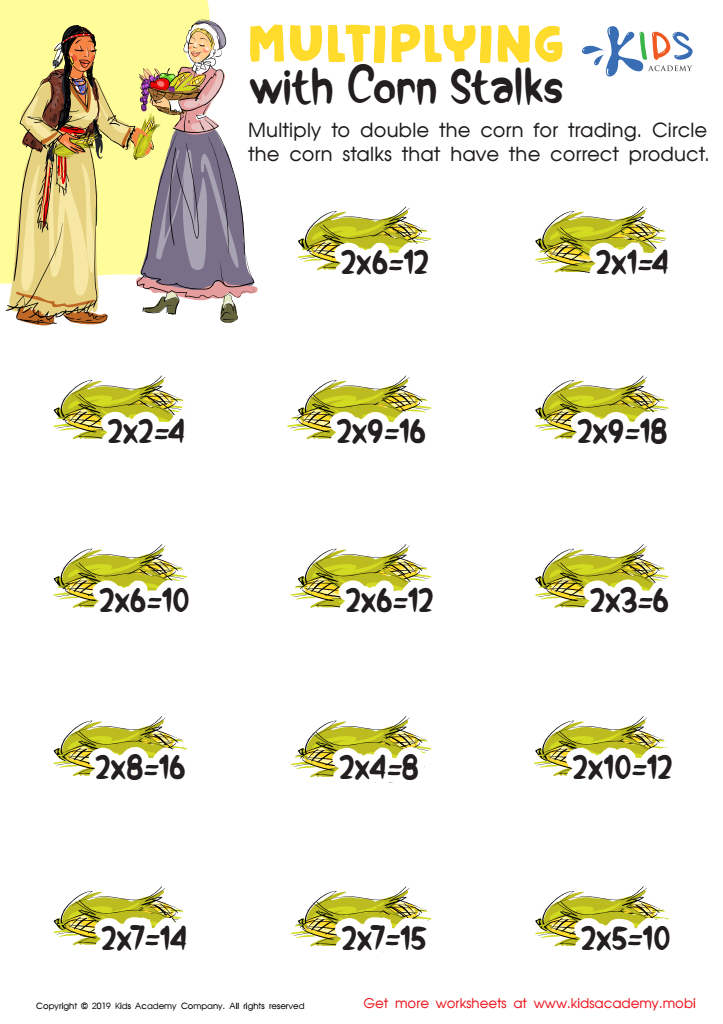
Farming is profitable; corn is a versatile crop used for many things. Ask your kids what products come from corn! This worksheet is a fun way to teach multiplying with corn stalks. Farmers must multiply the stalks to double their number for trading and increase their profits. Challenge your kids to circle the correct products.
Multiplying With Corn Stalks Worksheet
Worksheet
Multiplying 9’s Montgomery Bus Boycott Worksheet
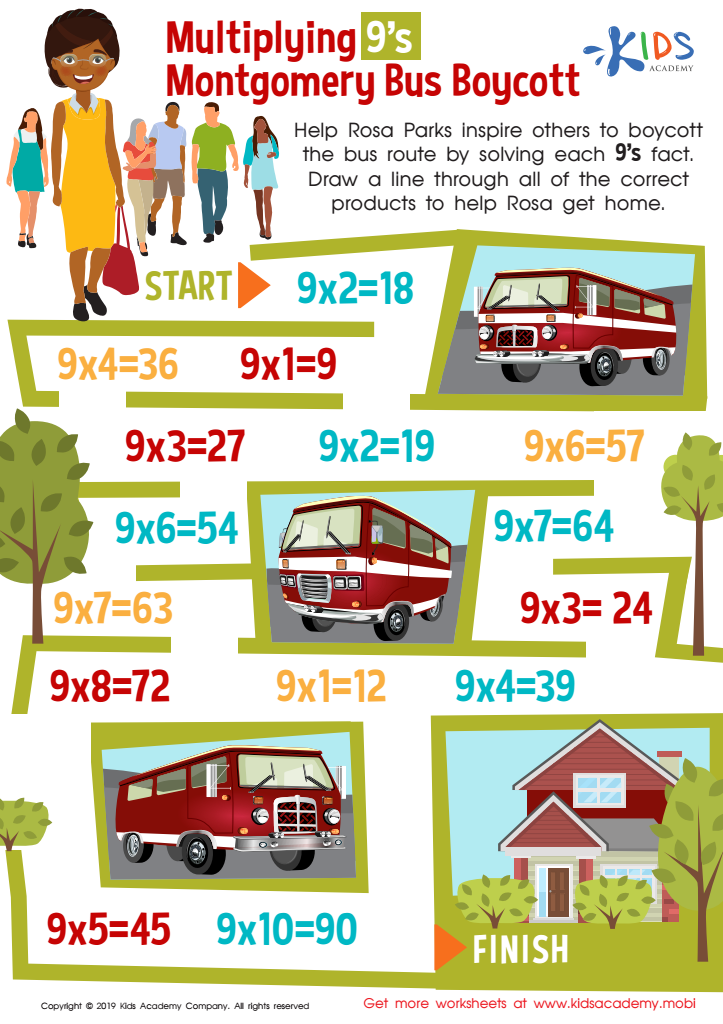
As your students learn math, the numbers get bigger. This worksheet is great for learning the nine times table. Help Rosa Park get home - ask them to solve each multiplication fact, then draw a line through the correct products. Encourage your students to stand up for what's right!
Multiplying 9’s Montgomery Bus Boycott Worksheet
Worksheet
Join Kids Academy for Free
Who is primarily going to use this learning content?








Parents and teachers should prioritize multiplication practice history for ages 5-8 to cultivate a strong mathematics foundation at an early age. The fundamental concepts of multiplication are crucial building blocks for more complex mathematical subjects. Early familiarity helps children develop problem-solving skills, numerical fluency, and an ability to understand patterns, which enhances their overall cognitive development.
Moreover, understanding multiplication as repeated addition and being able to visualize these concepts preps young minds for grasping division, fractions, and eventually algebra. When children confidently navigate these basic operations, they experience less anxiety and greater self-assuredness with math, contributing to a positive educational experience.
Additionally, multiplication practice nurtures critical thinking abilities. By exploring different strategies—such as skip counting, using visual aids, or engaging in hands-on activities—children learn there are multiple ways to approach a problem, which fosters adaptability and creative problem solving.
Finally, active involvement from parents or teachers creates a nurturing environment where children receive encouragement and validation. This not only motivates them but also allows for the identification of learning challenges early on, enabling timely interventions. Collectively, these efforts ensure that children are both competent and confident in their growing mathematical abilities, paving the way for future academic success.








