
Geography skills Social Studies Worksheets for Ages 5-8
3 filtered results
Difficulty Level
Grade
Age
-
From - To
Subject
Activity
Standards
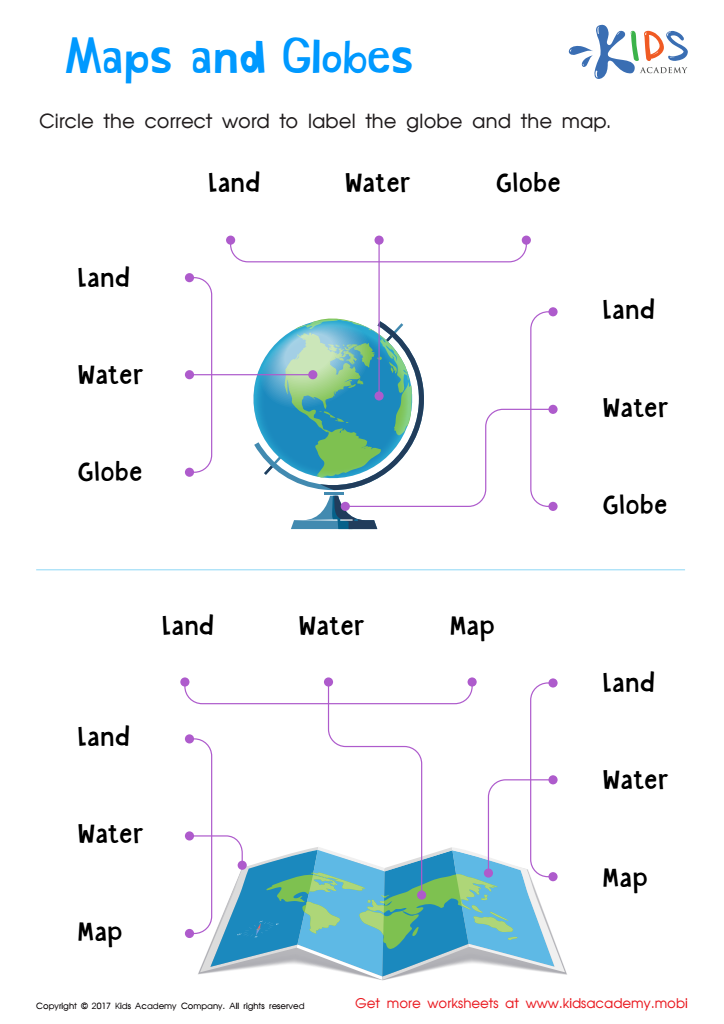
Discover engaging Geography Skills Social Studies Worksheets designed for children ages 5-8. These beautifully illustrated, printable worksheets from Kids Academy make learning about maps, landforms, and directions exciting and interactive. Foster your child's curiosity about the world around them as they develop essential skills in reading maps, identifying continents, and understanding cardinal directions. Perfect for both classroom and homeschooling settings, these resources transform geography lessons into a fun adventure, building a strong foundation in social studies. Equip young learners with the knowledge to navigate and explore their world confidently!
Favorites
With answer key
Interactive
 Assign to My Students
World Maps Worksheet
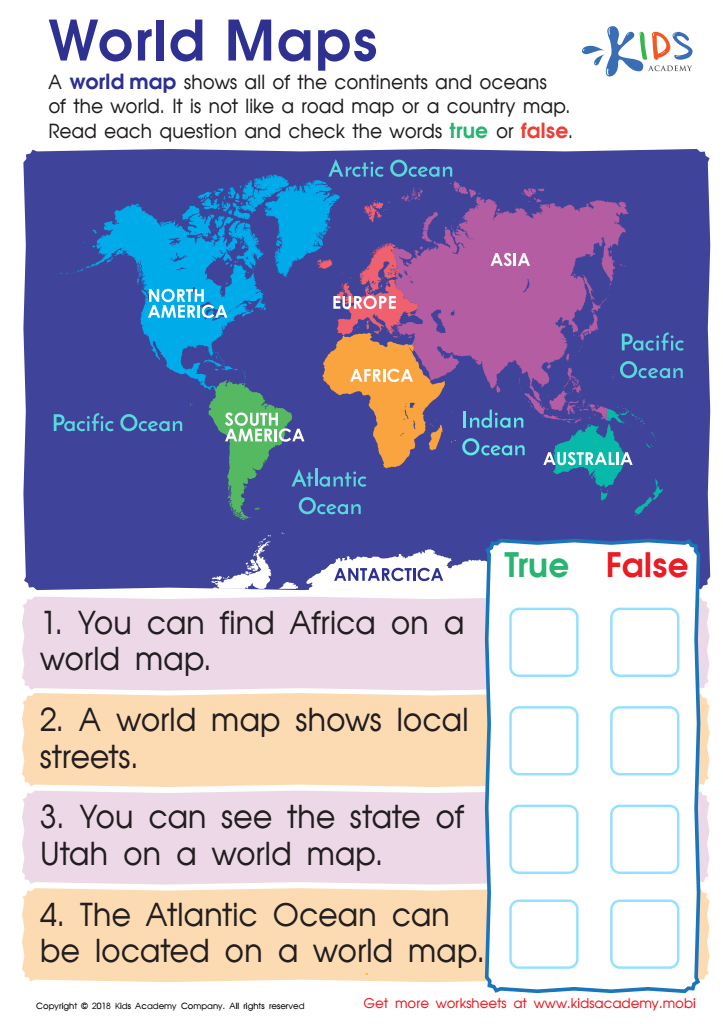
Help your young geographer learn about world maps. Show them that it displays all the oceans, continents and is distinct from other maps. Challenge them to answer the true/false questions on this free worksheet, and help them become a global citizen who understands the purpose of world maps.
World Maps Worksheet
Worksheet
Intercardinal Directions Worksheet
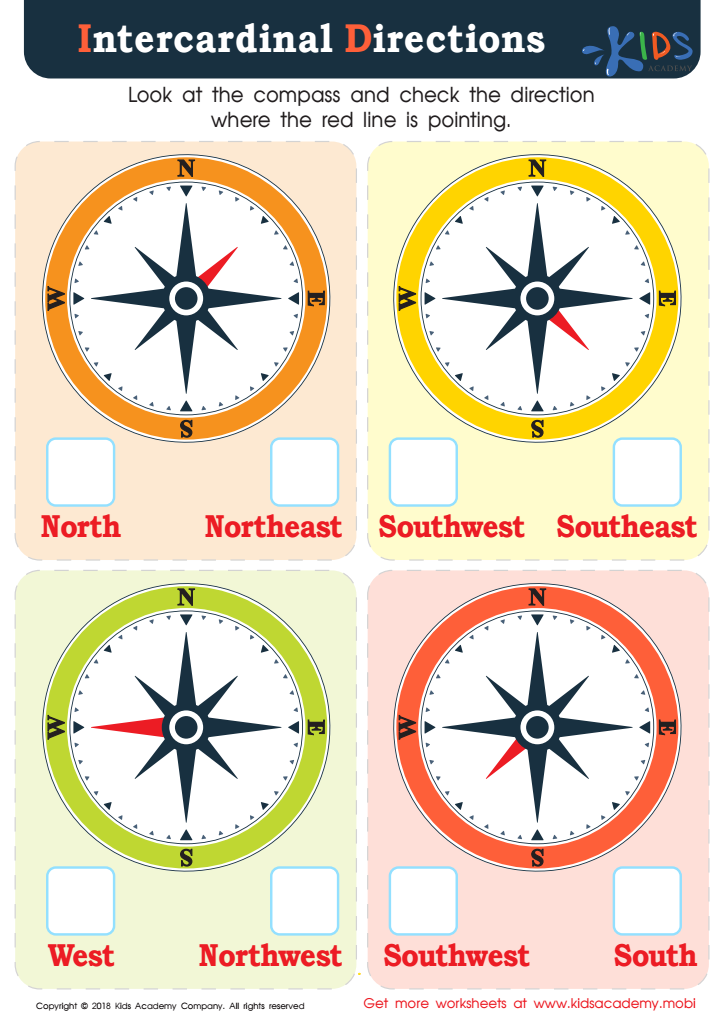
Young students often don't get to practice cardinal and intercardinal directions in the digital age, but it's an important social studies and geography concept to learn. This PDF provides colorful compasses for them to practice with, giving them a real-world skill for common curriculum and independent living.
Intercardinal Directions Worksheet
Worksheet
Join Kids Academy for Free
Who is primarily going to use this learning content?








Teaching geography skills within social studies to children aged 5-8 is imperative as it lays a foundation for their understanding of the world. Geography fosters curiosity and enhances children's awareness of diverse cultures, environments, and global interconnectedness. It encourages them to appreciate the variety of landscapes, weather patterns, and life forms that comprise our planet. This early exposure can spark a lifelong interest in exploration and conservation.
Furthermore, basic geography skills like recognizing continents, oceans, countries, and landmarks aid cognitive development and spatial awareness. Understanding elementary maps and directions bolsters critical thinking and problem-solving skills, which are applicable in everyday life and future educational pursuits.
From a social perspective, geography teaches empathy by allowing young learners to comprehend different lifestyles and challenges. For instance, recognizing that children in various parts of the world may experience different climates and living conditions fosters a sense of global citizenship and cultural respect.
Finally, engaging parents in geography-based activities, like family maps or exploring local landmarks, promotes bonding and shared learning experiences. Teachers incorporating geography into lessons ensure a well-rounded education, opening children's minds to the broader world. Therefore, caring about geography skills at this early stage sets the groundwork for informed, open-minded, and intellectually curious individuals.








