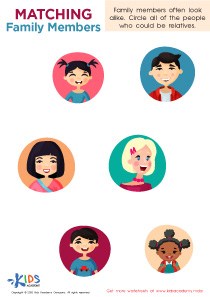
Number Recognition Social Studies Worksheets for Ages 5-8
4 filtered results
-
From - To
Welcome to our engaging collection of Number Recognition Social Studies Worksheets for ages 5-8! Designed to make learning fun, these worksheets merge essential math skills with social studies themes. Young learners will explore numbers through interactive activities, fostering their understanding of numerical concepts while gaining insight into important community and cultural aspects. Each worksheet is crafted to enhance counting skills, number recognition, and early problem-solving abilities in a meaningful context. Perfect for classrooms or at-home learning, these resources encourage creativity and critical thinking, making them ideal for young explorers eager to connect with the world around them! Start your learning journey today!
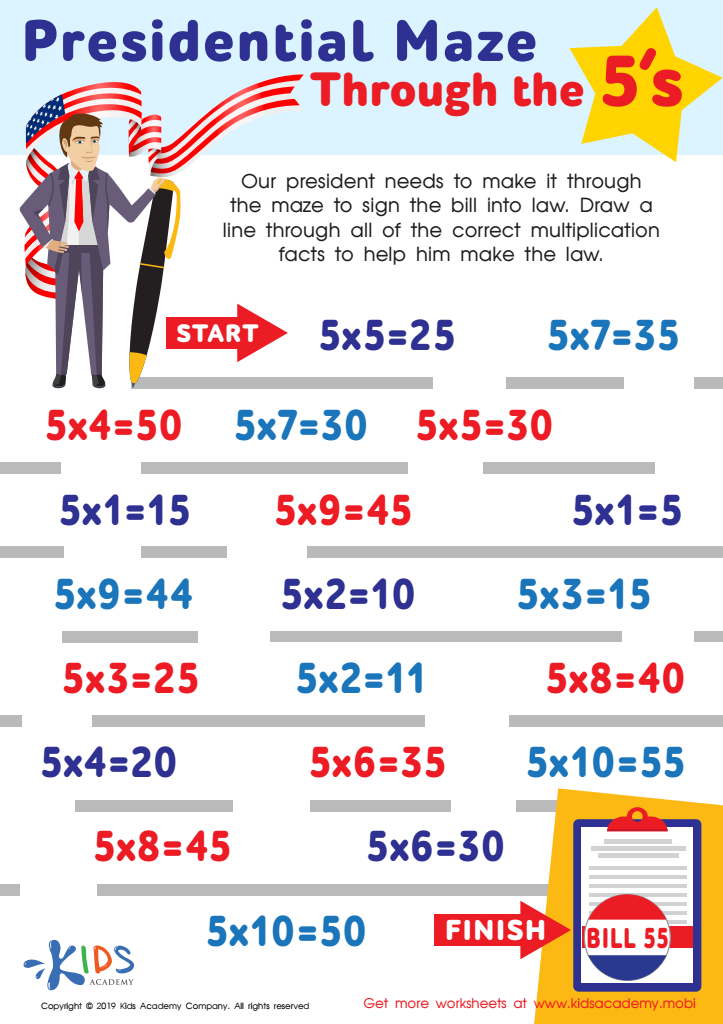
Presidential Maze Through the 5’s Worksheet
 Assign to My Students
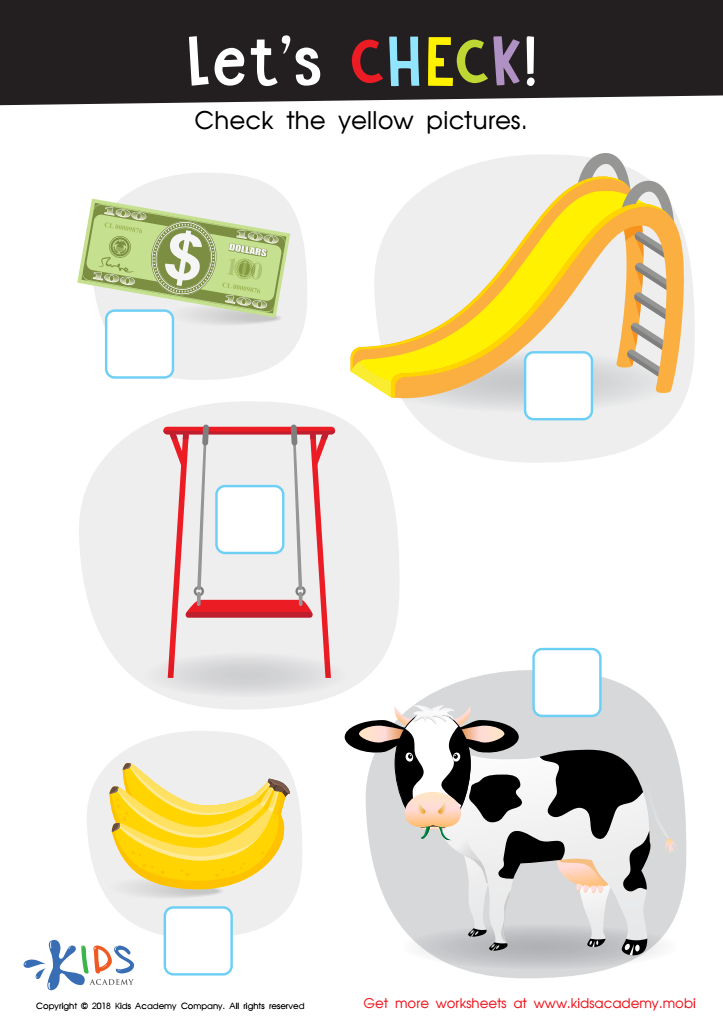
Let's Check! Worksheet
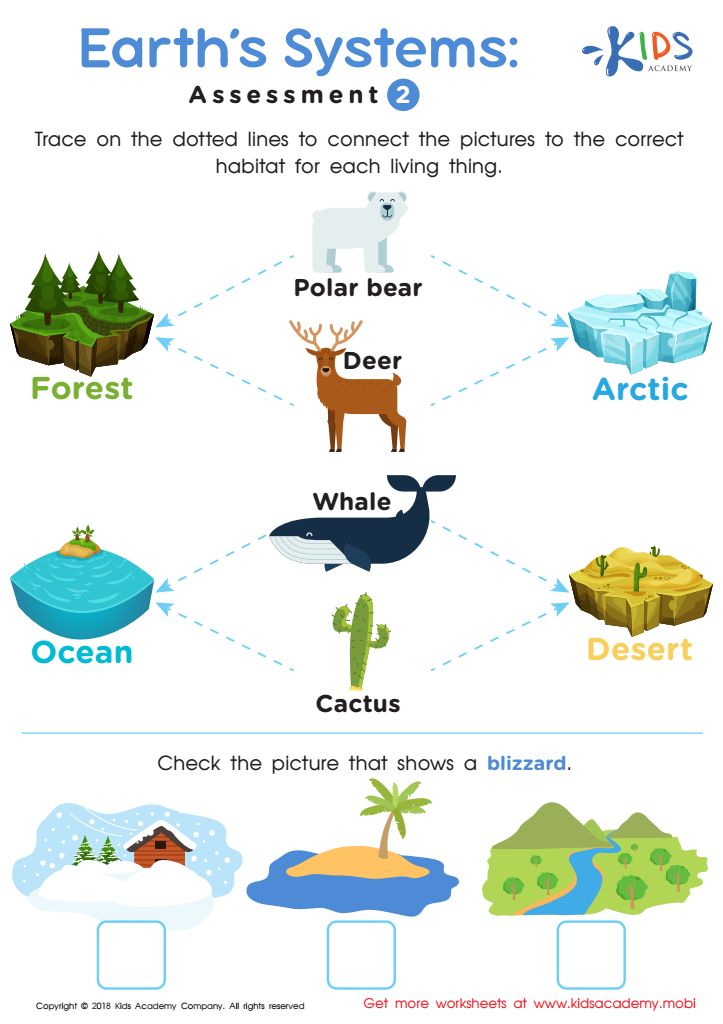
Earth's Systems: Assessment 2
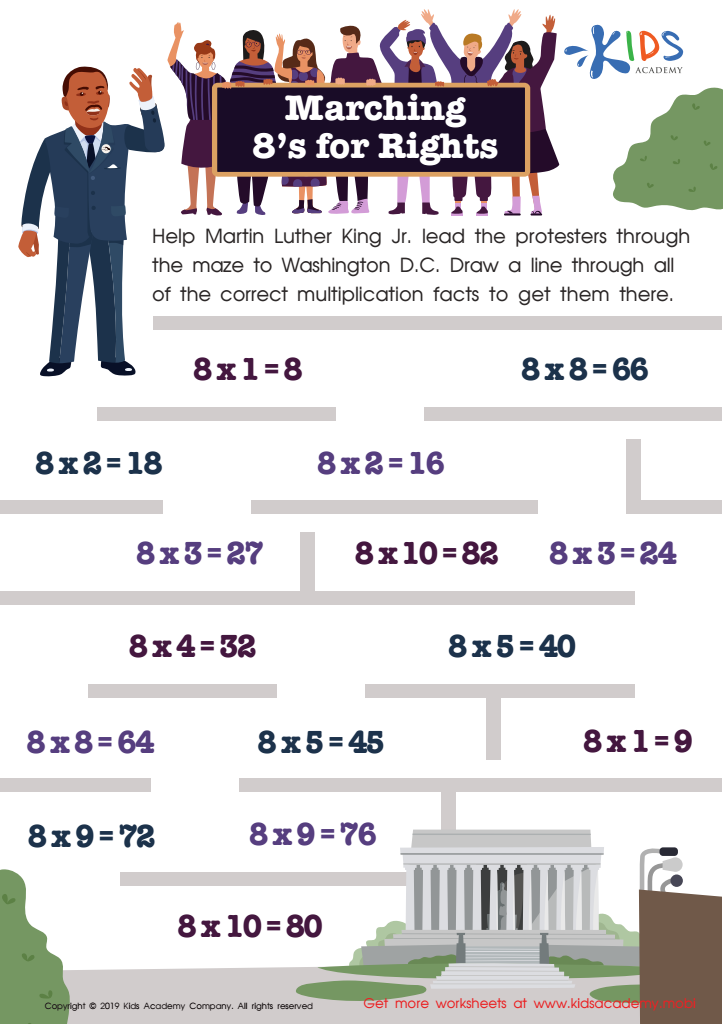
Marching 8’s for Rights Worksheet







Number recognition is a fundamental skill that lays the groundwork for mathematical understanding, so it is essential for parents and teachers to prioritize this in Social Studies for children aged 5-8. At this stage, children begin to connect numbers with their environments, enhancing their cognitive development while fostering curiosity about the world around them. Recognizing numbers helps children interpret quantities and frequencies in social contexts, such as demographics, voting, and money management.
Incorporating number recognition into Social Studies allows children to visualize and understand real-world concepts, such as populations of countries, current events, and statistics related to community issues. When children see how numbers apply to everyday life, they become more engaged learners.
Moreover, teaching number recognition through Social Studies promotes critical thinking and problem-solving skills. It provides opportunities for students to analyze information, draw conclusions, and understand the significance of data in shaping societies. As children learn to connect numbers with social concepts, they not only improve their mathematical skills but also become more informed citizens. Thus, understanding number recognition within Social Studies is vital for holistic development in young learners, making it an important focus for parents and educators alike.