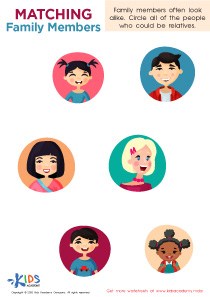
Understanding citizenship Social Studies Worksheets for Ages 5-8
6 filtered results
-
From - To
Discover our engaging "Understanding Citizenship" Social Studies worksheets designed for ages 5-8! Our carefully crafted activities help young learners grasp essential civic concepts, such as community roles, responsibilities, and the importance of following rules. These worksheets feature fun, interactive exercises that promote critical thinking and foster a sense of belonging. Perfect for both classroom and home use, they make learning about citizenship enjoyable and meaningful. Equip your child with the knowledge and skills to become responsible citizens. Explore our collection today and lay the foundation for a brighter future!
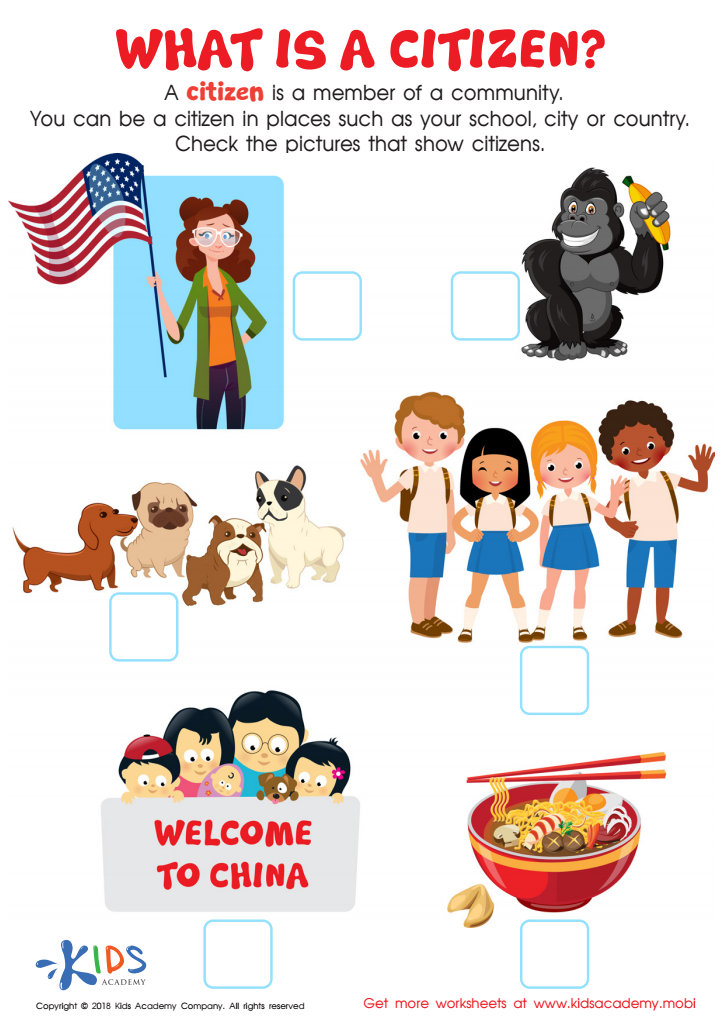
What is a Citizen? Worksheet
 Assign to My Students
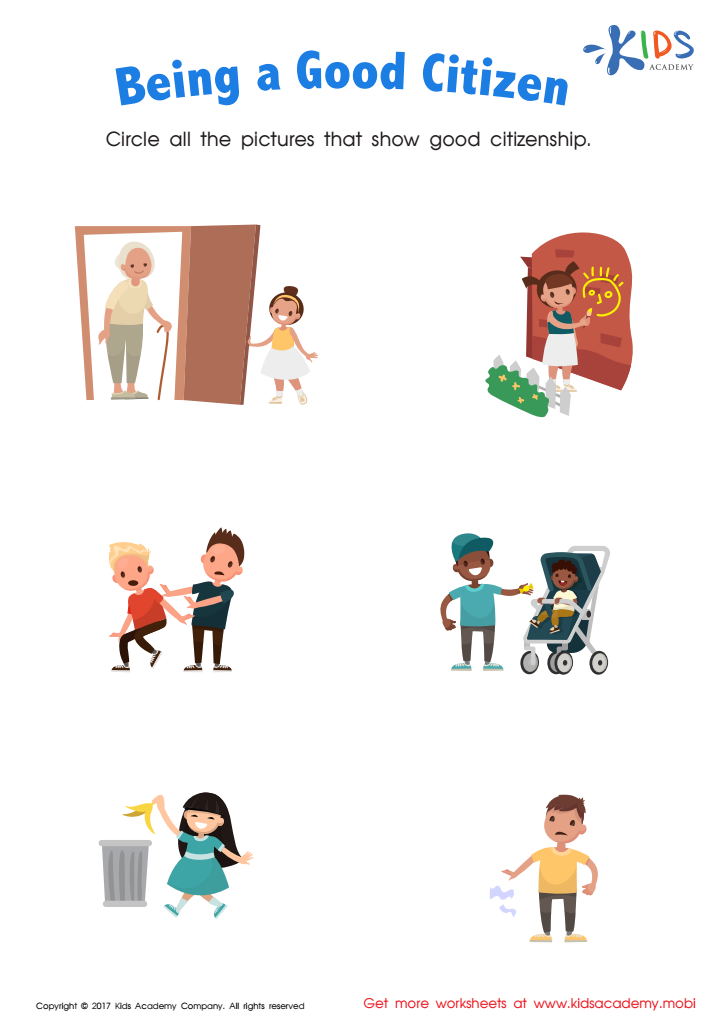
Being a Good Citizen Printable
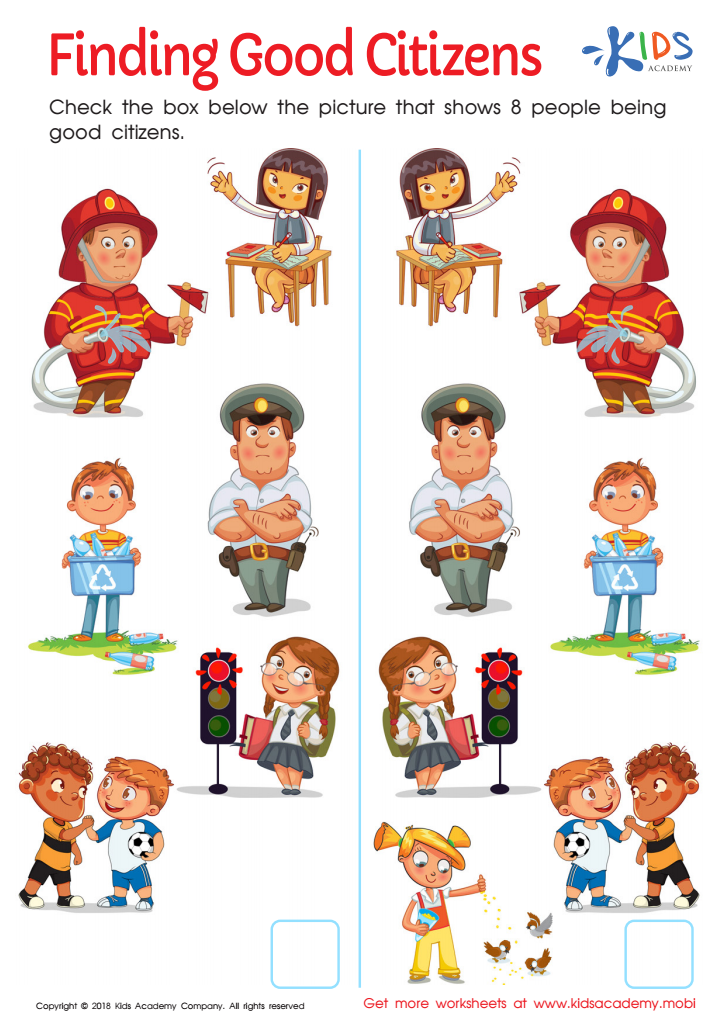
Finding Good Citizens Worksheet
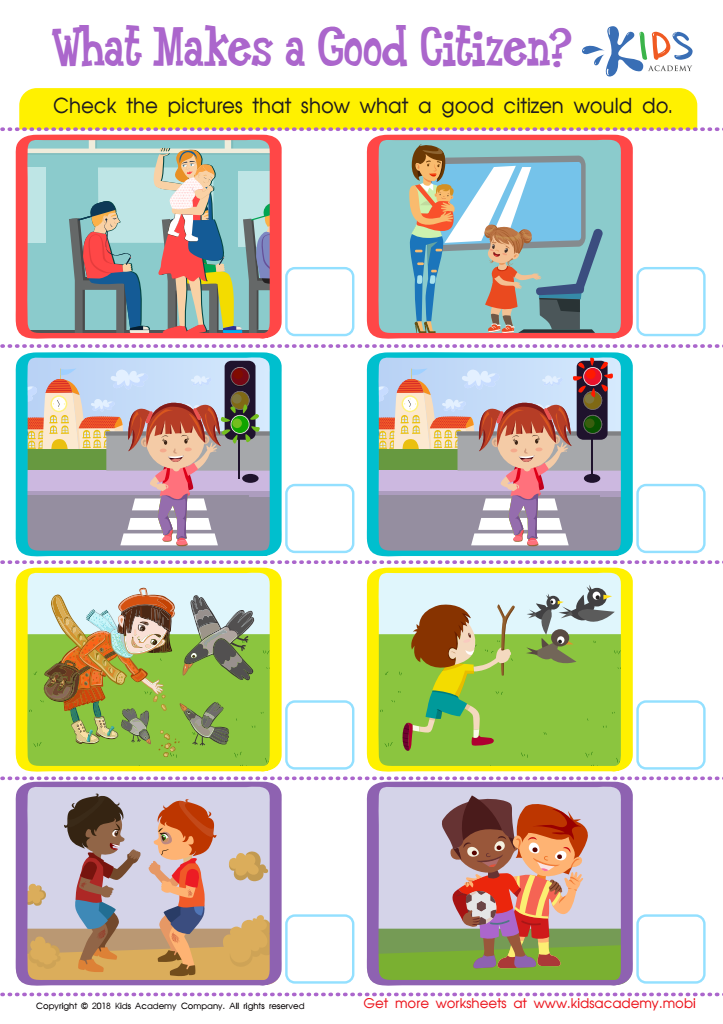
What Makes a Good Citizen? Worksheet
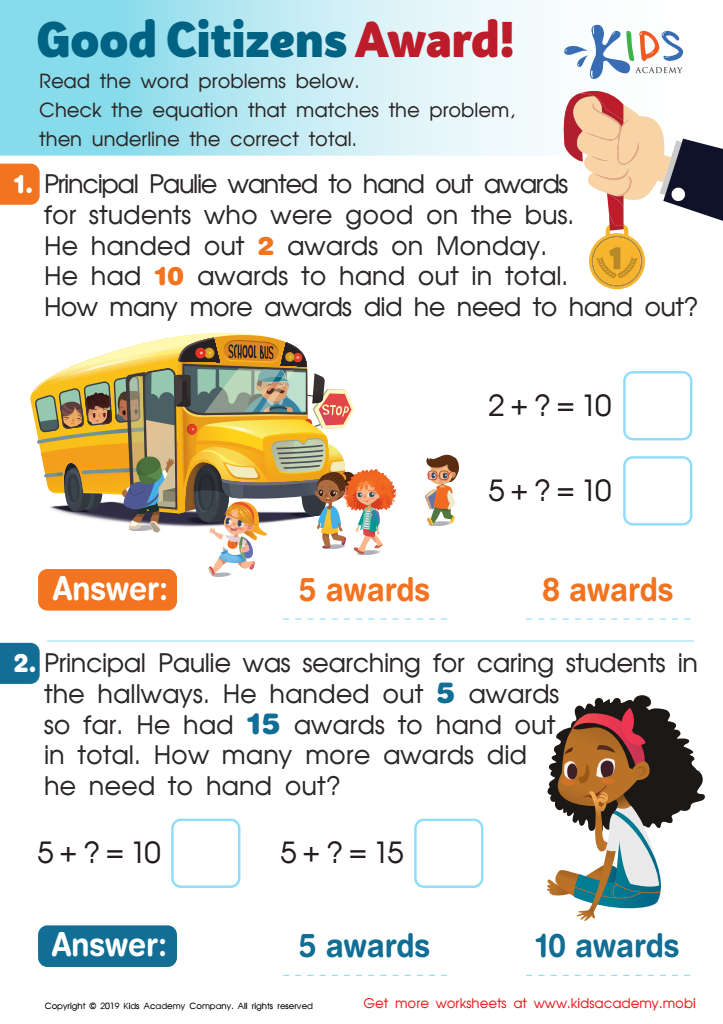
Good Citizens Award! Worksheet
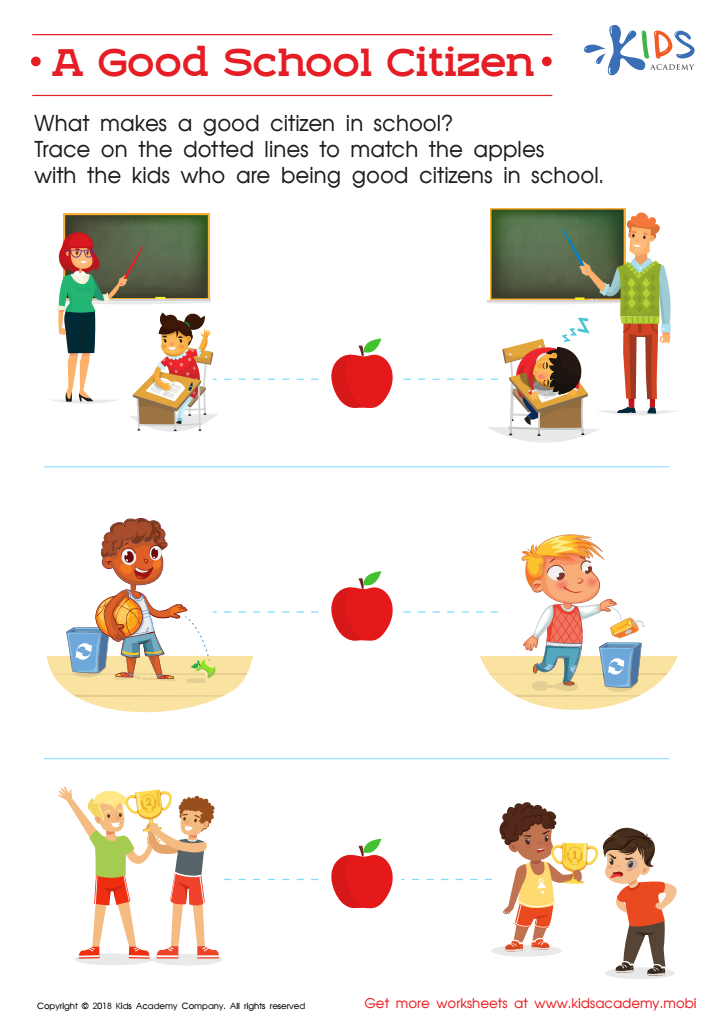
A Good School Citizen Worksheet








Understanding citizenship and social studies for ages 5-8 is essential because it lays the foundation for responsible and informed future citizens. At this developmental stage, children are beginning to grasp concepts of community, rules, and social interactions. When parents and teachers emphasize social studies, they help children understand the importance of cooperation, fairness, and respect for others.
Teaching citizenship helps young learners recognize the significance of contributing positively to their communities, fostering a sense of belonging and responsibility. It instills values such as honesty, respect, and empathy, which are crucial for building solid interpersonal relationships.
Social studies lessons provide context about the diverse world they inhabit, helping children appreciate different cultures, traditions, and perspectives. This understanding promotes inclusivity and combats prejudice from an early age. Additionally, children learn about historical figures and events, sending messages of perseverance, justice, and the importance of civic engagement.
Encouraging early engagement in social studies also develops critical thinking skills. Children begin to assess information, understand cause-and-effect relationships, and make informed decisions. By nurturing these attributes, parents and teachers help shape well-rounded individuals who are prepared to contribute to society thoughtfully and actively, fortifying the social fabric of future generations.