Number Recognition World Around Us Worksheets for Ages 5-8
3 filtered results
Difficulty Level
Grade
Age
-
From - To
Subject
Activity
Standards
Discover the "Number Recognition World Around Us Worksheets for Ages 5-8" at Kids Academy! Designed to make math fun and engaging, these worksheets help children recognize numbers by integrating real-world examples. Perfect for young learners, each activity promotes number identification, counting skills, and logical thinking. Colorful and interactive, these exercises captivate kids’ imaginations, enhancing their learning experience. Tailored for ages 5-8, our printable resources support both classroom learning and at-home practice. Empower your child’s mathematical journey today with our expertly crafted, easy-to-use number recognition worksheets and watch their confidence in numbers soar!
Favorites
With answer key
Interactive
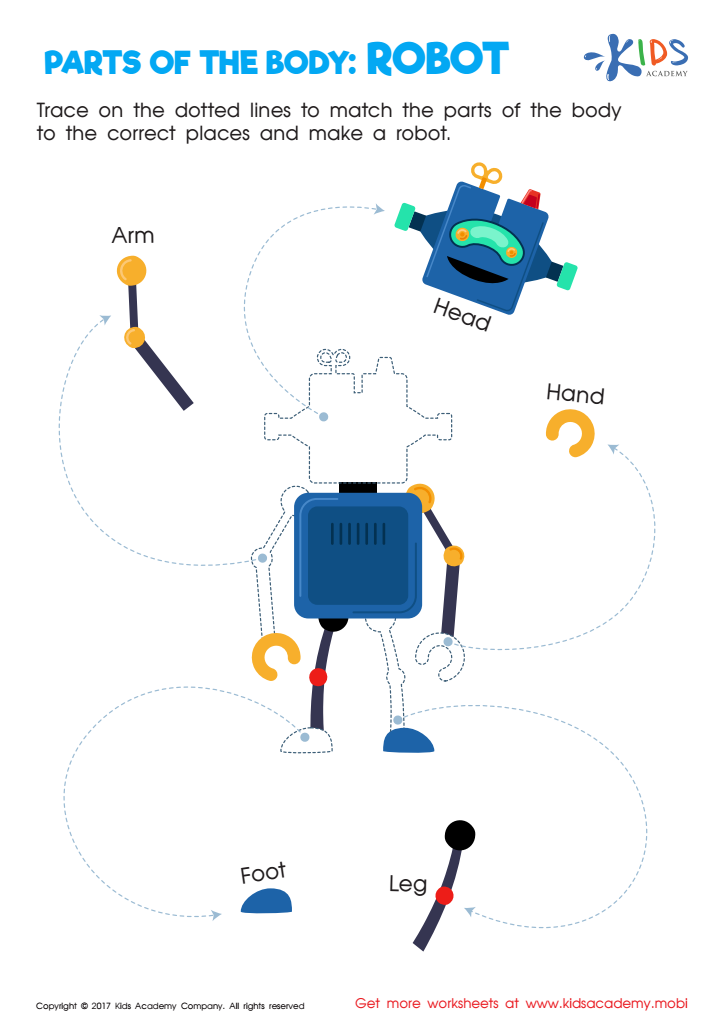
Robot Printable
Introduce your child to a fun robot and help her hone her matching skills with this parts of the body worksheet! Your child will trace dotted lines to match the robot's body parts to the right place, helping her focus, use abstract thinking and reason better. This worksheet is sure to get your child excited and help her build essential skills for future success!
 Assign to My Students
Robot Printable
Worksheet
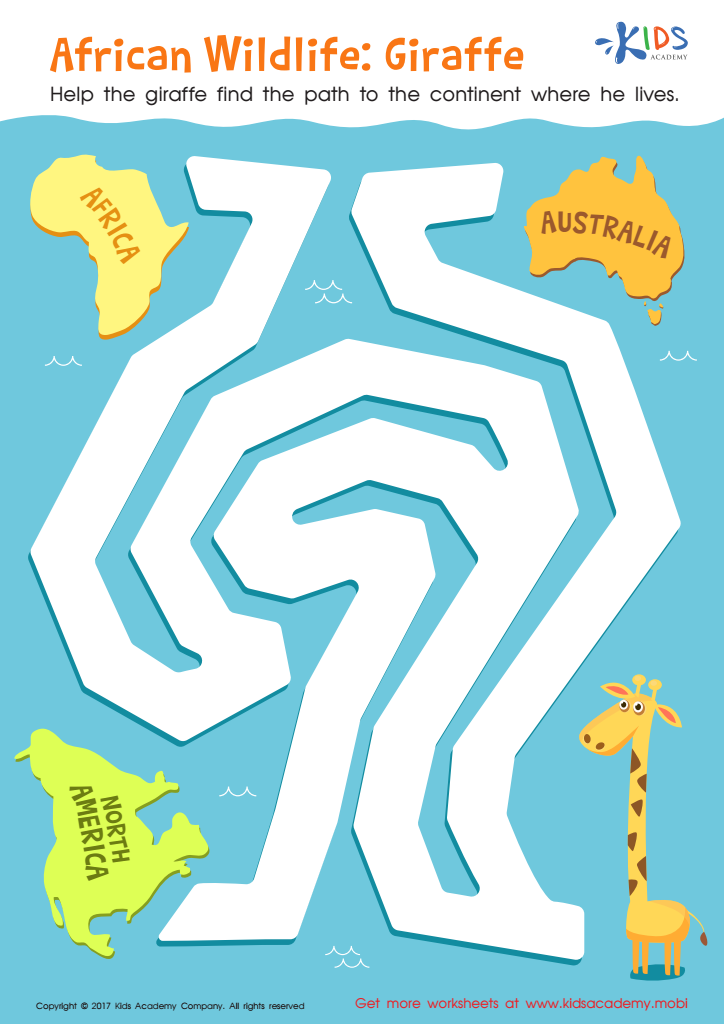
African Wildlife: Giraffe Worksheet
Help the giraffe get home! This African wildlife giraffe worksheet will boost your child's logical reasoning skills while they complete a maze to help the giraffe navigate choppy waters. Learn about different continents and their unique climates, practice problem solving and expand knowledge of the world and its habitats. Perfect for inspiring little learners!
African Wildlife: Giraffe Worksheet
Worksheet
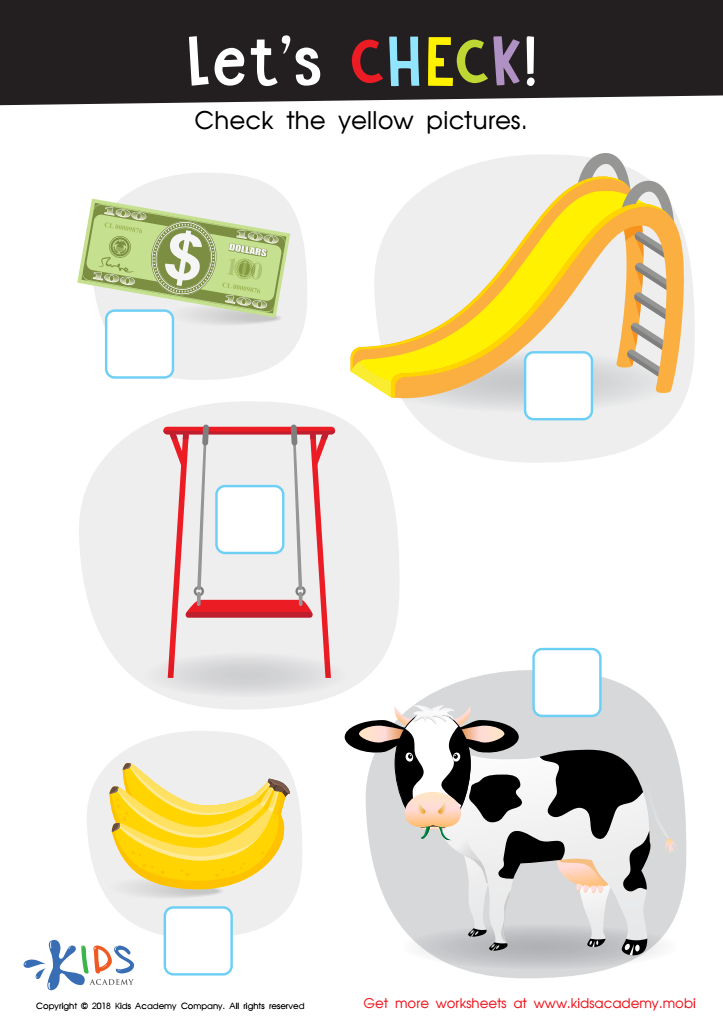
Let's Check! Worksheet
Before starting this coloring sheet, ask your kids to name some colors they know, or point to familiar items and ask them what color they are. Check if they can correctly identify the pictures of yellow objects. Then, you can begin the worksheet.
Let's Check! Worksheet
Worksheet
Join Kids Academy for Free
Who is primarily going to use this learning content?






Number recognition is a foundational skill that plays an integral role in a child's overall cognitive development. For children aged 5-8, understanding numbers and recognizing them in various settings lays the groundwork for more complex mathematical concepts. As parents and teachers, fostering number recognition helps children develop confidence in their math abilities from an early age.
First, number recognition enables children to make sense of their world, seeing numbers on clocks, calendars, street signs, and in books. This practical application aids in understanding time, dates, directions, and quantities. It can enhance their daily interactions and social activities, fostering a sense of independence.
Second, early number recognition is correlated with future academic success. When children recognize numbers easily, they can more readily learn basic arithmetic, understand patterns, and engage in problem-solving. This skill can translate to overall better performance not just in math, but also in disciplines that require logical thinking and sequencing.
Furthermore, integrating number recognition into everyday activities can make learning fun and natural rather than a chore. Using games, songs, and real-world examples, both parents and teachers can make learning engaging, thus maintaining children's curiosity and enthusiasm about math. Consequently, children will likely develop a positive attitude towards learning overall, turning them into lifelong learners.