Enhance your child's writing skills with our Alphabet Recognition Cursive Writing Worksheets designed specifically for ages 5-8. These engaging resources help young learners master the art of cursive writing while reinforcing their recognition of the alphabet. Each worksheet features clear, legible letters, guiding children through tracing and writing exercises. Packed with fun activities, our worksheets motivate children to practice consistently, building confidence and fluency in their cursive writing. Ideal for homeschooling or classroom use, these materials cater to early grade learners, fostering both literacy and fine motor skills in an enjoyable way. Start your child's cursive journey today!

Check out this FREE Trial Lesson on Cursive Writing for age 5-8!

X

Favorites
With answer key
Interactive
  • 5-8
  • Alphabet Recognition
  • Cursive Writing
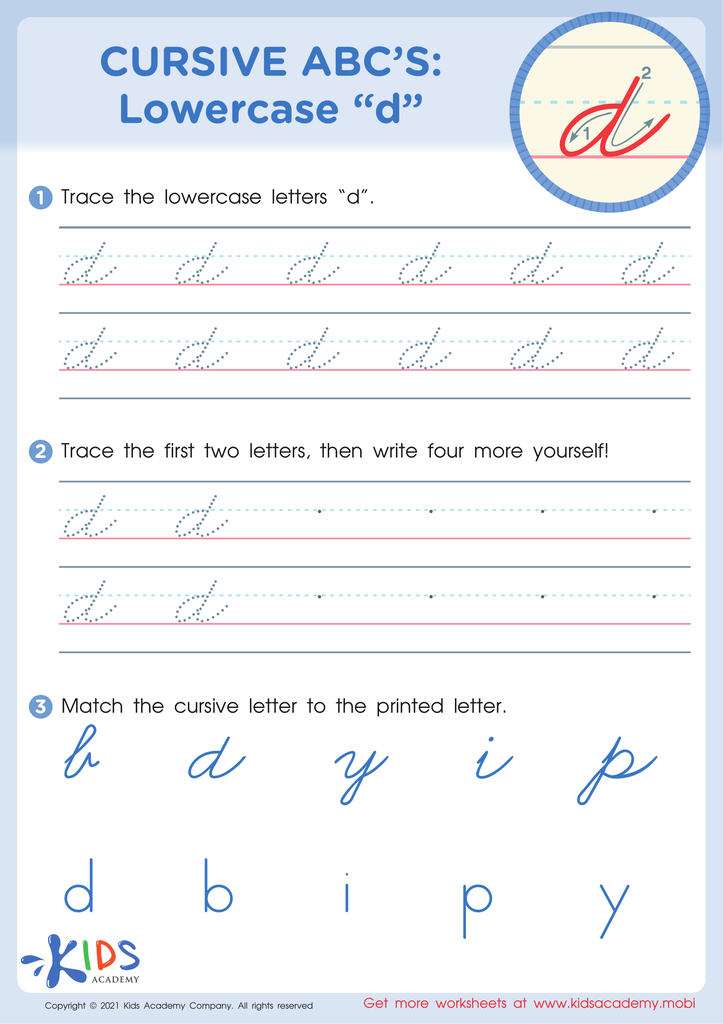
Cursive ABCs: Lowercase d

Cursive ABCs: Lowercase d

To make learning fun, introduce colorful worksheets! These help young learners perfect their cursive lowercase 'd'. By the end, they'll be better at writing and identifying the letter. It's an easy and enjoyable exercise for kids!
Cursive ABCs: Lowercase d
Worksheet
Cursive ABCs: Uppercase E

Cursive ABCs: Uppercase E

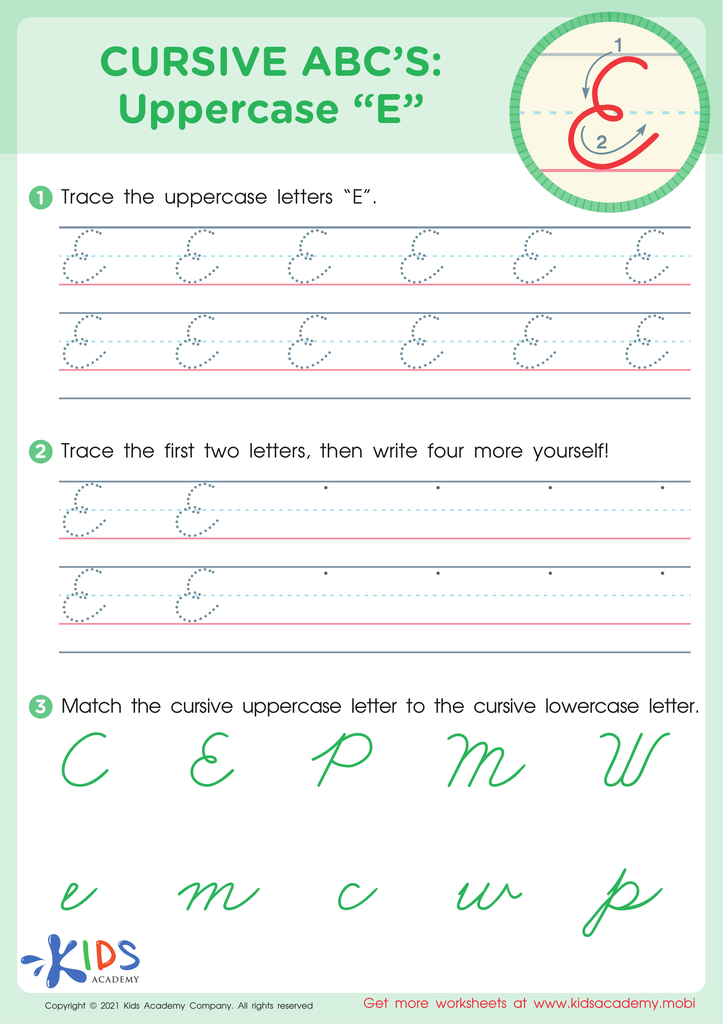
Ask your child if they can identify the letter 'E' and give examples. Each letter is unique, so provide coaching. Have them trace cursive 'E' to become familiar and boost confidence. Then, ask them to write it on their own.
Cursive ABCs: Uppercase E
Worksheet
Cursive ABCs: Uppercase G

Cursive ABCs: Uppercase G

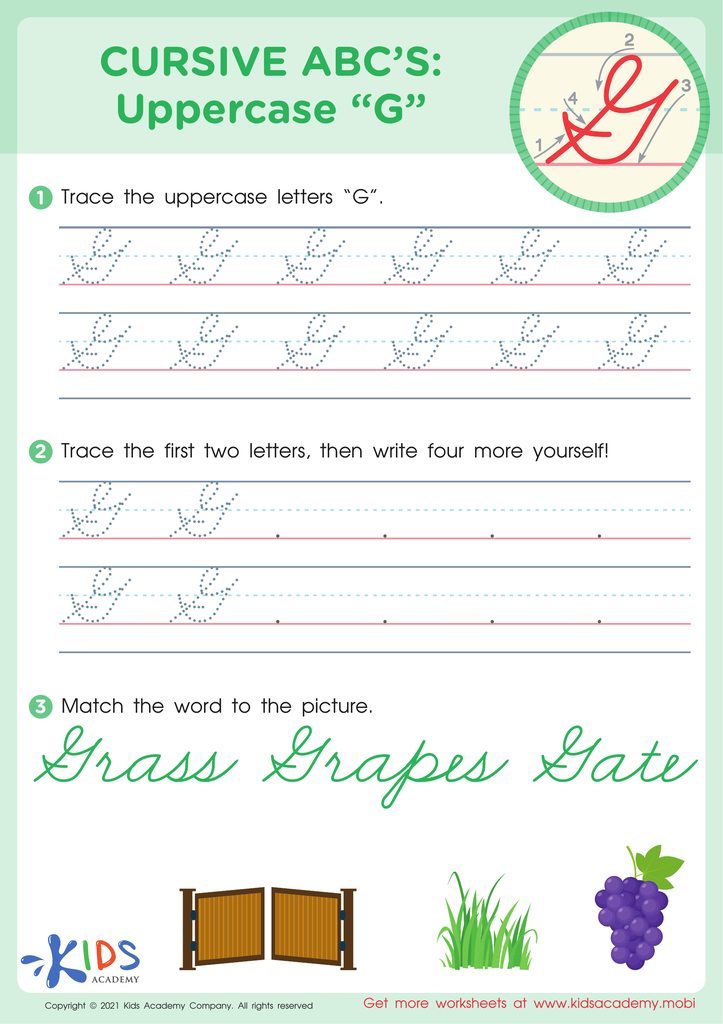
Remind your kids of words beginning with 'G' like 'girl' and 'goat'. Ask them to give examples too. Use this tracing worksheet to help your kids practice writing the cursive uppercase 'G'. It'll help them perfect their motor skills and get better at cursive letters.
Cursive ABCs: Uppercase G
Worksheet
Cursive ABCs: Lowercase c

Cursive ABCs: Lowercase c

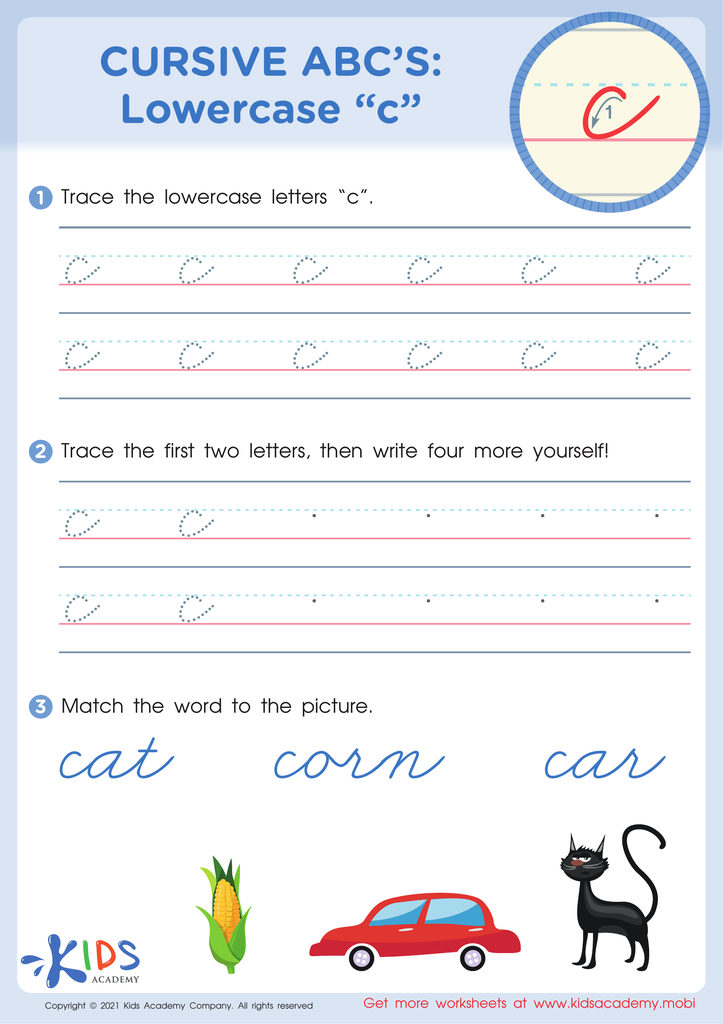
Once your child has successfully printed their letters, help them learn to recognize and write the alphabet in cursive. Struggling? This worksheet is perfect to assist them. Writing is an essential skill for kids to learn, so do all you can to help them. Use these tracing worksheets and guide them as they write the lowercase letter 'c' in cursive.
Cursive ABCs: Lowercase c
Worksheet
Cursive ABCs: Lowercase b

Cursive ABCs: Lowercase b

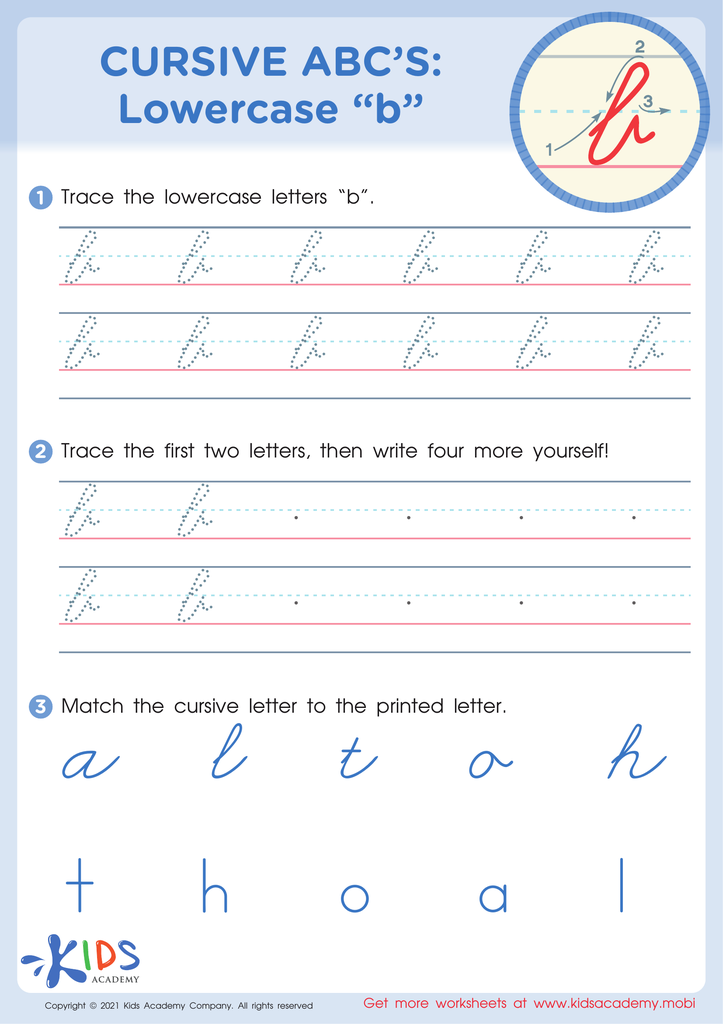
Trace two lines of lowercase b's with your kids. Guide them through the loops and swirls to help them learn cursive handwriting. Then let them practice writing the letter b themselves in the last two lines. With this exercise, your kids should become better at writing and recognizing the lowercase cursive b.
Cursive ABCs: Lowercase b
Worksheet
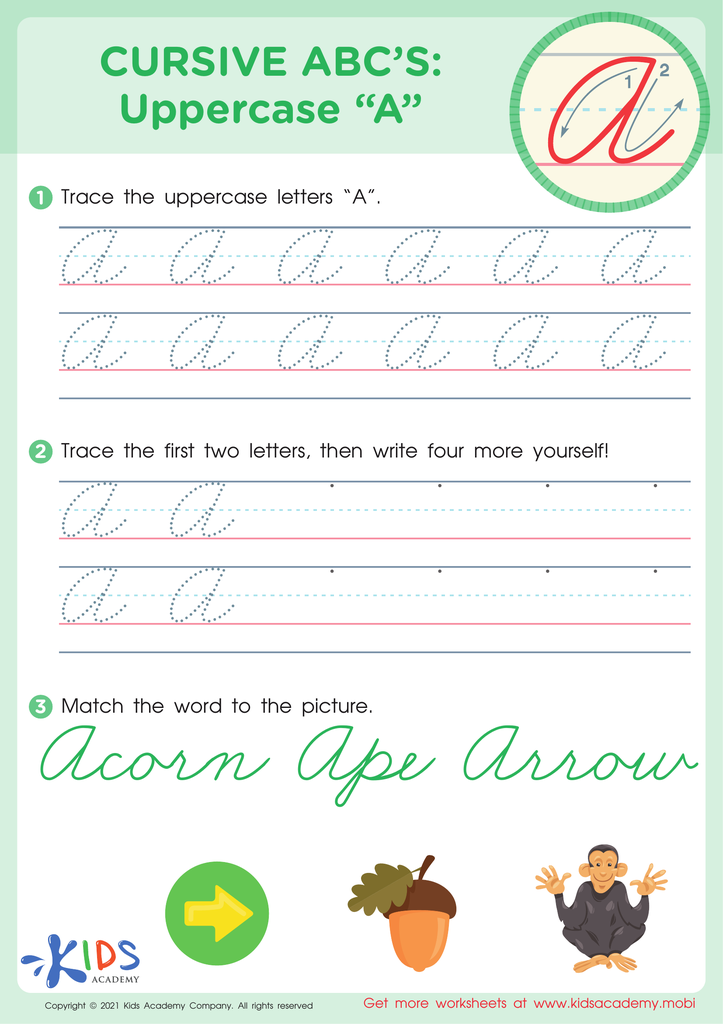
Cursive ABCs: Uppercase A

Cursive ABCs: Uppercase A

Help your kids develop their writing skills with our great tracing sheets. Improve their motor skills, as well as their vocabulary, by guiding them through tracing the dotted lines for the uppercase letters of the alphabet. When they are ready, let them practice writing the letters on their own for improved confidence.
Cursive ABCs: Uppercase A
Worksheet
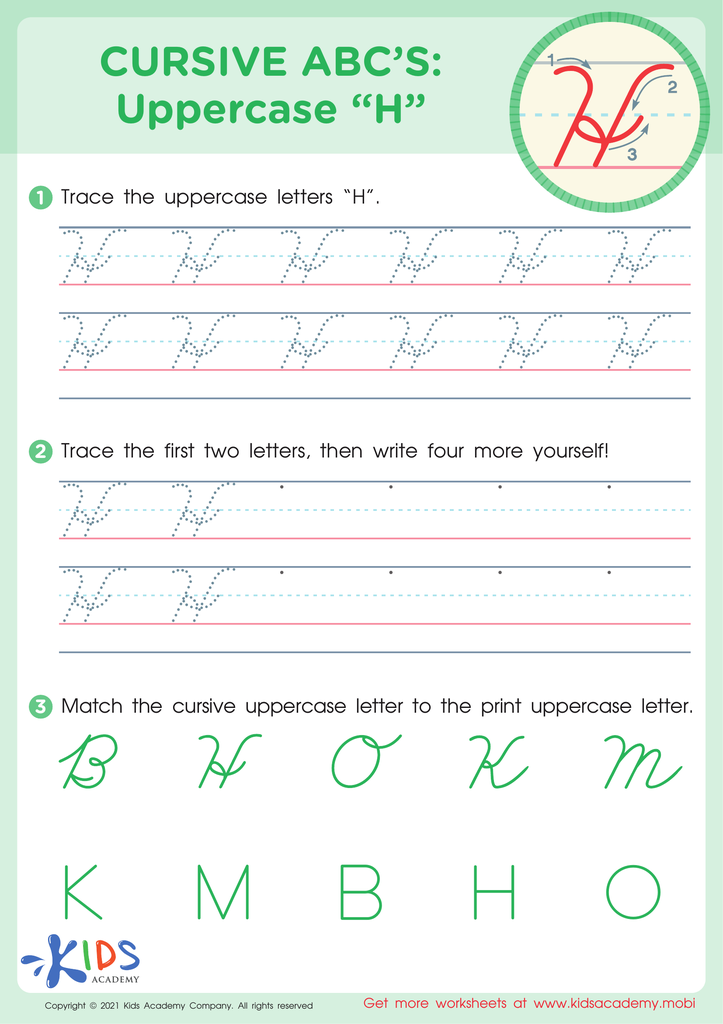
Cursive ABCs: Uppercase H

Cursive ABCs: Uppercase H

Have your child recite the alphabet and give you words beginning with H. This tracing sheet is perfect to help them improve their handwriting. Guide their hands as they trace the uppercase H, then have them practise writing it alone. At the bottom is an exercise to check their letter recognition.
Cursive ABCs: Uppercase H
Worksheet


Alphabet recognition and cursive writing are essential skills for children aged 5-8 as they lay the foundational groundwork for literacy and effective communication. Mastery of letter recognition equips students with the ability to identify and sound out letters, enhancing their reading and writing capabilities. This critical stage also introduces young learners to the fluidity and connectivity of cursive writing, promoting fine motor skills and hand-eye coordination.

Cursive writing, in particular, fosters a unique cognitive process. Unlike print, it encourages kids to understand the shape and flow of letters, which aids memory retention and contributes to faster writing speeds in the long run. Moreover, engaging with cursive can boost a child's confidence as they progress in their writing abilities.

Parents and teachers should also consider the social implications of these skills. Cursive writing helps children acquire personal expression through handwritten notes or letters to friends and family, enhancing interpersonal relationships. Furthermore, as many standardized tests require proficient handwriting, early exposure to cursive writing can have academic benefits.

In fostering an environment that values alphabet recognition and cursive writing, adults support children's overall development and prepare them for successful communication in their educational journeys and beyond.