Understanding syllables Grammar Worksheets for Ages 5-8
3 filtered results
Difficulty Level
Grade
Age
-
From - To
Subject
Activity
Standards
Discover our engaging "Understanding Syllables Grammar Worksheets" designed specifically for children ages 5-8. These interactive resources help young learners grasp the concept of syllables through fun activities and exercises. Our worksheets promote phonemic awareness and enhance reading skills, making learning enjoyable. With a variety of exercises that include counting syllables in words, breaking down sounds, and practicing spelling, students gain confidence in their language abilities. Ideal for both classroom and at-home learning, these worksheets cater to different learning styles, ensuring every child can succeed. Enhance your child's writing and reading skills today with our easy-to-use syllable worksheets!
Favorites
With answer key
Interactive
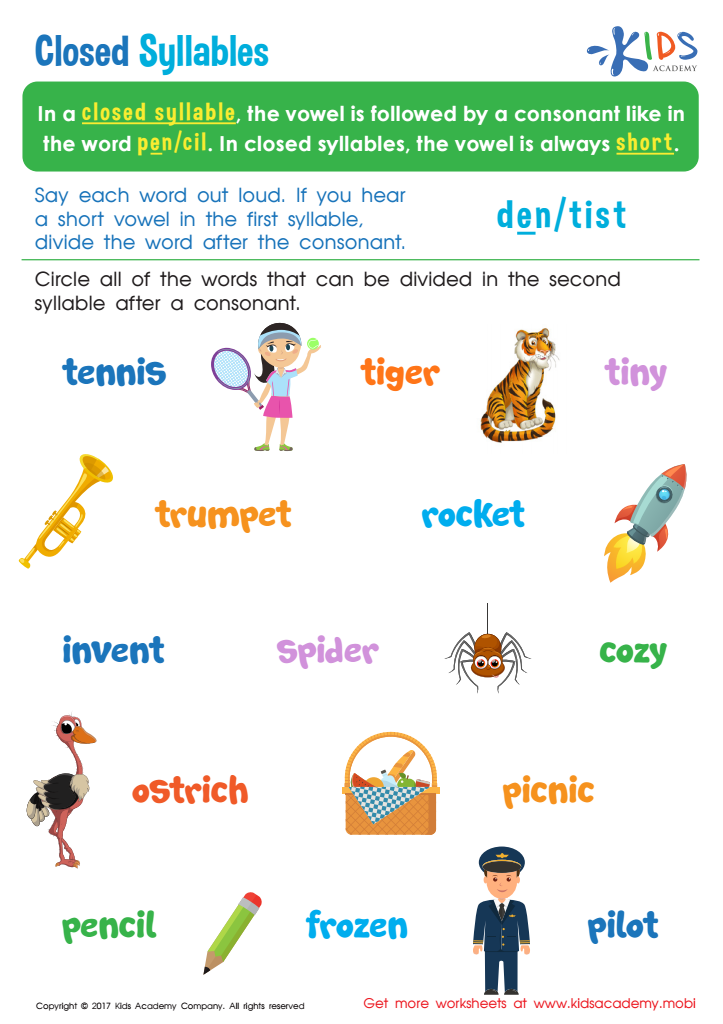
Closed Syllable Spelling Worksheet
Learning syllables can be tough, but we can make it easier! Look for long and short vowel sounds to identify closed syllables. This worksheet can help 3rd graders do just that, with its fun and colorful design.
 Assign to My Students
Closed Syllable Spelling Worksheet
Worksheet
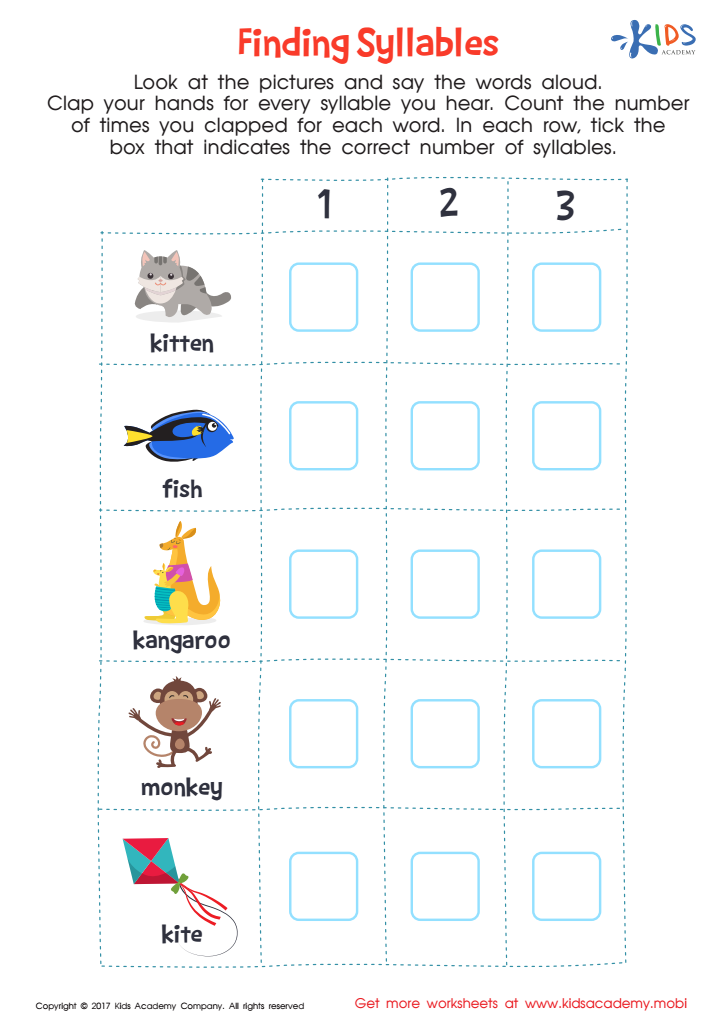
Finding Syllables Word Structure Worksheet
Have your kid clap and count syllables in words to improve their reading and spelling! Use this word structure worksheet for a fun activity - syllables!
Finding Syllables Word Structure Worksheet
Worksheet
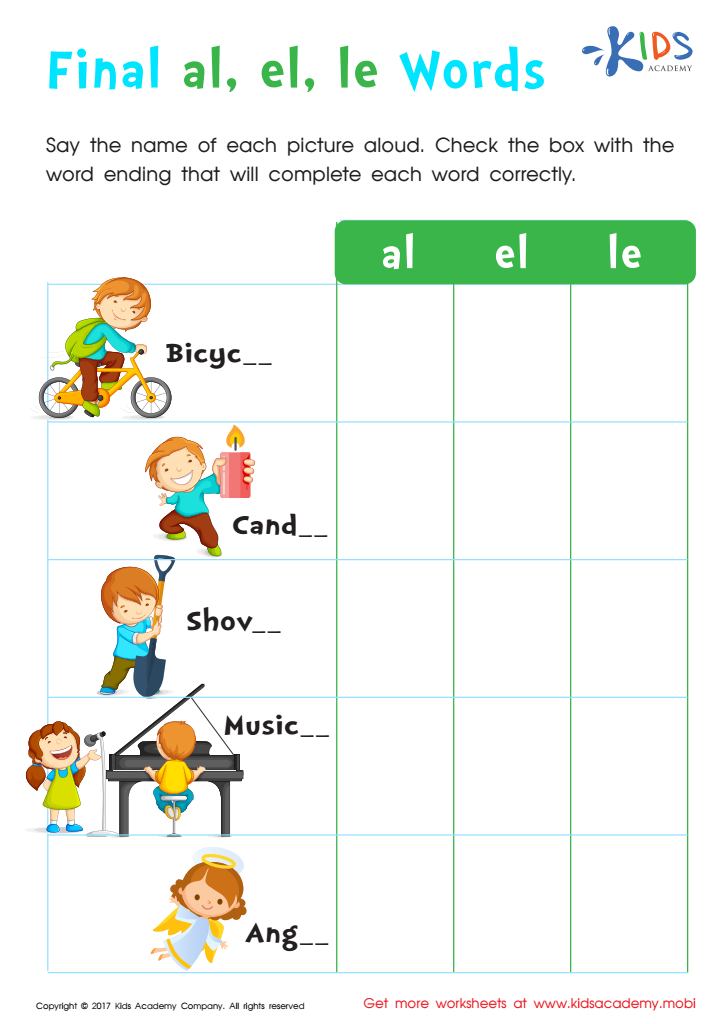
Spelling Words Ending with –le, –el and –al Worksheet
Spelling tricky words with the same ending sounds can be fun with this worksheet! Kids learn to spell -le, -el, and -al words while enjoying colorful pictures. It's a great way to refine their usage of tricky word endings.
Spelling Words Ending with –le, –el and –al Worksheet
Worksheet
Join Kids Academy for Free
Who is primarily going to use this learning content?



Understanding syllables is crucial for children aged 5-8 as it forms a foundational skill in their literacy development. Syllables are the building blocks of words, influencing how they read, write, and spell. When children learn to break words into syllables, they enhance their phonemic awareness, which is essential for decoding words. This skill not only improves reading fluency but also boosts confidence in their ability to tackle unfamiliar words.
For parents and teachers, cultivating syllable awareness is significant because it lays the groundwork for language development, listening skills, and communication. Engaging young learners in syllable activities, such as clapping or tapping out syllables while speaking, can make learning stimulating and enjoyable. It also fosters collaborative skill-building, as children often learn better through engaging with peers or family.
Moreover, a solid understanding of syllables can improve speling abilities and overall comprehension. For early-grade educators, integrating syllable activities into lessons can provide structure and enhance student focus, ultimately contributing to better performance in reading tasks. Recognizing the importance of syllables equips parents and teachers to support children's linguistic growth and instills a lifelong love for language, thus enriching their educational journey.