Contextual understanding Writing Worksheets for Ages 5-8
6 filtered results
-
From - To
Discover our engaging Contextual Understanding Writing Worksheets designed specifically for children aged 5-8! These worksheets help young learners enhance their comprehension and writing skills by connecting ideas within a meaningful context. Kids will explore various scenarios through fun exercises, enabling them to practice writing while understanding the importance of context. Each worksheet combines imaginative prompts with vibrant visuals, fostering creativity and critical thinking. Perfect for home or classroom use, these resources are tailored to instill a love for writing and improve language skills. Dive into hands-on learning and watch your child flourish as they develop essential literacy skills!
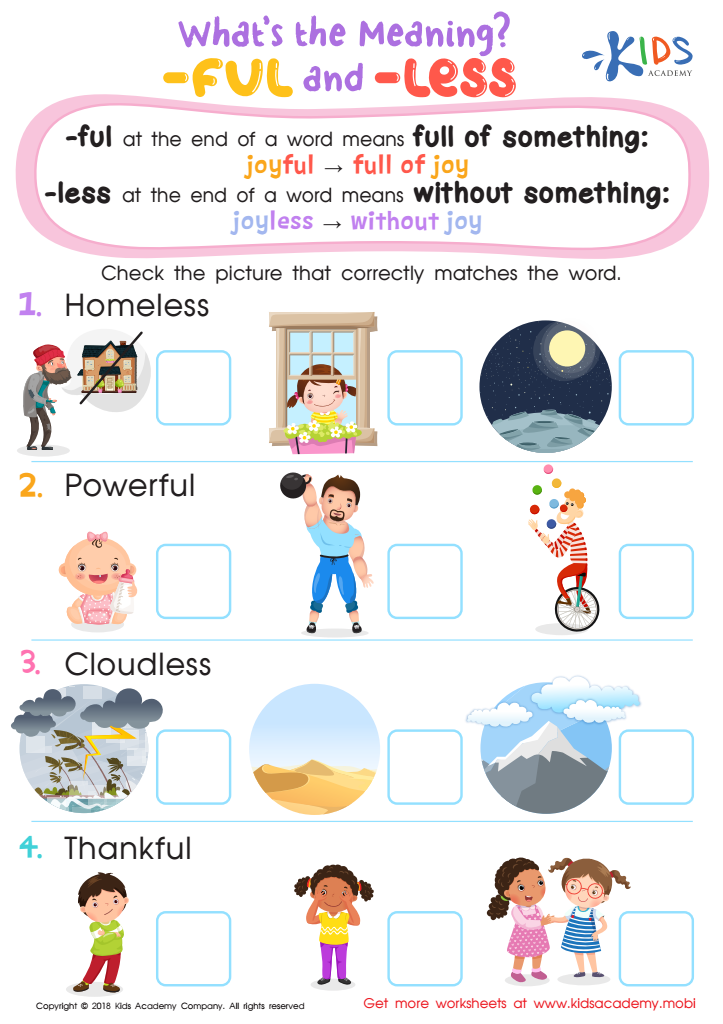
What's the Meaning? Worksheet
 Assign to My Students
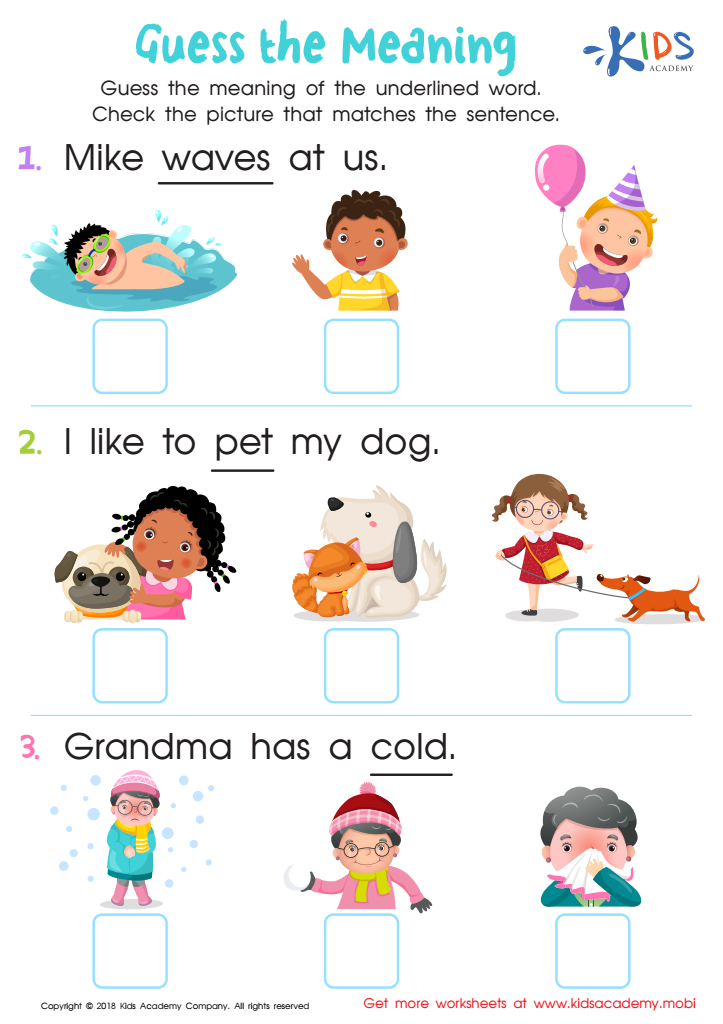
Guess the Meaning Worksheet
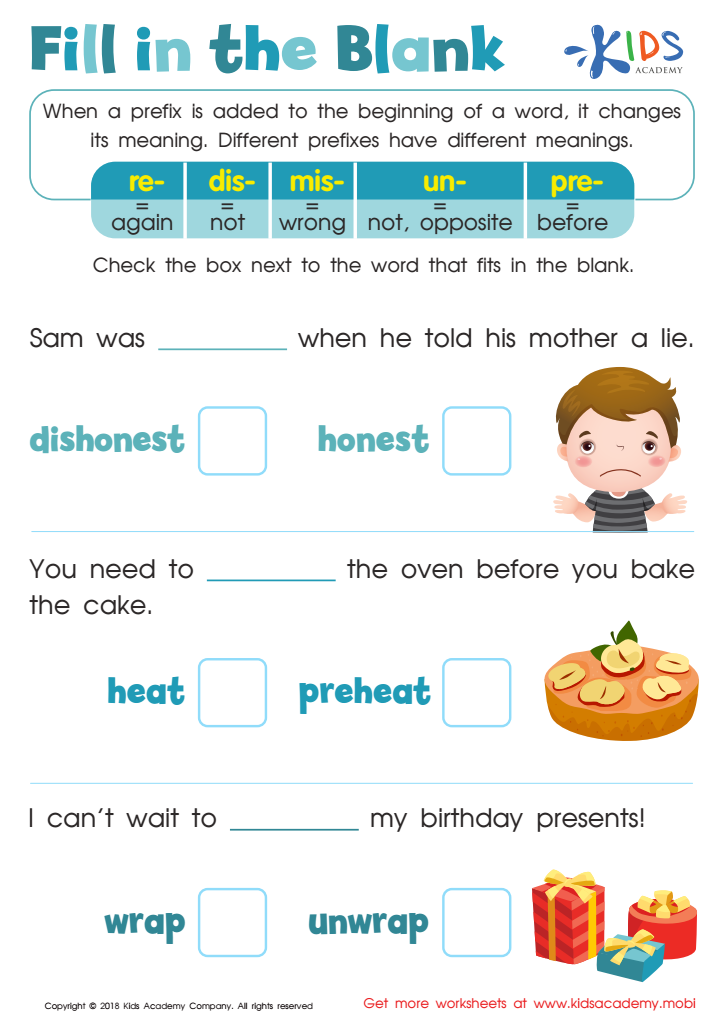
Reading: Fill in the Blank Worksheet
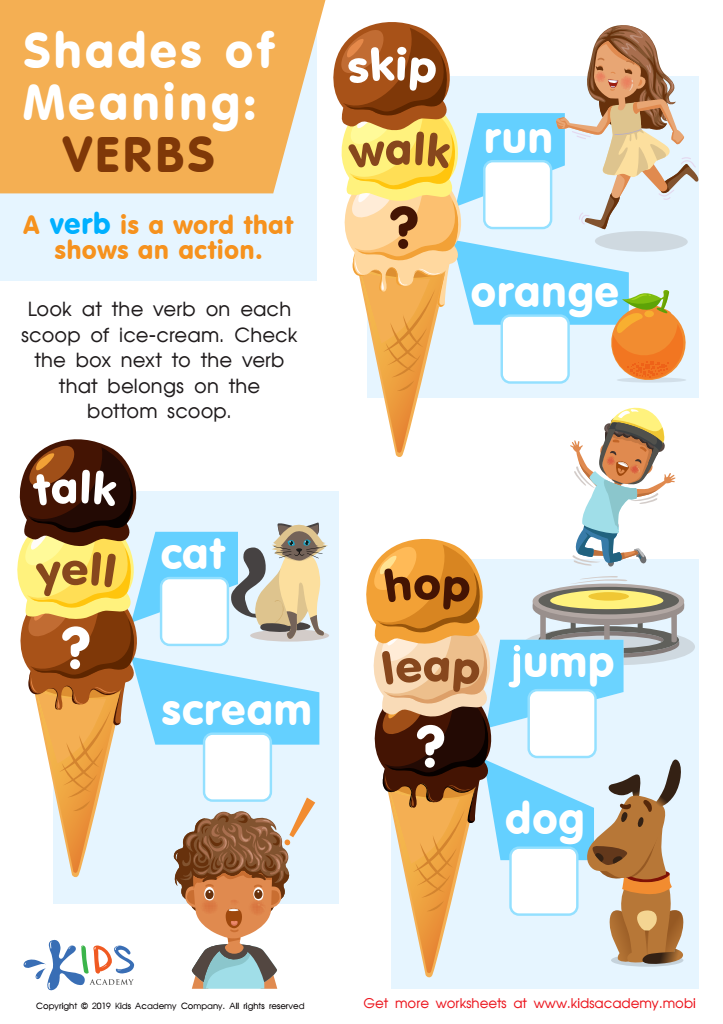
Shades of Meaning: Verbs Worksheet
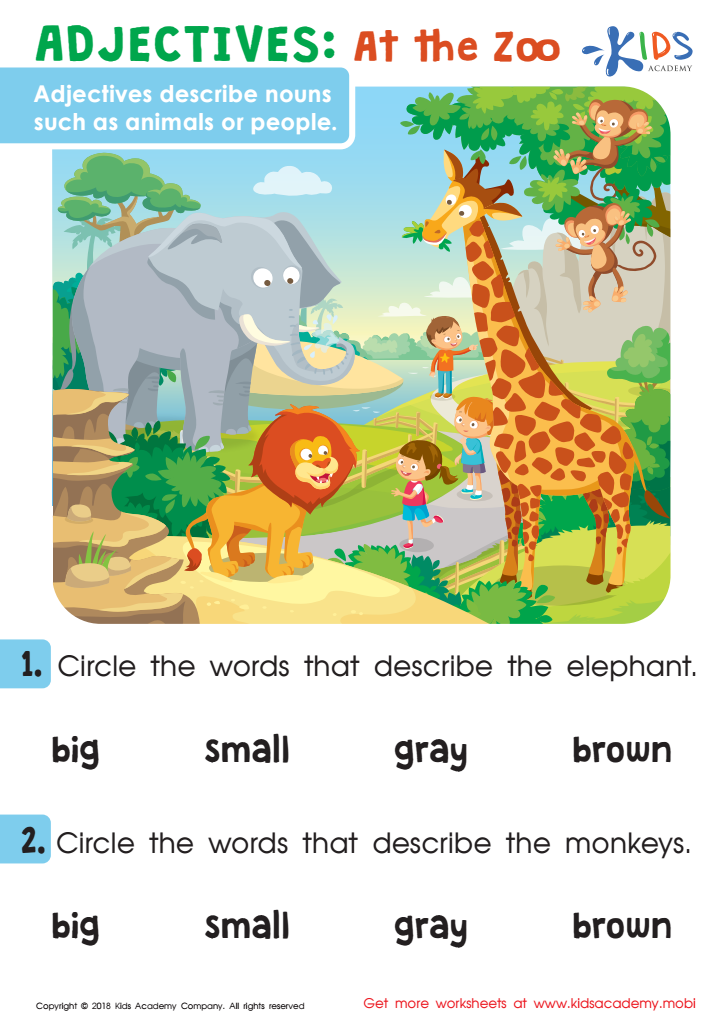
Adjectives: At The Zoo Worksheet
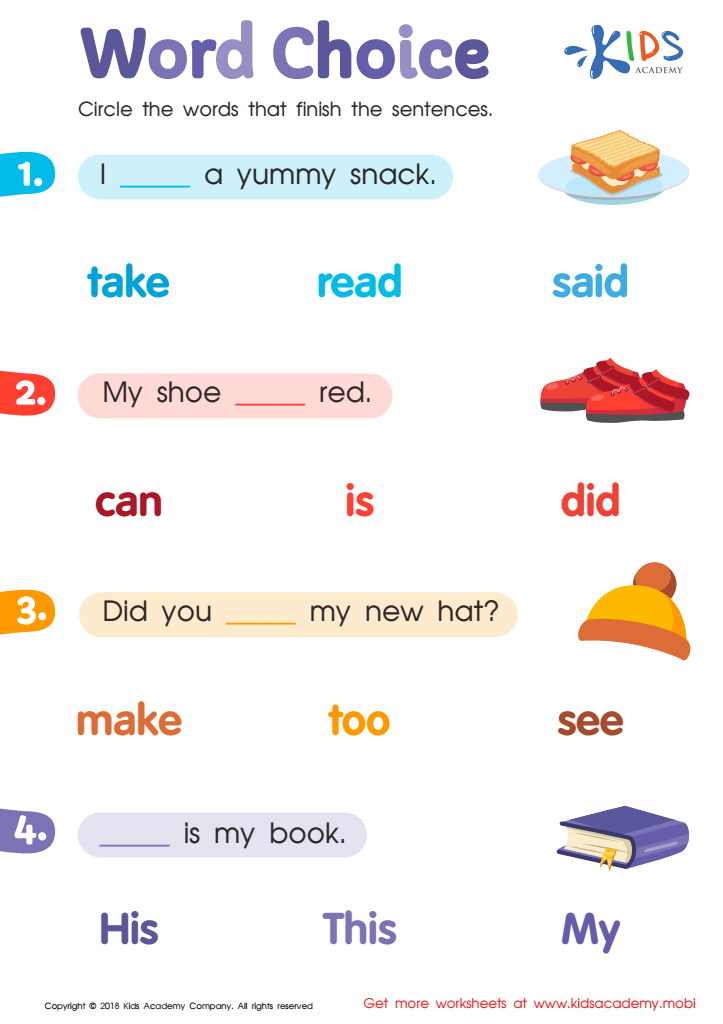
Word Choice Worksheet




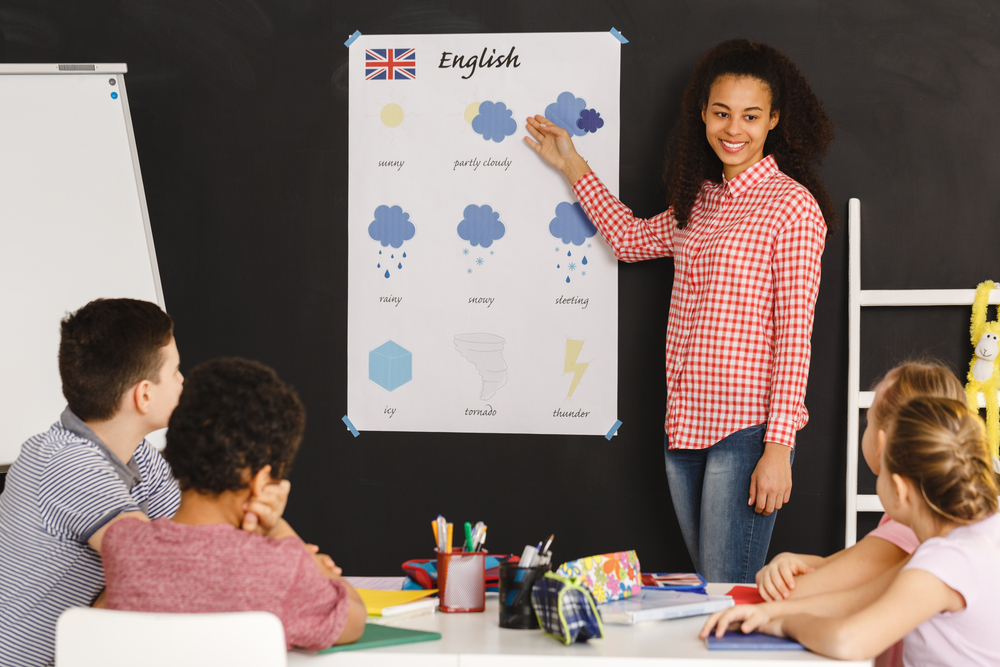


Contextual understanding in writing is essential for children aged 5-8, as it fosters their ability to make connections between their experiences and the written word. Parents and teachers should care about this skill because it enhances comprehension, encourages creativity, and boosts critical thinking. When children understand the context of a story or topic, they are more likely to engage with the material, making reading and writing a more enjoyable and meaningful experience.
Contextual understanding helps children relate their own experiences to what they read, allowing them to form personal connections with the material. This, in turn, empowers them to express those connections in their writing, leading to richer and more authentic stories or essays. Furthermore, when children learn to analyze the context behind characters, settings, and events, they develop empathy and a deeper appreciation for diverse perspectives.
Additionally, context-driven writing fosters vocabulary growth, as students encounter and use a variety of words in different settings. Ultimately, focusing on contextual understanding nurtures a lifelong love for reading and writing, which is crucial for academic success and overall communication skills. By emphasizing this aspect in their education, parents and teachers can equip children with the tools necessary to navigate and express their understanding of the world.








