Improving vocabulary Writing Worksheets for Ages 5-8
6 filtered results
-
From - To
Enhance your child's vocabulary skills with our collection of engaging Writing Worksheets designed specifically for ages 5-8. These fun and interactive worksheets encourage young learners to explore new words while developing their writing abilities. Each worksheet incorporates playful exercises, including word searches, fill-in-the-blanks, and picture prompts, making vocabulary building enjoyable and effective. Aligned with early literacy standards, our resources support children's language development, spark creativity, and boost confidence in writing. Perfect for homeschooling or classroom use, these worksheets will empower your child to express themselves better and expand their language skills through captivating activities. Discover the joy of vocabulary enhancement today!
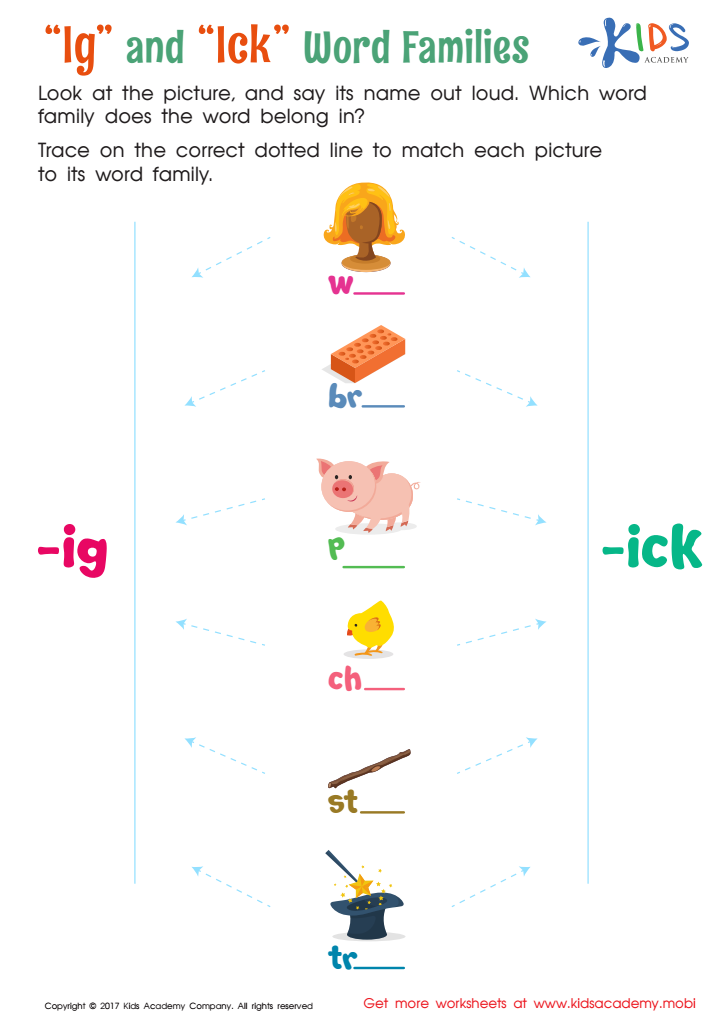
Words Families "ig" and "ick" Spelling Worksheet
 Assign to My Students
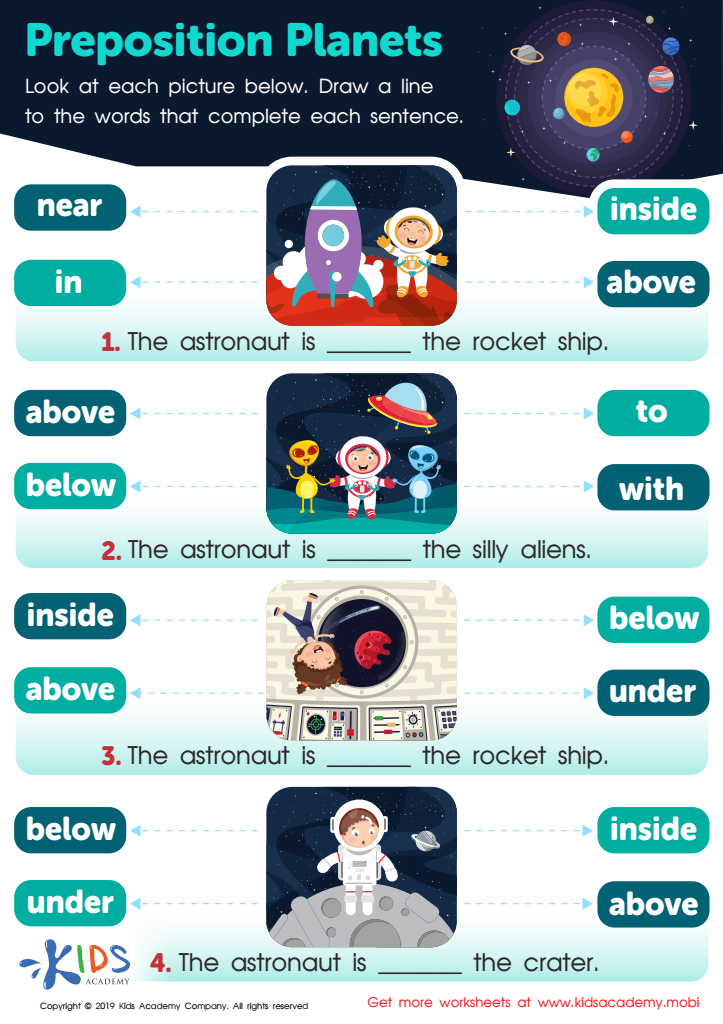
Preposition Planets Worksheet
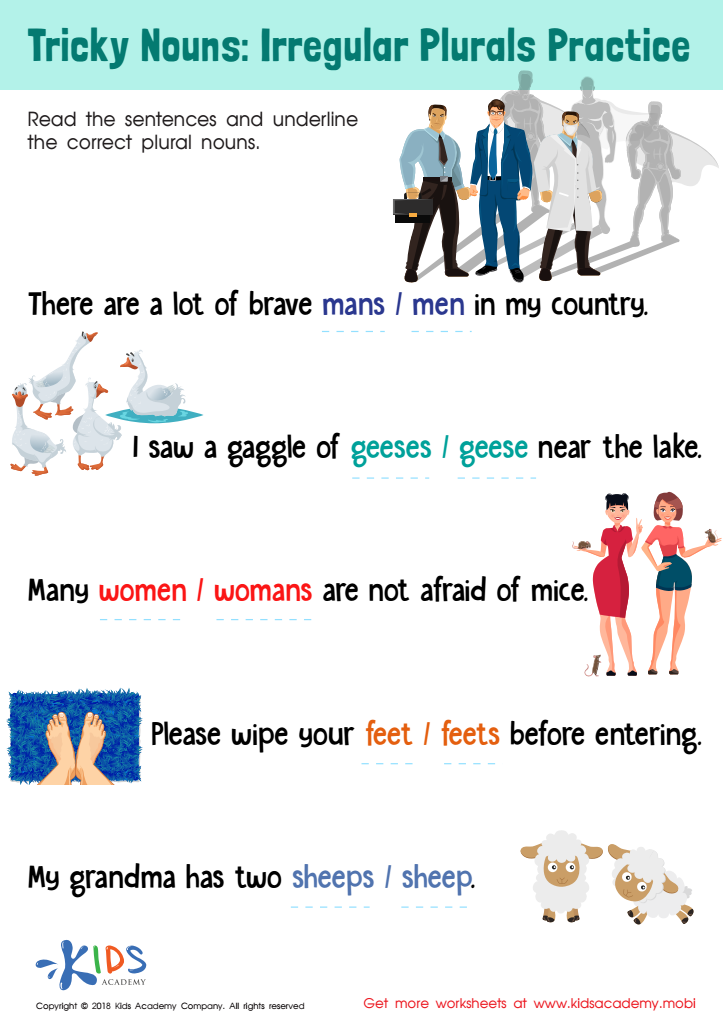
Tricky Nouns: Irregular Plurals Practice Worksheet
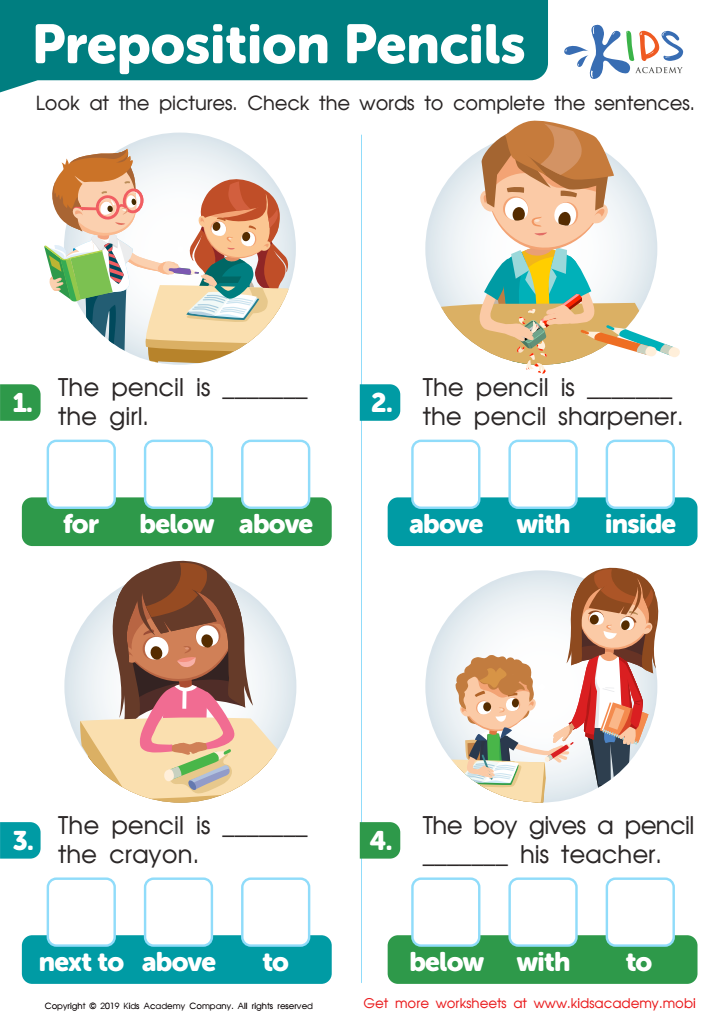
Preposition Pencils Worksheet
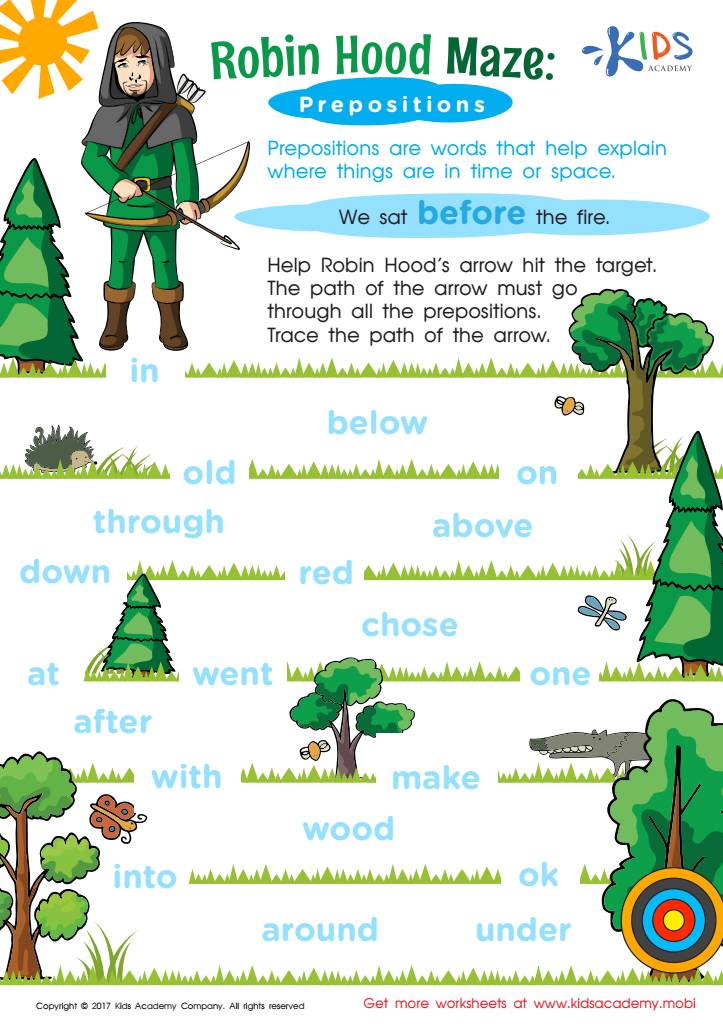
Prepositions Worksheet
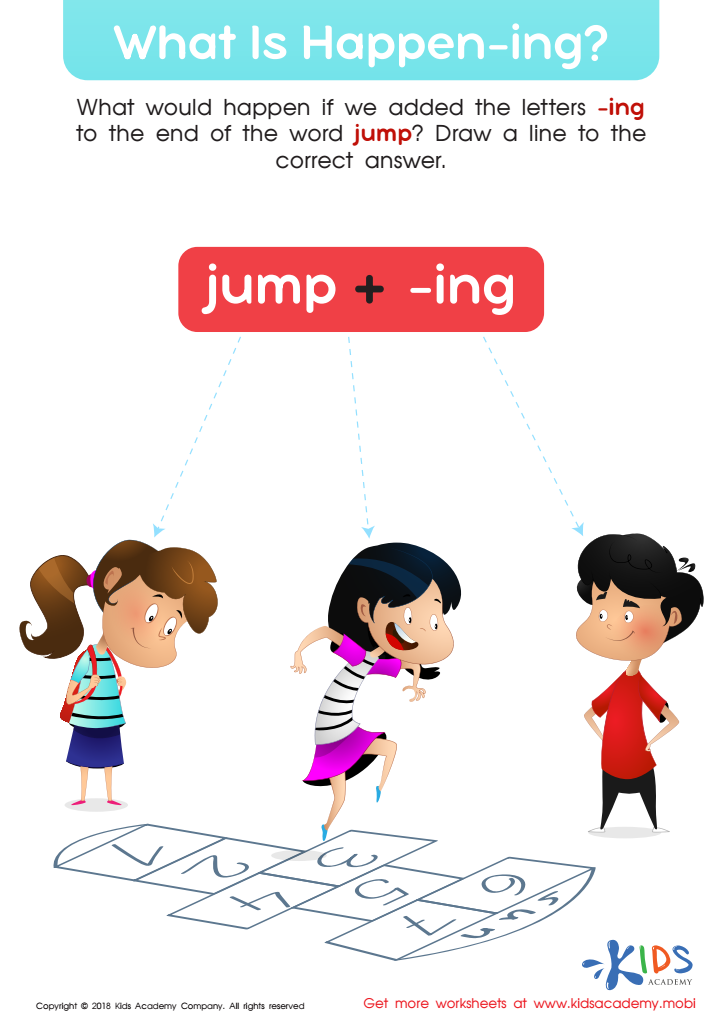
What Is Happen-Ing? Worksheet



.jpg)




Improving vocabulary writing in children aged 5-8 is crucial for several reasons. First, a robust vocabulary is foundational for effective communication. Children with a strong vocabulary can articulate their thoughts and ideas more clearly, which boosts their confidence in speaking and writing. This age group is also critical for language acquisition, and enriching vocabulary during these formative years supports cognitive development.
Moreover, enhanced vocabulary helps children comprehend what they read. As they encounter new words in stories and texts, a rich vocabulary enables them to derive meaning, fostering a love for reading and learning. This competence is linked to better academic performance over time, setting a positive trajectory for their education.
Additionally, engaging children in vocabulary writing activities cultivates creativity and critical thinking. It encourages them to explore language nuances, fostering self-expression. Lastly, as caregivers and educators, fostering vocabulary growth strengthens the home-school connection. Parents and teachers can work collaboratively, employing games, storytelling, and interactive exercises to create an engaging learning environment. In summary, investing effort in improving vocabulary writing for young children not only enhances their immediate communication skills but also supports their long-term academic and personal growth.








