Phonics recognition Writing Worksheets for Ages 5-8
5 filtered results
-
From - To
Discover our engaging Phonics Recognition Writing Worksheets designed specifically for children ages 5 to 8! These interactive resources help young learners strengthen their phonics skills, laying a solid foundation for reading and writing success. Each worksheet features fun activities that encourage kids to identify phonetic sounds and practice writing words, all while fostering creativity and a love for learning. Ideal for home or classroom use, our worksheets make phonics instruction an enjoyable experience. Perfect for educators and parents, they cater to various learning styles, ensuring that every child can thrive. Start your child's literacy journey today with our comprehensive worksheets!
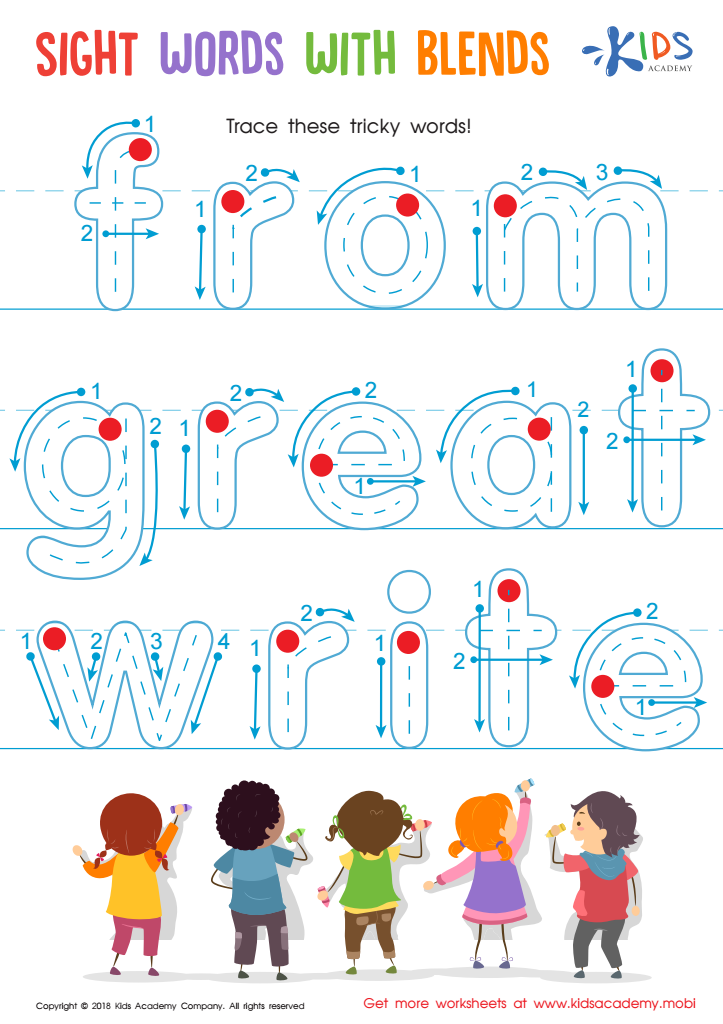
Sight Words with Blends Worksheet
 Assign to My Students
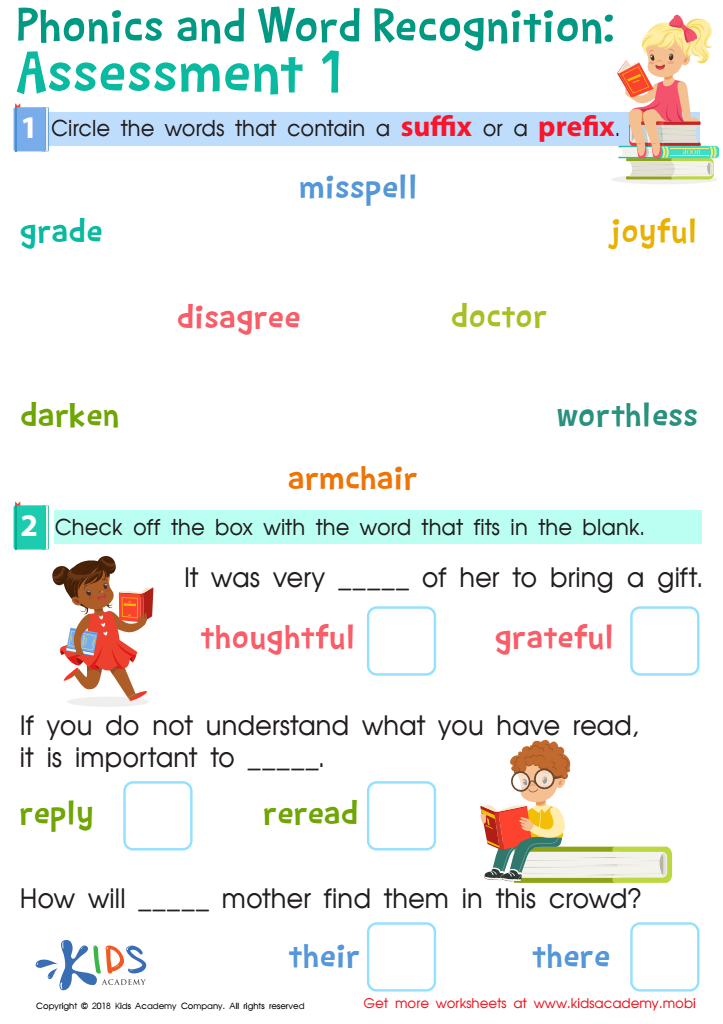
Phonics and Word Recognition: Assessment 1 Worksheet
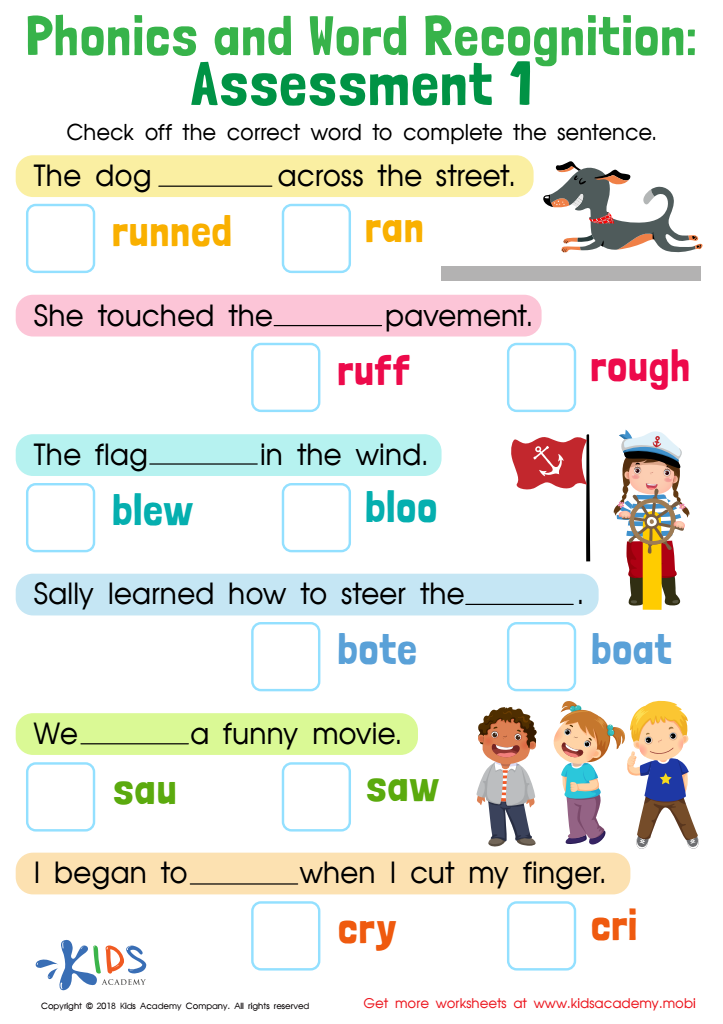
Phonics and Word Recognition: Assessment 1 Worksheet
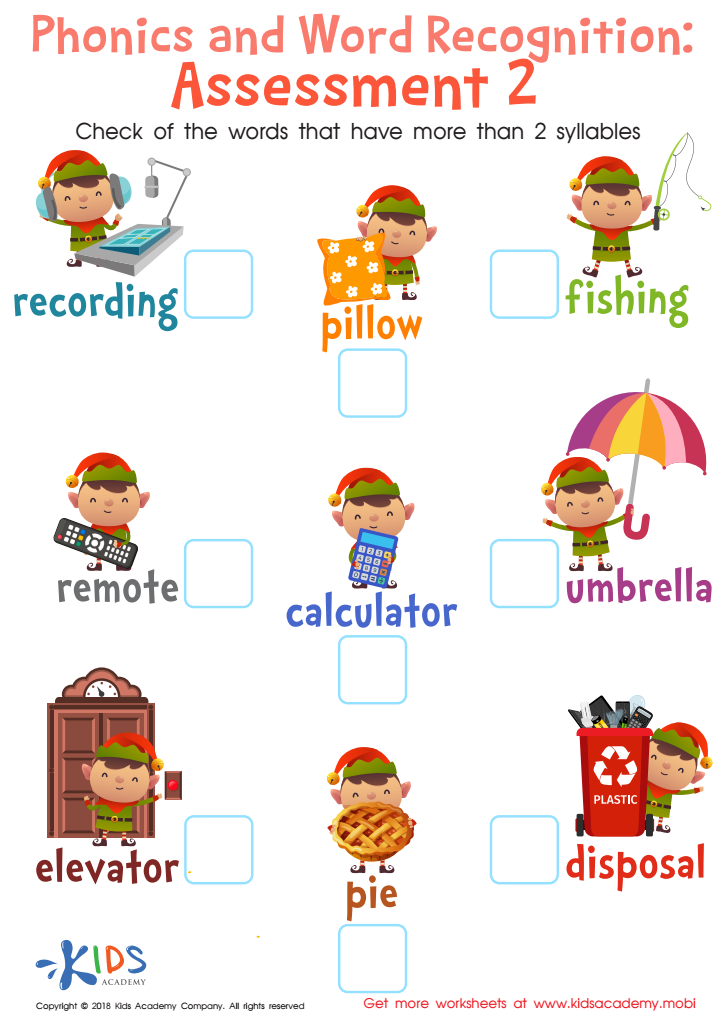
Phonics and Word Recognition: Assessment 2 Worksheet
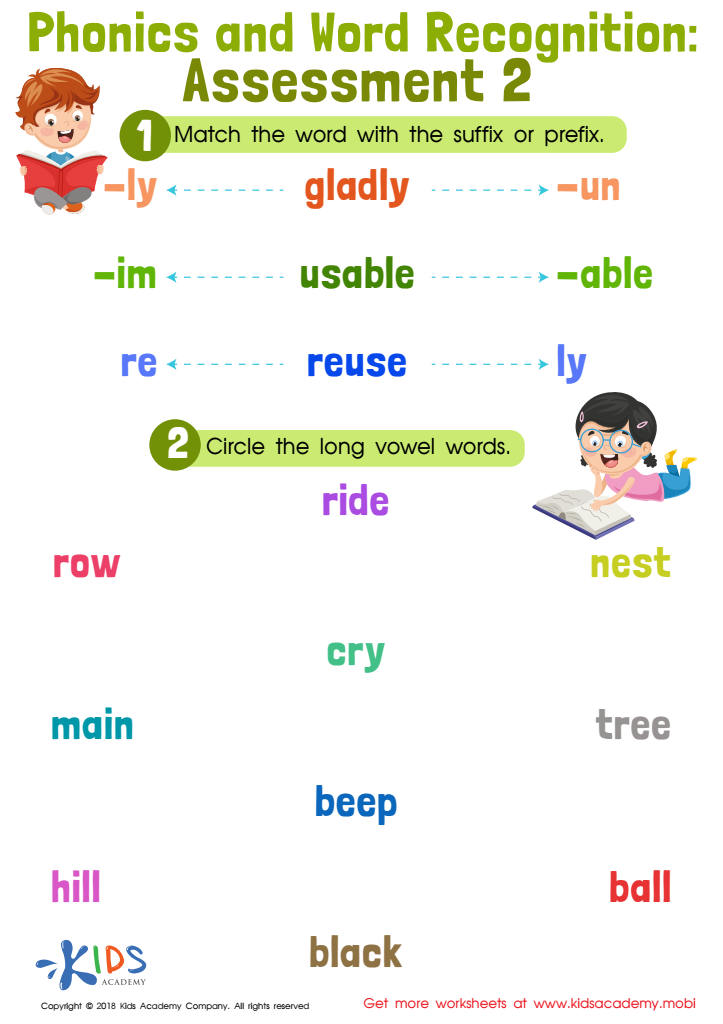
Phonics and Word Recognition: Assessment 2








Phonics recognition and writing are critical developmental skills for children ages 5-8, particularly as they lay the foundation for literacy. Understanding phonics—connect and the sounds associated with letters and combinations—enables children to decode words, facilitating reading fluency. When children grasp this concept, it not only boosts their confidence but also enhances their comprehension, allowing them to engage more deeply with texts.
For parents and teachers, recognizing the significance of phonics in writing is equally important. It helps children employ phonemic awareness, enabling them to sound out words and improve their spelling. When students learn to write using phonics, they reinforce their reading skills, fostering a positive feedback loop essential for language development.
Moreover, writing with phonics promotes creativity by allowing children to express thoughts and ideas without being overly dependent on perfectly spelled words. This encourages resilience and a growth mindset, critical traits in their academic journey. Early intervention through phonics activities can prevent future struggles with literacy, ultimately impacting a child’s overall educational trajectory. Thus, investing time and resources in phonics recognition writing is essential for nurturing competent readers and writers, forming a solid foundation for lifelong learning.








