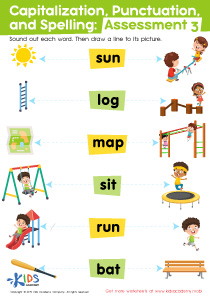
Vocabulary development Writing Worksheets for Ages 5-8
10 filtered results
-
From - To
Explore our engaging Vocabulary Development Writing Worksheets designed for children ages 5-8! These thoughtfully crafted resources aim to enhance vocabulary, spelling, and writing skills through fun activities tailored to young learners. Our worksheets incorporate colorful visuals and age-appropriate exercises that spark creativity while promoting language acquisition. Kids can practice word usage, sentence formation, and expand their vocabulary in an interactive way. These worksheets not only support academic growth but also encourage a love for writing, allowing children to express their thoughts and ideas freely. Perfect for home or classroom use, our resources make learning vocabulary enjoyable and effective!
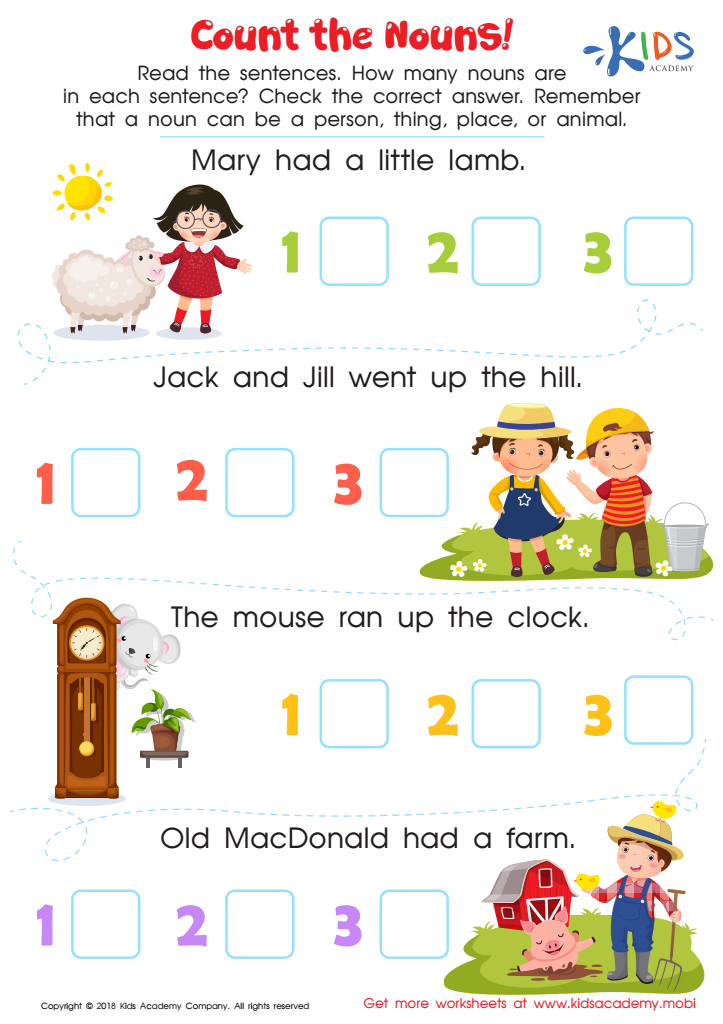
Count the Nouns Worksheet
 Assign to My Students
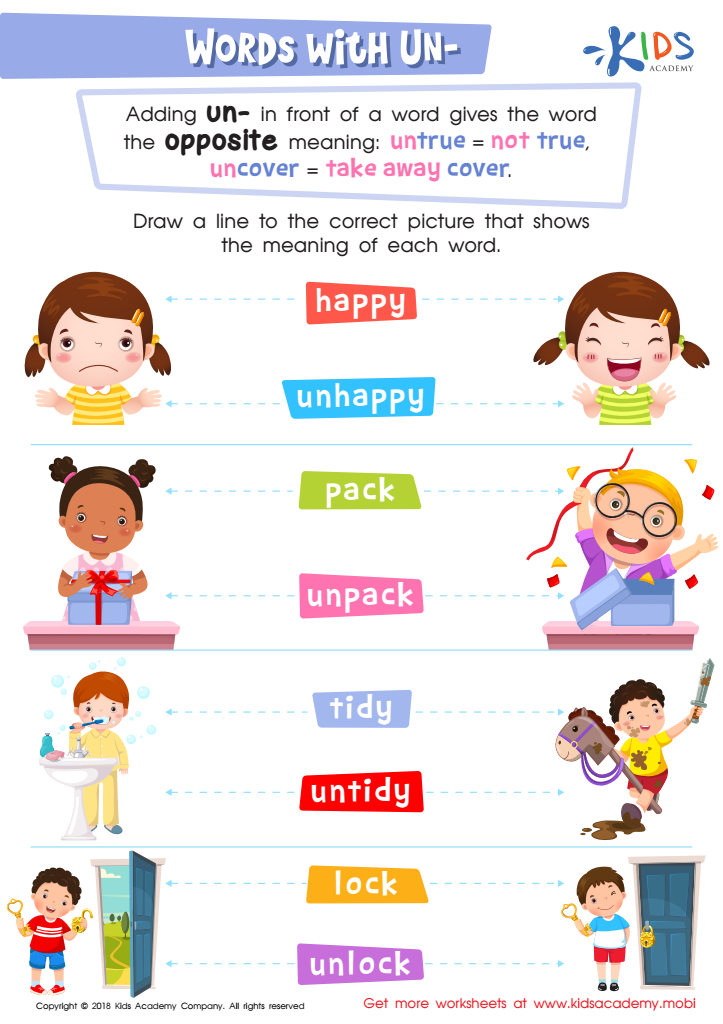
Words with Un– Worksheet
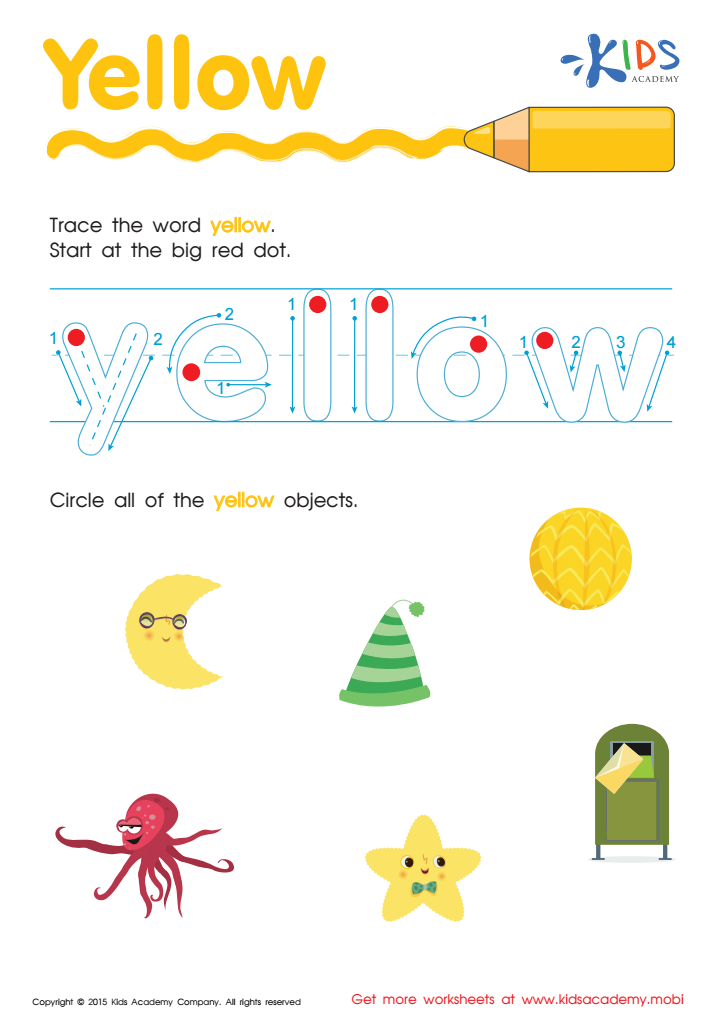
Yellow Tracing Color Words Worksheet
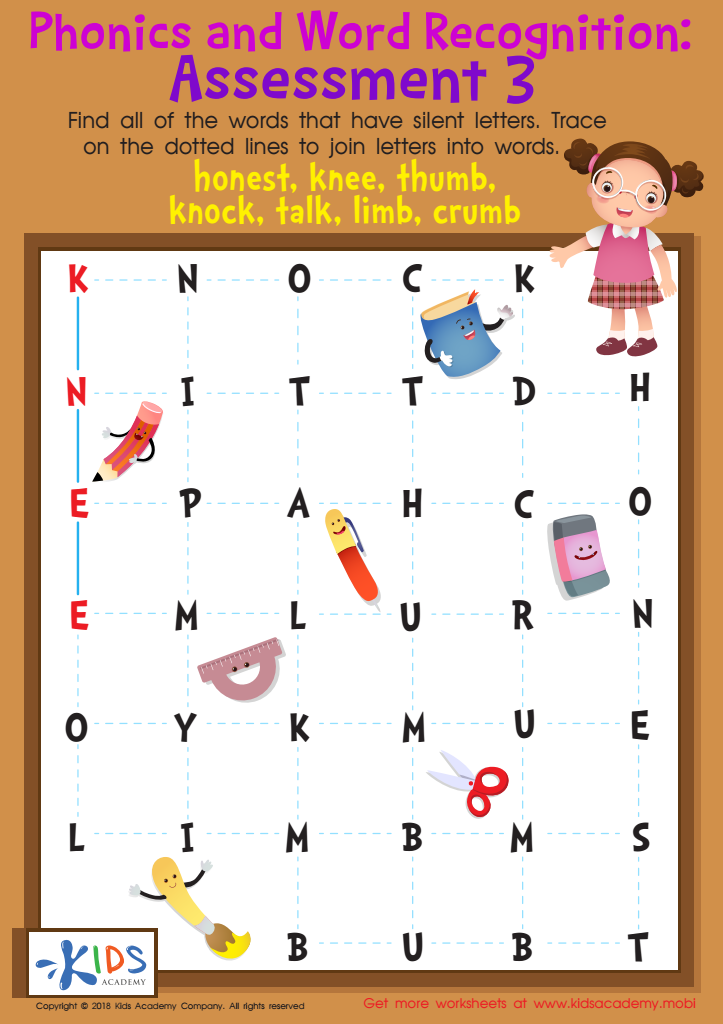
Phonics and Word Recognition: Assessment 3 Worksheet
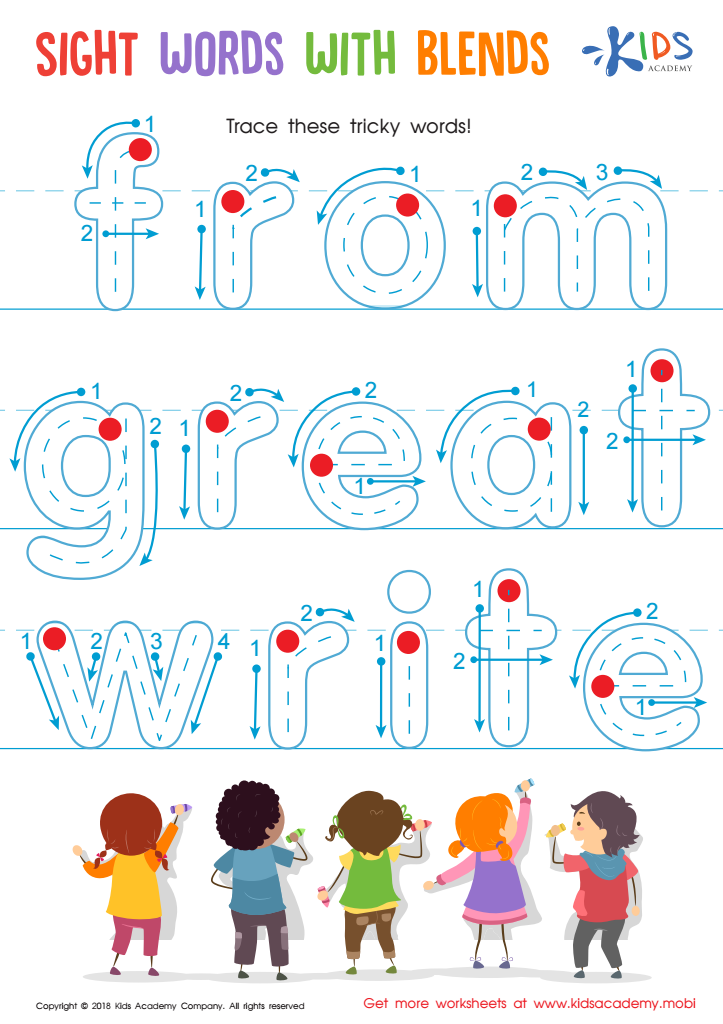
Sight Words with Blends Worksheet
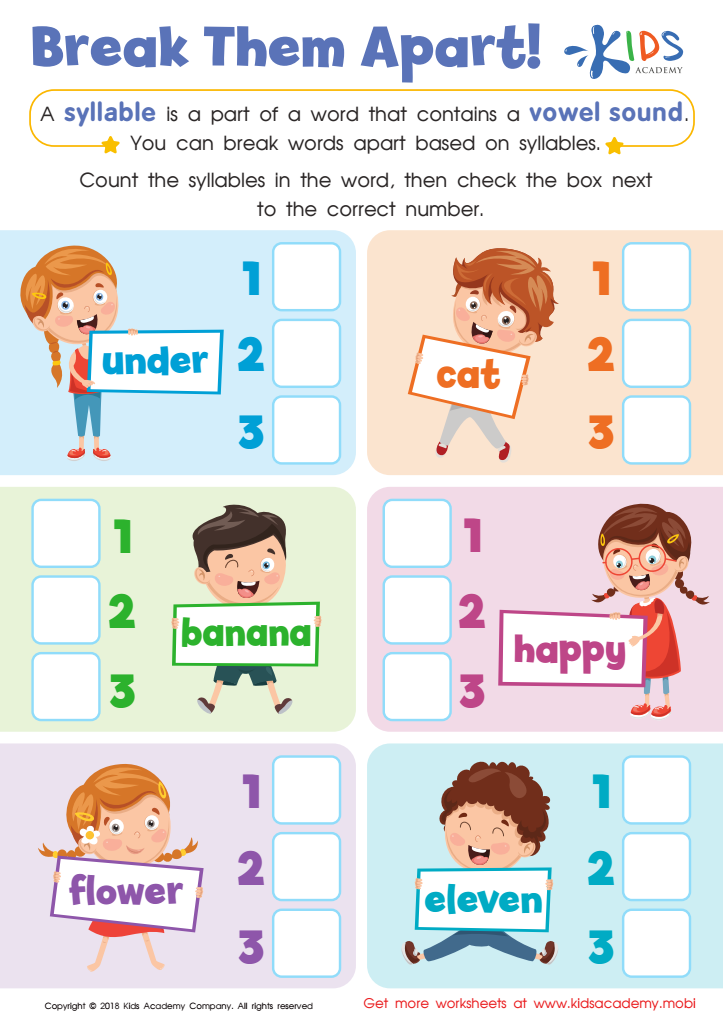
Reading: Break Them Apart Worksheet
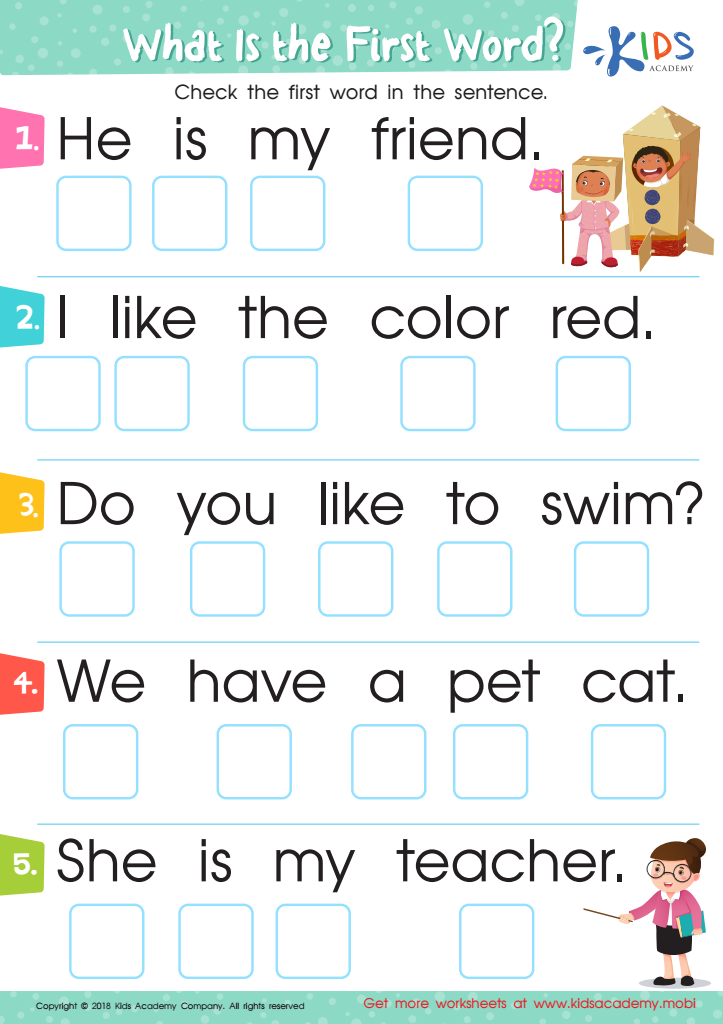
What is the First Word? Worksheet
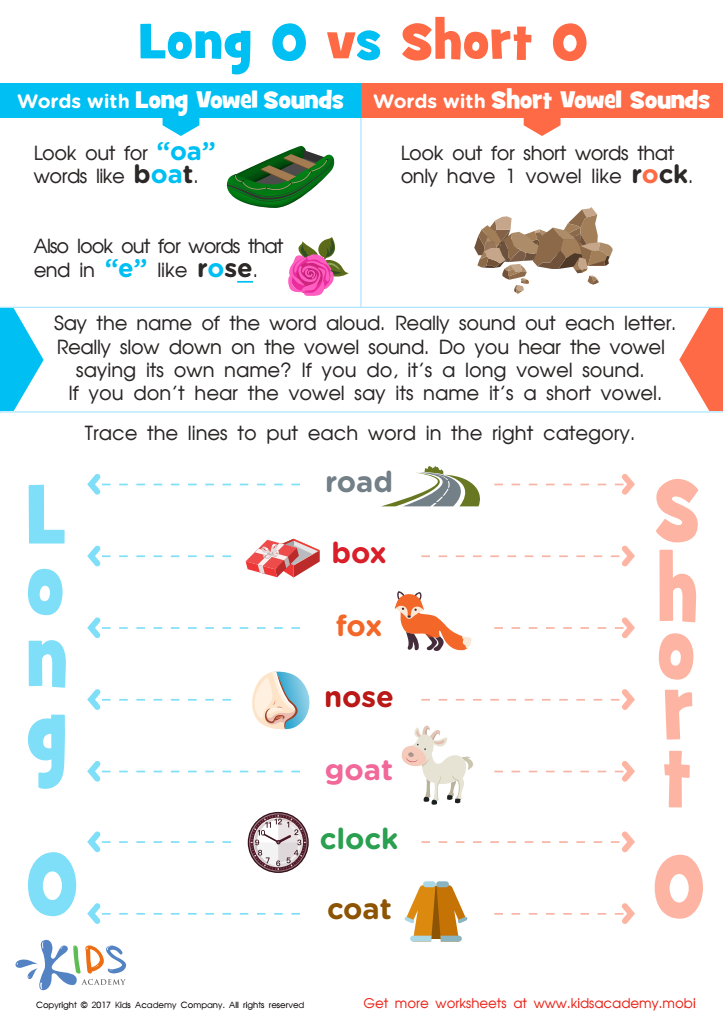
Long and Short Vowel O Spelling Worksheet
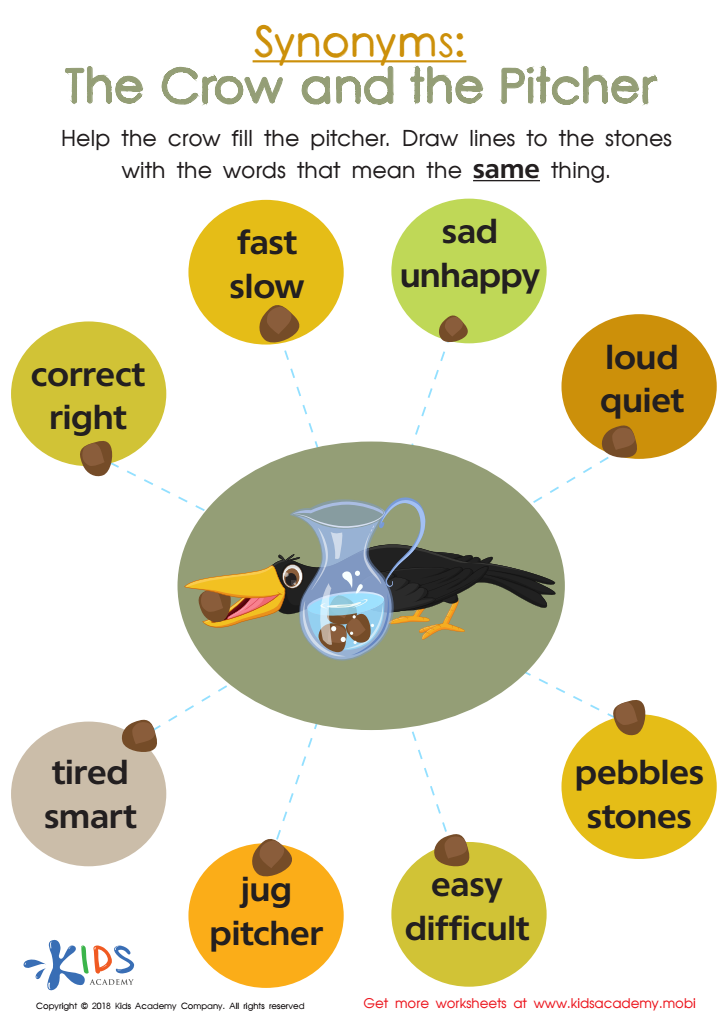
The Crow and the Pitcher Synonyms Worksheet
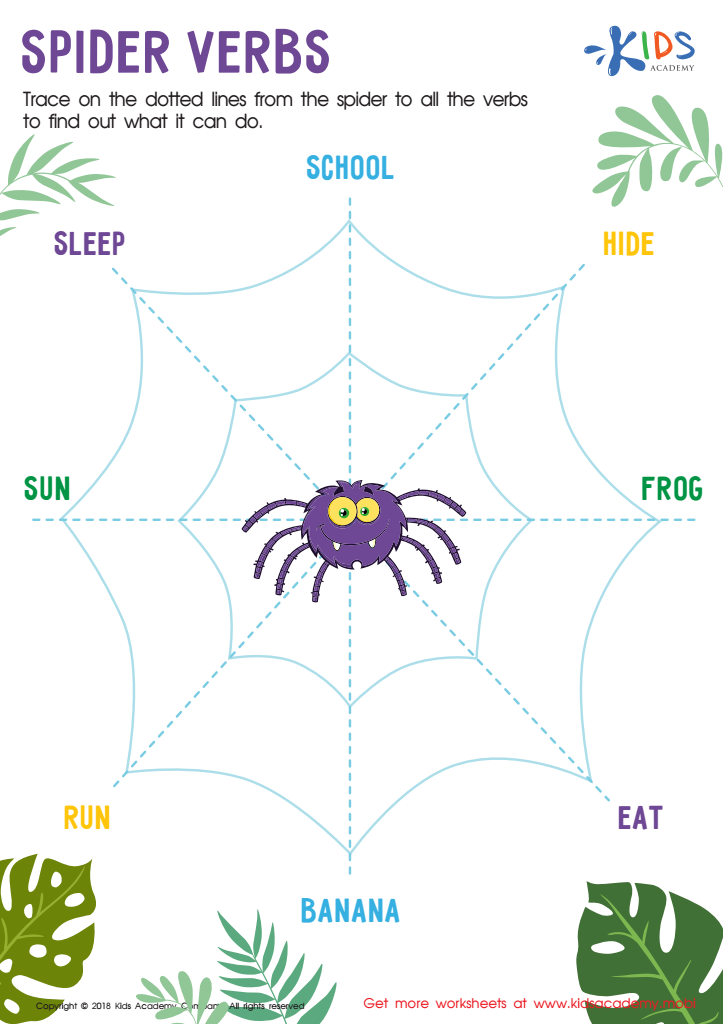
Spider Verbs Worksheet







Vocabulary development is crucial for children aged 5-8, as it lays the foundation for their reading and writing skills. At this age, children are exploring the world around them and learning to express their thoughts, emotions, and ideas through language. A rich vocabulary enhances their ability to comprehend stories, engage in discussions, and articulate their needs.
For parents and teachers, fostering vocabulary growth is essential for a child's academic success. Children with well-developed vocabularies tend to perform better in school, demonstrating greater reading comprehension and writing proficiency. This age is also when children begin to make connections between spoken and written language, benefiting greatly from diverse vocabulary exposure through conversations, books, and interactive activities.
Moreover, a strong vocabulary builds confidence, empowering children to communicate effectively with peers and adults. This can enhance social skills and emotional intelligence, as they learn to describe feelings and scenarios more accurately.
Lastly, vocabulary development support from adults can inspire a lifelong love for reading and learning. When teachers and parents actively engage children in vocabulary-building activities—such as storytelling, word games, and discussions—they help instill a curiosity about language that fuels motivation and academic progress as children grow.