Comparing shapes Worksheets for Ages 5-9
6 filtered results
-
From - To
Explore our engaging "Comparing Shapes Worksheets" designed specifically for children aged 5-9! These interactive resources make learning about shapes fun and accessible, helping young learners develop critical thinking and observational skills. Our worksheets feature a variety of activities that encourage kids to identify, compare, and contrast different shapes through colorful visuals and relatable scenarios. Perfect for both classroom and home learning environments, these worksheets promote shape recognition and enhance fine motor skills. With an array of exercises tailored to various learning levels, children will delight in discovering the unique attributes of shapes while building essential math foundations. Start comparing shapes today!
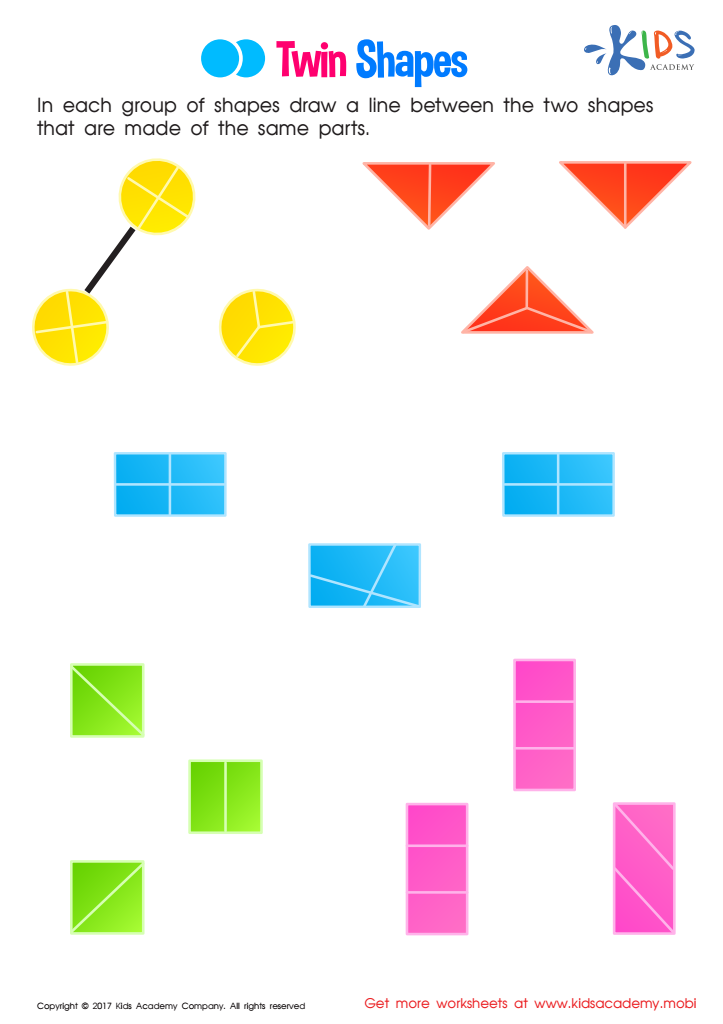
Twin Shapes Worksheet
 Assign to My Students
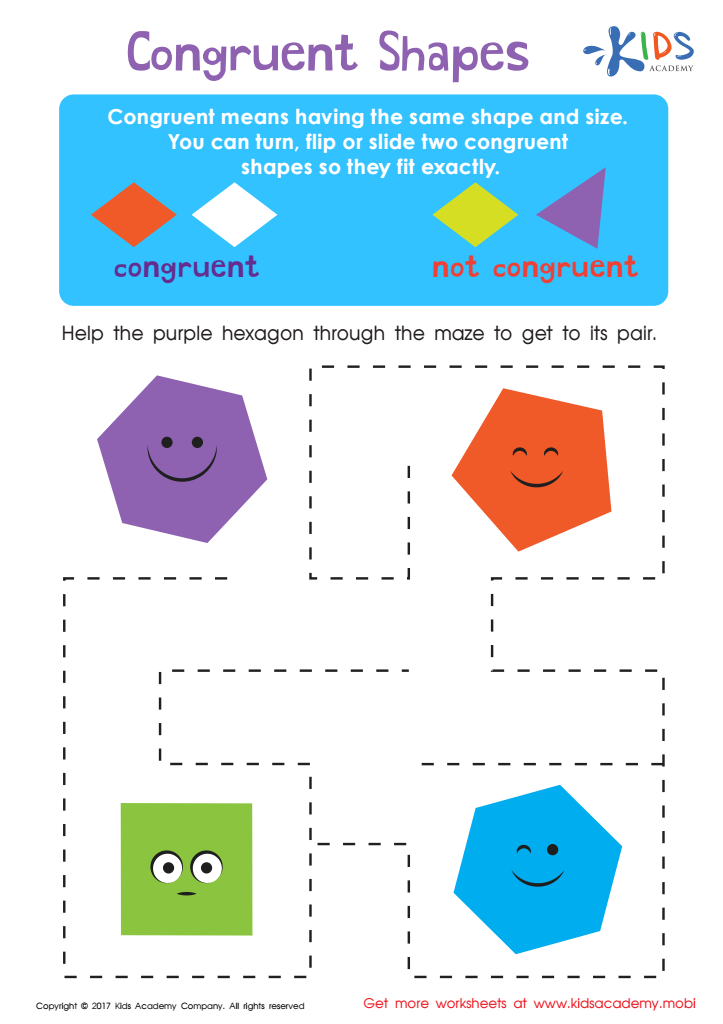
Congruent Shapes Worksheet
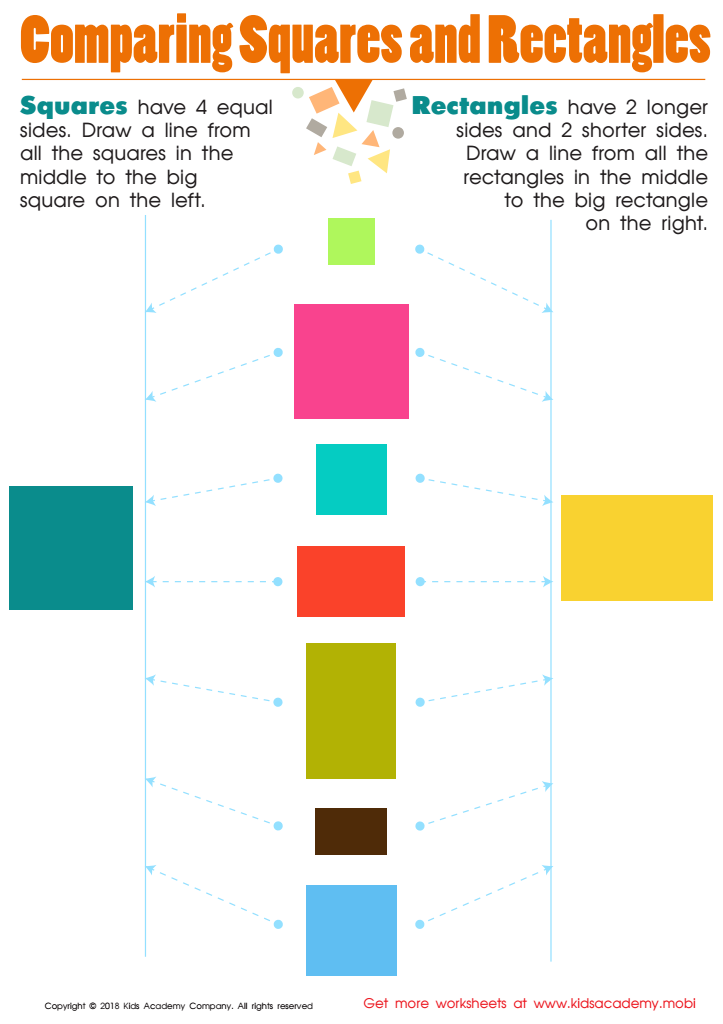
Comparing Squares Rectangles Worksheet
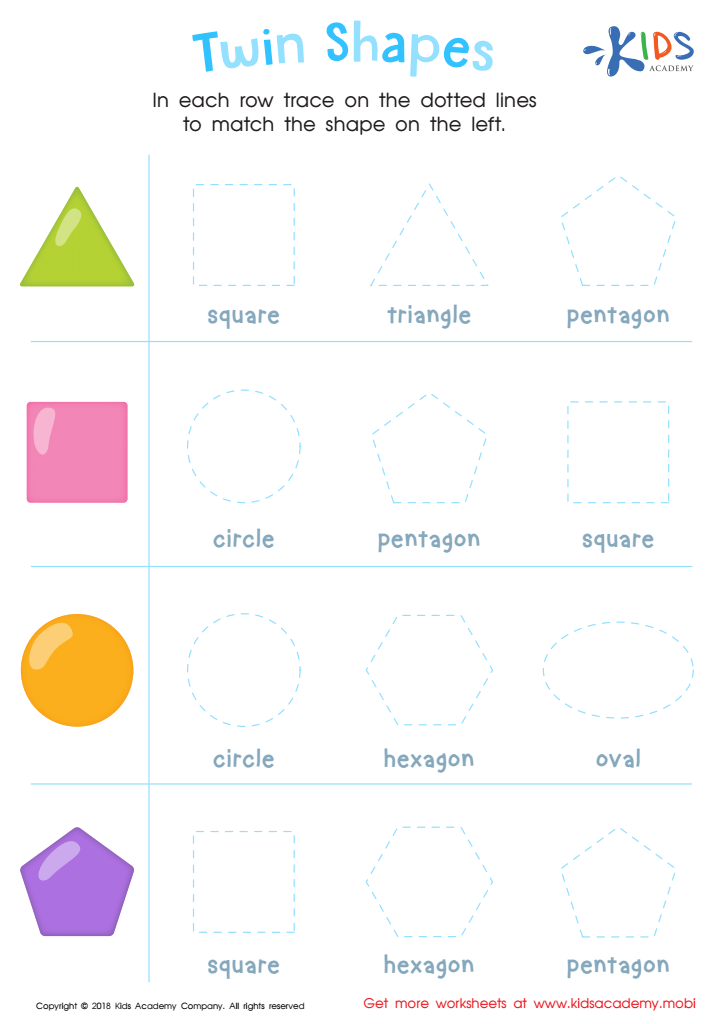
Twin Shapes Dot-to-Dot Worksheet


.jpg)





Comparing shapes is a fundamental skill for children aged 5-9 that sets the groundwork for more advanced mathematical reasoning. At this developmental stage, children are naturally curious and eager to explore their surroundings, making it an ideal time to introduce them to geometric concepts.
Understanding shapes and their attributes—such as size, symmetry, and the number of sides—helps children develop critical observation skills. By comparing shapes, they learn to recognize patterns and categorize objects, which enhances their problem-solving abilities. This activity also supports fine motor skills as children manipulate different shapes, fostering a hands-on learning experience.
Moreover, comparing shapes is not just about math; it integrates art and science, allowing children to appreciate beauty and design in the world around them. This holistic approach nurtures creativity while laying a foundation for logical thinking.
Parental and educational support in this area can significantly boost a child's confidence in tackling more complex mathematical concepts later, such as measurement and spatial reasoning. Ultimately, engaging in activities that involve comparing shapes cultivates a love for learning and an appreciation for the world, making it a vital component of early education.








