
Interpreting information Worksheets for Ages 5-9
3 filtered results
Difficulty Level
Grade
Age
-
From - To
Subject
Activity
Standards
Discover our engaging "Interpreting Information Worksheets" designed specifically for children ages 5-9. These worksheets are perfect for developing vital reading comprehension and analytical skills. Featuring a variety of fun and interactive activities, children will learn how to interpret graphs, read short passages, and understand charts. Each worksheet encourages critical thinking and helps young learners gain confidence in processing information. Ideal for classroom settings or at-home learning, our resources are crafted to make learning enjoyable while building essential skills. Dive into our collection today and watch your child's ability to interpret and analyze information flourish!
Favorites
With answer key
Interactive
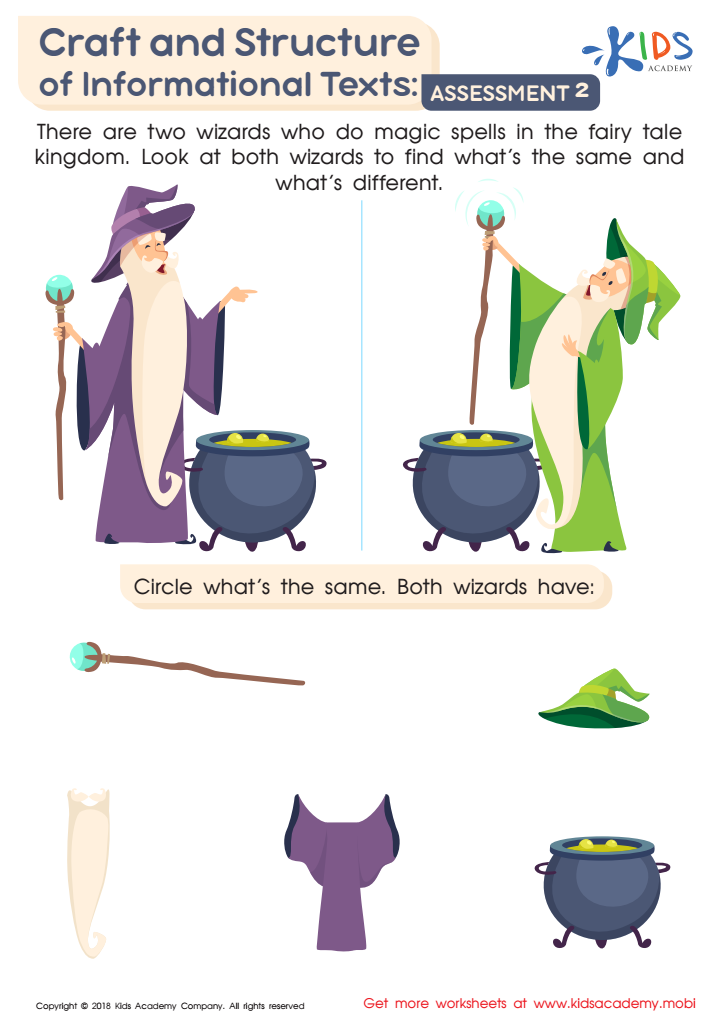
Craft and Structure of Informational Texts: Assessment 2 Worksheet
This assessment has kids looking at two similar fairy tale wizards, focusing on their visuals to find the similarities and differences. Then, they'll circle the things they both have. It's a great way to help children hone their detail-oriented comprehension skills, which is essential when using informational texts.
 Assign to My Students
Craft and Structure of Informational Texts: Assessment 2 Worksheet
Worksheet
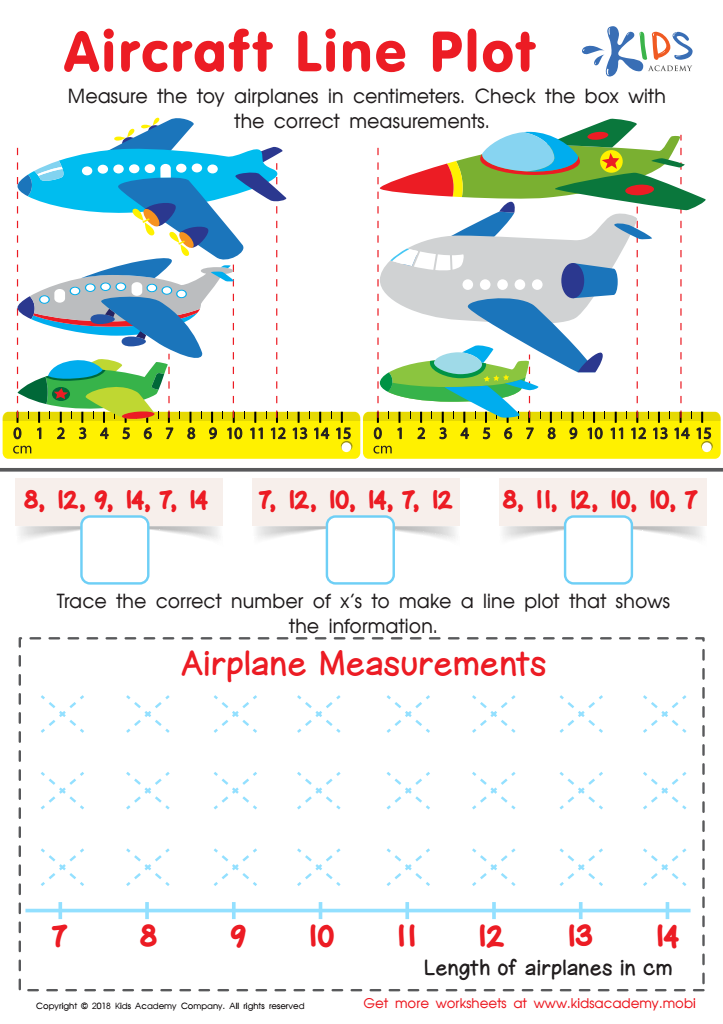
Aircraft Line Plot Worksheet
If your kids are aviation enthusiasts, they'll love this worksheet! Look at the picture with them, then ask them to measure the toy planes in cm. Check the box with the right measurements and then trace the x's to make a line plot with the data.
Aircraft Line Plot Worksheet
Worksheet
Join Kids Academy for Free
Who is primarily going to use this learning content?






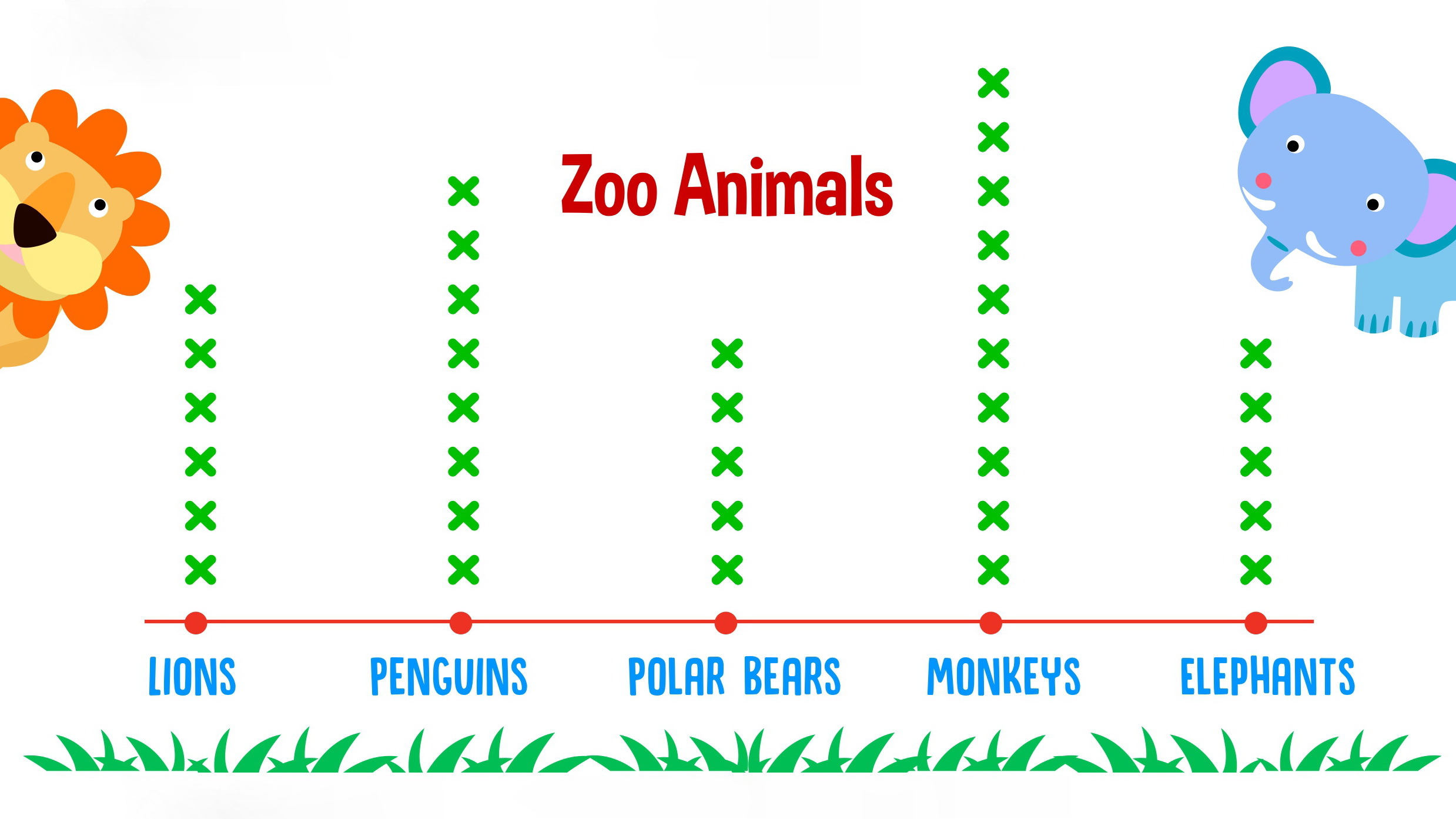
Interpreting information is a fundamental skill that lays the groundwork for a child’s academic and personal growth, particularly for ages 5-9. During these formative years, children are rapidly developing cognitive abilities, and they begin to understand the world around them through text, images, and spoken words. Parents and teachers play a crucial role in guiding this development by encouraging critical thinking and comprehension skills.
When children learn to interpret information, they develop the ability to analyze, evaluate, and make sense of various messages. This skill empowers them to approach tasks and challenges with confidence, fostering independence and resilience. For example, a child who can interpret a story’s message is better equipped to relate it to their own experiences, enhancing emotional intelligence and empathy.
Additionally, exposure to diverse sources of information helps children build a well-rounded worldview. This foundational ability can boost literacy skills, improve communication and academic success, and prepare them to navigate an increasingly complex society.
By prioritizing interpretation skills, parents and teachers can inspire a love for learning, encourage curiosity, and prepare children to become informed, engaged citizens. Investing in these skills during early childhood ensures a brighter future for both the individual and society as a whole.








