Phonological awareness Worksheets for Ages 5-9
11 filtered results
-
From - To
Unlock your child's potential with our engaging Phonological Awareness Worksheets designed for ages 5-9! These thoughtfully crafted resources help young learners develop essential foundational skills, such as rhyming, syllable counting, and sound recognition. Tailored to enhance literacy, our worksheets make learning fun and interactive, fostering a love for reading from an early age. Parents and educators will find age-appropriate activities that cater to various learning styles, supporting each child's unique journey. Empower your student to build confidence in their reading abilities and improve their overall language skills. Start exploring our phonological awareness worksheets today and watch your child thrive!
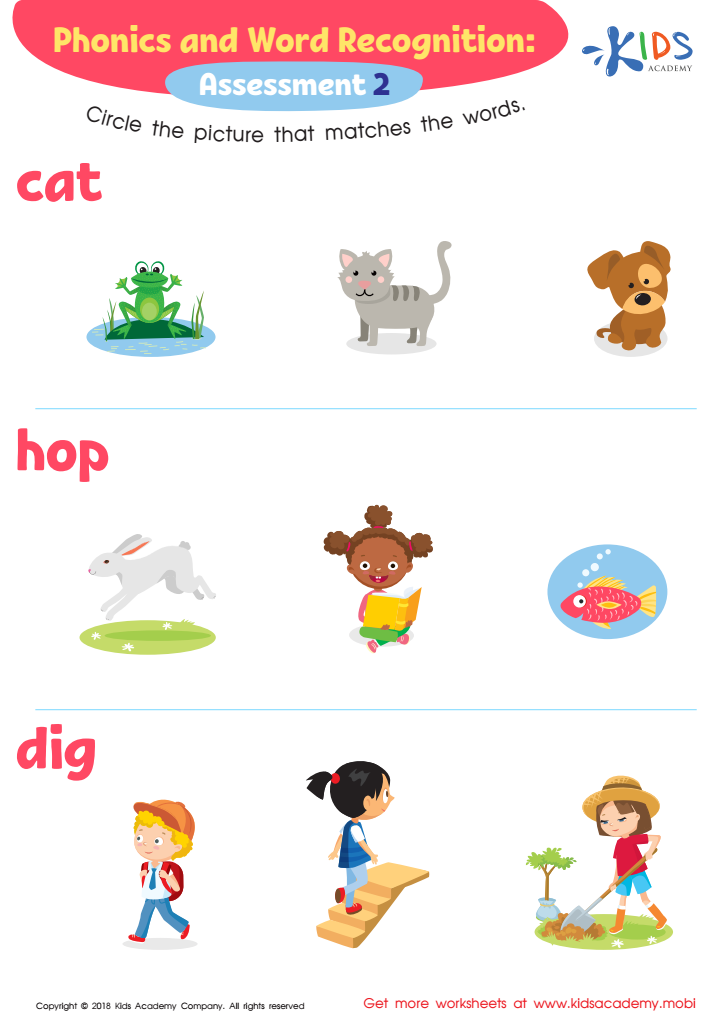
Phonological Awareness: Assessment 2 ELA Worksheet
 Assign to My Students
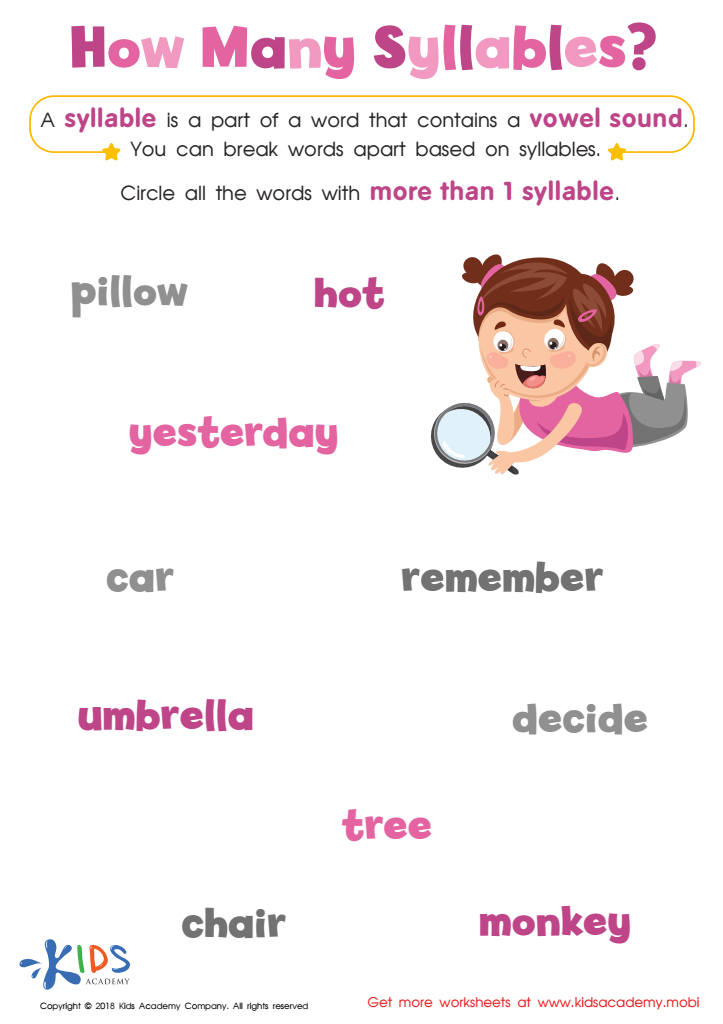
Reading: How Many Syllables Worksheet
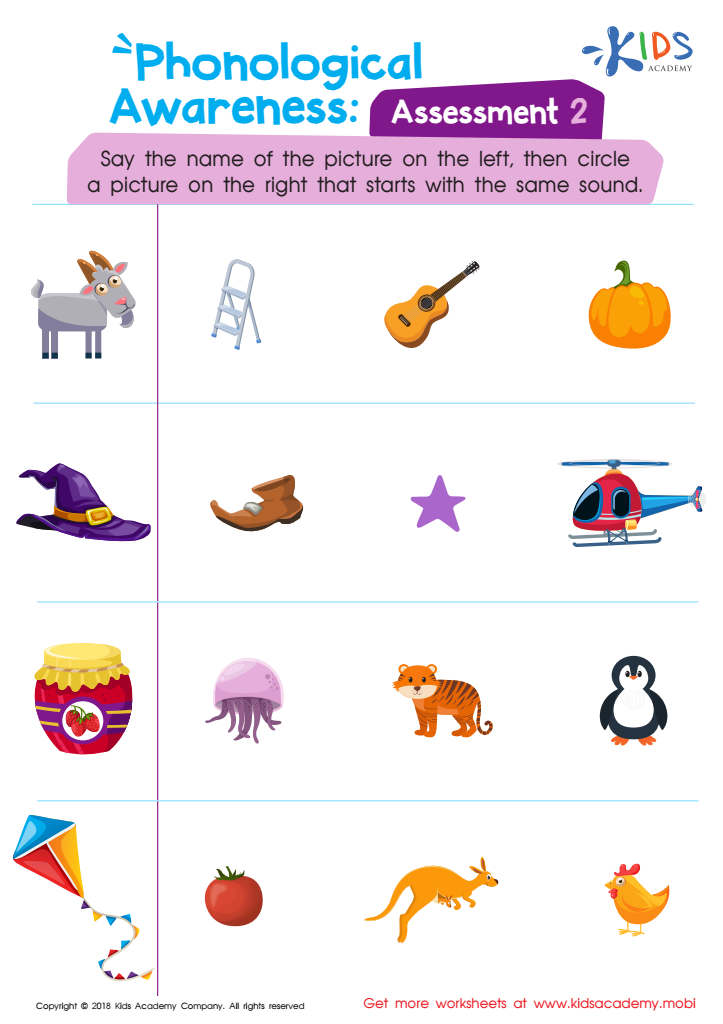
Phonological Awareness: Assessment 2 Worksheet
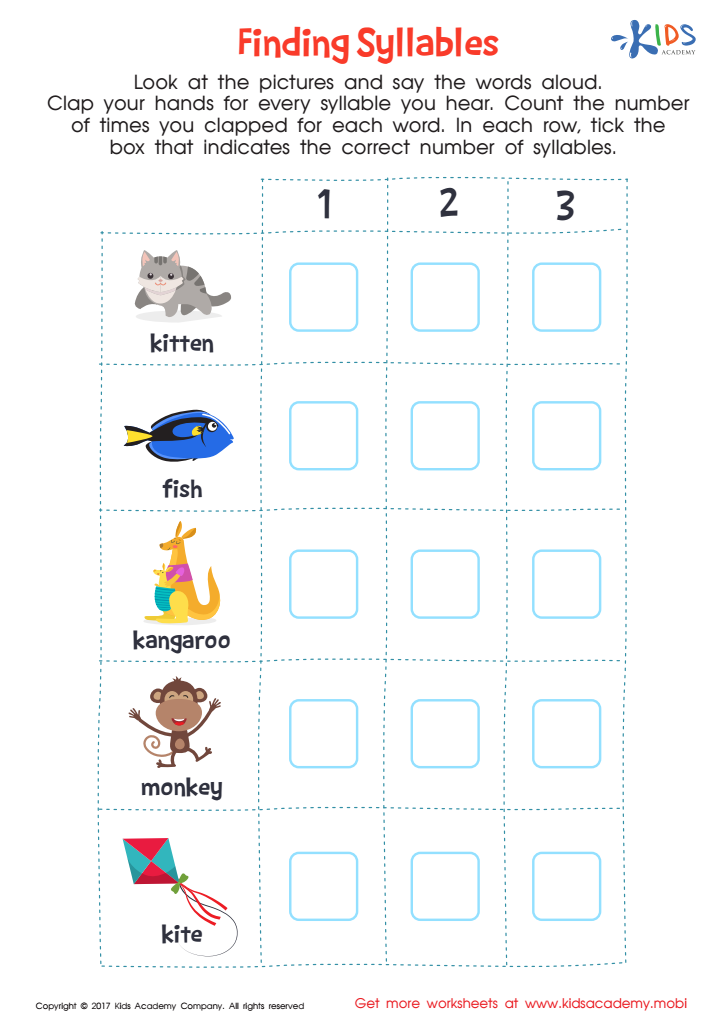
Finding Syllables Word Structure Worksheet
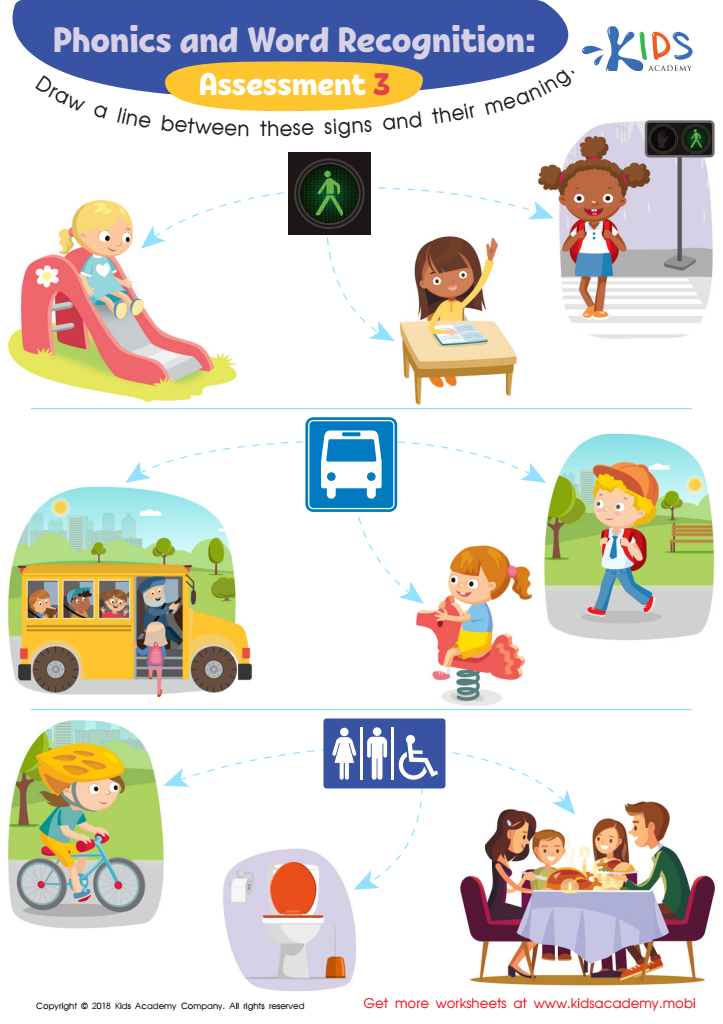
Phonological Awareness: Assessment 3 ELA Worksheet
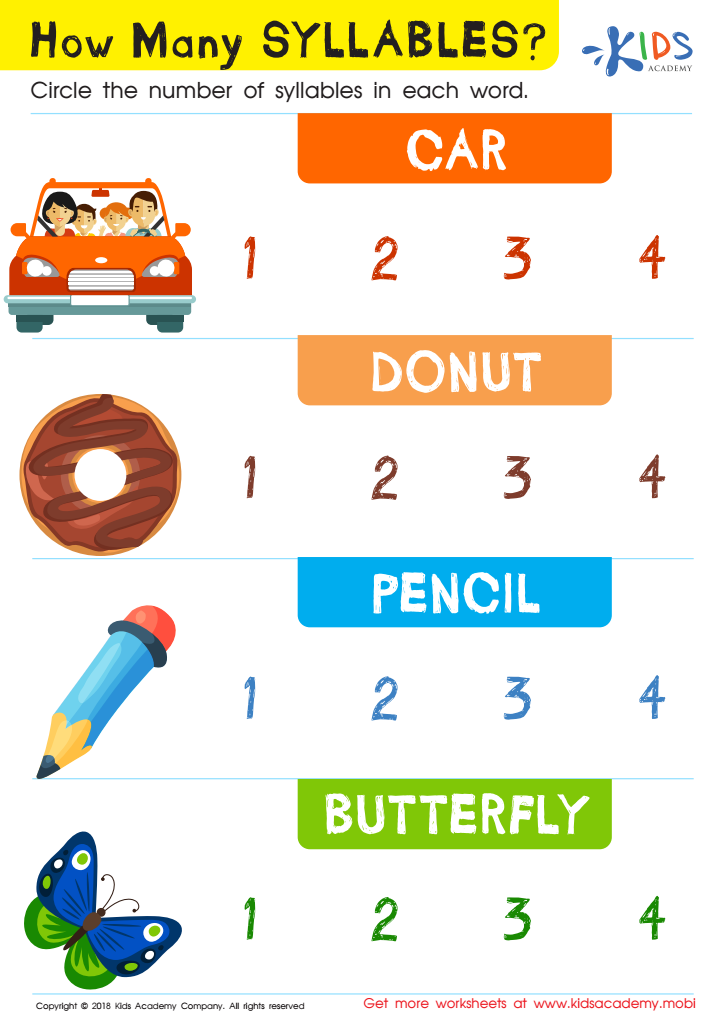
How Many Syllables? Worksheet
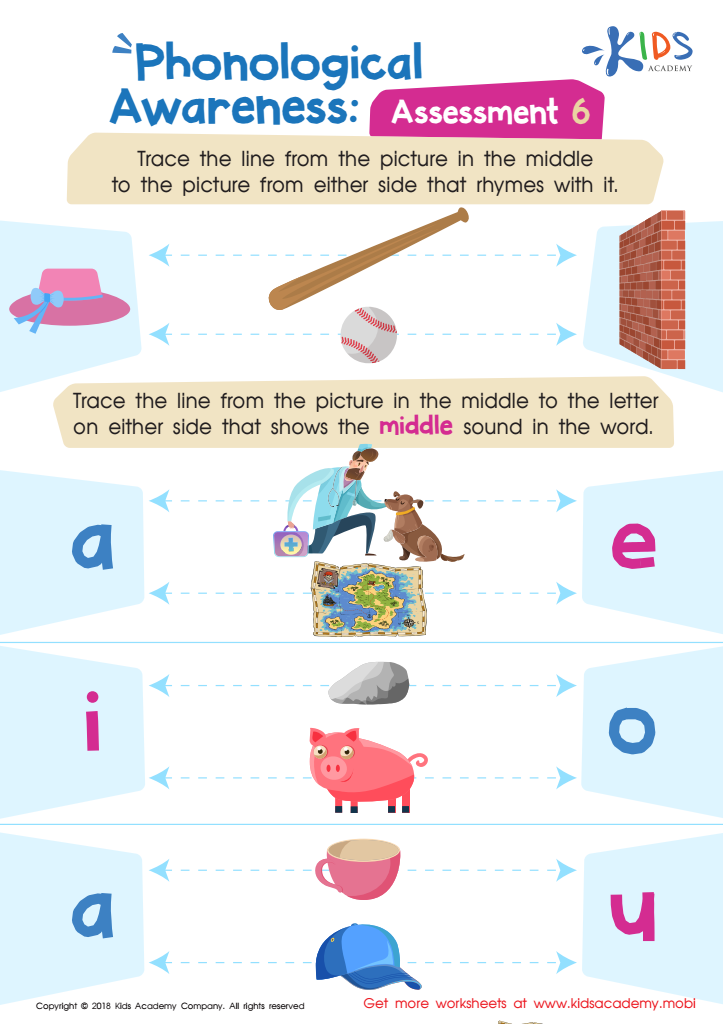
Phonological Awareness: Assessment 6 Worksheet
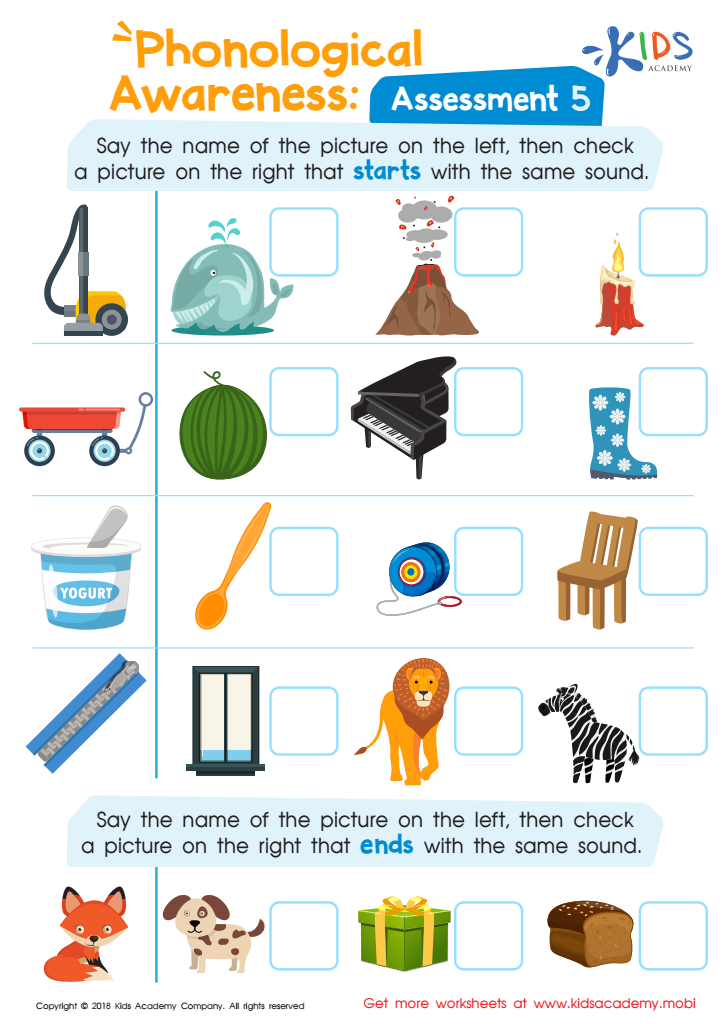
Phonological Awareness: Assessment 5 Worksheet
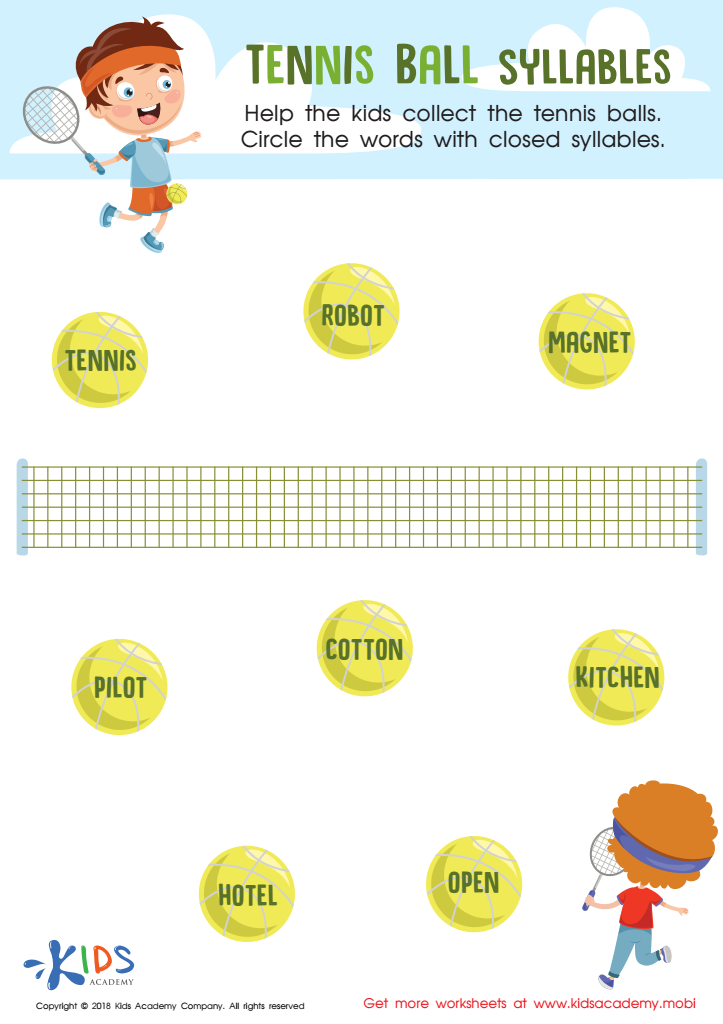
Tennis Ball Syllables Worksheet
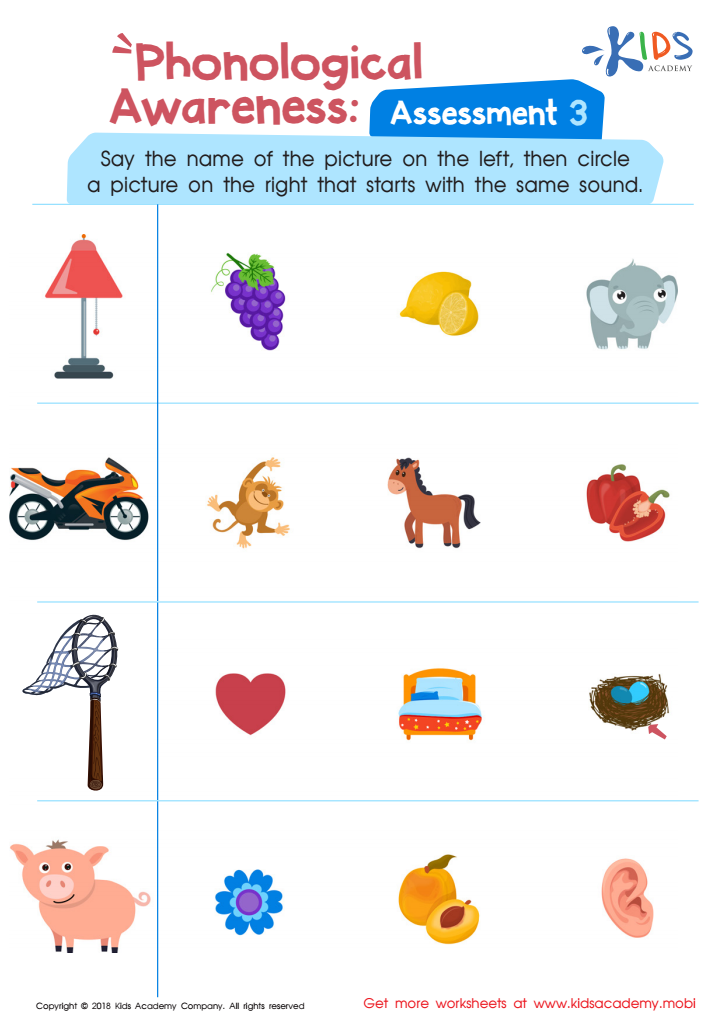
Phonological Awareness: Assessment 3 Worksheet
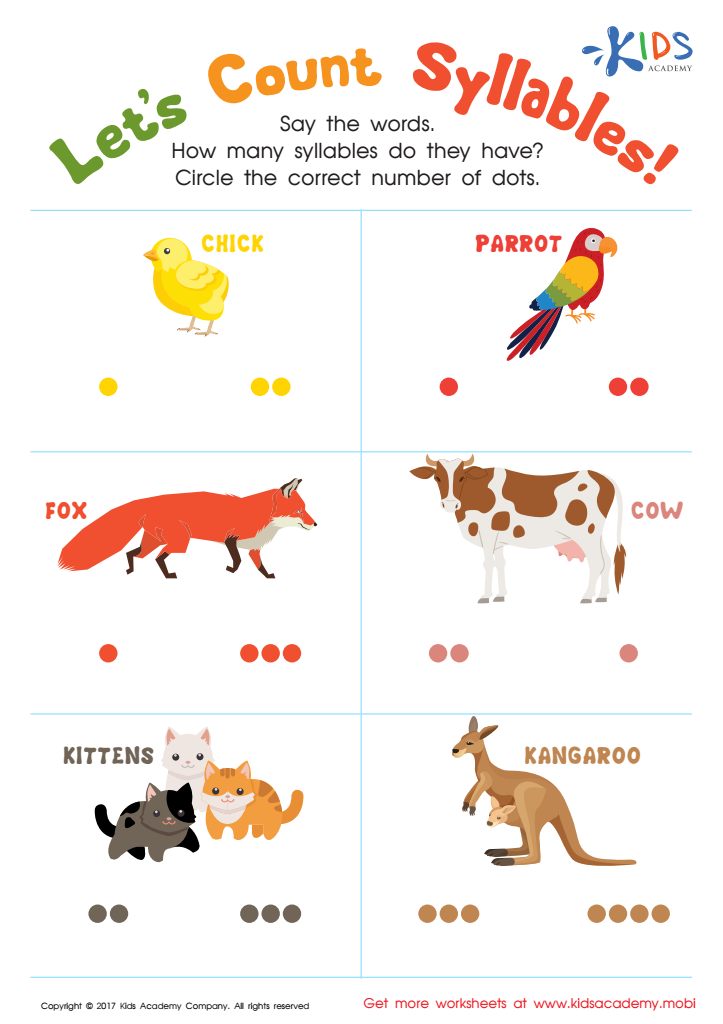
Lets Count Syllables Worksheet








Phonological awareness is a crucial skill for children aged 5-9, as it lays the foundation for successful reading and writing. This ability to recognize and manipulate the sounds in spoken words helps children understand the relationship between sounds and the letters that represent them, which is vital for decoding unfamiliar words. Parents and teachers should care about phonological awareness for several reasons.
First, children with strong phonological awareness often show greater success in learning to read, which boosts their academic confidence and performance across subjects. This foundational skill enables them to tackle more complex tasks as they progress in school.
Additionally, phonological awareness is linked to overall language development. It enhances children's verbal skills, vocabulary, and comprehension, making it a critical component of effective communication. Furthermore, by actively engaging in phonological awareness activities—such as rhyming games and sound manipulation—parents and teachers can nurture a love for language and foster a positive learning environment.
Investing time in phonological awareness during these early years sets the stage for lifelong literacy skills, reducing the risk of reading difficulties and ensuring that children are better prepared for academic challenges ahead. By prioritizing these skills, parents and teachers empower children to become successful learners.








