
Shape identification Worksheets for Ages 5-9
40 filtered results
Difficulty Level
Grade
Age
-
From - To
Subject
Activity
Standards
Our Shape Identification Worksheets for ages 5-9 are designed to make learning fun and engaging. These educational resources help kids recognize and identify various shapes, enhancing their spatial awareness and fine motor skills. Featuring vibrant images and interactive activities, our worksheets cover fundamental shapes like circles, squares, and triangles, as well as more complex figures like hexagons and octagons. Perfect for classroom use or at-home practice, these worksheets offer a blend of puzzles, matching games, and coloring sheets to keep young learners interested and motivated. Boost your child's geometry skills and build a strong foundation for future math success.
Favorites
With answer key
Interactive
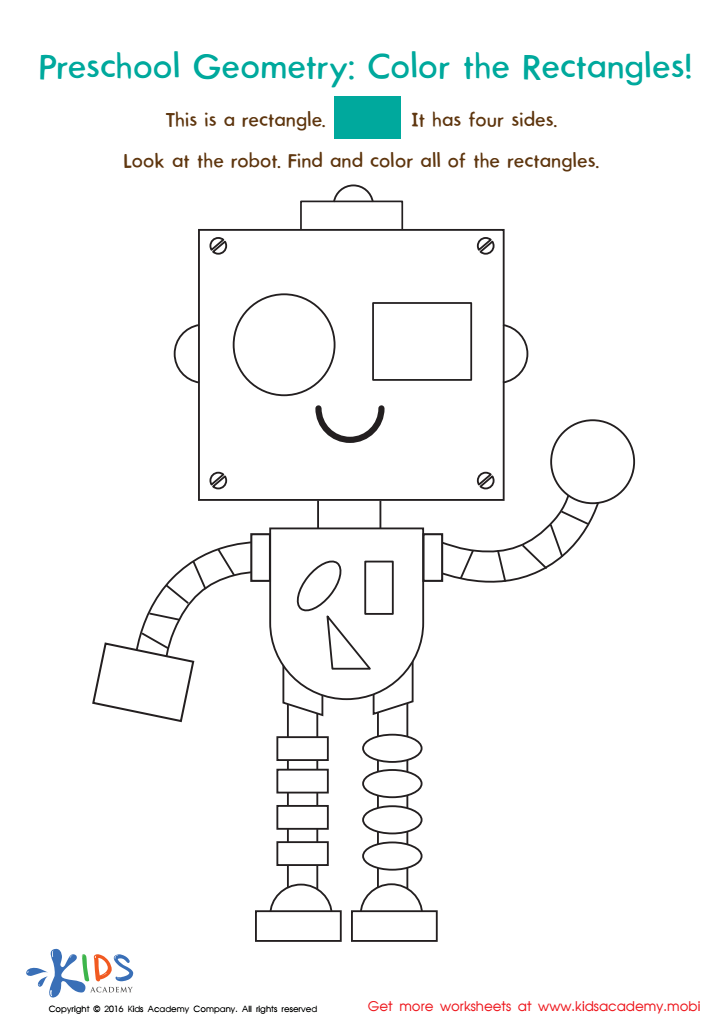
Geometry Worksheet
Geometry can be fun for kids! They explore shapes that create their favorite pics and objects. This preschool worksheet explains that rectangles have four sides, then kids color rectangles on a funny robot!
 Assign to My Students
Geometry Worksheet
Worksheet
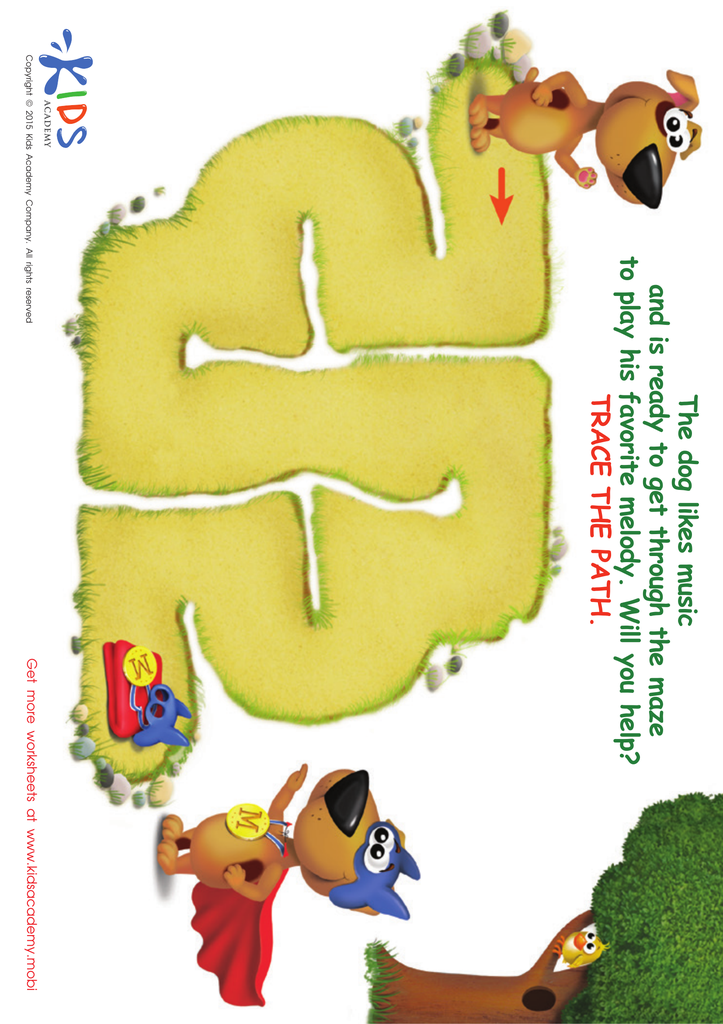
Superman Maze Worksheet
Kids can help a dog get to the superhero uniform by tracing the path through the maze. It's fun and helps develop handwriting skills. Get more free printable mazes at Kids Academy!
Superman Maze Worksheet
Worksheet
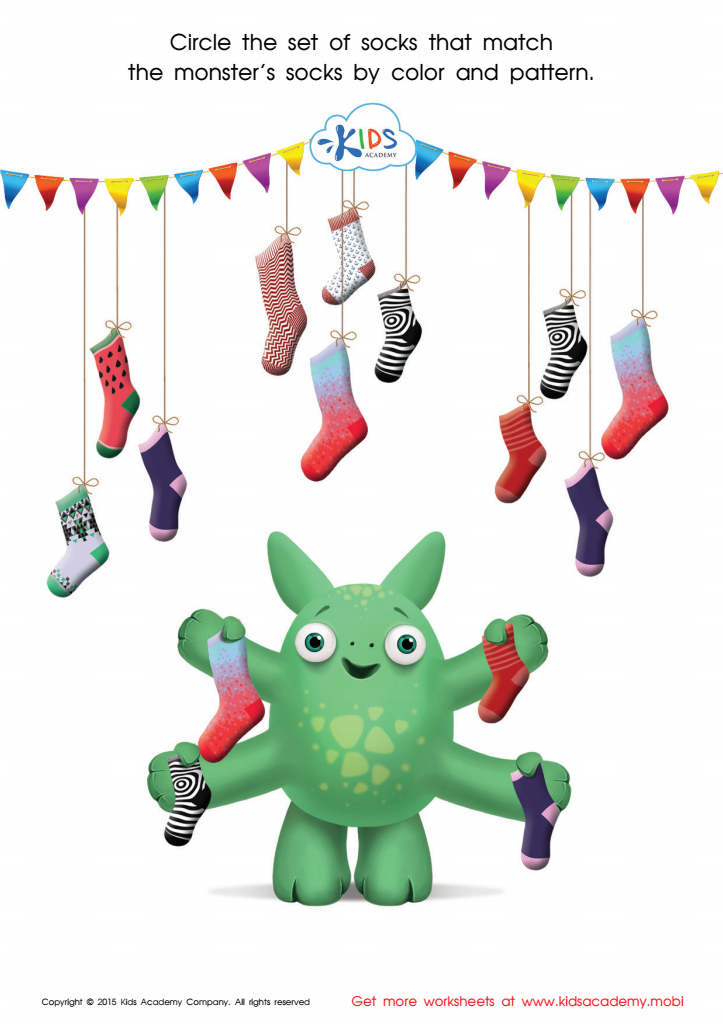
Sort the Monster's Socks Worksheet
Let your little one challenge herself and practice with matching Monster socks. She must be very attentive to match the same socks and draw a line connecting them!
Sort the Monster's Socks Worksheet
Worksheet
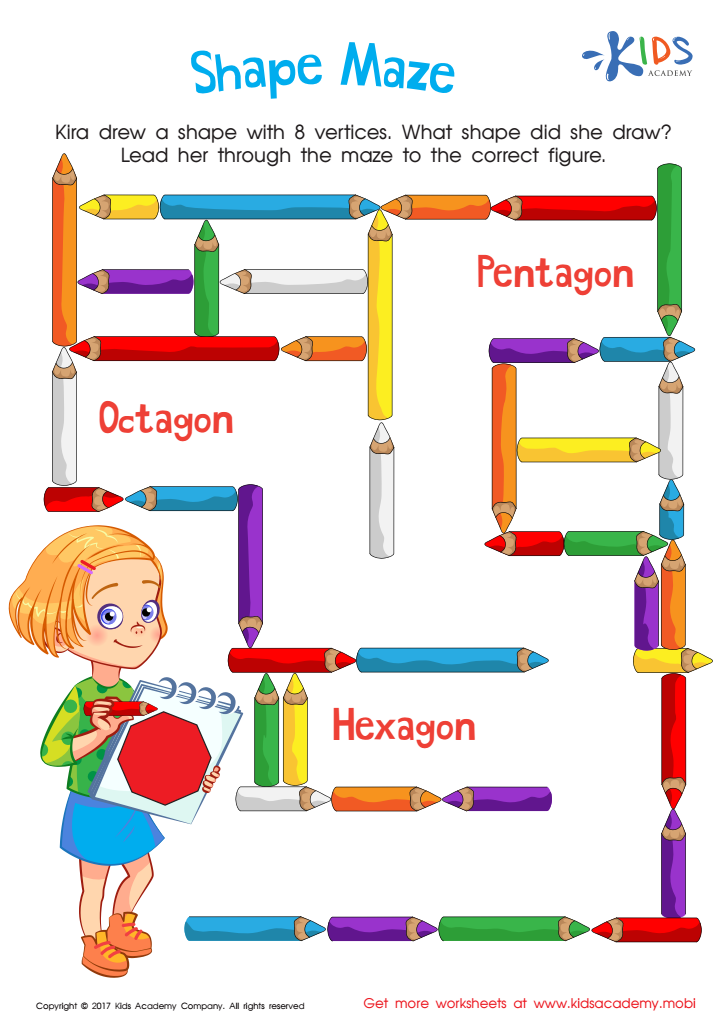
Shape Maze Worksheet
Test your child's geometry knowledge with this fun printable maze! They'll need to identify shapes with 8 vertices to find their way through the maze and get the correct answer.
Shape Maze Worksheet
Worksheet
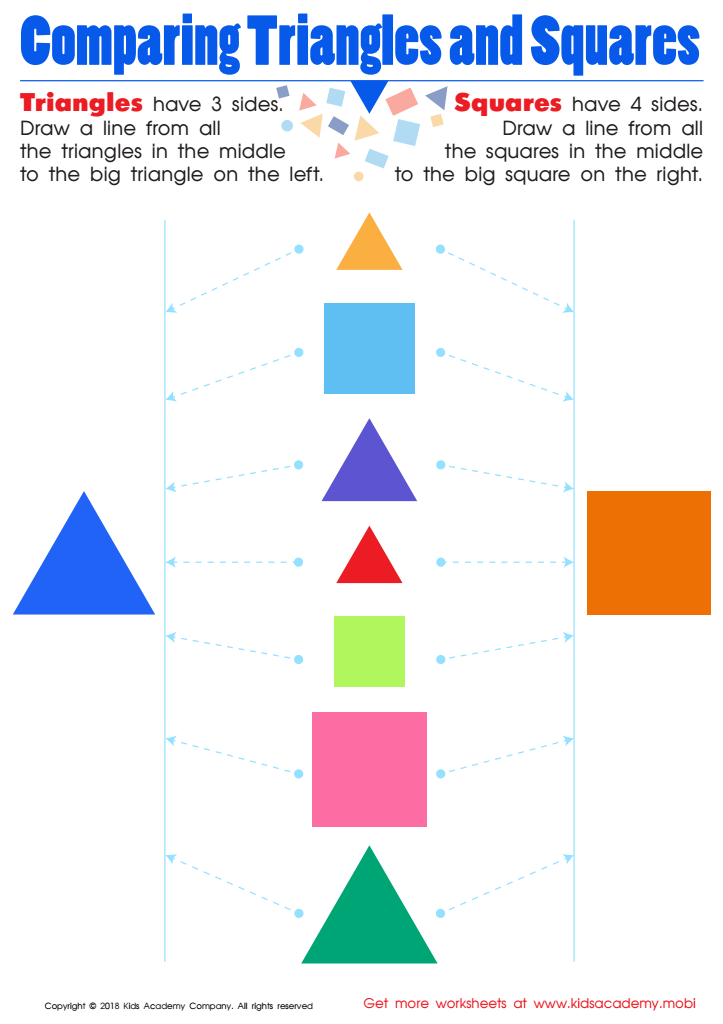
Comparing Triangles Squares Worksheet
Squares and triangles are different in the number of sides they have. Challenge kids to compare them with this fun worksheet! Read the descriptions at the top, then use the left and right shapes to match up the middle ones. Go down the page, joining the middle shapes to the side using the dotted lines!
Comparing Triangles Squares Worksheet
Worksheet
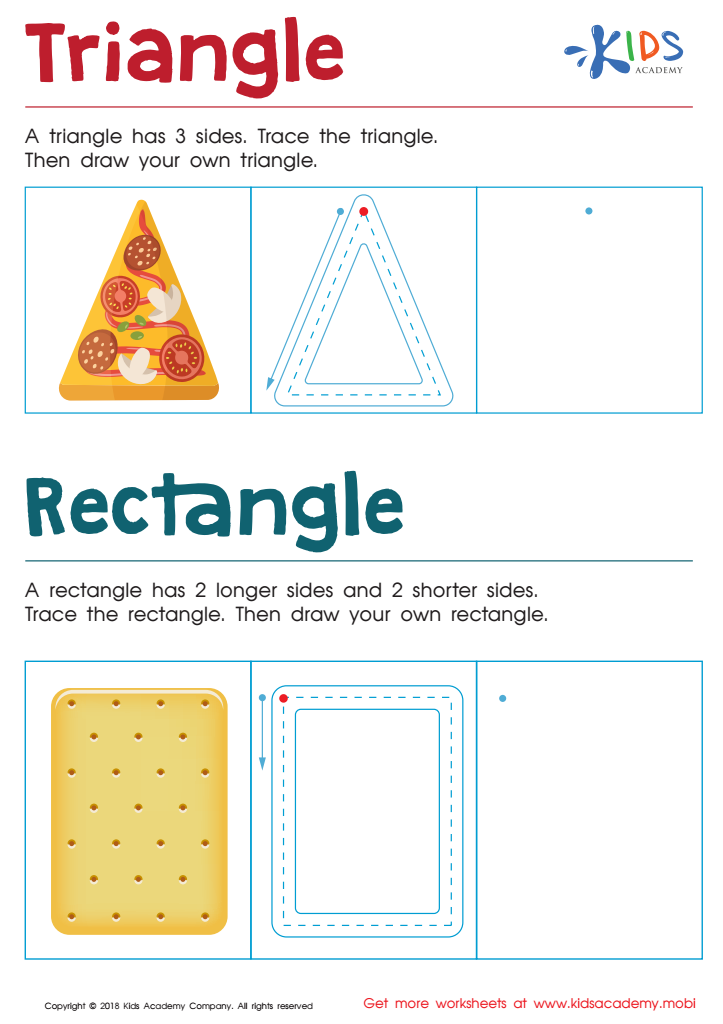
Triangle Rectangle Worksheet
This printable worksheet helps kids draw rectangles and triangles. Have your child trace the pizza and cracker shapes to become familiar, then try their own. Perfect for second graders! Coloring and creativity make this fun and educational.
Triangle Rectangle Worksheet
Worksheet
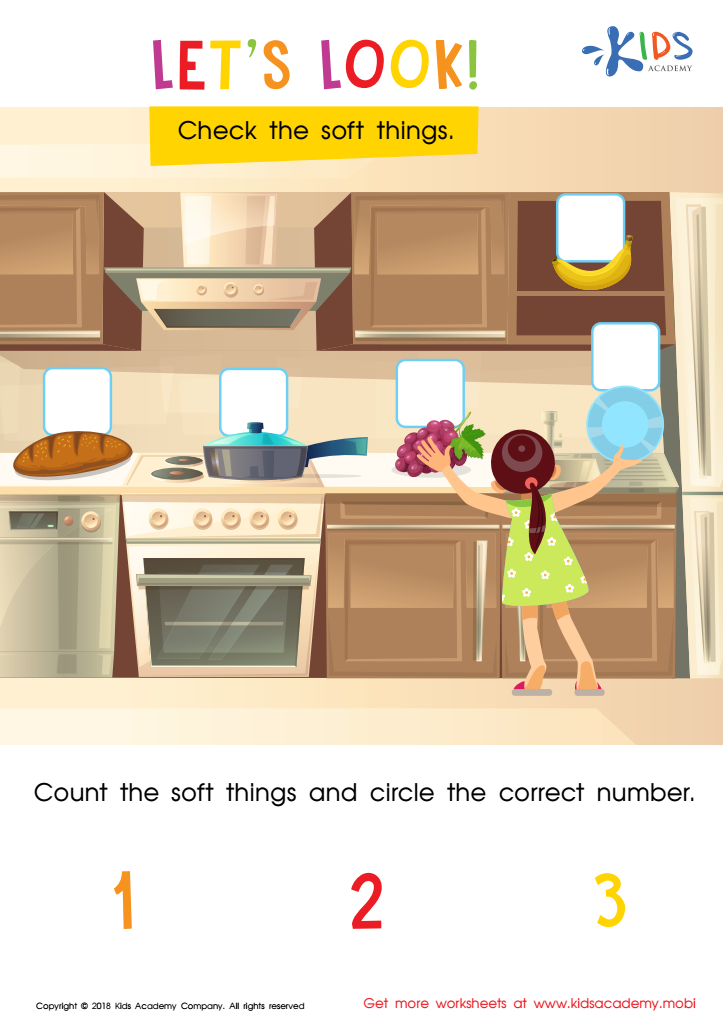
Let's Look! Assessment Worksheet
Have your child look at the picture in the printout and name the objects. Ask which ones are soft and hard and have them count the soft objects and circle the number. This worksheet will engage your child's thinking and teach them about texture.
Let's Look! Assessment Worksheet
Worksheet
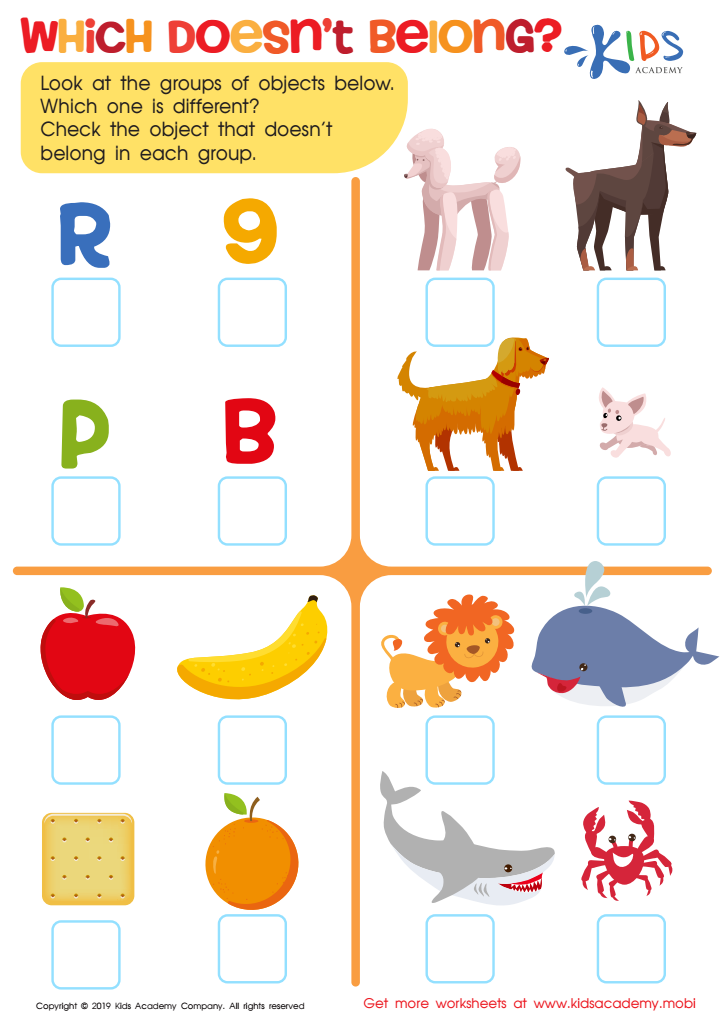
Which Doesn't Belong? Worksheet
This engaging worksheet helps preschoolers recognize similar and different attributes of common words, using brightly-colored pictures. They analyze the items in each category and check off what is different. For extra practice, have them explain their reasoning verbally! Sorting and classifying are important skills to learn.
Which Doesn't Belong? Worksheet
Worksheet
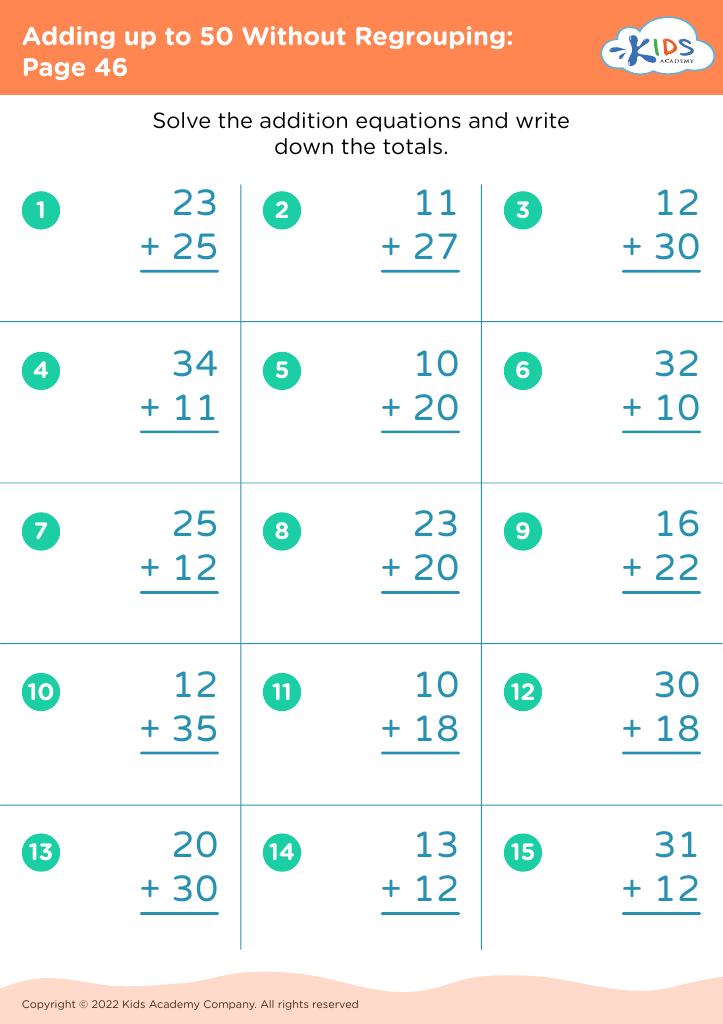
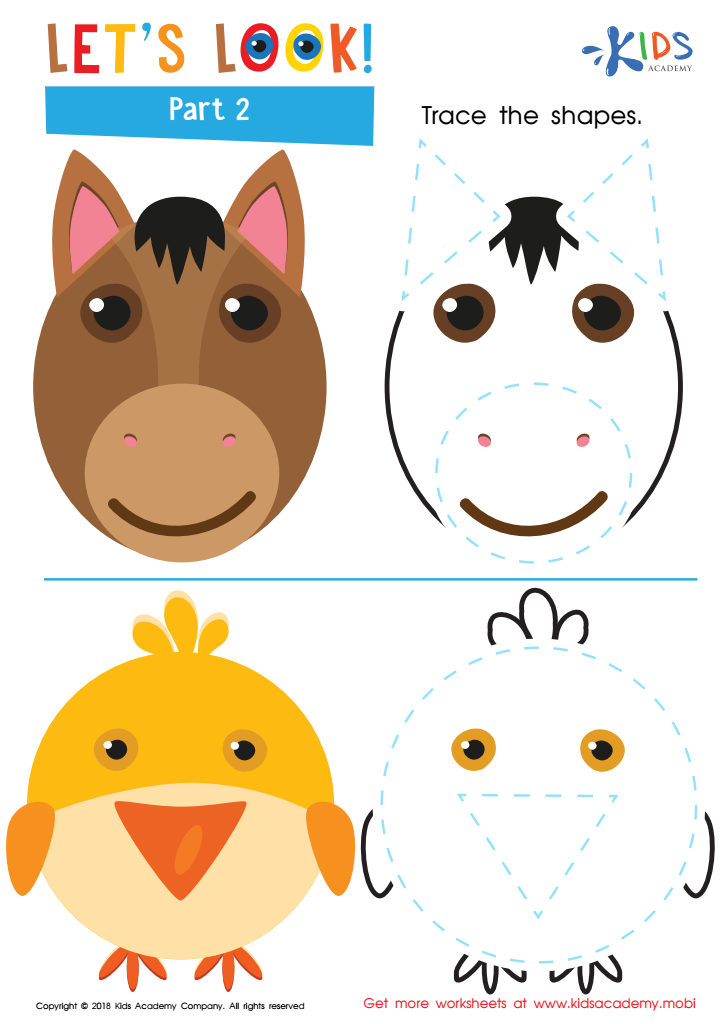
Let's Look! Part 2 Worksheet
This tracing sheet helps your little ones develop their skills. Ask them to identify the animals, then trace the shapes in the space provided, following the dotted lines. It's a simple task that can help them grow and have fun!
Let's Look! Part 2 Worksheet
Worksheet
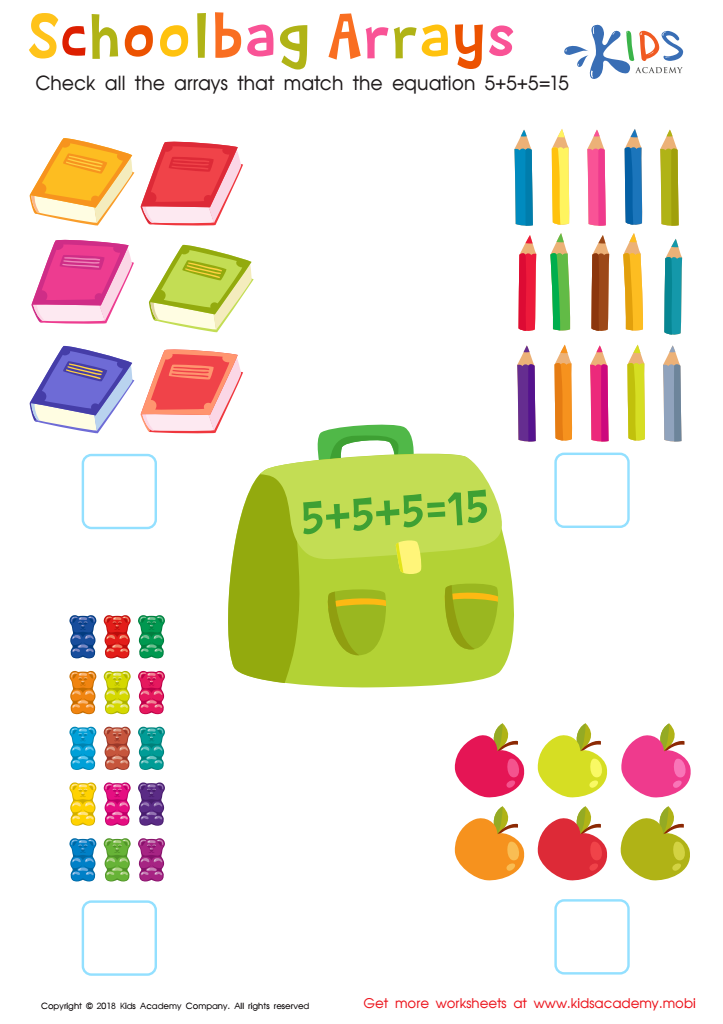
Schoolbag Arrays Worksheet
Help your child spot the correct arrays in this worksheet: having them count the items in each and check the boxes for the ones with 15 objects. Ask them to differentiate between rows and columns and explain which ones match the equation 5+5+5=15.
Schoolbag Arrays Worksheet
Worksheet
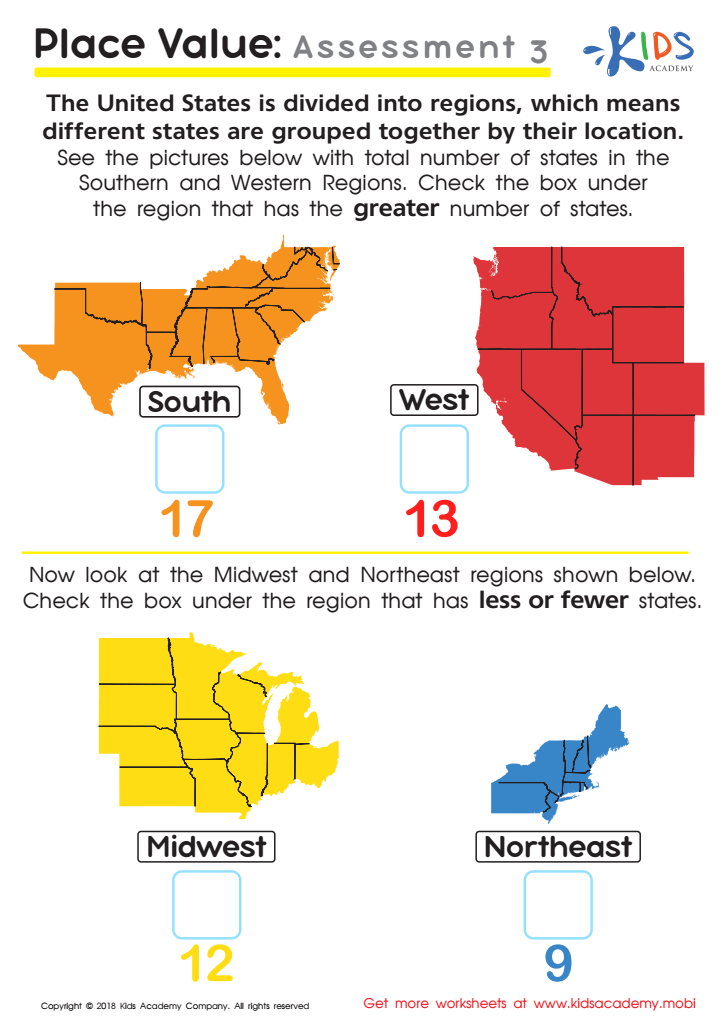
Place Value: Assessment 3 Worksheet
Test your child's math skills without them realizing it! This fun worksheet looks at the states and regions of the U.S. and your child can compare numbers greater or lesser than the other. It's the perfect way to assess your child's number sense without them knowing.
Place Value: Assessment 3 Worksheet
Worksheet
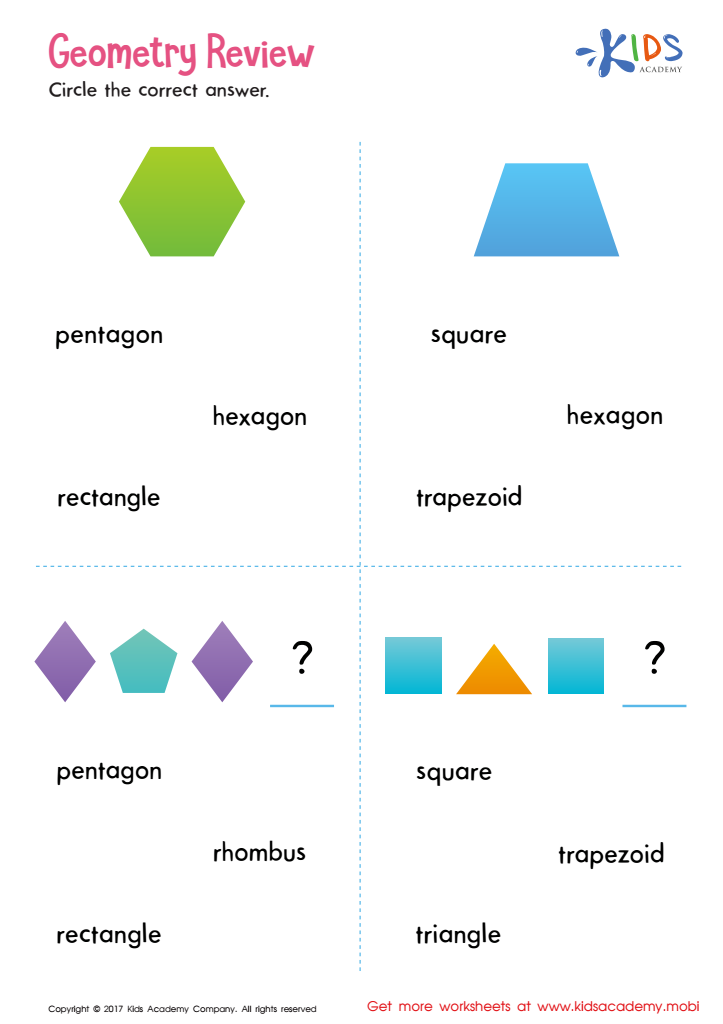
Geometry Review Printable
Repetition is key to success; give your child the practice they need with this geometry worksheet.
Geometry Review Printable
Worksheet
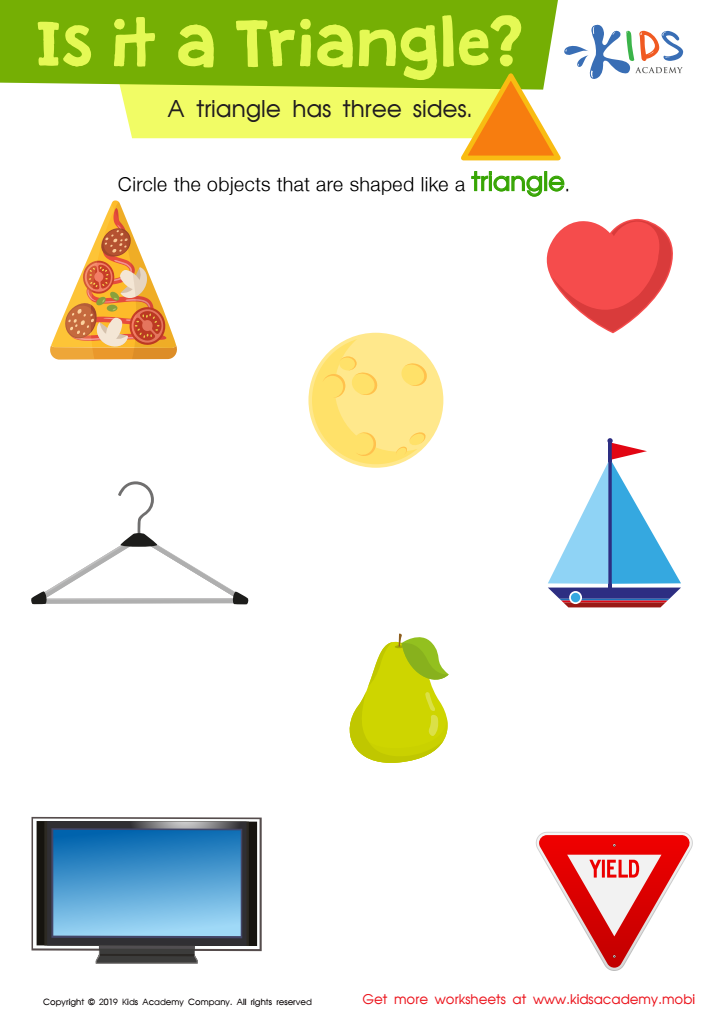
Is It a Triangle? Worksheet
Young kids need to learn to identify basic shapes for math. Show them what a triangle looks like with this fun worksheet. They can look around their environment for everyday objects shaped like a triangle and circle them on the sheet. Download now and start learning what a triangle is!
Is It a Triangle? Worksheet
Worksheet
Join Kids Academy for Free
Who is primarily going to use this learning content?


.jpg)





Shape identification is a foundational skill that serves as a crucial building block for a child's cognitive and academic development, particularly in early childhood education for ages 5-9. Understanding shapes is not just about recognizing and naming circles, squares, or triangles; it plays a pivotal role in various learning areas.
Firstly, shape identification enhances spatial awareness and geometry skills. When children learn to distinguish between different shapes, they develop the ability to understand and navigate the space around them, which is essential for tasks ranging from simple puzzles to more complex math problems later on.
Moreover, shapes help in honing visual discrimination—a critical pre-reading skill. Recognizing the differences between shapes prepares children to notice distinctions in letters and numbers, thus supporting early literacy and numeracy.
Incorporating shape recognition into activities also fosters fine motor skills. Tracing, drawing, and constructing shapes improve hand-eye coordination, which is vital for writing and other daily tasks.
Furthermore, learning shapes can spark creativity. Whether through art, building blocks, or games, children engage their imagination while reinforcing their knowledge.
Parents and teachers should emphasize shape identification to support holistic development. This foundational understanding equips children with the skills they need for future academic success and enhances their ability to interact effectively with the world around them.








