Comparing shapes 2D Shapes Worksheets for Ages 5-9
4 filtered results
-
From - To
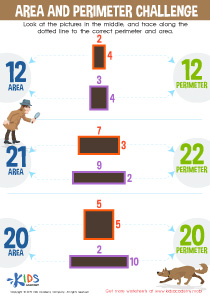
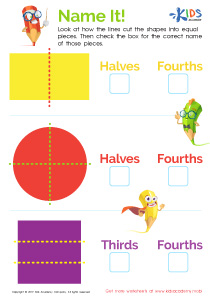
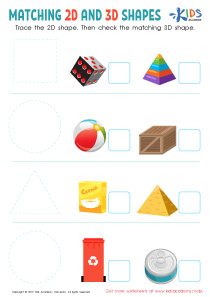
Explore our engaging "Comparing 2D Shapes Worksheets" designed for children aged 5-9! These interactive activities help young learners identify, compare, and differentiate various two-dimensional shapes. Our worksheets present a fun way to develop critical thinking and observational skills as kids visually segment and compare shapes like squares, circles, triangles, and rectangles. Perfect for classrooms or home learning, these resources encourage creativity and enhance mathematical understanding. With vibrant visuals and age-appropriate challenges, students will enjoy mastering shape comparison while building a solid foundation for future math concepts. Start your journey with our comprehensive collection of shape worksheets today!
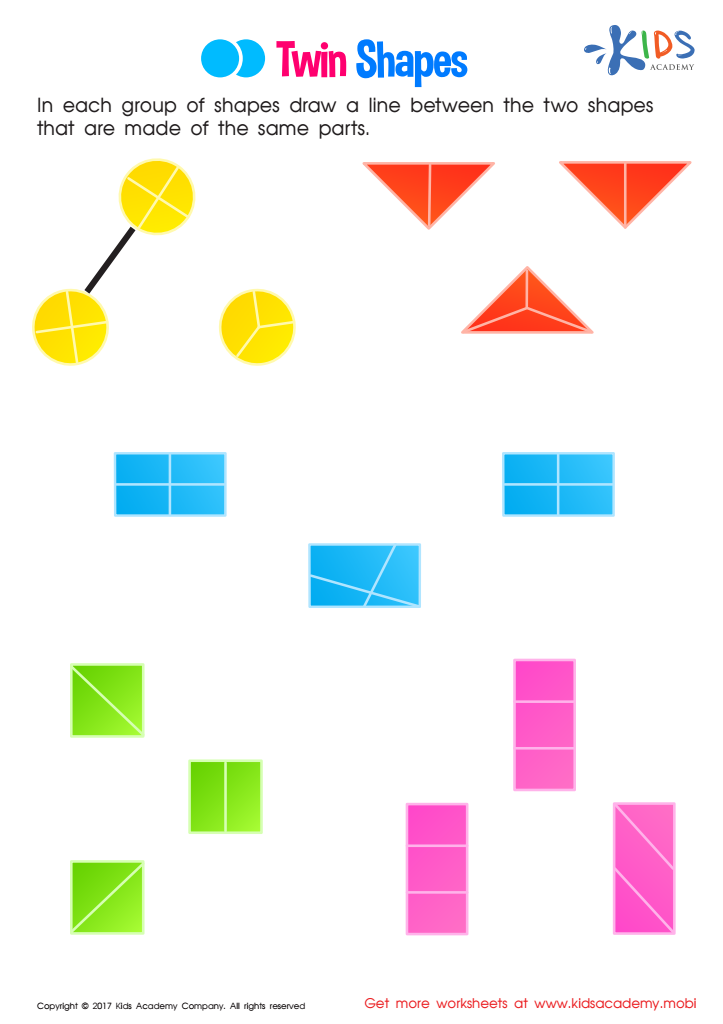
Twin Shapes Worksheet
 Assign to My Students


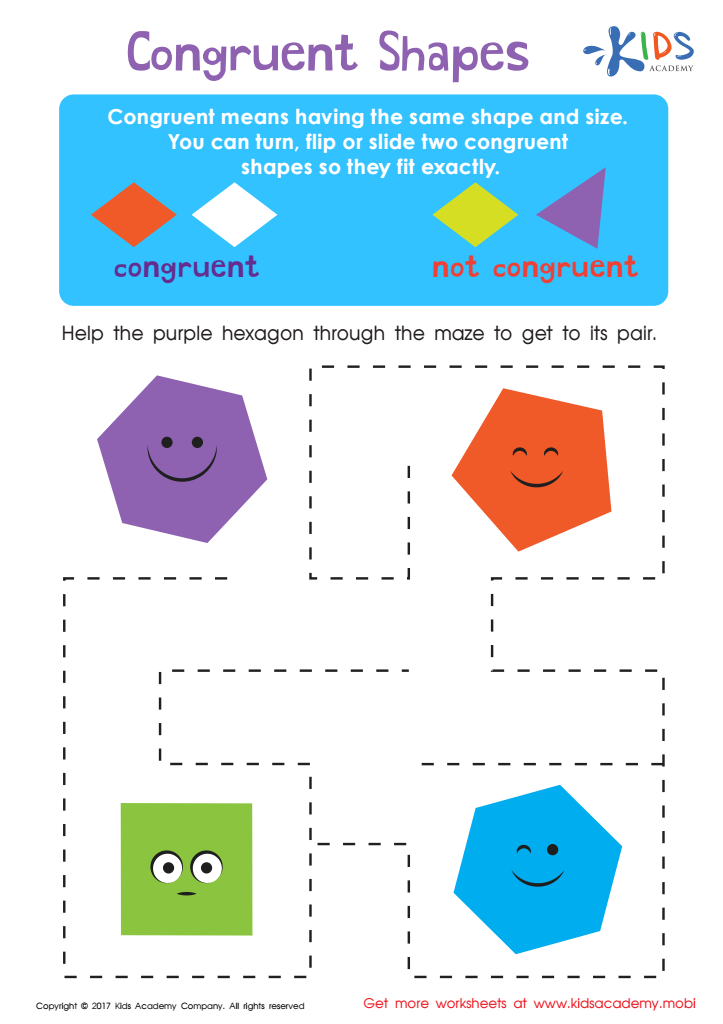
Congruent Shapes Worksheet
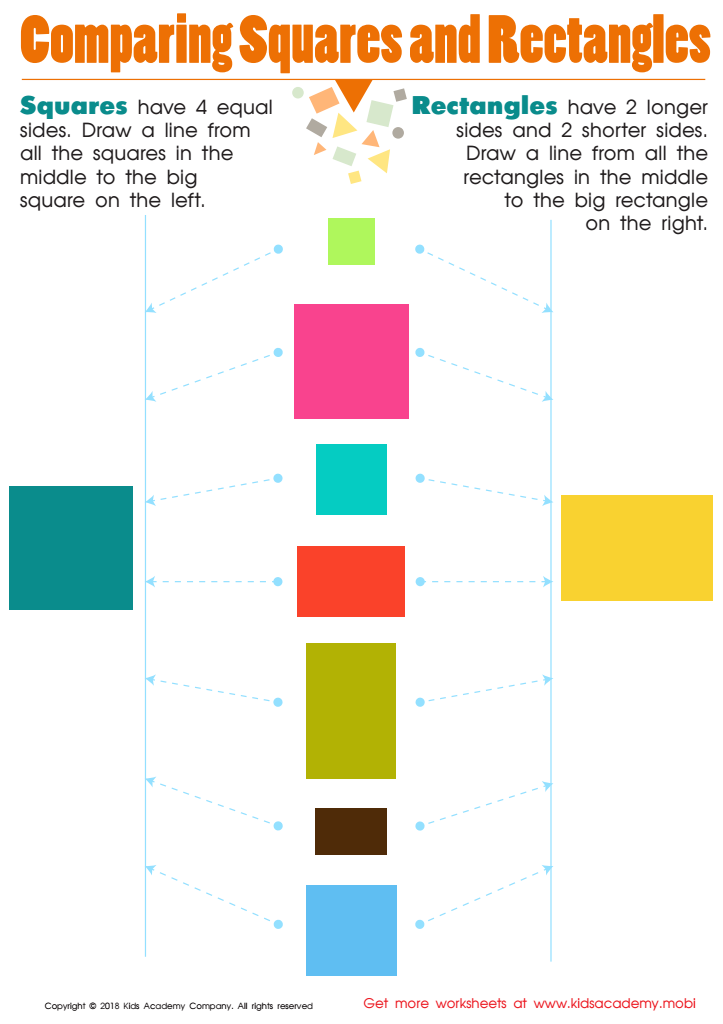
Comparing Squares Rectangles Worksheet
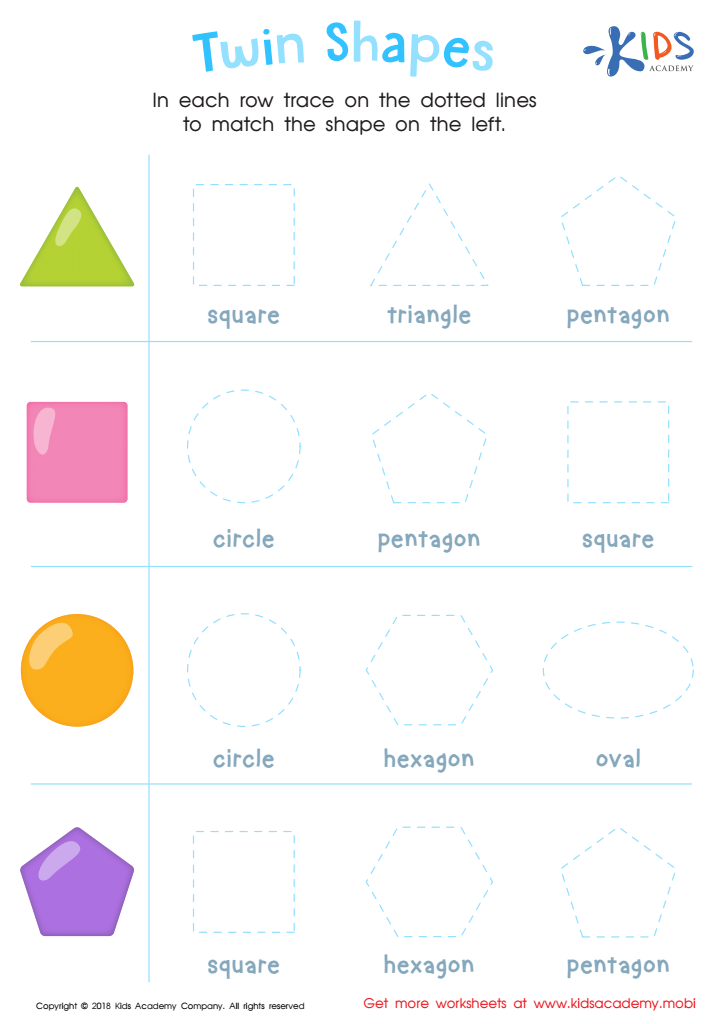
Twin Shapes Dot-to-Dot Worksheet








Comparing 2D shapes is a foundational skill that plays an essential role in a child’s early mathematical development. For parents and teachers, understanding and fostering this skill is critical for several reasons.
Firstly, comparing shapes introduces children to key mathematical concepts such as symmetry, area, and perimeter. By recognizing differences and similarities in shapes, children develop critical thinking and analytical skills that are crucial for problem-solving in more complex mathematical contexts later on.
Additionally, shapes are ubiquitous in our environment; helping children discern them enhances their observational skills and cognitive mapping abilities. Recognizing basic shapes and their properties lays the groundwork for geometric comprehension, which is a vital component of mathematics education.
Moreover, engaging in shape comparisons serves as an excellent opportunity for parents and teachers to enrich language development. By discussing attributes like color, size, and orientation, children expand their vocabulary and enhance their communication skills.
Finally, instilling an early appreciation for shapes nurtures creativity. Understanding different forms leads children to explore art and design, reinforcing the interconnectedness of math and the real world. Therefore, comparing 2D shapes is a critical stepping stone in shaping well-rounded, confident learners.