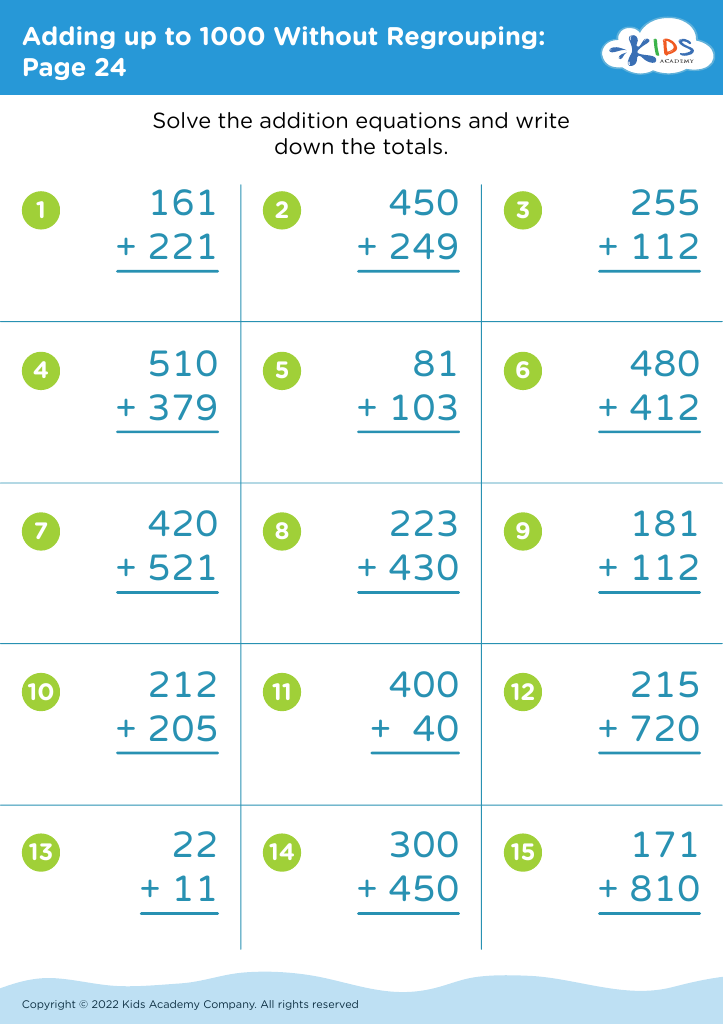
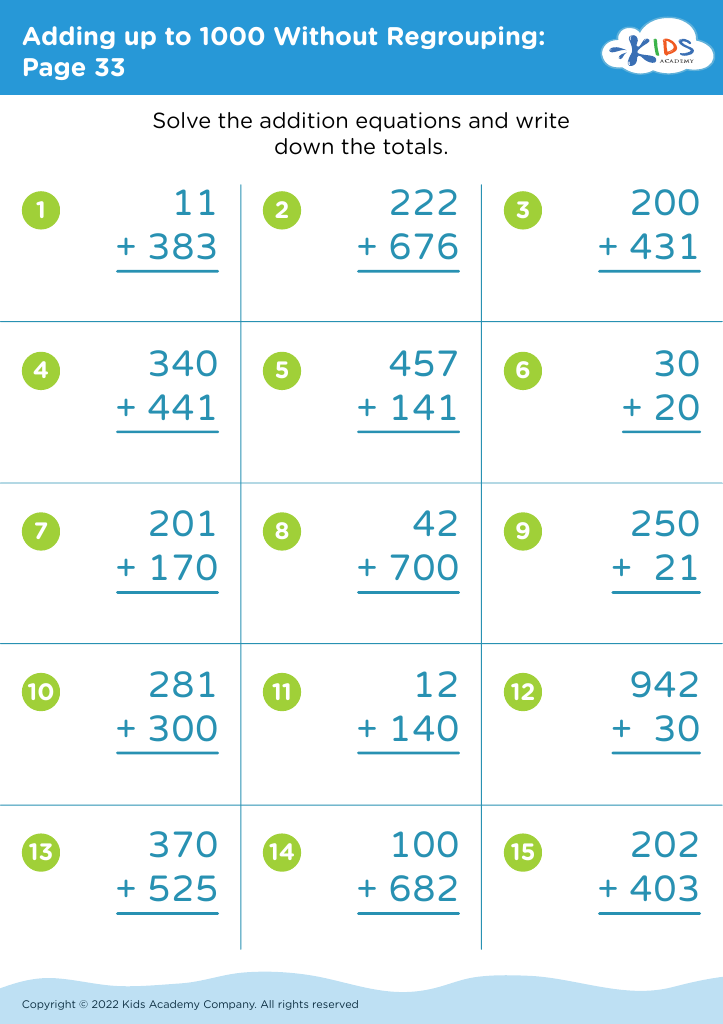
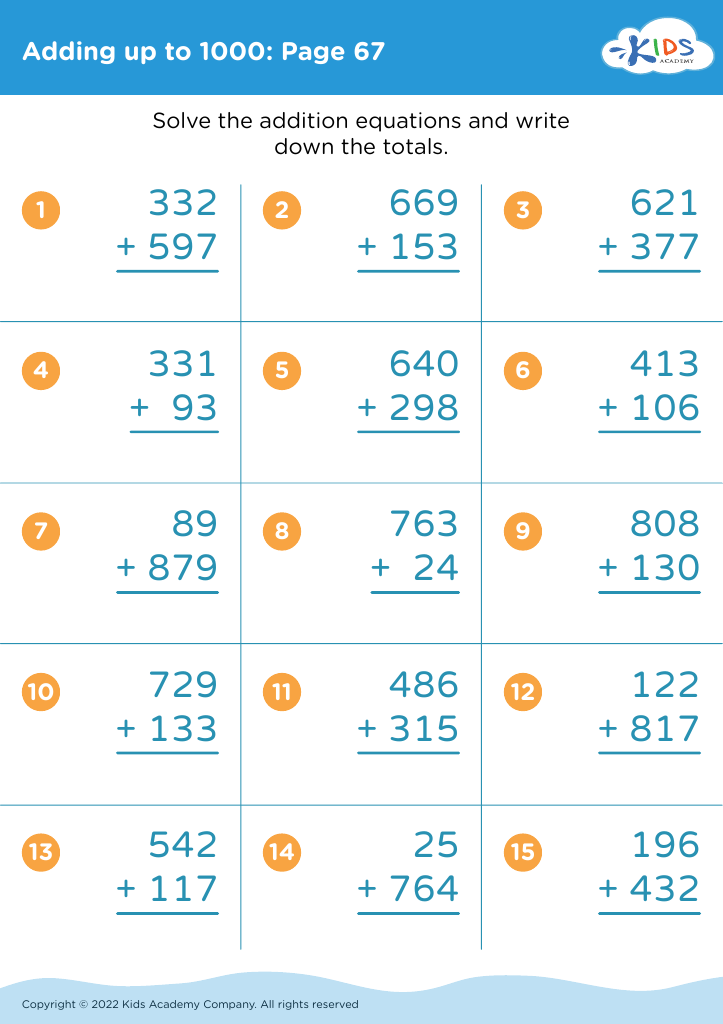




Parents and teachers should prioritize teaching addition up to 1000 for children aged 5-9, as it lays a vital foundation for future mathematical skills. At this age, children are developing critical thinking and problem-solving abilities. Mastering addition within this range promotes number sense, ensuring they understand not just how to add, but why certain strategies work, enhancing their mathematical fluency.
This skill extends beyond basic addition; it fosters confidence in tackling more complex mathematical concepts, including subtraction, multiplication, and division. The ability to quickly and accurately add numbers up to 1000 sets the stage for success in higher-level math, as children progress in their education.
Moreover, everyday activities can be enriched by this knowledge—whether it’s budgeting, measuring ingredients in cooking, or playing games involving numbers, reinforcing learning while being engaging. Furthermore, nurturing a child’s interest in math during these formative years can promote a lifelong appreciation of the subject.
Involving parents and teachers in these activities also strengthens the home-school connection, making learning a collaborative and enjoyable experience. Ultimately, understanding addition up to 1000 equips children with essential skills that influence their academic journey and real-world applications.








