Filters

21 filtered results

Clear all filters
Favorites
With answer key
Interactive

21 filtered results

Difficulty Level

Grade


Welcome to our "Basic Addition & Subtraction Worksheets" designed for children aged 5-9! These engaging worksheets help young learners master essential math skills through fun, interactive exercises. Covering fundamental concepts of addition and subtraction, our resources ensure a solid foundation for future math success. Each worksheet includes colorful illustrations and varied problems to maintain interest while promoting logical thinking. Perfect for classroom activities or at-home learning, these printables cater to different skill levels, making them ideal for every young mathematician. Download today and support your child's numeracy journey with our comprehensive collection of worksheets!
Check out this FREE Trial Lesson on Addition & Subtraction for age 5-9!

P

Favorites
With answer key
Interactive
  • 5-9
  • Basic Addition
  • Addition & Subtraction
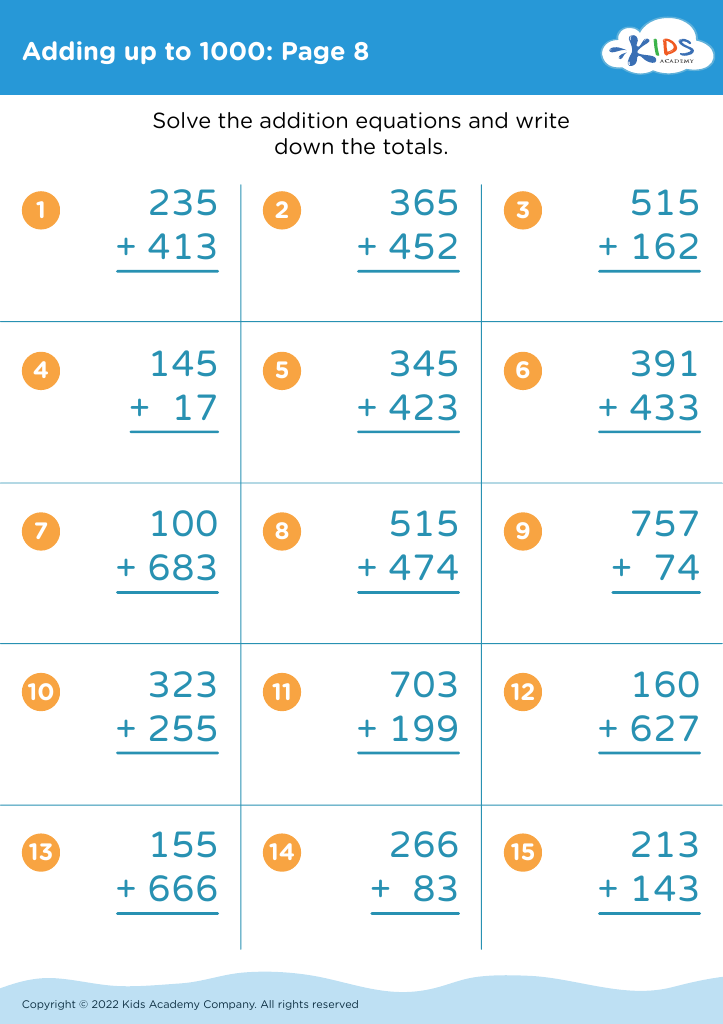
Adding up to 1000: Page 8

Adding up to 1000: Page 8

Adding up to 1000: Page 8
Worksheet
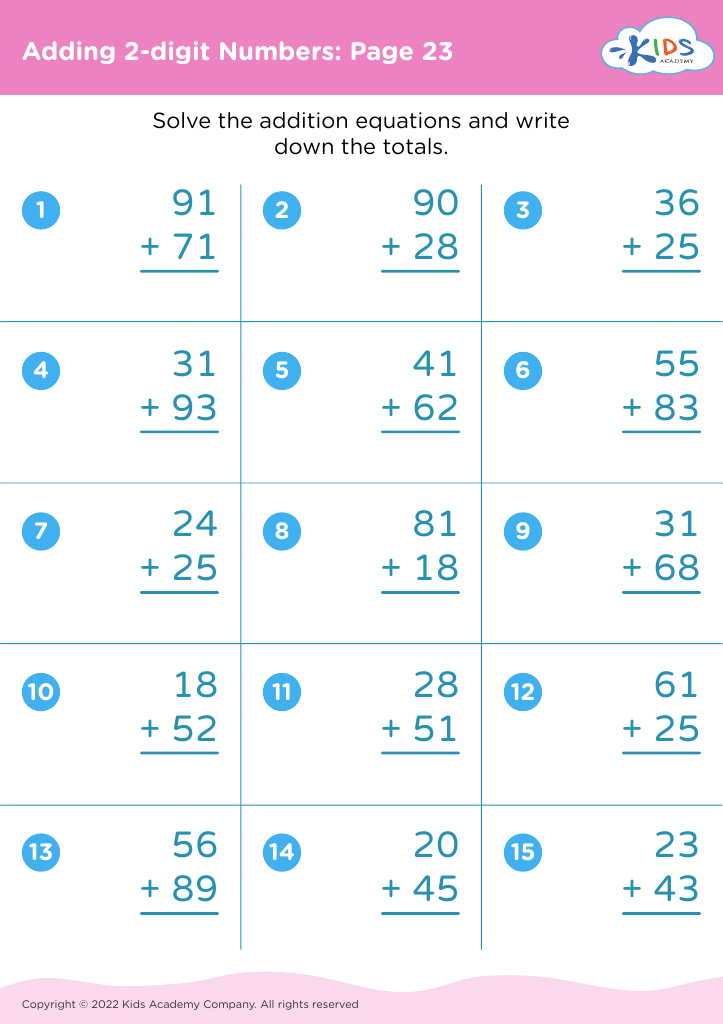
Adding 2-digit Numbers: Page 23

Adding 2-digit Numbers: Page 23

Adding 2-digit Numbers: Page 23
Worksheet
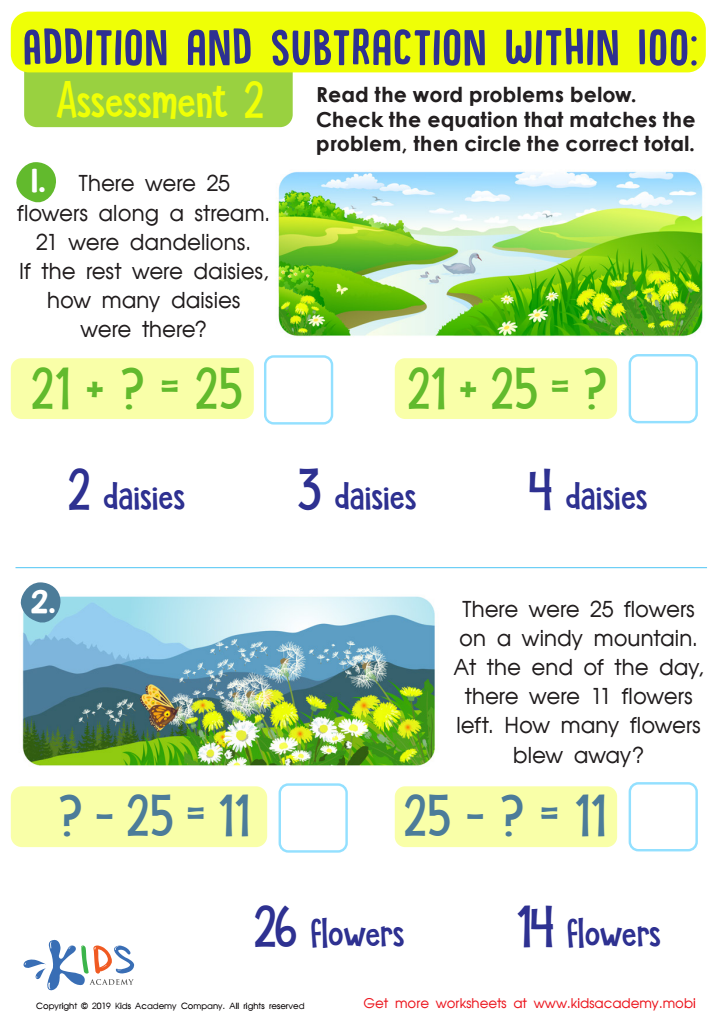
Assessment 2 Math Worksheet

Assessment 2 Math Worksheet

Using fun exercises and pictures, you can get kids excited about math. With practice and reminders of what they've learnt, they'll be solving simple addition and subtraction equations with ease. Read the word problems in the picture to them, then help them check the equation and choose the correct answer.
Assessment 2 Math Worksheet
Worksheet
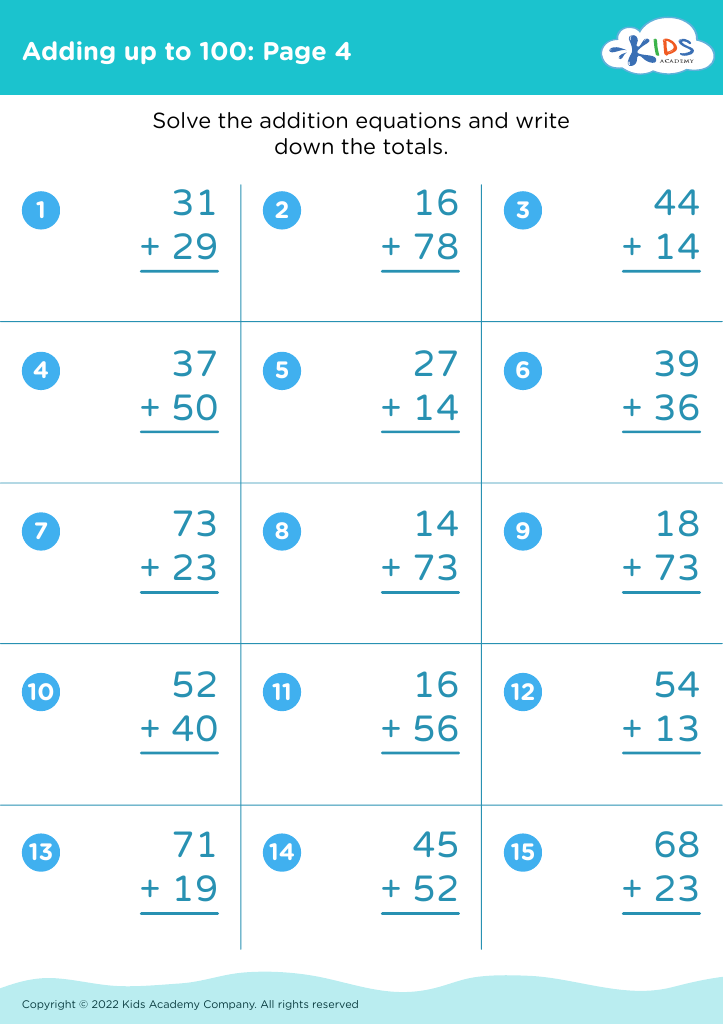
Adding up to 100: Page 4

Adding up to 100: Page 4

Adding up to 100: Page 4
Worksheet
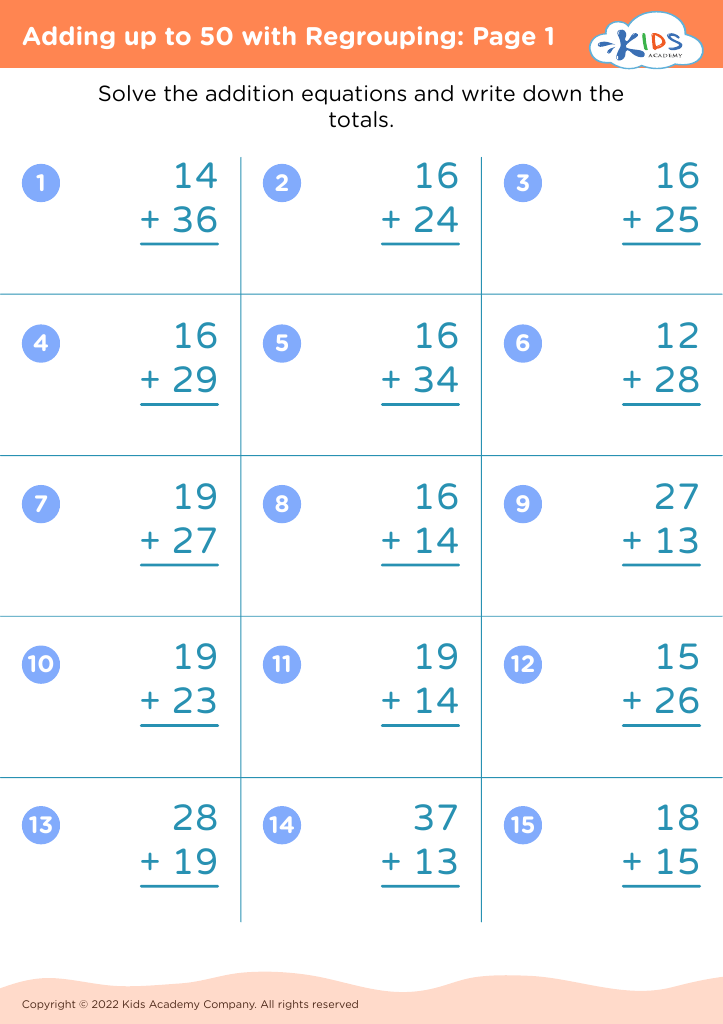
Adding up to 50 with Regrouping: Page 1
Worksheet
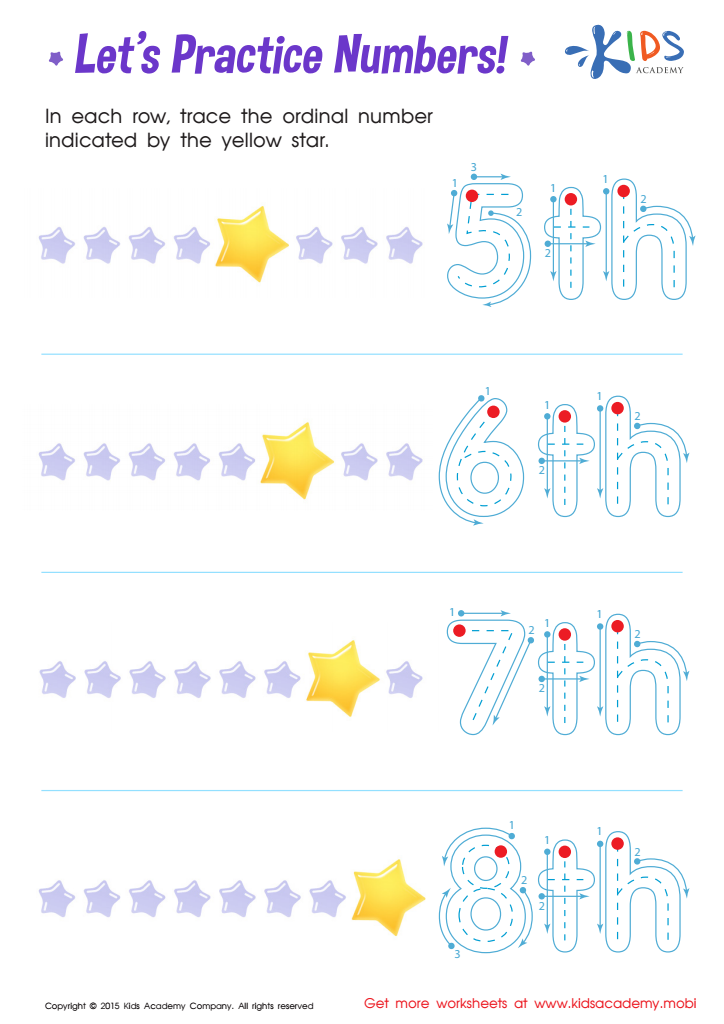
Practice Ordinal Numbers Worksheets PDF
Ordinal Numbers: Let's Practice Numbers Printable
Worksheet
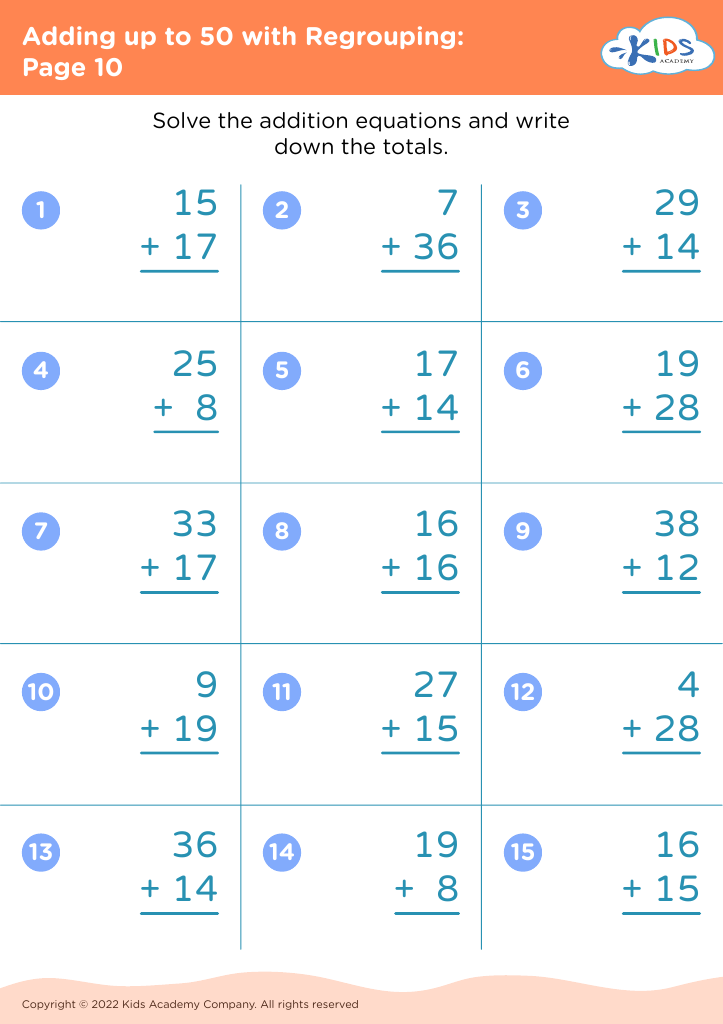
Adding up to 50 with Regrouping: Page 10
Worksheet
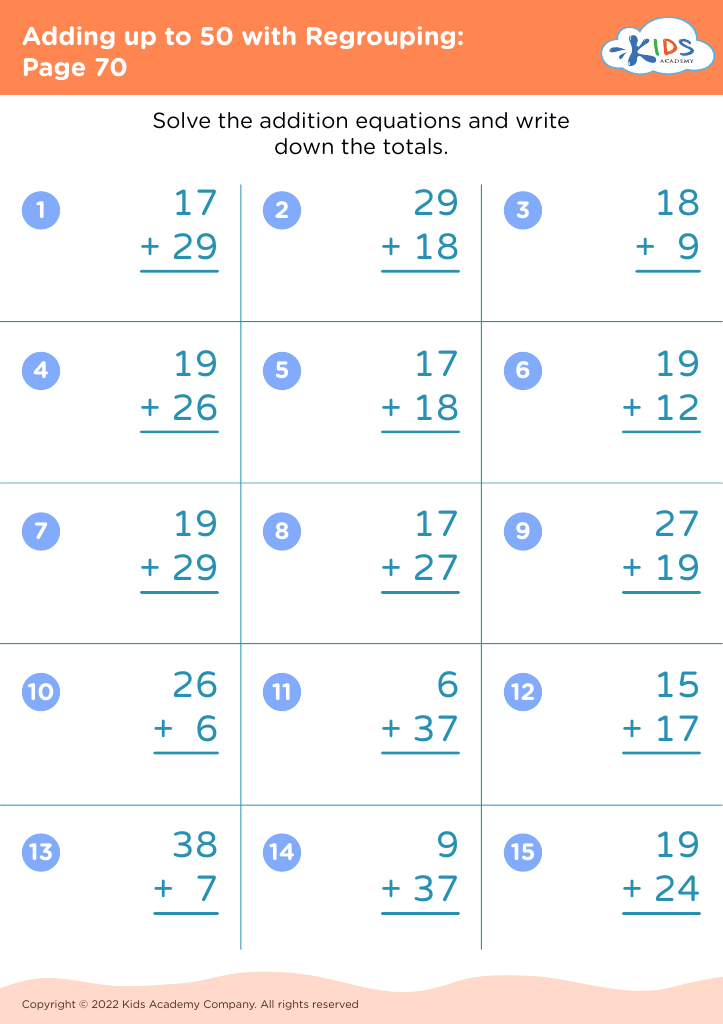
Adding up to 50 with Regrouping: Page 70
Worksheet
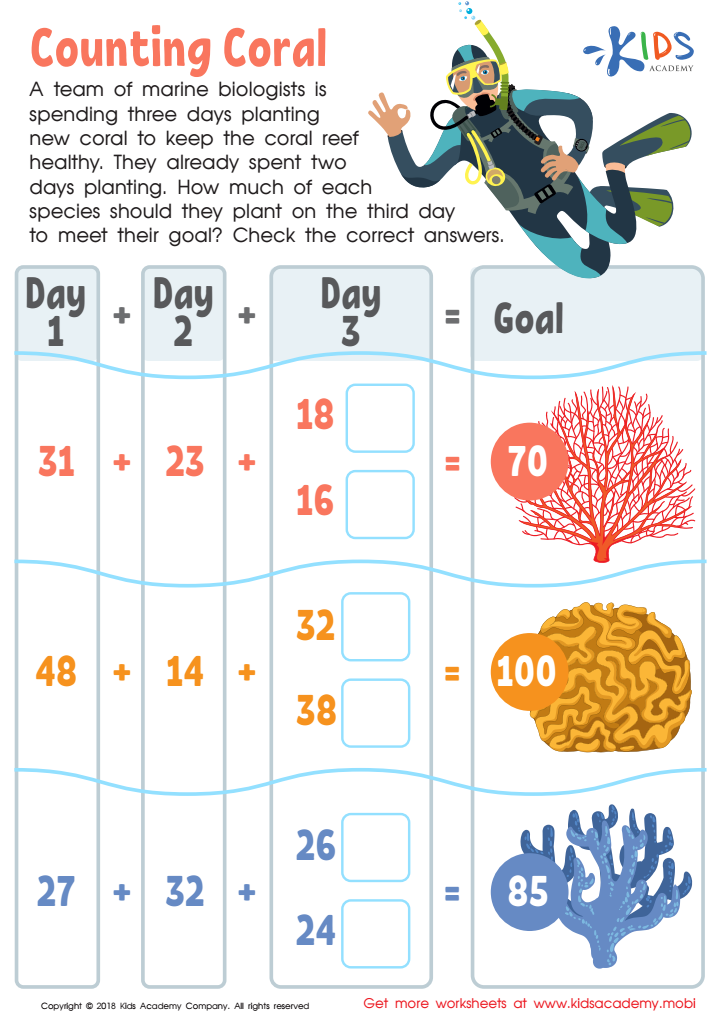
Counting Coral Worksheet

Counting Coral Worksheet

Introduce your child to the team of marine biologists planting coral to keep a reef healthy. They've planted for two days and need to figure out how much of each specie to plant on the third day to reach their goal. Help your child answer the questions on the printout and learn what it takes to be a marine biologist.
Counting Coral Worksheet
Worksheet
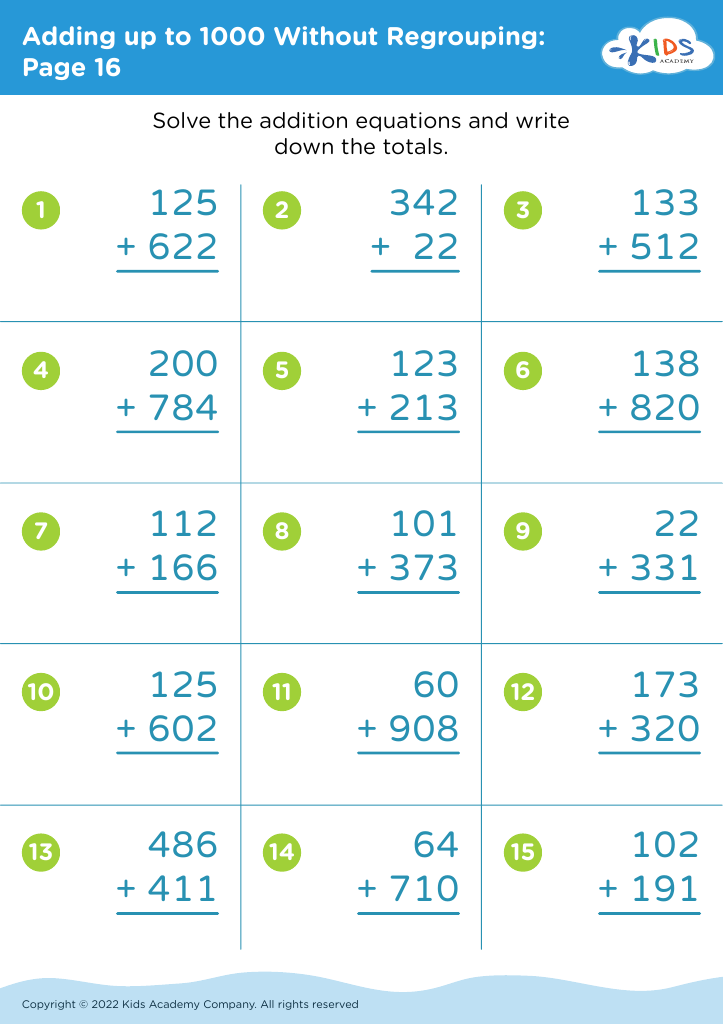
Adding up to 1000 Without Regrouping: Page 16
Worksheet
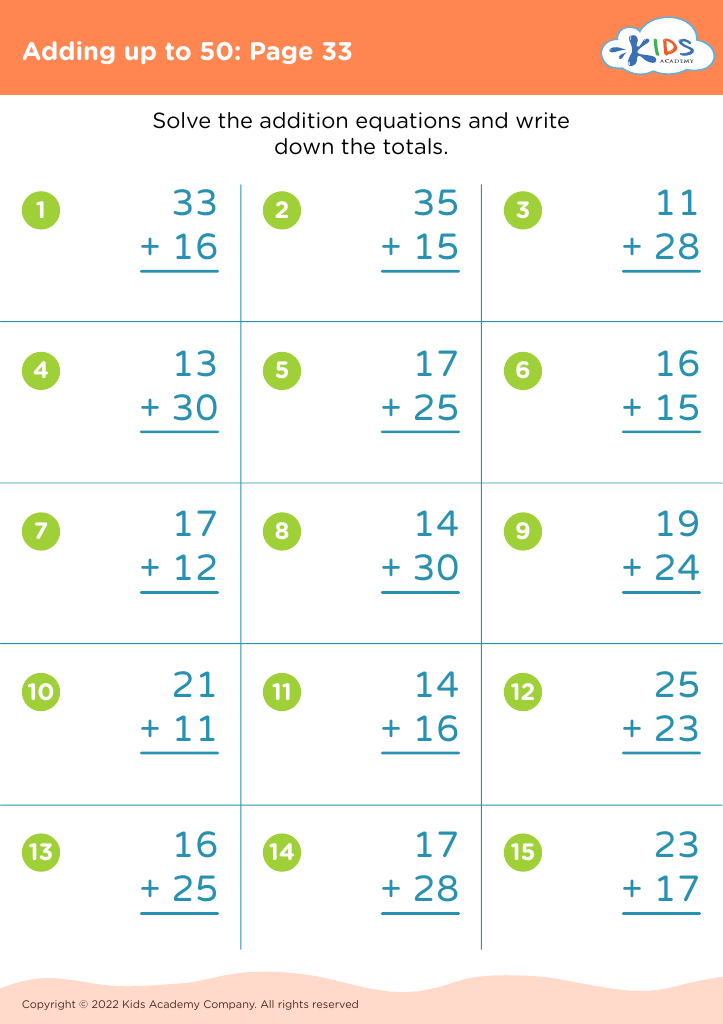
Adding up to 50: Page 33

Adding up to 50: Page 33

Adding up to 50: Page 33
Worksheet
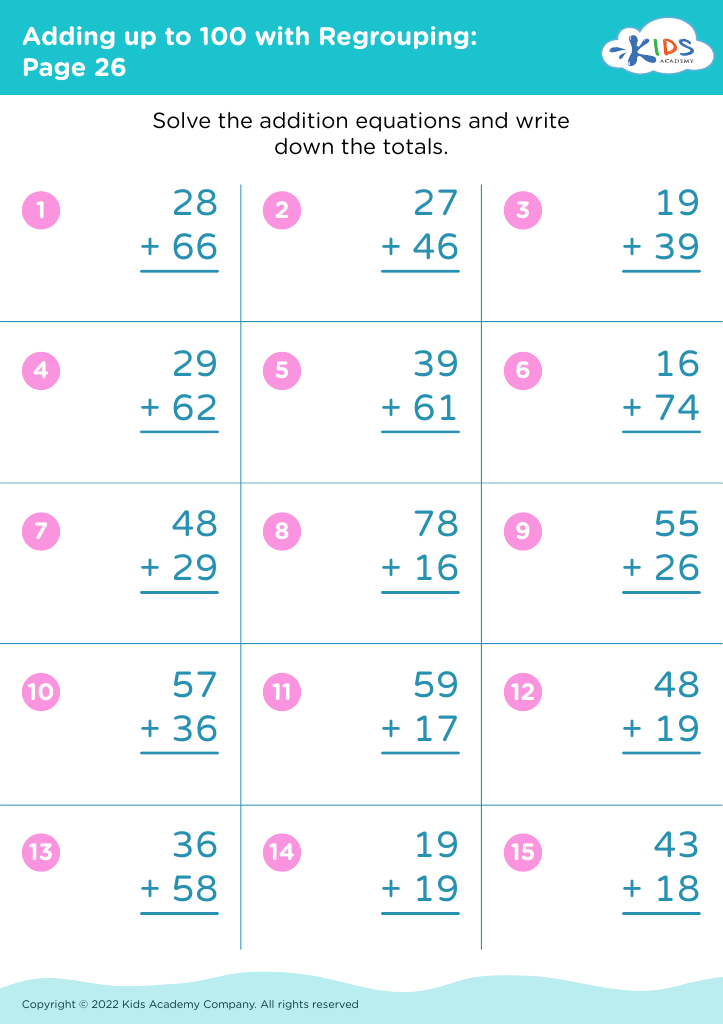
Adding up to 100 with Regrouping: Page 26
Worksheet
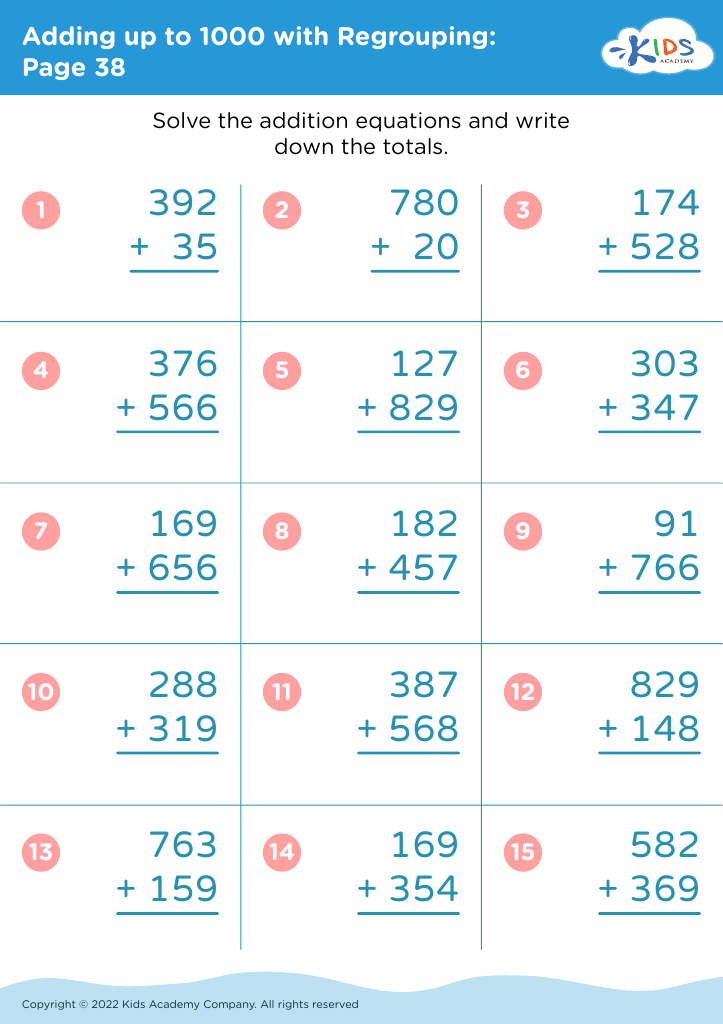
Adding up to 1000 with Regrouping: Page 38
Worksheet
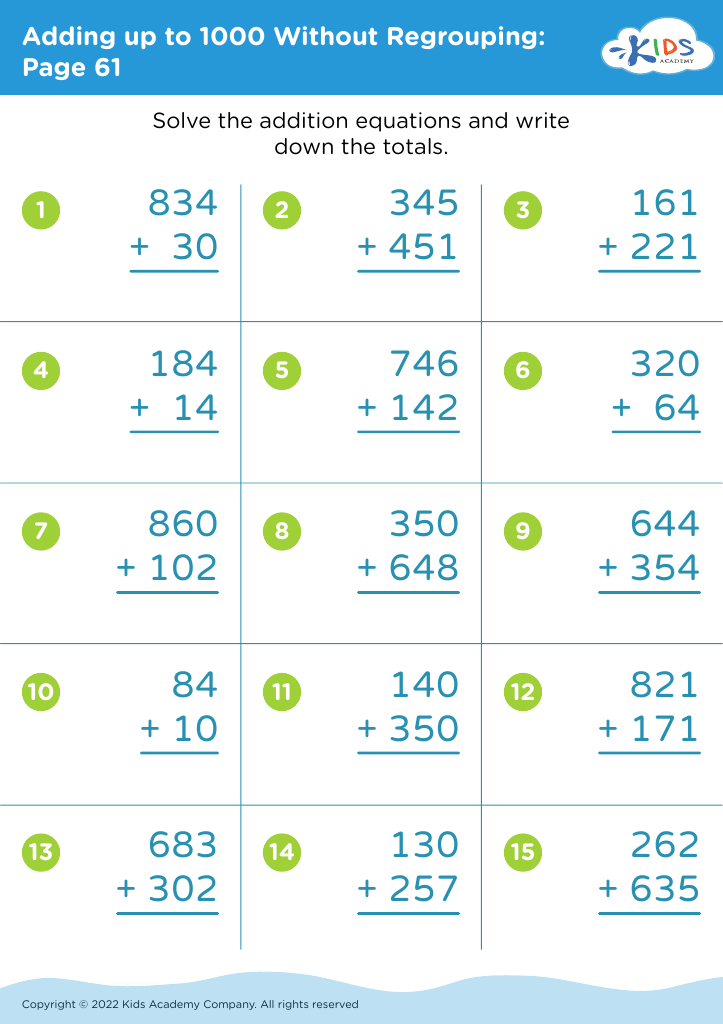
Adding up to 1000 Without Regrouping: Page 61
Worksheet
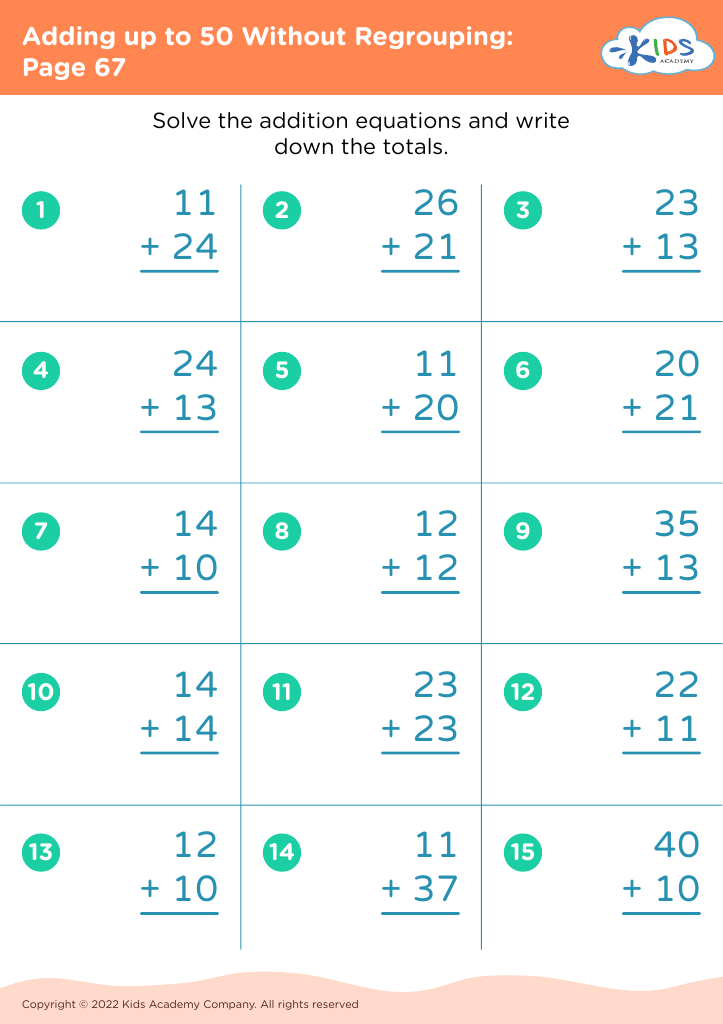
Adding up to 50 Without Regrouping: Page 67
Worksheet
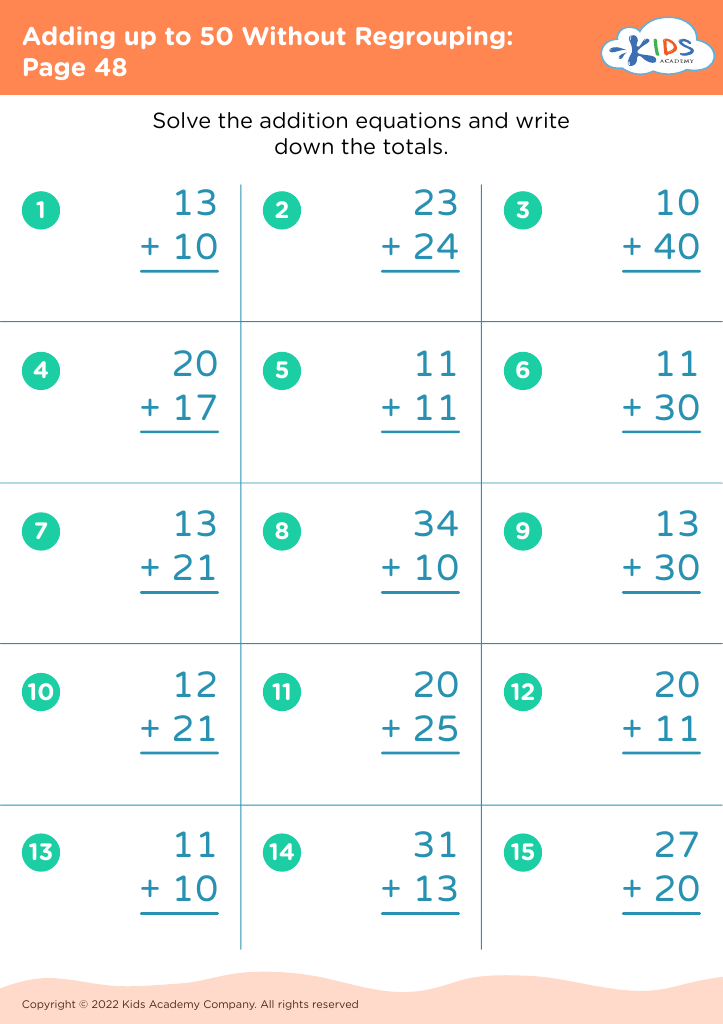
Adding up to 50 Without Regrouping: Page 48
Worksheet
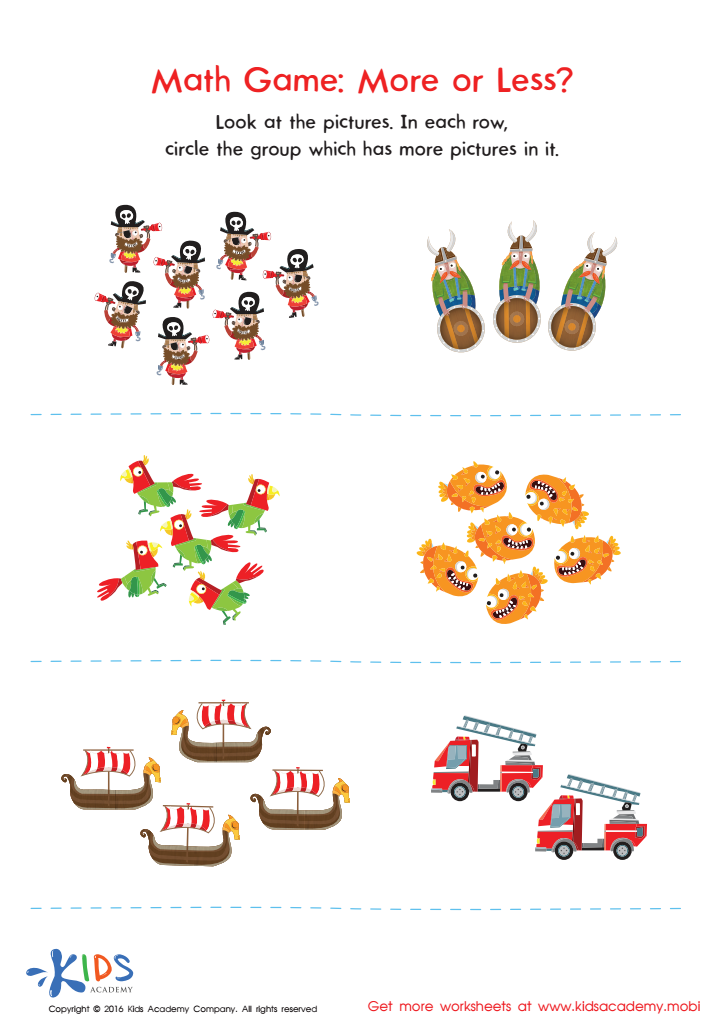
Free Printable More or Less Worksheets for Kindergarten

More or Less Worksheet

Counting and understanding quantity are essential skills for kindergarteners. Get your free printable more or less worksheet now!
More or Less Worksheet
Worksheet
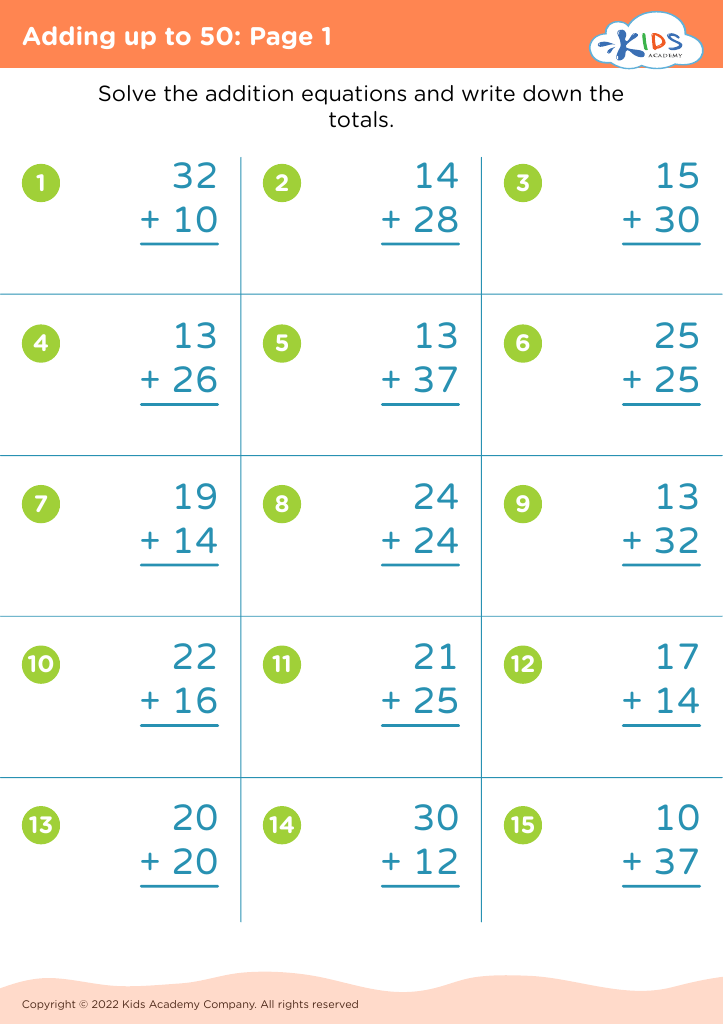
Adding up to 50: Page 1

Adding up to 50: Page 1

Adding up to 50: Page 1
Worksheet
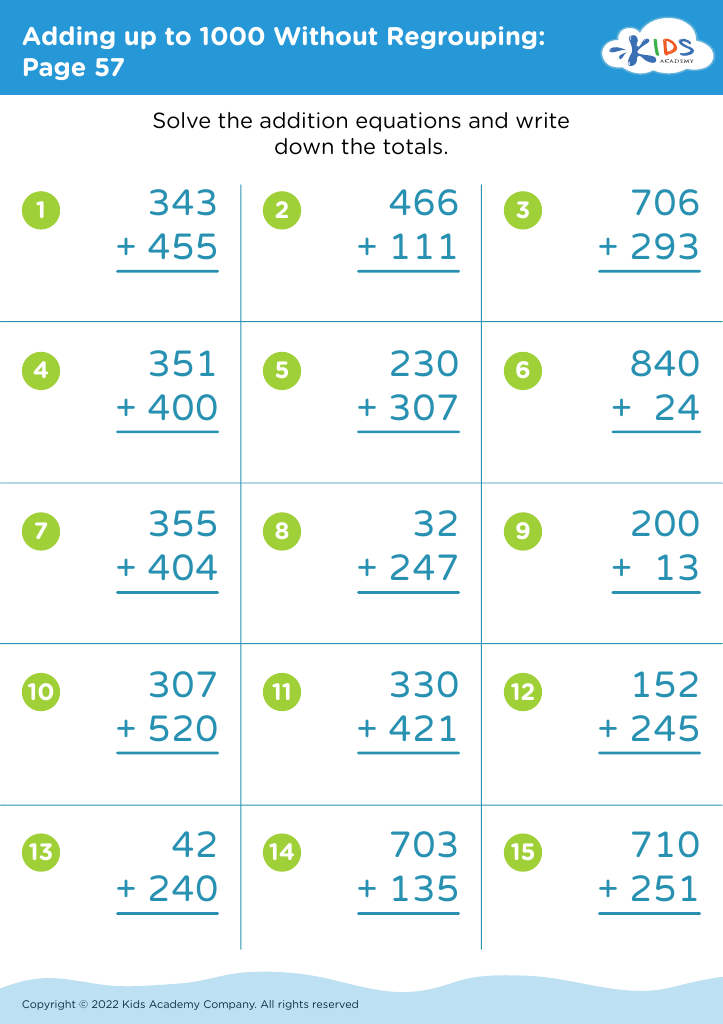
Adding up to 1000 Without Regrouping: Page 57
Worksheet
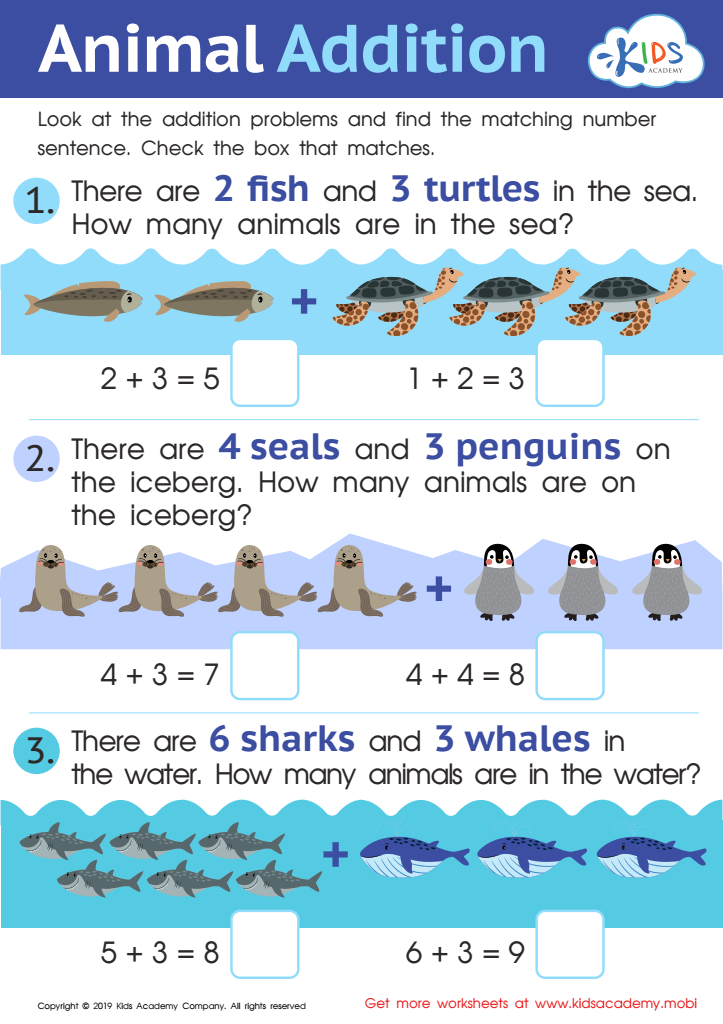
Animal Addition Worksheet

Animal Addition Worksheet

Get your kids learning addition and subtraction with this fun worksheet! Show them that solving equations can be enjoyable and help them match number sentences to the correct boxes. By doing this together, you'll create a positive learning experience that your kids won't forget.
Animal Addition Worksheet
Worksheet
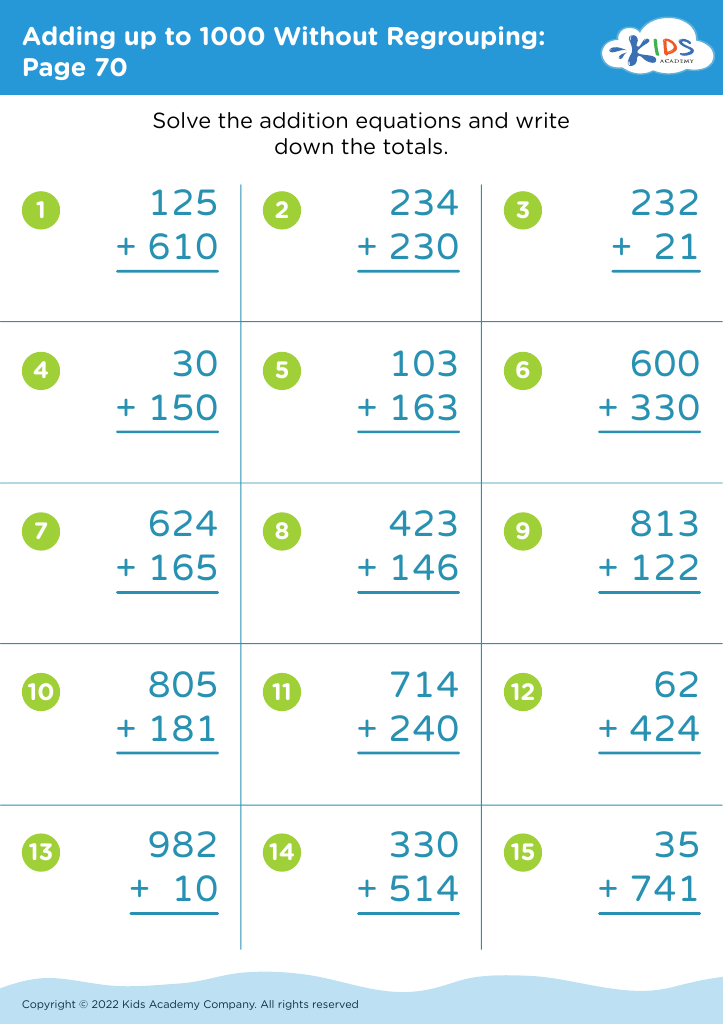
Adding up to 1000 Without Regrouping: Page 70
Worksheet


Basic addition and subtraction skills are foundational to a child's mathematical understanding and overall academic success. For ages 5-9, these skills are critical as they set the stage for more complex mathematical concepts. First, understanding these operations helps children develop problem-solving skills; they learn to approach challenges systematically. Additionally, early math proficiency directly correlates with improved performance in later grades across subjects, enhancing critical thinking and reasoning abilities.

Parents and teachers play a vital role in nurturing these skills. When parents provide engaging, hands-on learning experiences at home, they reinforce what is taught in school, fostering a positive attitude towards math. Activities like counting objects, playing math games, or practicing through everyday situations help make learning enjoyable.

Teachers, on the other hand, help create structured environments where children feel safe to make mistakes and learn from them. By incorporating varied teaching methods—such as visual aids and interactive activities—they can address different learning styles effectively. Ultimately, investing time and energy into teaching basic addition and subtraction not only builds essential math skills but also boosts children's confidence, supports their cognitive development, and prepares them for future academic and real-world challenges.