Critical Thinking Geometry Worksheets for Ages 5-9
5 filtered results
-
From - To
Unlock your child's potential with our engaging Critical Thinking Geometry Worksheets designed specifically for ages 5-9! These worksheets integrate essential geometrical concepts with critical thinking exercises, helping young learners develop problem-solving skills while having fun. Suitable for home or classroom use, our resources emphasize exploration and creativity, allowing kids to visualize shapes and understand spatial relationships. By tackling these worksheets, children will enhance their reasoning abilities and boost their confidence in math. Foster a positive learning environment where math becomes an exciting adventure—perfect for preparing them for future academic success! Explore our collection and give your child the gift of critical thinking today!
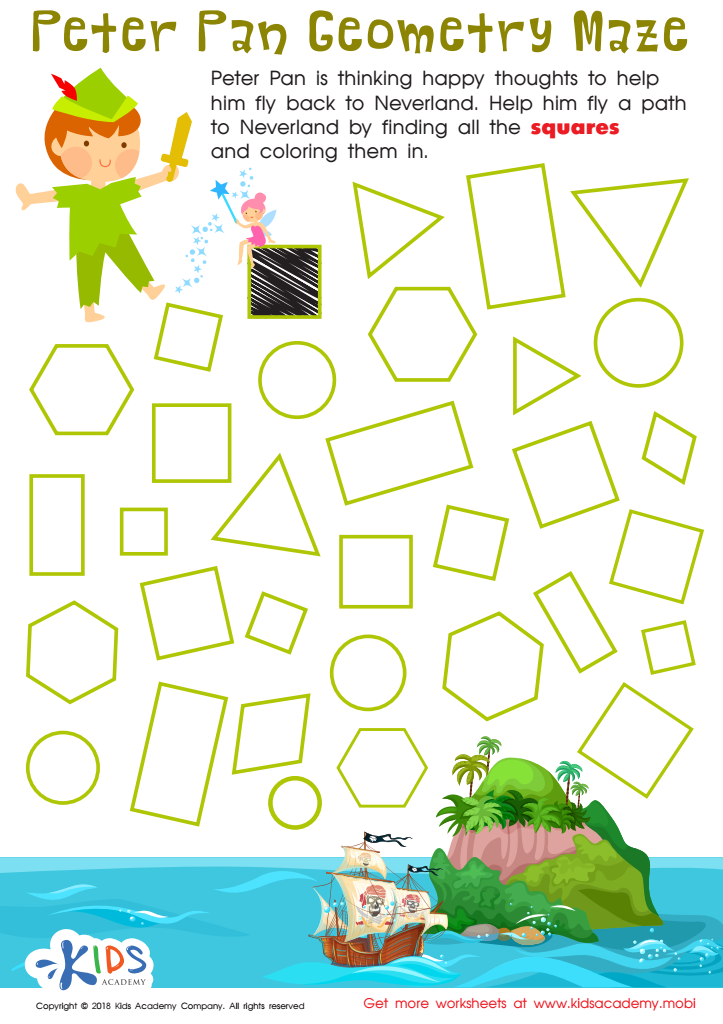
Peter Pan Worksheet
 Assign to My Students












Find the Pattern Worksheet
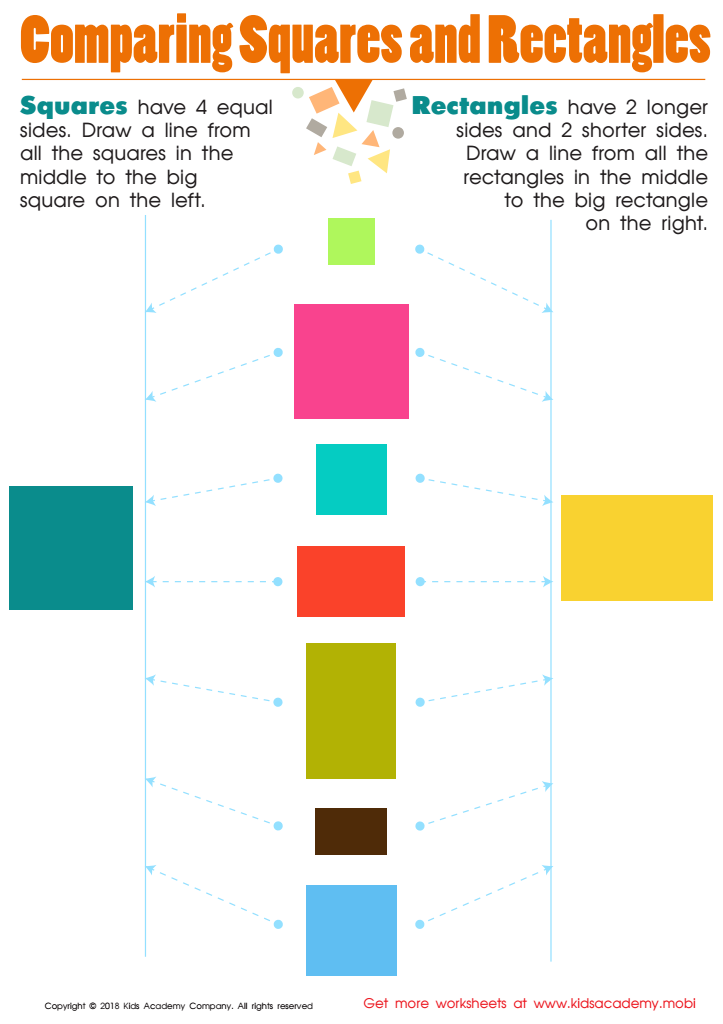
Comparing Squares Rectangles Worksheet
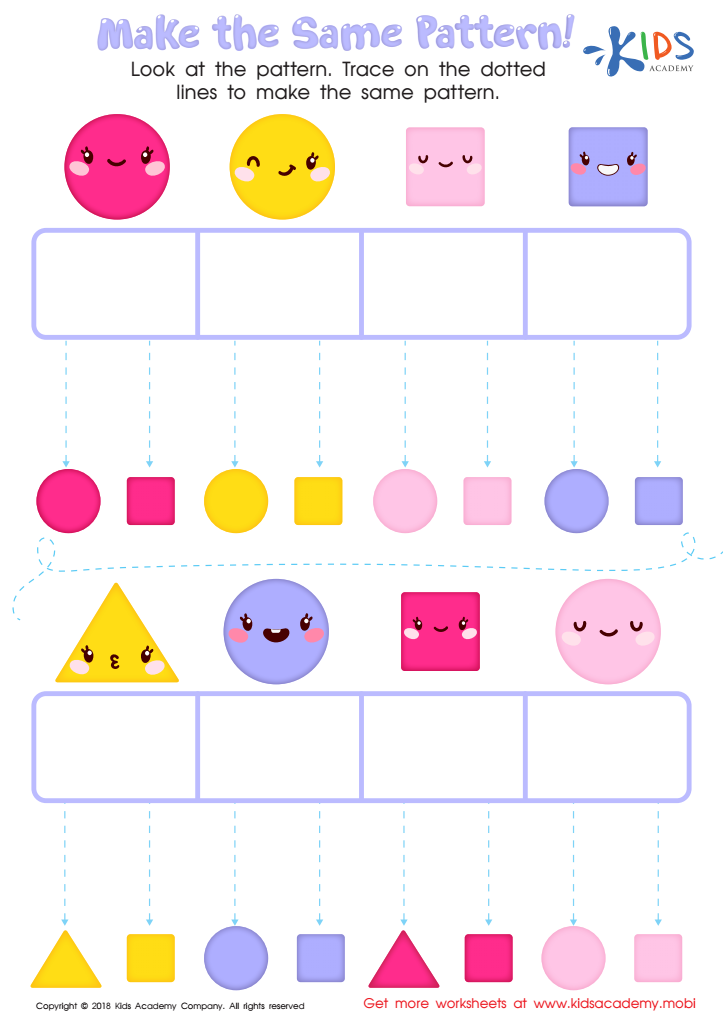
Make the Same Pattern Worksheet
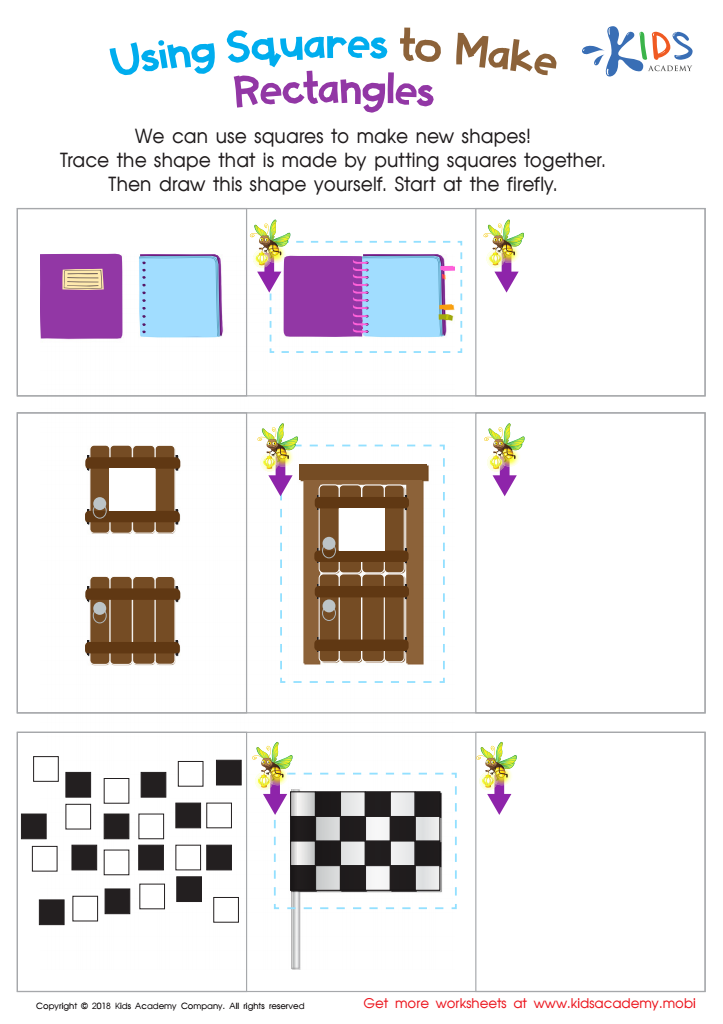
Using Squares to Make Rectangles Worksheet








Parents and teachers should care about Critical Thinking Geometry for ages 5-9 because it lays the foundation for essential cognitive skills and academic success. At this stage, children are naturally curious and eager to explore their surroundings, making it an ideal time to introduce geometric concepts. Cultivating critical thinking through geometry helps young learners develop problem-solving skills, enhance spatial reasoning, and foster creativity.
Engaging children in geometric activities encourages them to think critically about shapes, sizes, patterns, and relationships, allowing them to recognize and understand the world around them. These skills are instrumental not only in math but also in subjects like art, science, and technology. Additionally, nurturing critical thinking at a young age promotes independence and confidence, empowering students to tackle challenges and make informed decisions.
Moreover, laying the groundwork in geometry fosters a greater appreciation for mathematics as a whole, making it more accessible and enjoyable. By integrating critical thinking games, interactive activities, and collaborative projects into the learning environment, educators and parents can inspire a lifelong love for learning, enhancing not just academic performance but also building skills that are crucial for future success in an increasingly complex world.








