Understanding place values Numbers Worksheets for Ages 5-9
14 filtered results
-
From - To
Unlock the power of numbers with our "Understanding Place Values" worksheets, designed for kids aged 5-9. These engaging, printable activities help young learners grasp essential place value concepts by breaking down numbers into ones, tens, hundreds, and beyond. Mastery of place values is crucial for developing strong math skills and foundational number sense. Through colorful exercises and lively scenarios, children will boost their confidence and competence in mathematics. Perfect for classroom use or home practice, these worksheets make learning fun and effective. Start the journey towards math success with our expertly crafted place value resources!
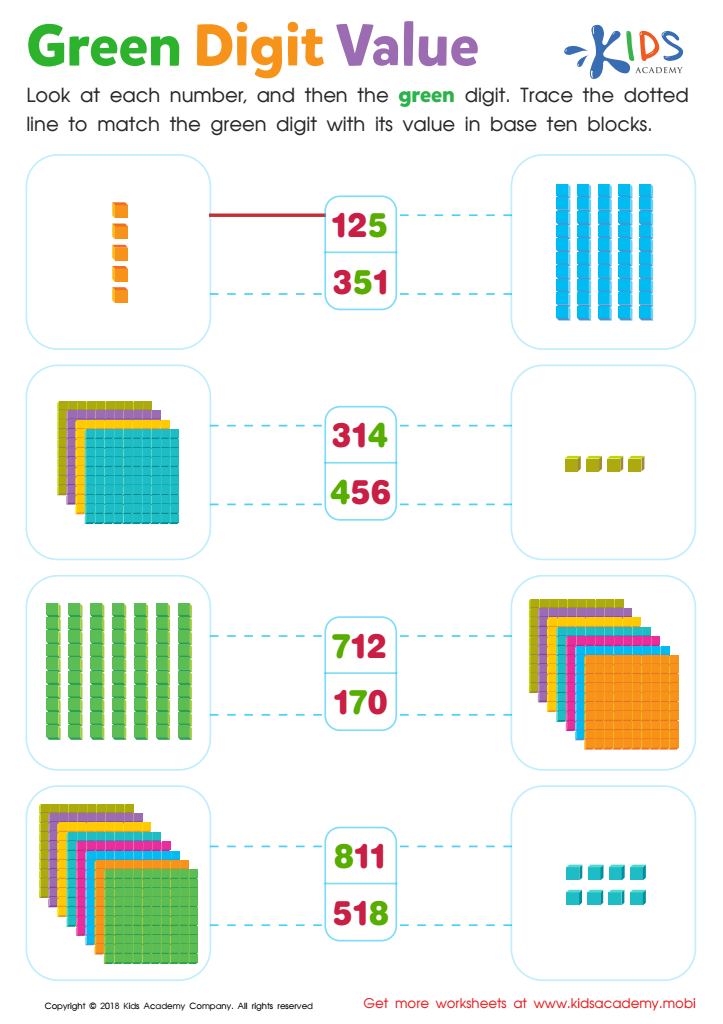
Green Digit Value Worksheet
 Assign to My Students
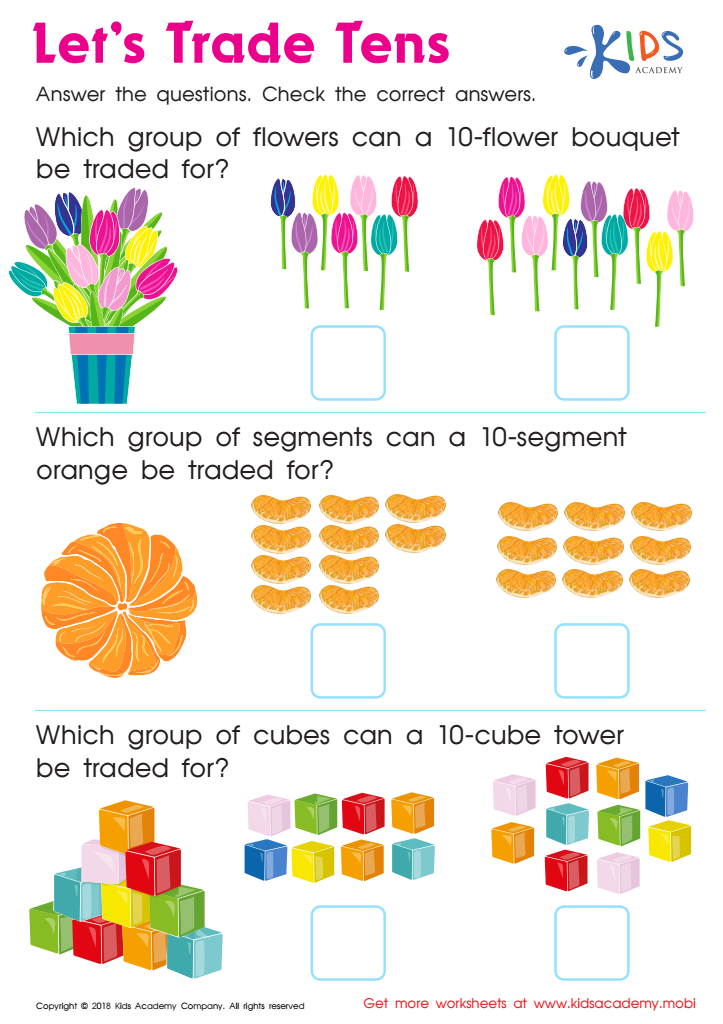
Lets Trade Tens Worksheet
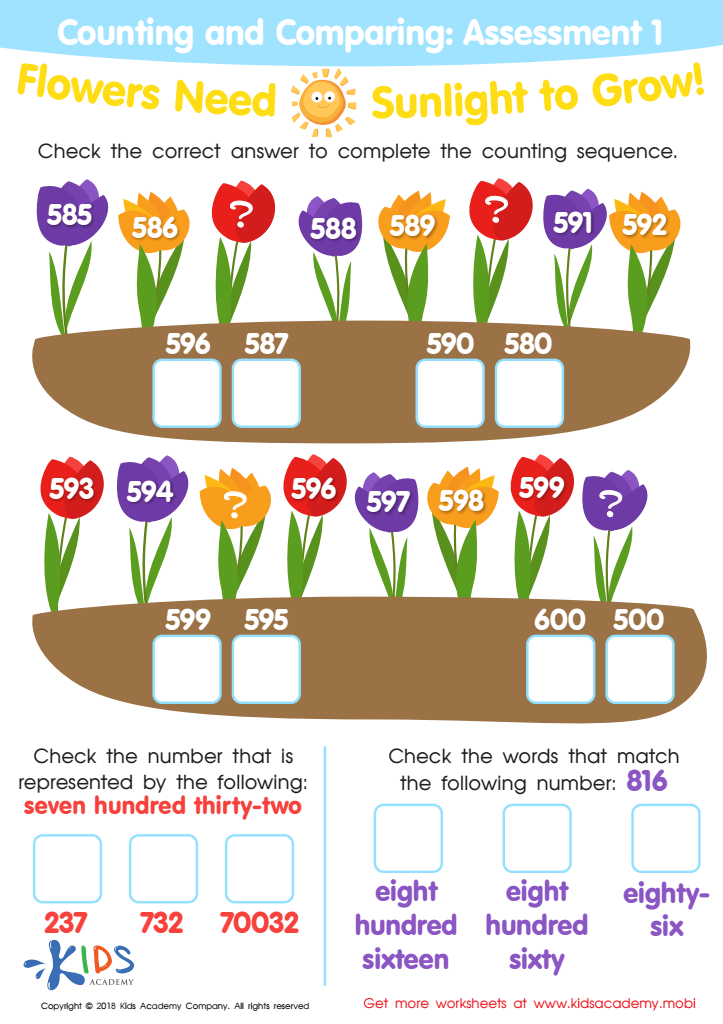
Counting and Comparing: Assessment 1 Worksheet
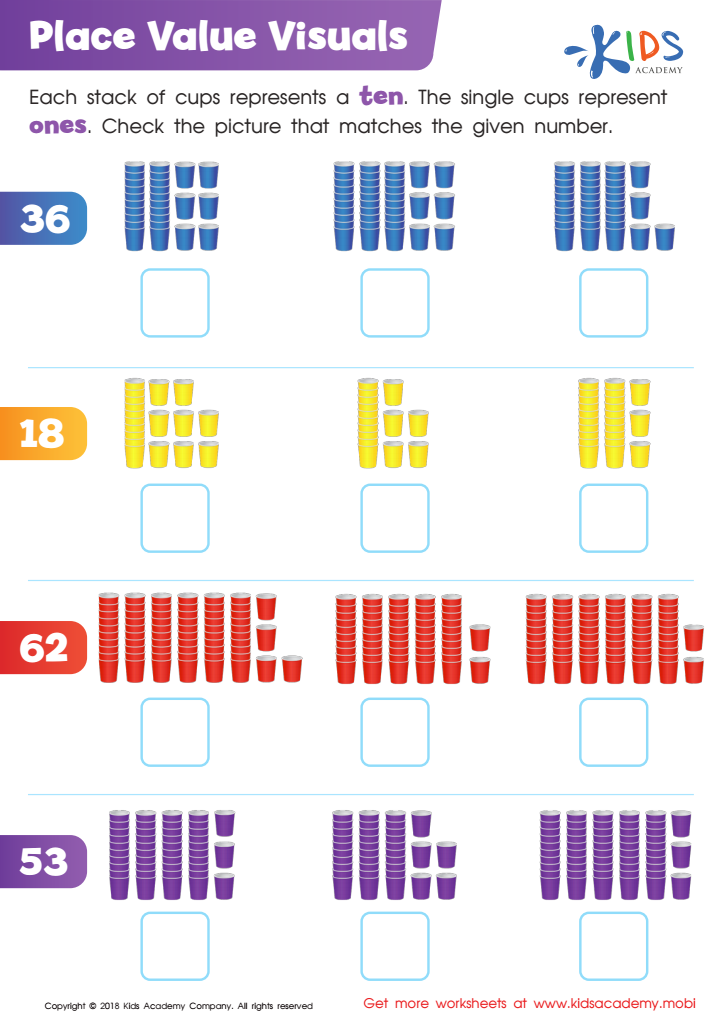
Place Value Visuals Worksheet
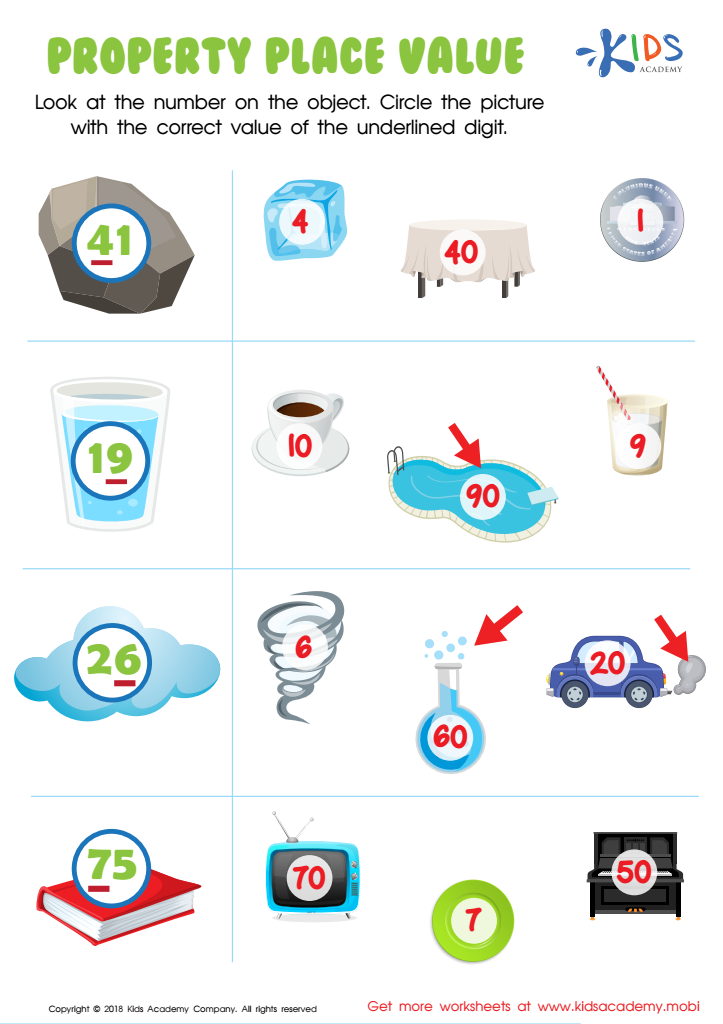
Property Place Value Worksheet
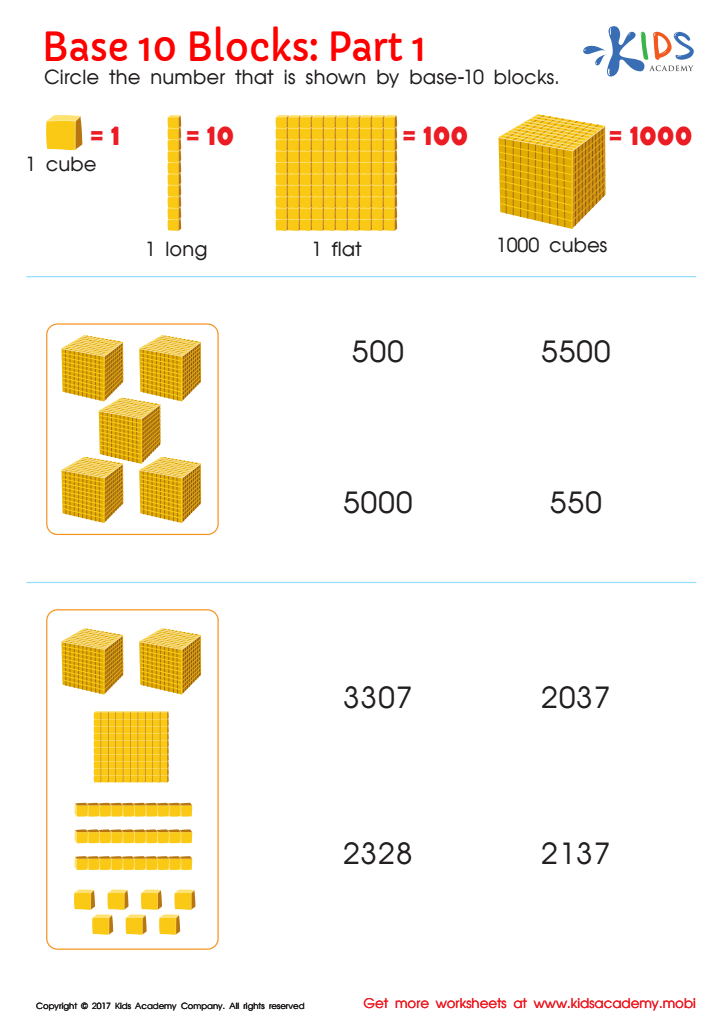
Place Value Thousands Worksheet
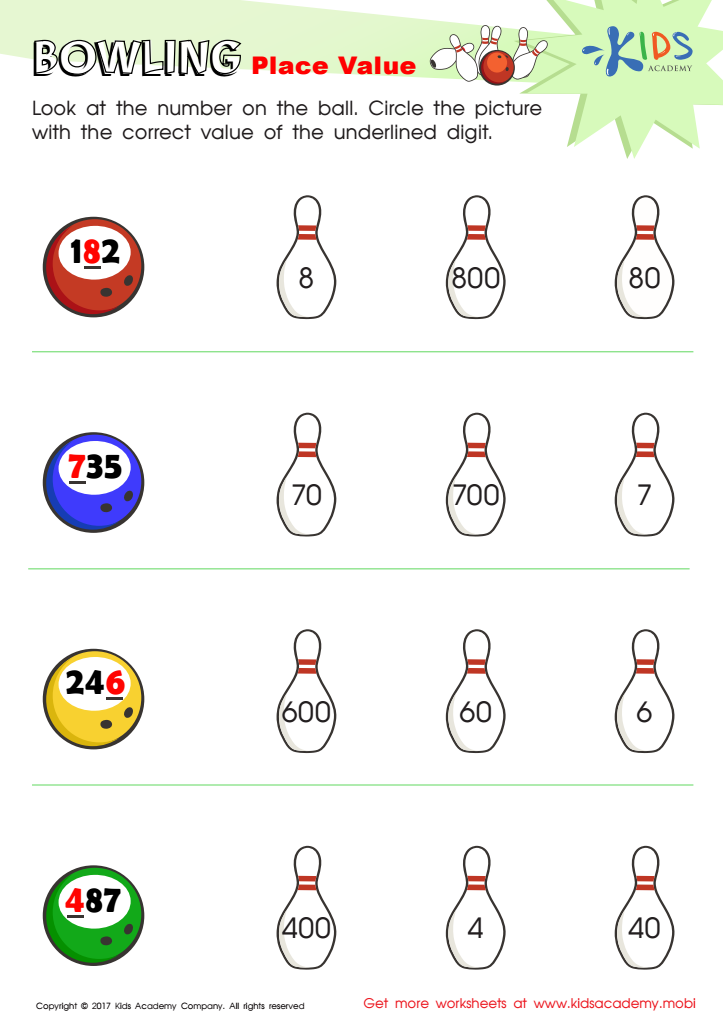
Place Value Worksheet
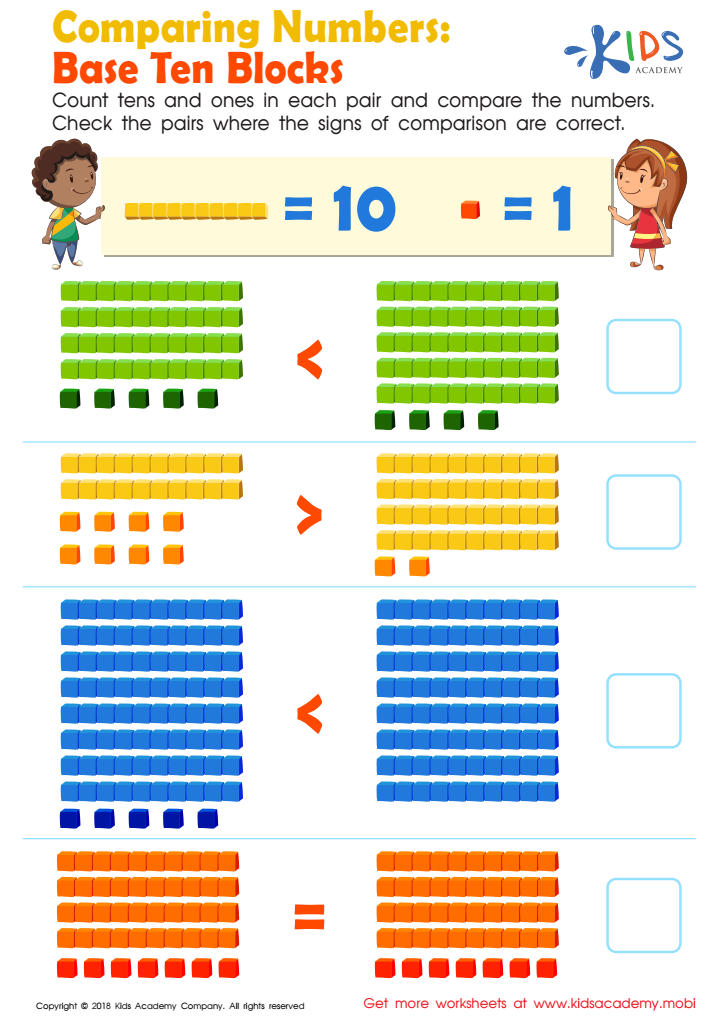
Comparing Numbers: Base Ten Blocks Worksheet
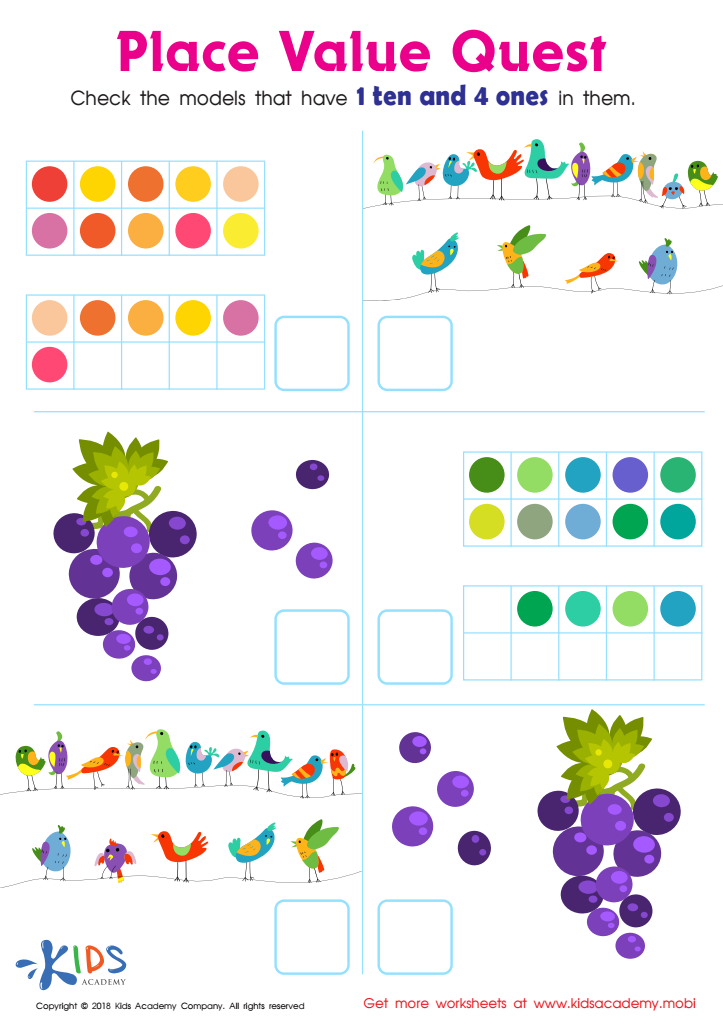
Place Value Quest Worksheet
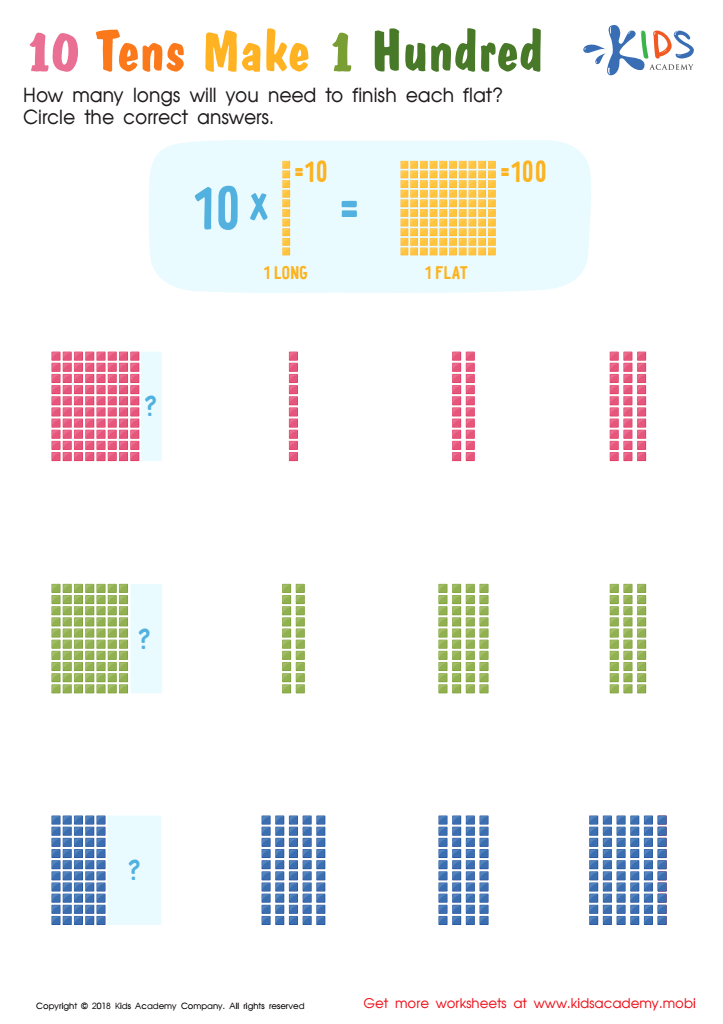
10 Tens Make 1 Hundred Worksheet
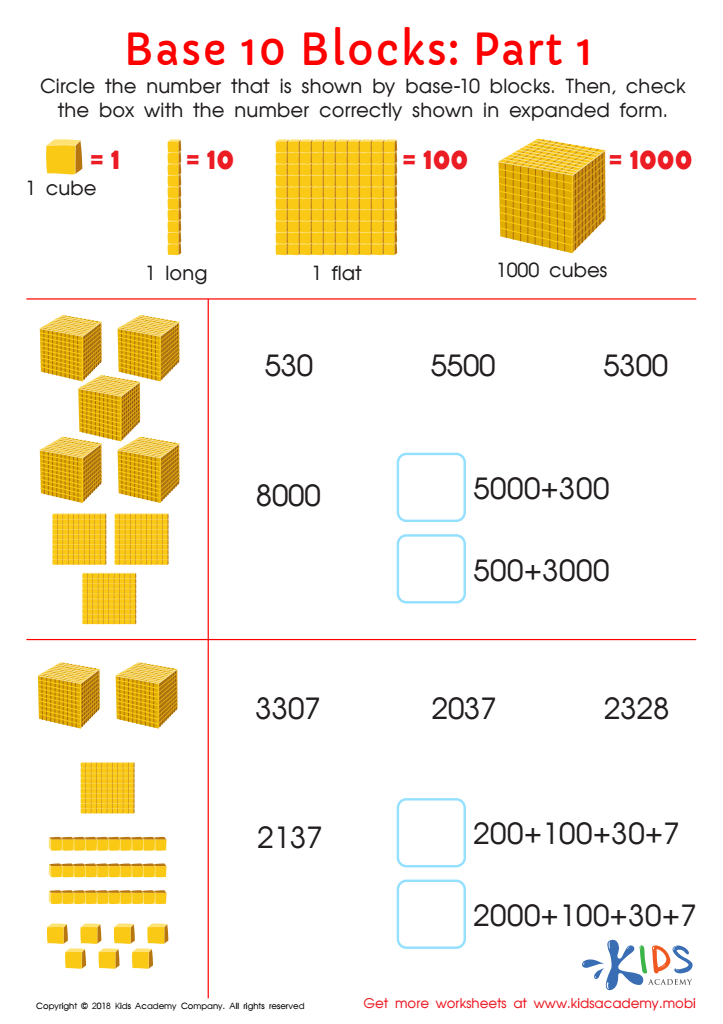
Base 10 Blocks Worksheet: Part 1
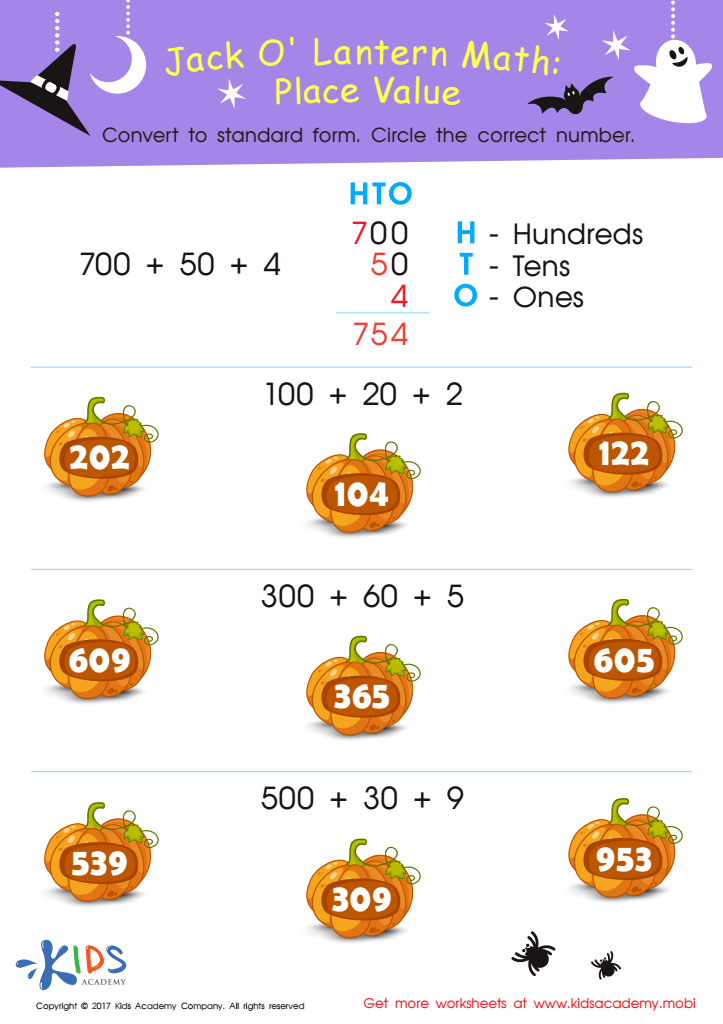
Free Place Value Worksheet
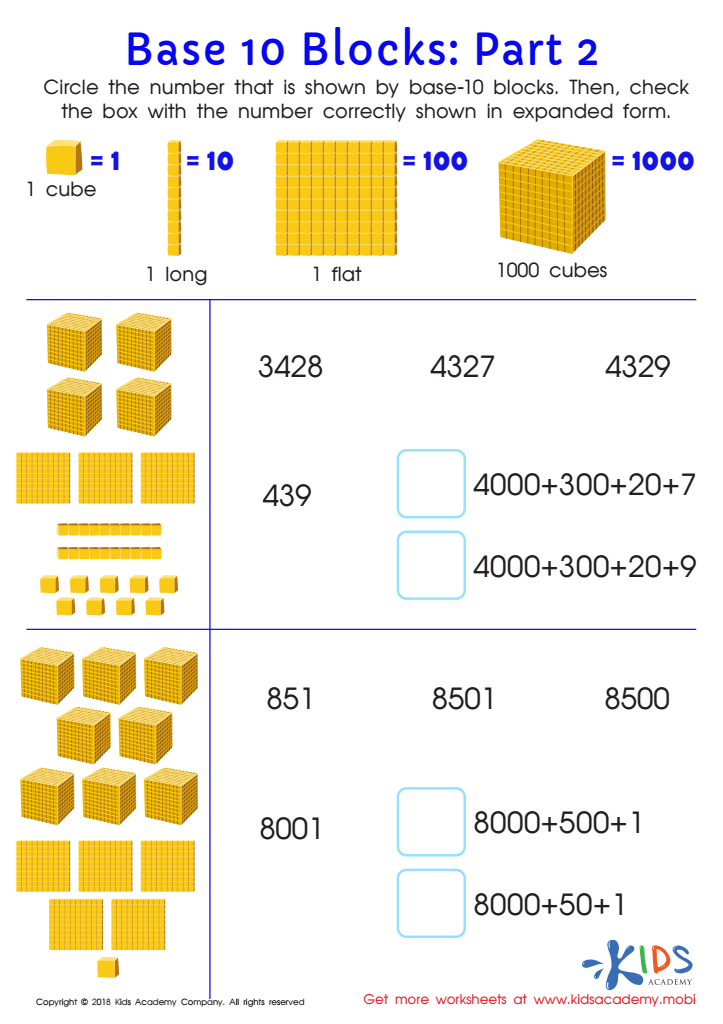
Base 10 Blocks Worksheet: Part 2
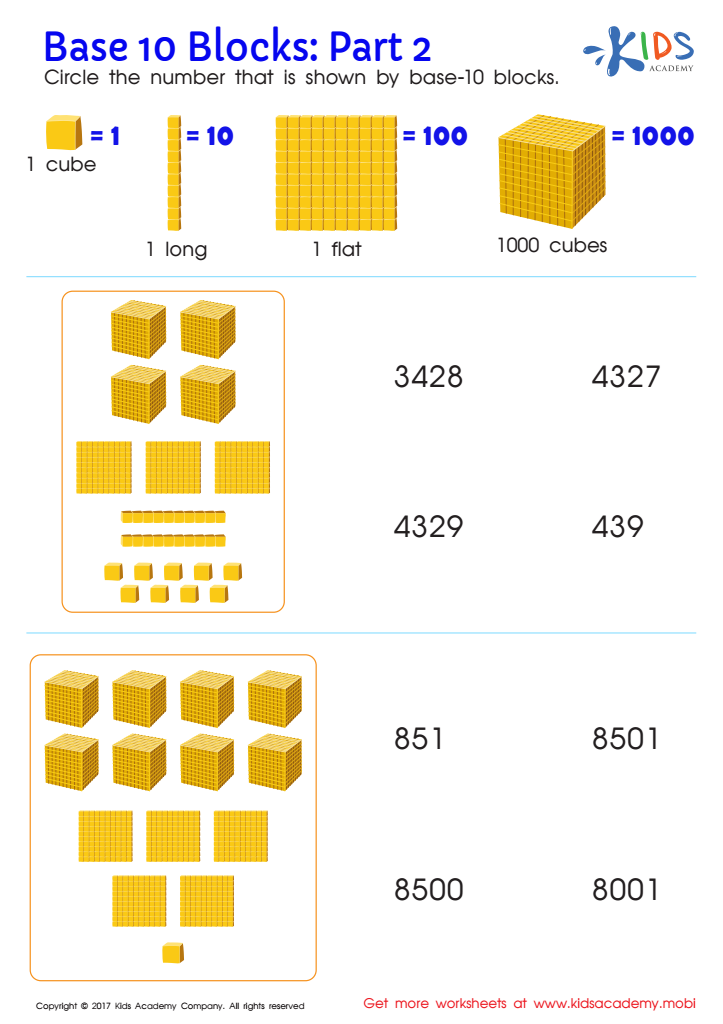
Place Value Worksheet: Thousands








Understanding place value is foundational to a child's mathematical development, particularly for ages 5-9. At this stage, children grasp basic arithmetic concepts and learning the significance of each digit in a number empowers them with skills vital for more complex mathematical operations.
Place value helps children break down and understand multi-digit numbers. For example, in the number 352, the digit 3 represents 300, not just 3. Recognizing this exposes children to the value of each digit based on its position, which enhances their ability to perform addition, subtraction, multiplication, and division with greater ease and confidence.
Furthermore, a strong grasp of place value contributes to their problem-solving and reasoning skills. They’re able to estimate, compare, and sequence numbers effectively—skills paramount not only in academics but in real-life situations such as handling money or measuring quantities.
For teachers, familiarizing children with place value early on creates a solid ground for introducing advanced math topics in later years without reteaching these fundamental concepts. For parents, reinforcing this understanding at home fosters a supportive learning environment, which aids in their child’s overall academic confidence and curiosity.
In essence, mastering place value aids in fostering a child’s number sense, crucial for their overall cognitive development and enthusiasm for learning mathematics.








