Understanding skip-counting Numbers Worksheets for Ages 5-9
3 filtered results
-
From - To
Discover engaging skip-counting numbers worksheets designed for ages 5-9! Our comprehensive activities make learning to count by 2s, 5s, 10s, and beyond both fun and effective. These worksheets help young learners improve their number sense, foundation for multiplication, and problem-solving skills. Featuring colorful designs, kid-friendly themes, and interactive exercises, our skip-counting resources make mastering math concepts enjoyable and accessible. Encourage your child to explore patterns in numbers, boost their confidence, and build strong arithmetic abilities. Perfect for classroom or at-home practice, our skip-counting worksheets are a vital tool for early grade math success.
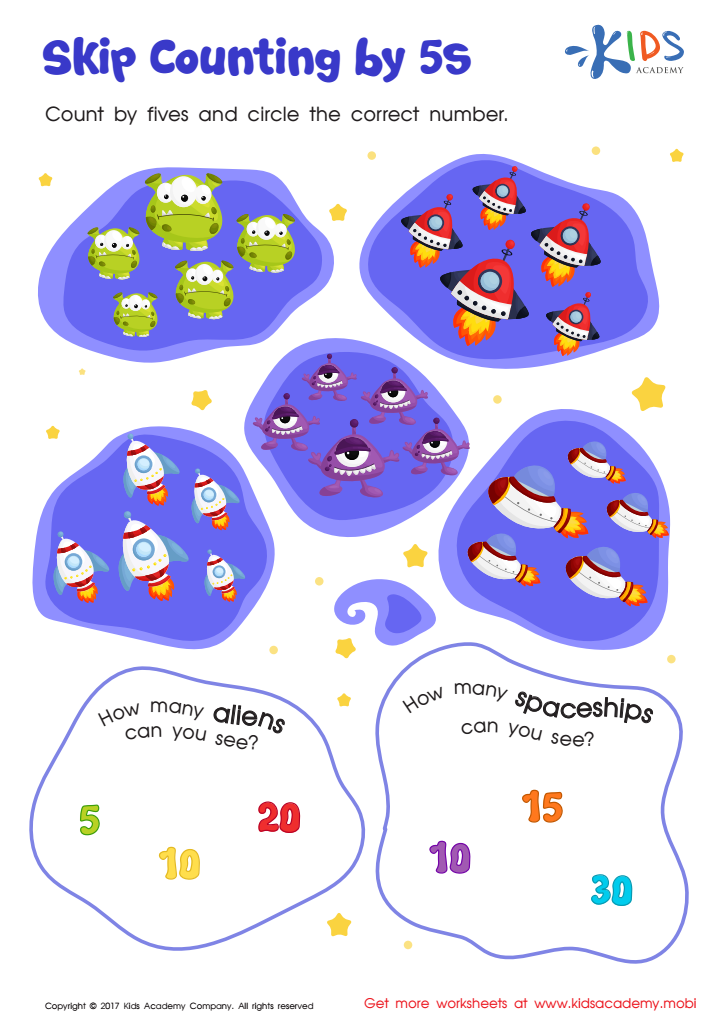
Skip Counting by 5s: Aliens and Spaceships Printable
 Assign to My Students
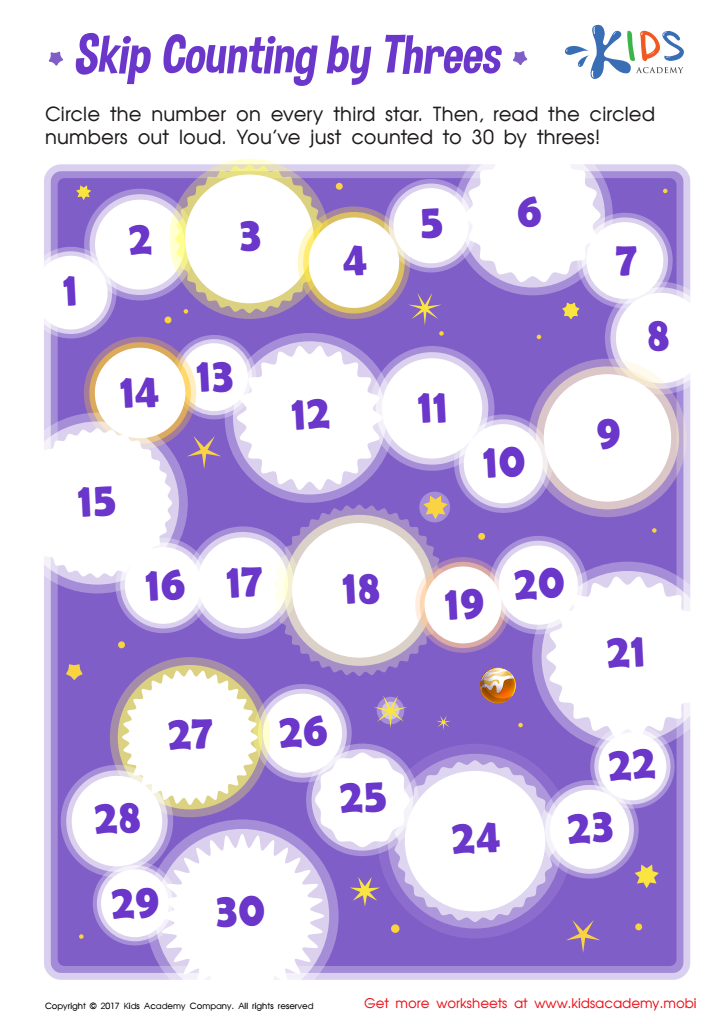
Skip Counting By Three Printable
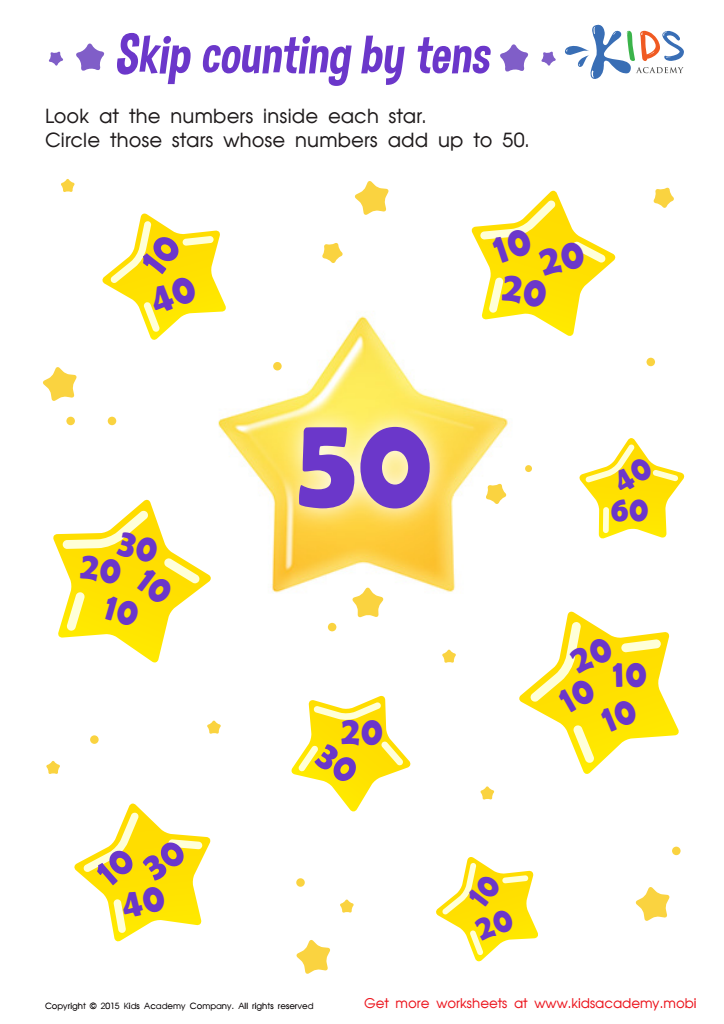
Learn Dozens: Skip Counting by Tens Printable








Understanding skip-counting is fundamental for children aged 5-9 as it plays a crucial role in developing early numeracy skills. Skip-counting, which is counting forward or backward by a number other than one (e.g., by twos, fives, tens), helps children grasp the concept of number patterns, which are the building blocks of more advanced arithmetic operations like multiplication and division.
When children learn to skip-count, they enhance their ability to recognize sequences and improve their mental math skills. For example, skip-counting by fives helps them quickly determine multiples of five (5, 10, 15, etc.), which is later useful in calculating time, money, and measurements.
Additionally, skip-counting reinforces place value understanding, which is foundational for working with larger numbers and comprehending the decimal system. Engaging with these number patterns can also boost a child's confidence in handling mathematical concepts, thereby fostering a positive attitude toward math as they progress through their education.
Moreover, integrating skip-counting into daily activities promotes cognitive development by enhancing memory and concentration. It’s a practical skill that makes learning more dynamic and interactive, making math enjoyable and accessible. Thus, parents and teachers should prioritize this fundamental concept early on to ensure a strong mathematical foundation for their children.








