
Visual learning reinforcement Math Worksheets for Ages 5-9
12 filtered results
Difficulty Level
Grade
Age
-
From - To
Subject
Activity
Standards
Enhance your child’s math skills with our engaging Visual Learning Reinforcement Math Worksheets designed for ages 5-9. These worksheets combine fun and education through vibrant visuals and interactive activities, making math concepts easier to grasp. Perfect for early learners, our resources cover essential topics such as counting, addition, subtraction, and more. With a focus on visual learning, children are able to understand and retain math concepts better, boosting their confidence and academic performance. Visit our website to access a variety of colorful, printable worksheets that transform learning math into an enjoyable and rewarding adventure!
Favorites
With answer key
Interactive
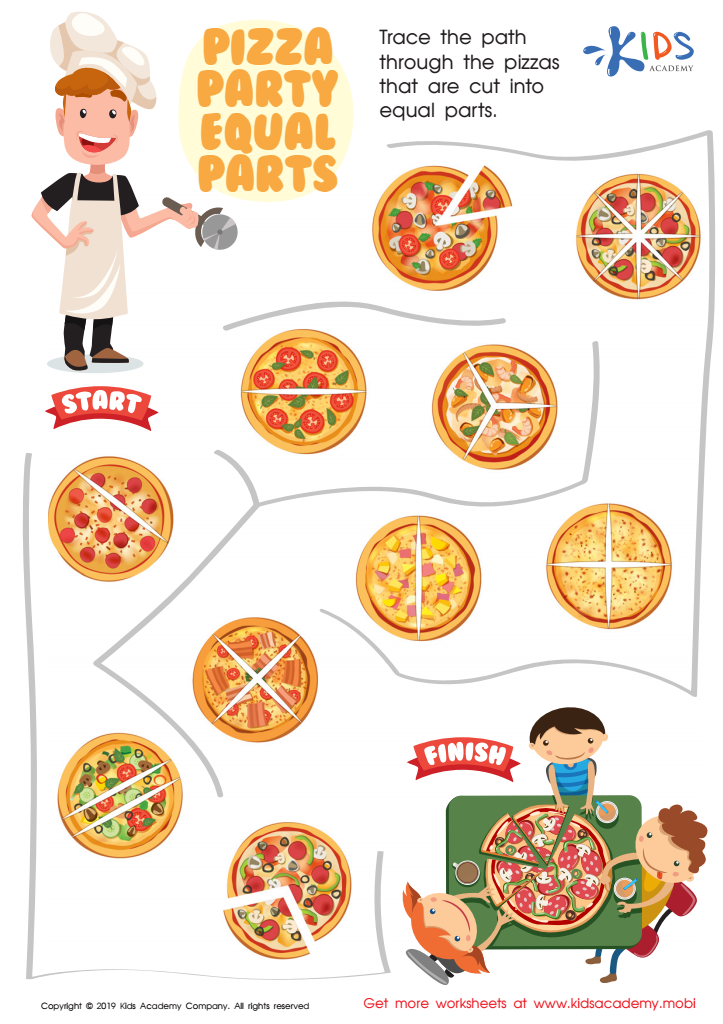
Pizza Party Equal Parts Worksheet
Love pizza? This printout is a great way to help kids learn about equal parts! Kids must identify pizzas cut into equal parts, then trace the path through the pizzas. It's an exciting maze - and a great way to help kids learn! Get the traceable pdf today and let the fun begin!
 Assign to My Students
Pizza Party Equal Parts Worksheet
Worksheet
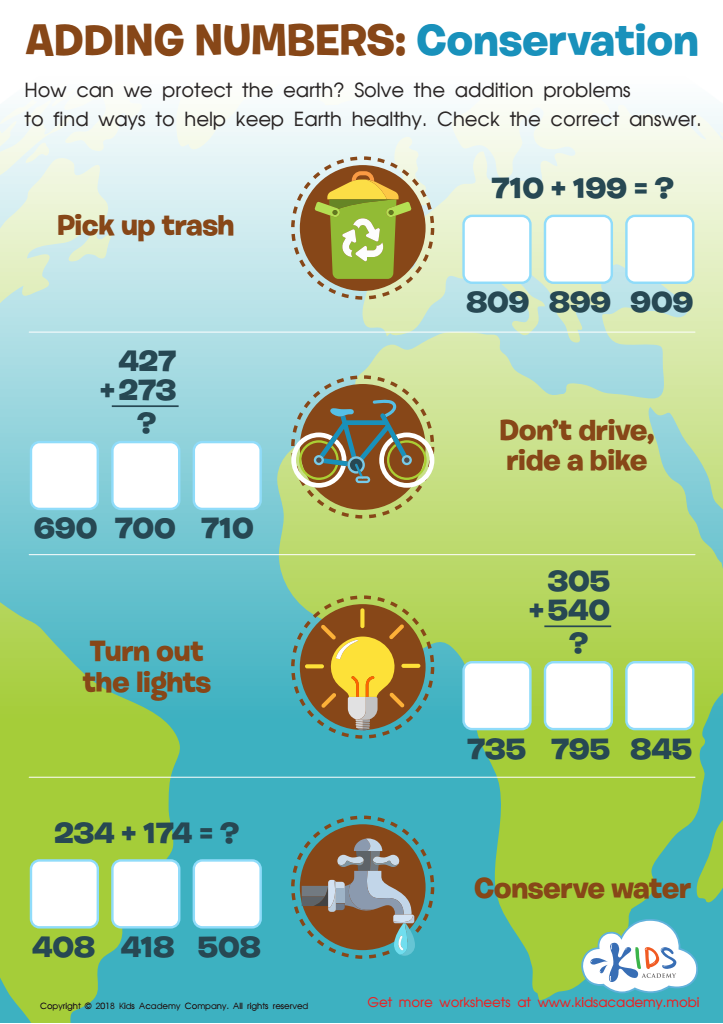
Adding Numbers: Conservation Worksheet
We all live on the Earth, which provides us with the vital necessities for survival. Unfortunately, we too often take advantage of this, causing pollution, water wastage and global warming. Help teach your kids how we can protect our planet - ask them to come up with good ideas and work together to find solutions. Challenge them to solve the subtraction problems to see what they can do to help keep the Earth healthy.
Adding Numbers: Conservation Worksheet
Worksheet
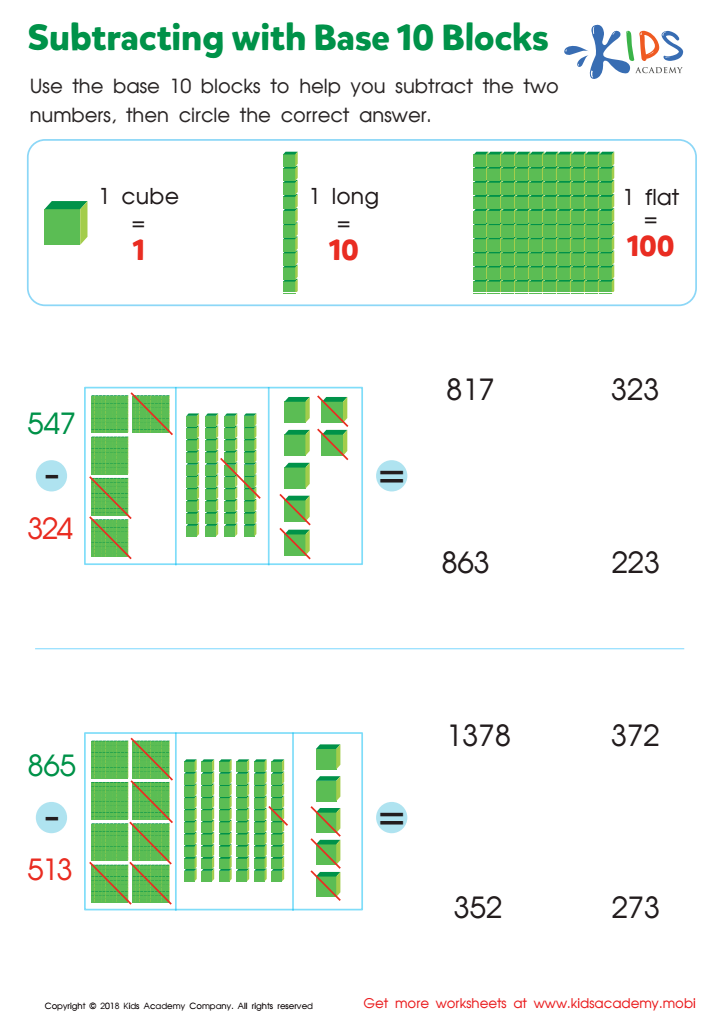
Subtracting with Base 10 Blocks Worksheet
Is your child having difficulty with 3-digit subtraction? They're not alone! Show your kid the idea behind subtracting with the help of Kids Academy's PDF worksheet. Colorful green base blocks are used to visualize the concept. Starting from the tens column, subtract each number and use the images for guidance. Allow your child to circle the correct answer for a comprehensive math lesson.
Subtracting with Base 10 Blocks Worksheet
Worksheet
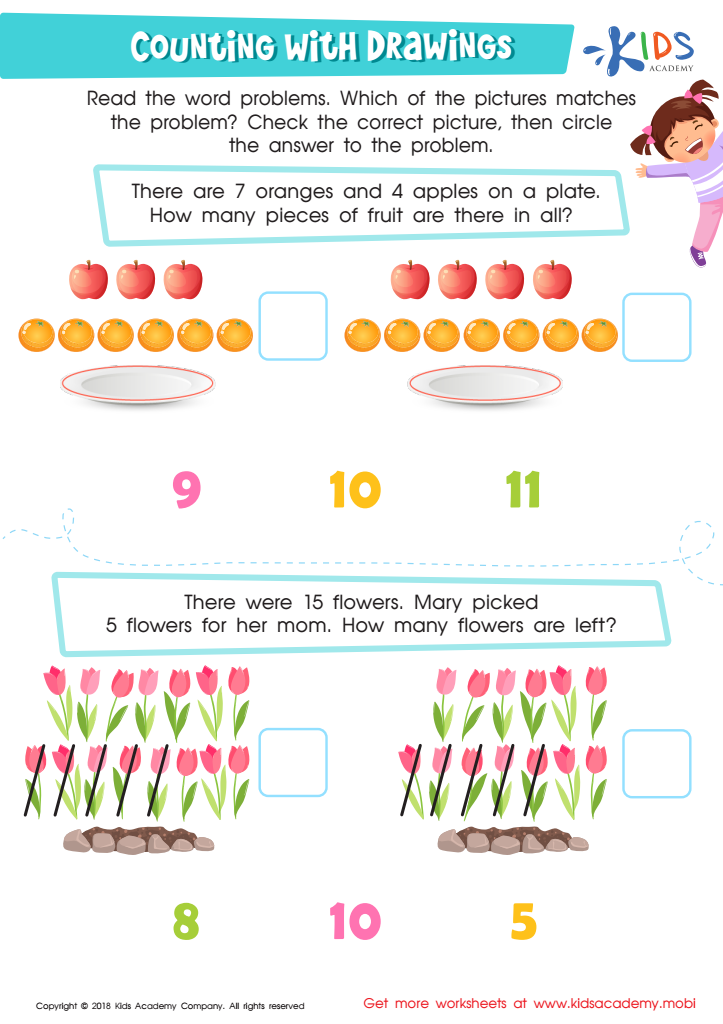
Counting with Drawings: Fruits & Chocolates Worksheet
Learning basic addition and subtraction has never been easier with this free worksheet! Young mathematicians can sort & count to get the right sum or difference for each problem. Plus, they'll practice fine motor skills by circling the correct answer. An ideal way to help kids build important visual recognition and discernment skills.
Counting with Drawings: Fruits & Chocolates Worksheet
Worksheet
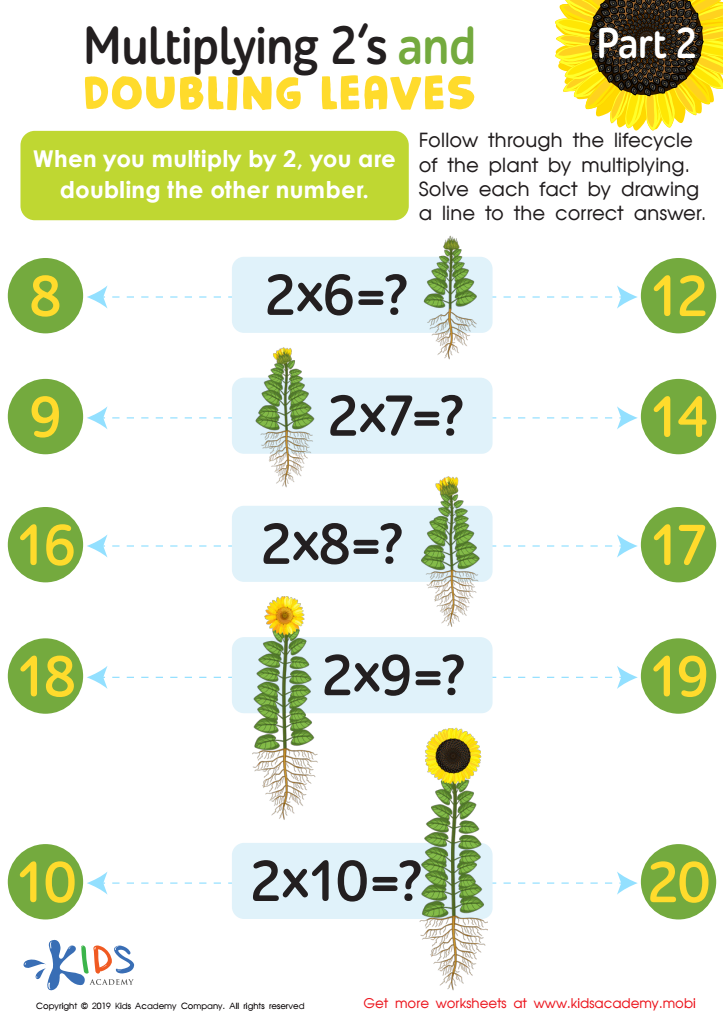
Multiplying 2’s and Doubling Leaves Part 2 Worksheet
Help your students master multiplication with these simple tips. Double the number for multiplying by 2 and use this interactive tracing sheet for solving each fact. Plus, it's colorful making it fun for your students to learn.
Multiplying 2’s and Doubling Leaves Part 2 Worksheet
Worksheet
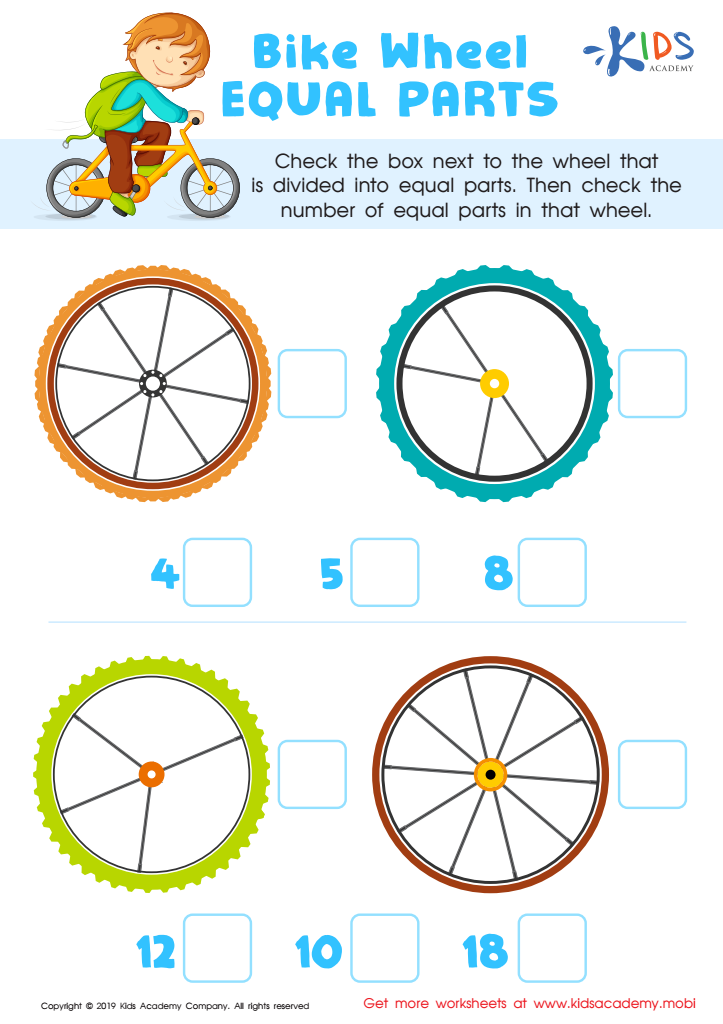
Bike Wheel Equal Parts Worksheet
Help your kids have fun while they learn! Ask them to identify the object in the picture with four wheels. Guide them to count the spokes, then check the box on the wheel with equal parts. Lastly, check how many equal parts the wheel is divided into.
Bike Wheel Equal Parts Worksheet
Worksheet
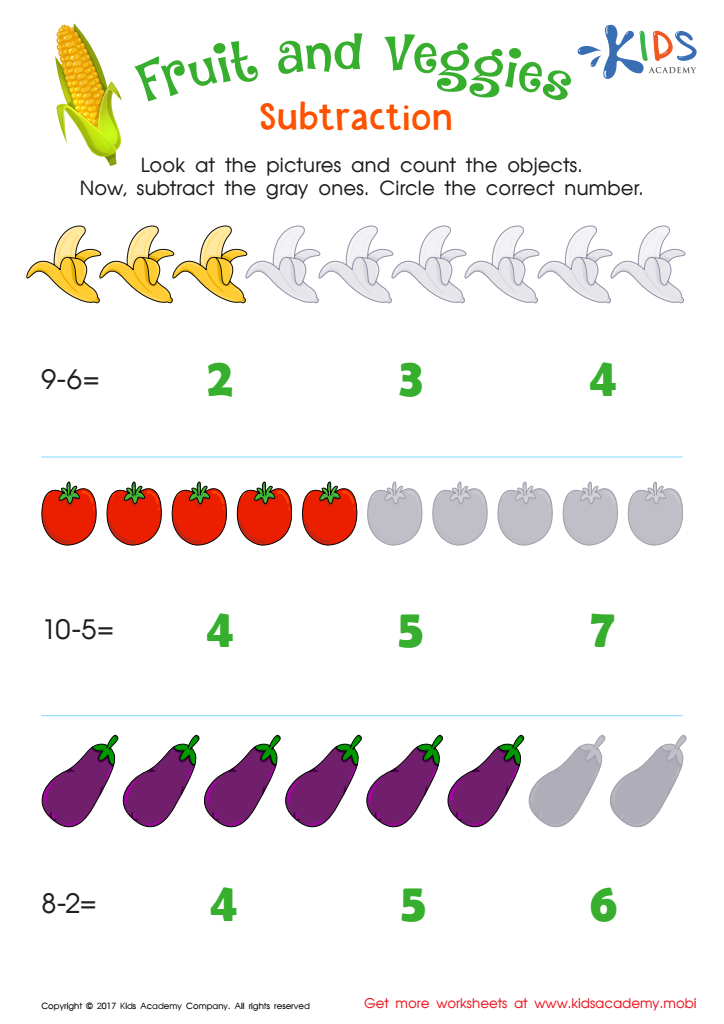
Fruit and Veggies Subtraction Worksheet
Kids learn subtraction with this fun worksheet: fruits and veggies! Kids use pictures to count or take away to get the right answer, aiding in understanding subtraction better.
Fruit and Veggies Subtraction Worksheet
Worksheet
Join Kids Academy for Free
Who is primarily going to use this learning content?




.jpg)

Visual learning reinforcement in math for children aged 5-9 is essential for several reasons. At this developmental stage, young learners are primarily concrete thinkers, meaning they grasp concepts better when they can see and manipulate objects. Visual tools such as pictures, manipulatives, and diagrams simplify abstract mathematical ideas, making them easier to understand.
Firstly, visual learning in math engages multiple senses, thereby reinforcing memory. When children see and touch, they create stronger neural connections that make concepts more memorable. For example, using counters or number lines helps children understand addition and subtraction beyond rote memorization.
Secondly, visuals promote problem-solving and critical thinking skills. Tools like graphs and charts encourage children to analyze information and draw conclusions independently. This foundation is crucial for more complex mathematical reasoning as they progress in their education.
Moreover, visual aids cater to diverse learning styles. While some children may excel with numerical data alone, others might find it challenging. Visual reinforcement helps bridge this gap, making math accessible to all learners, regardless of their learning preferences.
Lastly, fostering a positive attitude towards math at an early age is vital. Fun and engaging visual activities can minimize math anxiety, making learning a joyful experience. Consequently, children develop a lifelong appreciation and confidence in math, laying a strong groundwork for future academic success.








