Filters

8 filtered results

Clear all filters
Favorites
With answer key
Interactive

8 filtered results

Difficulty Level

Grade


Enhance your child's cognitive development with our specially designed matching worksheets for ages 5-9. These engaging and educational worksheets boost critical thinking, problem-solving, and memory skills. Perfect for young learners, our resources focus on fun yet challenging activities that improve concentration and sharpen cognitive abilities. Tailored to fit various learning styles, these printable worksheets are ideal for use at home or in the classroom. Watch your child thrive academically and cognitively as they enjoy completing these interactive tasks. Visit our website to explore an extensive collection that supports your child's intellectual growth.

Check out this FREE Trial Lesson on Matching for age 5-9!

Match Exactly the Same

Favorites
With answer key
Interactive
  • 5-9
  • Cognitive Development
  • Matching
Matching Colors Worksheet

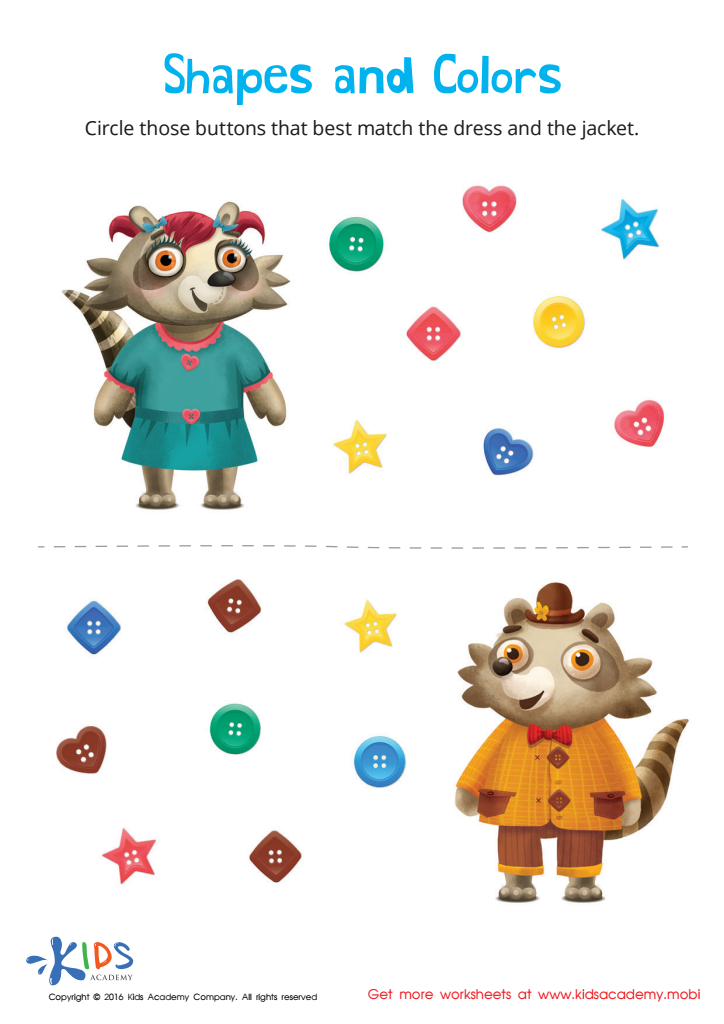
Matching: Shapes and Colors Worksheet

Help Mr. and Mrs. Raccoon find the right buttons to match their shirts! Kids will identify shapes and colors and learn to match them correctly.
Matching: Shapes and Colors Worksheet
Worksheet
Fruits Matching Worksheet

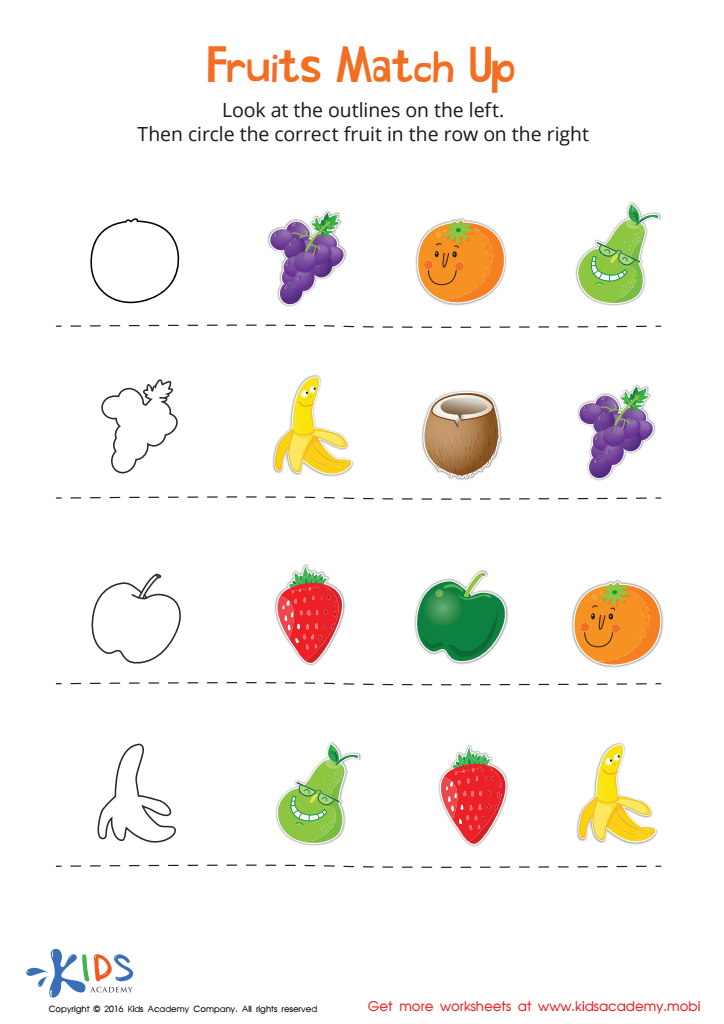
Fruits Match Up Worksheet

Motivate your child to count and sharpen their spatial reasoning skills with this vivid fruit worksheet.
Fruits Match Up Worksheet
Worksheet
Opposites on the Farm Worksheet

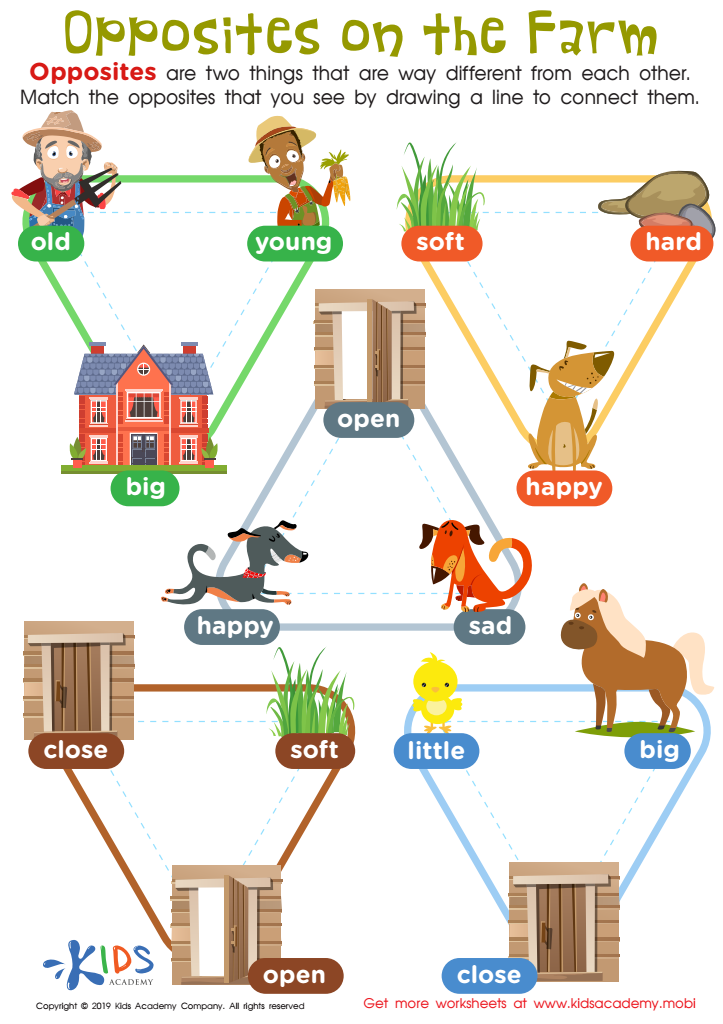
Opposites on the Farm Worksheet

Teaching children the concept of opposites is important for their development. This worksheet offers a fun way to practice. Kids can use traceable lines to match farm imagery with pairs of opposites. It's a great way to help them compare and contrast, a key skill for reading, math, writing and more.
Opposites on the Farm Worksheet
Worksheet
Colorful Arrays Bingo Worksheet

Colorful Arrays Bingo Worksheet

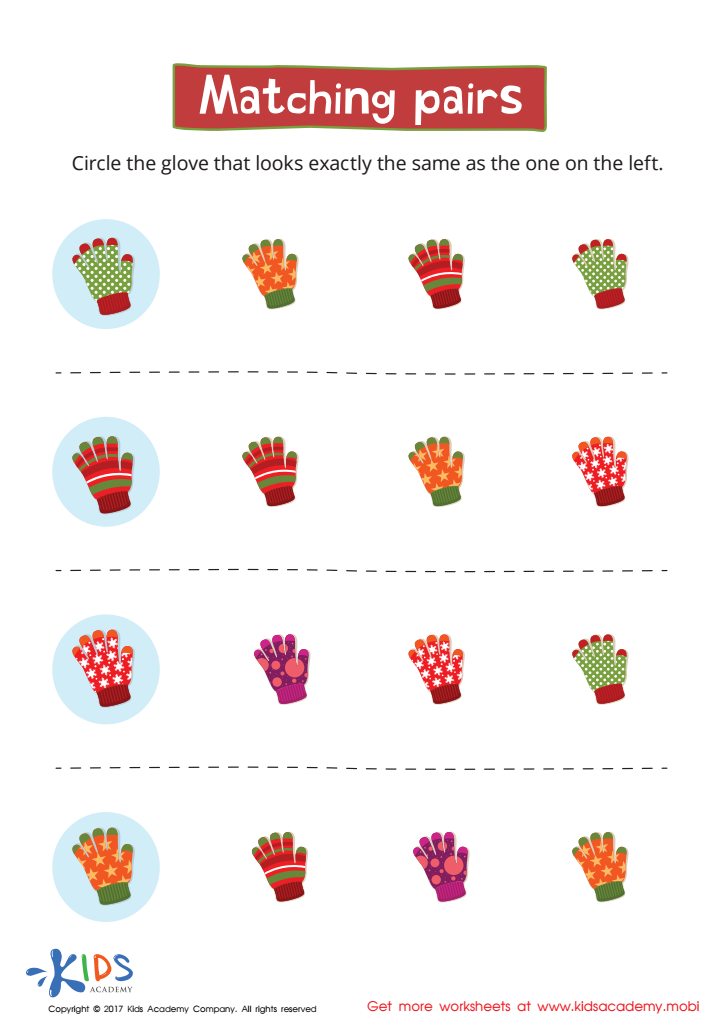
This worksheet stimulates thinking about arrays and how to represent them. Instruct students to count the 6 arrays and find which ones sum up to 12. Ask them to check the answers for accuracy.
Colorful Arrays Bingo Worksheet
Worksheet
Preschool Matching Worksheets

Matching: Matching Pairs Worksheet

Winter's here! Get your child ready with a fun matching worksheet. Challenge them to sort mitten designs, recognize directions, and match mittens in other rows. This helps preschoolers hone problem-solving skills and recognize shapes. Print out more seasonal activities for a diverse summer experience!
Matching: Matching Pairs Worksheet
Worksheet
Free Math Worksheets for Kids

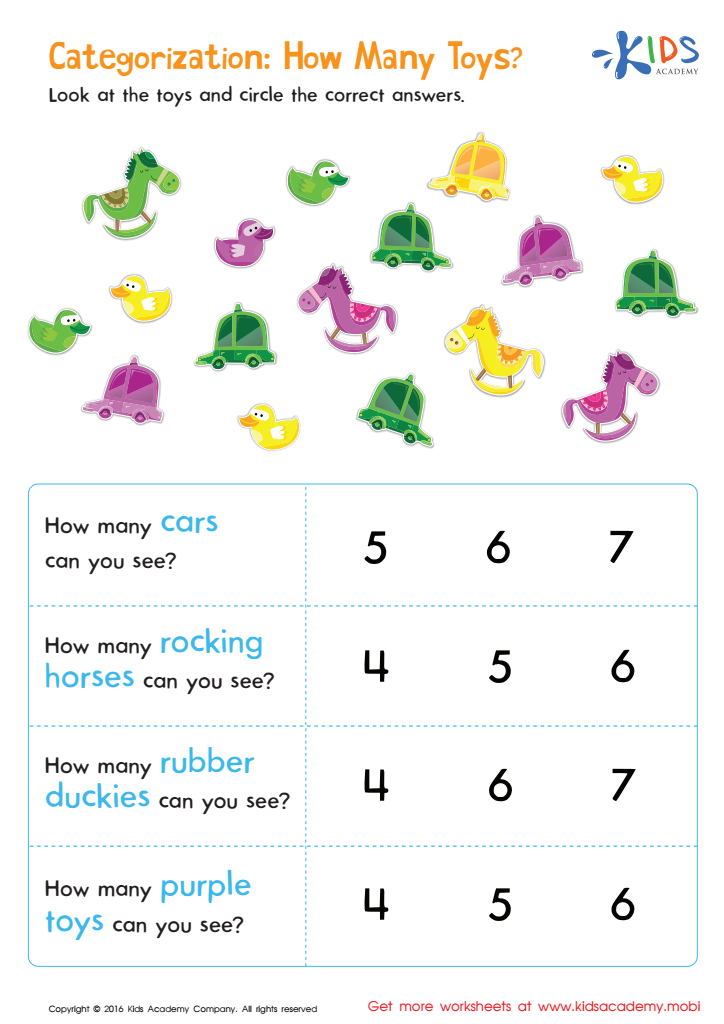
Classifying Toys by Type and Color Sorting Worksheet
Kids Academy offers free math worksheets to help practice counting, categorization & recognition skills. Kids will enjoy counting by color & type while strengthening problem-solving & literacy skills.
Classifying Toys by Type and Color Sorting Worksheet
Worksheet
Missing Letters Worksheet

Missing Letters Worksheet

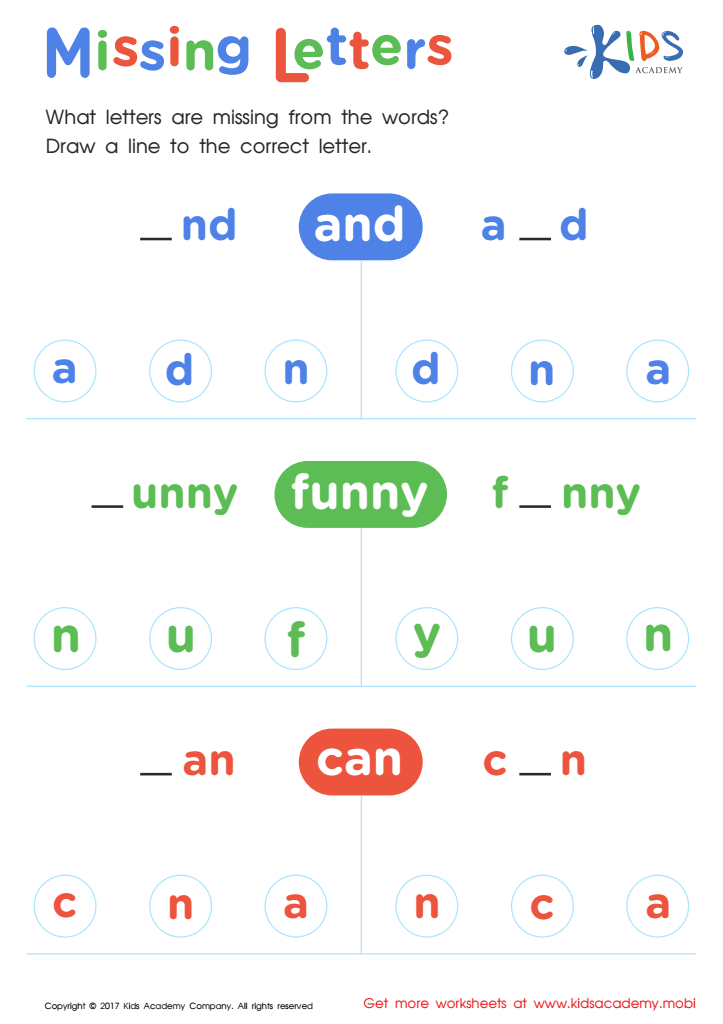
Review sight words with this fun matching worksheet from Kids Academy! Look at the sight words in the middle, read them aloud and find the missing letter on each side for each word. Draw a line to the correct letter to complete the sheet!
Missing Letters Worksheet
Worksheet
Preschool Matching Worksheet

Shapes Worksheet

This fun worksheet will challenge your child to recognize tricky patterns, sort through similar ones, and create strategies to get the right answer. It'll also help them to strengthen problem-solving skills and build confidence. With more challenging tasks, your child will be ready to tackle higher level math and sequencing skills.
Shapes Worksheet
Worksheet


Caring about cognitive development matching for children aged 5-9 is crucial because it directly impacts how they learn and process information. This developmental stage, part of what Jean Piaget defined as the Preoperational and early Concrete Operational stages, includes significant growth in skills like memory, problem-solving, and logical thinking. By ensuring that the learning tasks and materials are appropriately matched to the child’s cognitive abilities, parents and teachers can provide meaningful and supportive learning experiences that promote growth.

When cognitive tasks are too easy or overly challenging, children can become disengaged or frustrated. Properly matched activities help sustain their interest and motivation. For instance, using hands-on activities like puzzles and grouping objects helps children understand concepts of classification and seriation, essential skills at this stage. Similarly, storytelling and role-playing can enhance linguistic and social understanding.

Furthermore, well-matched cognitive activities help identify children's unique strengths and areas needing support. Early recognition of potential difficulties in reading or problem-solving allows for timely intervention, which is critical for long-term academic and personal success. Essentially, regular and mindful interactions focusing on cognitive development build a robust foundation for critical thinking, setting the stage for lifelong learning and adaptability.