Cognitive Development Tracing Shapes Worksheets for Ages 5-9
4 filtered results
-
From - To
Explore our engaging "Cognitive Development Tracing Shapes Worksheets" designed specifically for children ages 5-9! These worksheets provide a fun and interactive way for young learners to enhance their cognitive skills while mastering shape recognition and coordination. Our activities encourage critical thinking and problem-solving as kids trace various shapes, promoting fine motor skills and hand-eye coordination. With vibrant graphics and age-appropriate challenges, these worksheets make learning enjoyable and effective. Whether at home or in the classroom, our resources are perfect for reinforcing essential cognitive development concepts. Download now and give your child the tools to succeed while having fun!
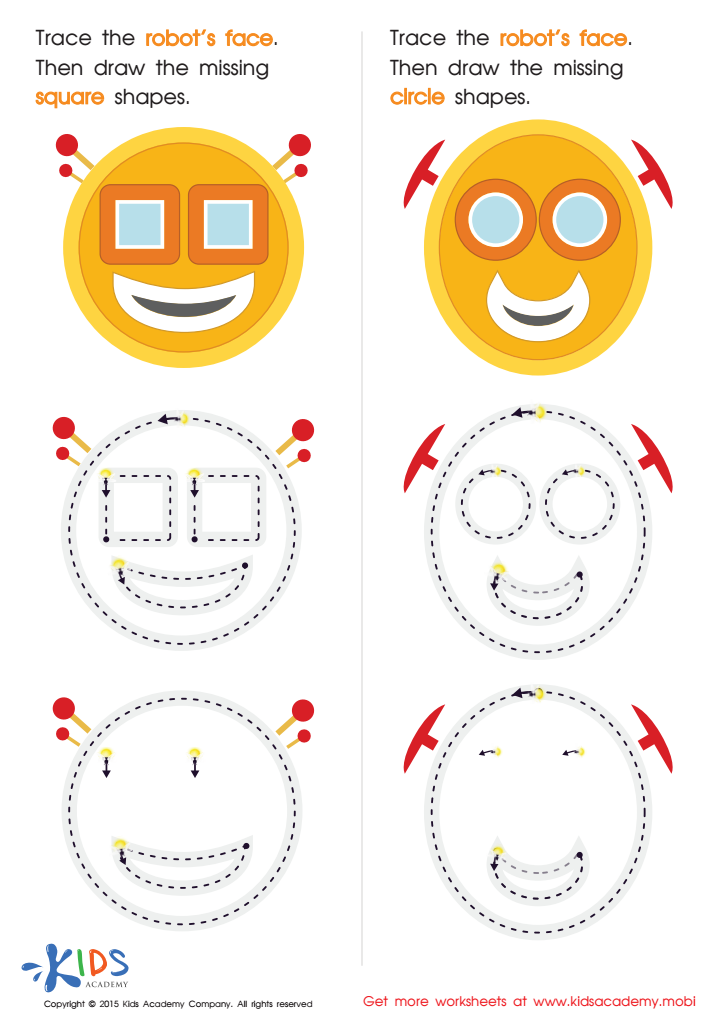
Practicing to Draw Circles And Squares Printable
 Assign to My Students
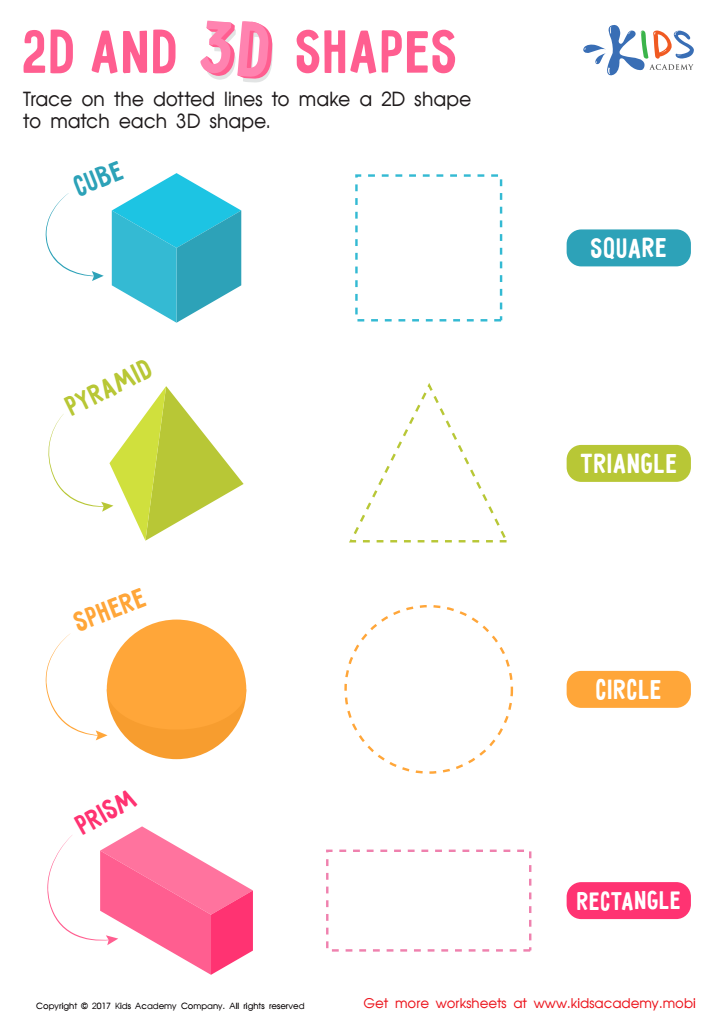
2D and 3D Shapes Worksheet
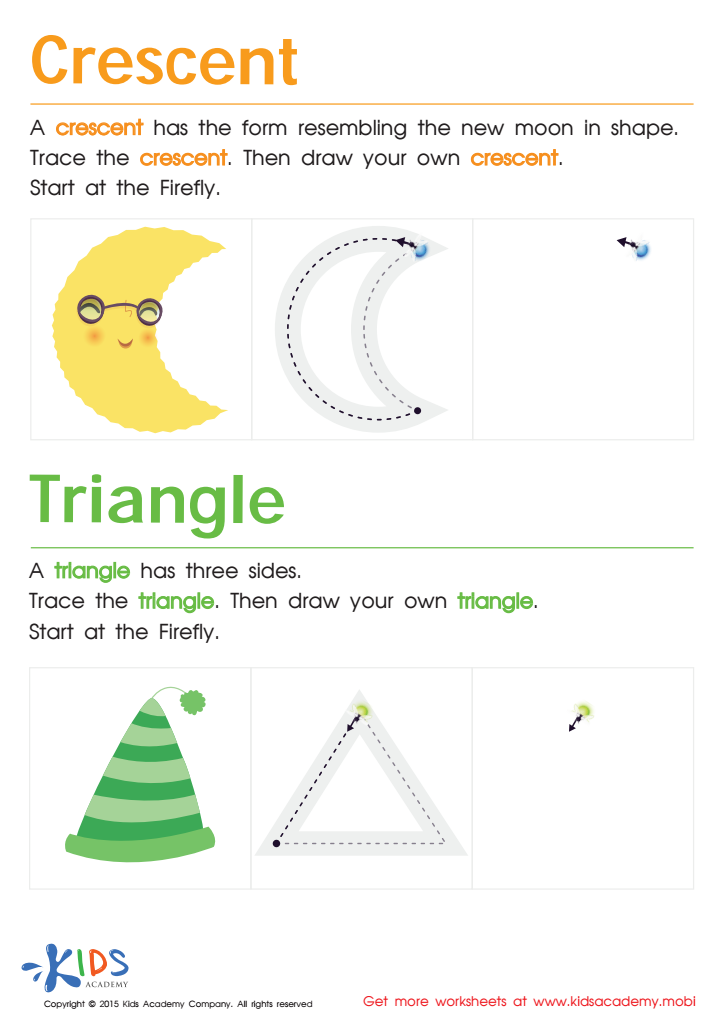
Learning to Draw Crescents And Triangles Worksheet
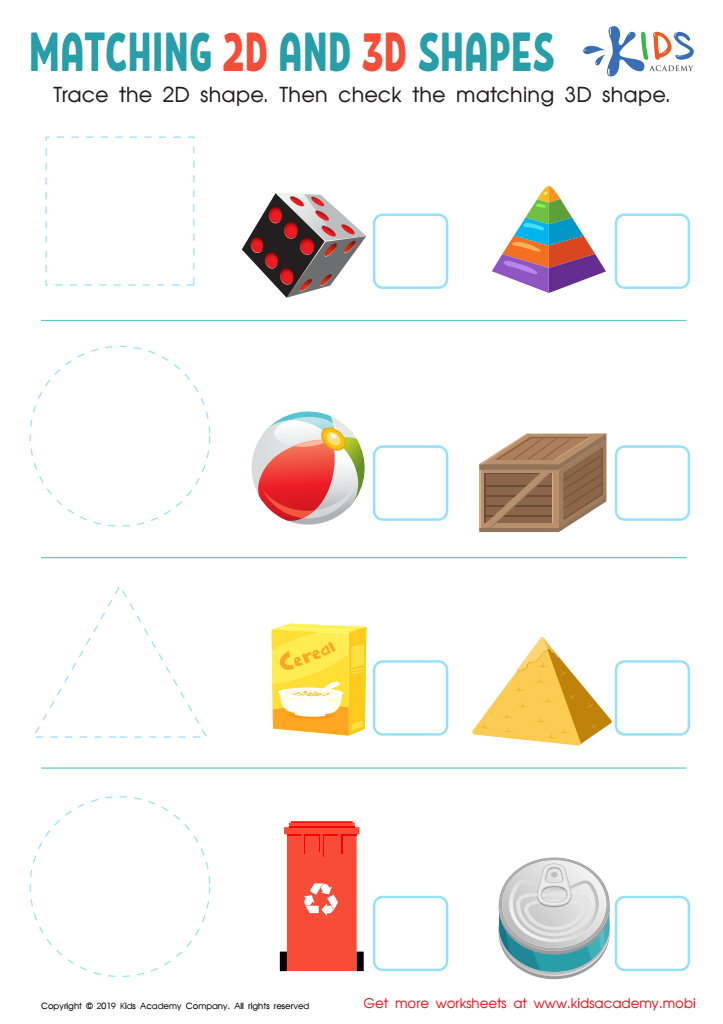
Matching 2D and 3D Shapes Worksheet








Cognitive development during early childhood is crucial for a child's overall learning and growth. Tracing shapes is a vital activity for children aged 5-9 as it enhances various cognitive skills that contribute to later academic success. This practice helps improve fine motor skills, a prerequisite for writing, drawing, and other daily tasks. As children trace different shapes, they develop hand-eye coordination and muscle memory, allowing for smoother, more controlled movements.
Furthermore, shape tracing nurtures visual-spatial skills, which are essential for understanding geometry and problem-solving in mathematics. By recognizing shapes and patterns, children become adept at classifying objects and understanding spatial relationships, which are fundamental concepts in both math and science.
Additionally, tracing shapes boosts cognitive flexibility and concentration. As children focus on the shapes and follow the lines, they enhance their attention span and increase their ability to follow instructions. This foundation supports stronger executive functioning skills in later years.
Engaging in shape tracing not only develops intelligence but also promotes creativity and self-expression. Therefore, parents and teachers should prioritize this simple yet powerful activity to cultivate well-rounded, capable learners who are ready for future educational challenges.