Character analysis Reading Worksheets for Ages 5-9
6 filtered results
-
From - To
Unlock the power of reading comprehension with our Character Analysis Reading Worksheets designed for ages 5-9. These engaging sheets help young learners delve into their favorite stories, promoting critical thinking and understanding. Students can explore characters’ traits, motivations, and development in fun, interactive ways. Activities cater to different skill levels, enhancing vocabulary and providing a strong foundation in narrative analysis. Perfect for classroom use or at-home practice, these worksheets make reading a vibrant and insightful experience. Empower your child to become a more thoughtful reader with printable, easy-to-use resources from Kids Academy. Reading becomes an adventure with our Character Analysis Worksheets!
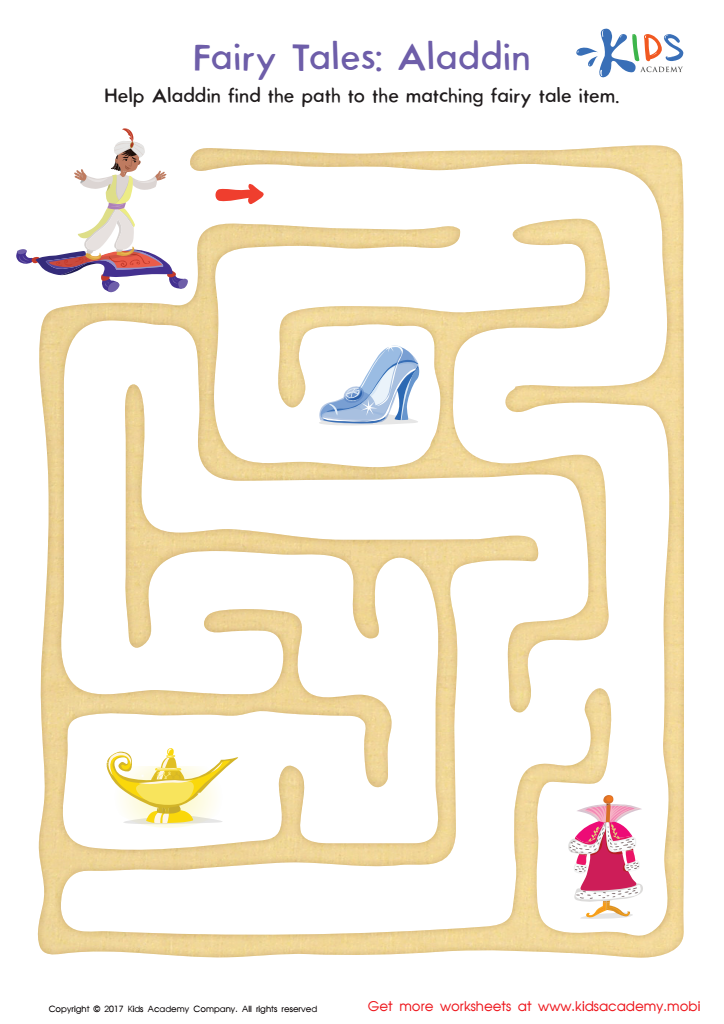
Fairy Tales Aladdin Printable
 Assign to My Students
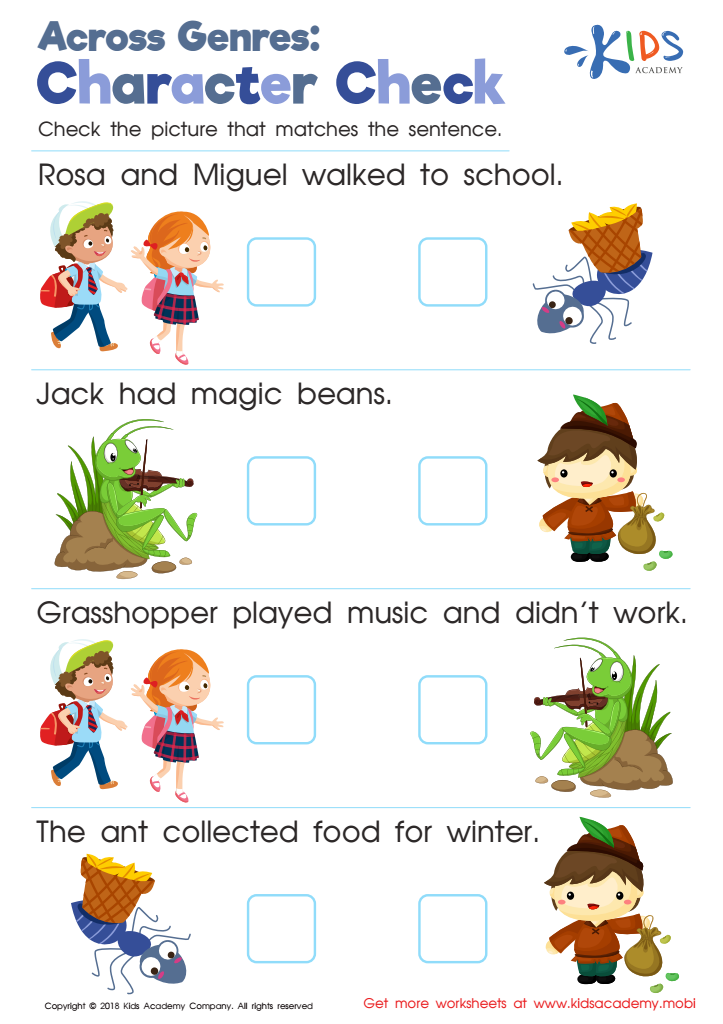
Across Genres: Character Check Worksheet
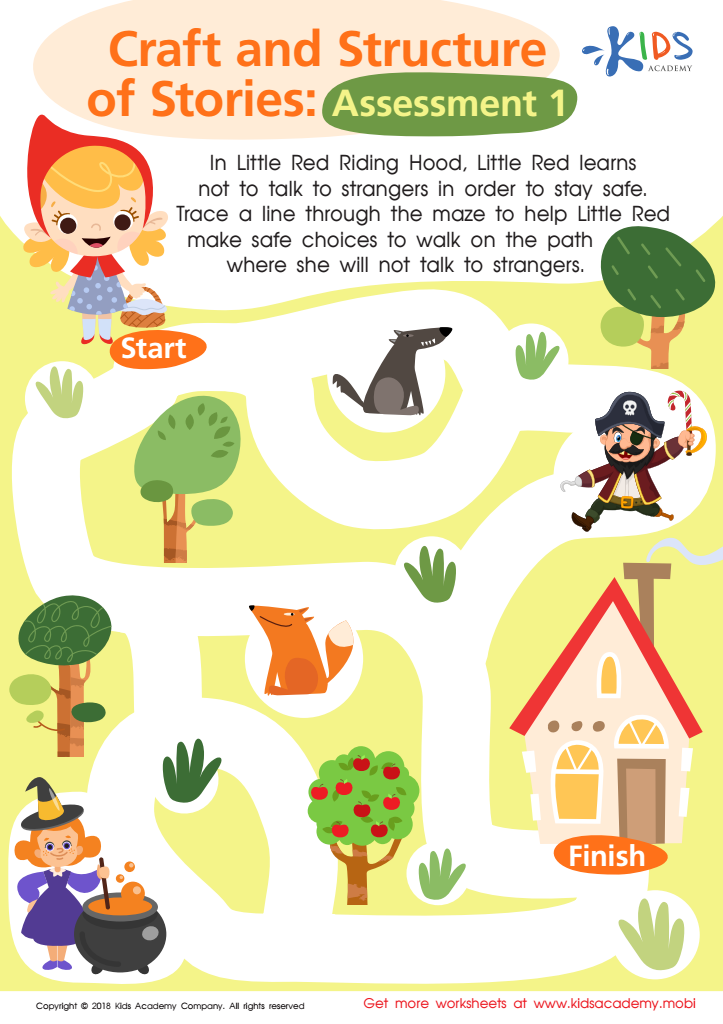
Craft and Structure of Stories: Assessment 1 Worksheet
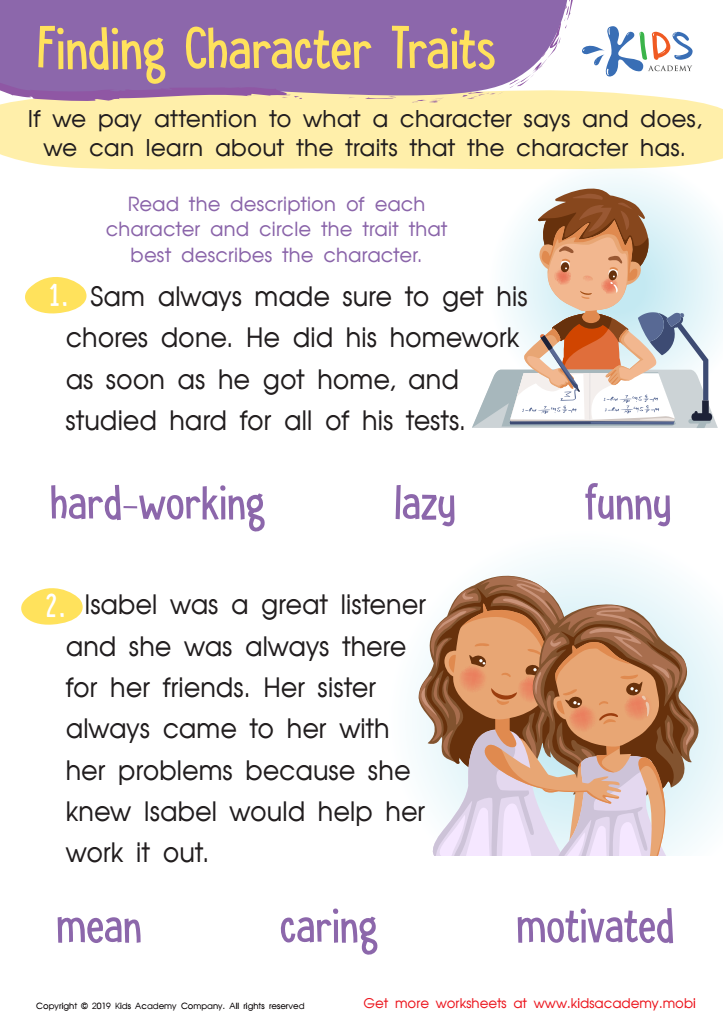
Finding Character Traits Worksheet
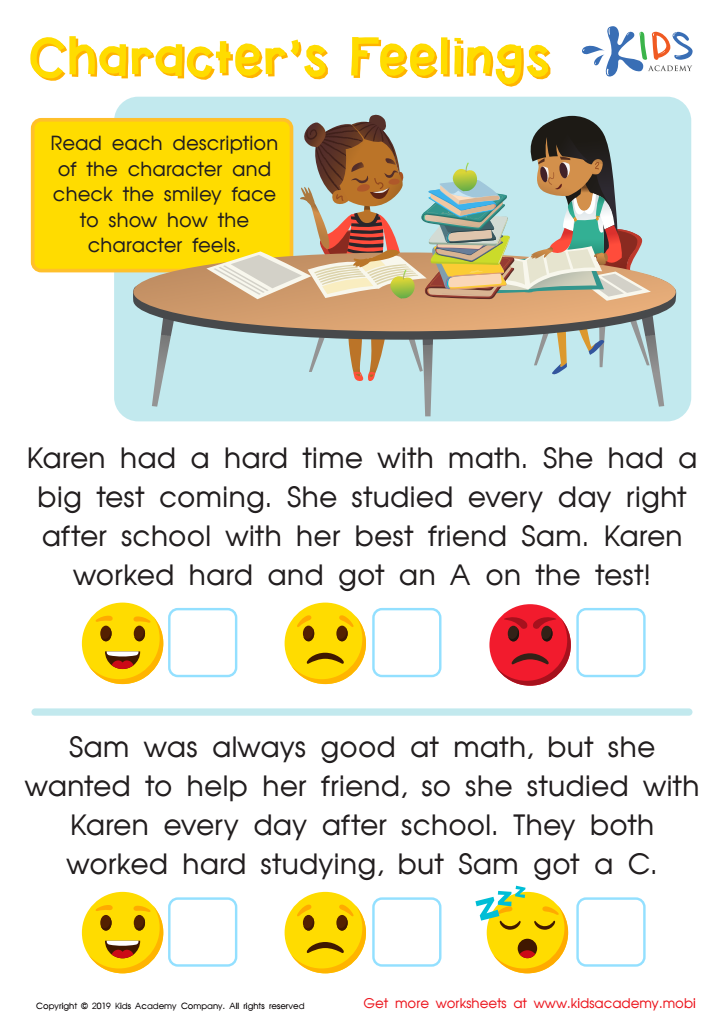
Character’s Feelings Worksheet




.jpg)



Character analysis reading is a vital aspect of early childhood education, essential for children aged 5-9. During these formative years, kids are not only learning to read but also developing important cognitive, social, and emotional skills. Encouraging character analysis strengthens comprehension abilities as children learn to identify key traits, motivations, and developments within a story. This foundational skill assists in understanding more complex texts as they grow older.
Analyzing characters helps children connect with the story more deeply, fostering empathy and emotional intelligence. By exploring different viewpoints and actions, children cultivate a better understanding of diverse behaviors and emotions, which is essential for developing strong social skills. Recognizing why a character acts a certain way instills an early understanding of moral reasoning and discernment between right and wrong.
Furthermore, character analysis supports critical thinking and problem-solving skills. When children evaluate characters' decisions and consequences, they learn to anticipate outcomes and think critically about various situations. This process encourages reflective thinking and enhances vocabulary, helping children articulate their thoughts and opinions more clearly.
In summary, character analysis reading is essential for young learners. It nurtures emotional intelligence, enhances comprehension, and fosters critical thinking, thereby laying a robust foundation for future educational success and interpersonal skills.








