Character recognition Reading Worksheets for Ages 5-9
4 filtered results
-
From - To
Enhance your child's reading skills with our Character Recognition Reading Worksheets, designed specifically for ages 5-9! These engaging worksheets focus on helping young learners identify and recognize various characters from stories, fostering comprehension and imaginative play. By mixing fun activities with essential educational practices, our resources make reading enjoyable while reinforcing language skills. Perfect for homeschooling or classroom use, our character recognition worksheets promote early literacy development in a captivating way. Download now and watch your child blossom into a confident reader as they explore vibrant illustrations and exciting narratives. Empower their literacy journey today with our comprehensive reading resources!
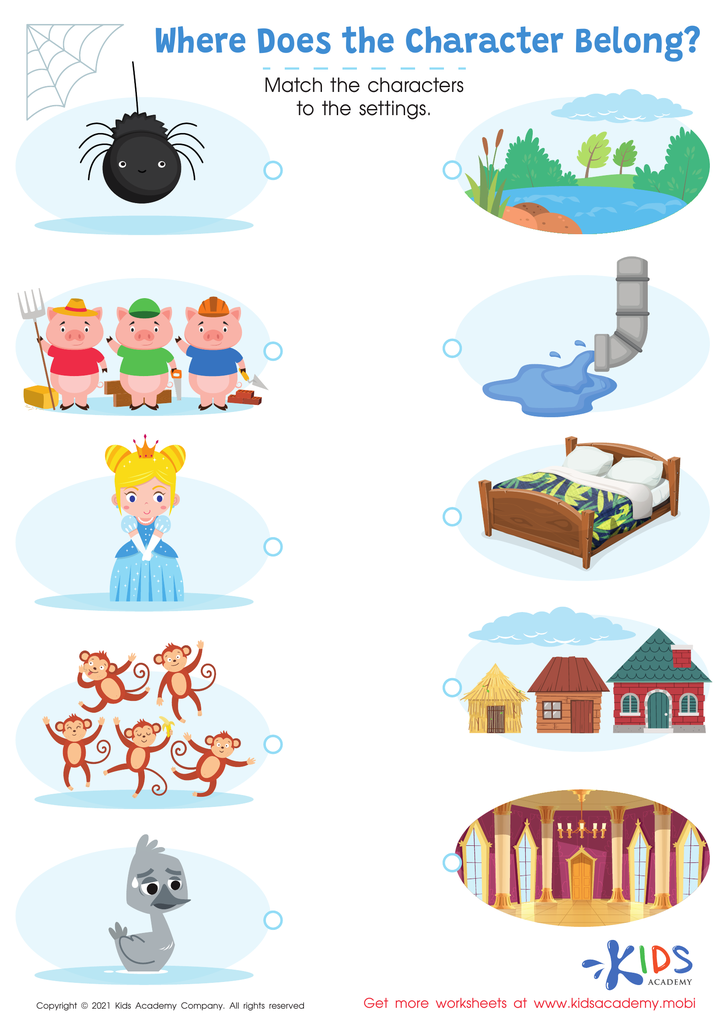
Where Does the Character Belong? Worksheet
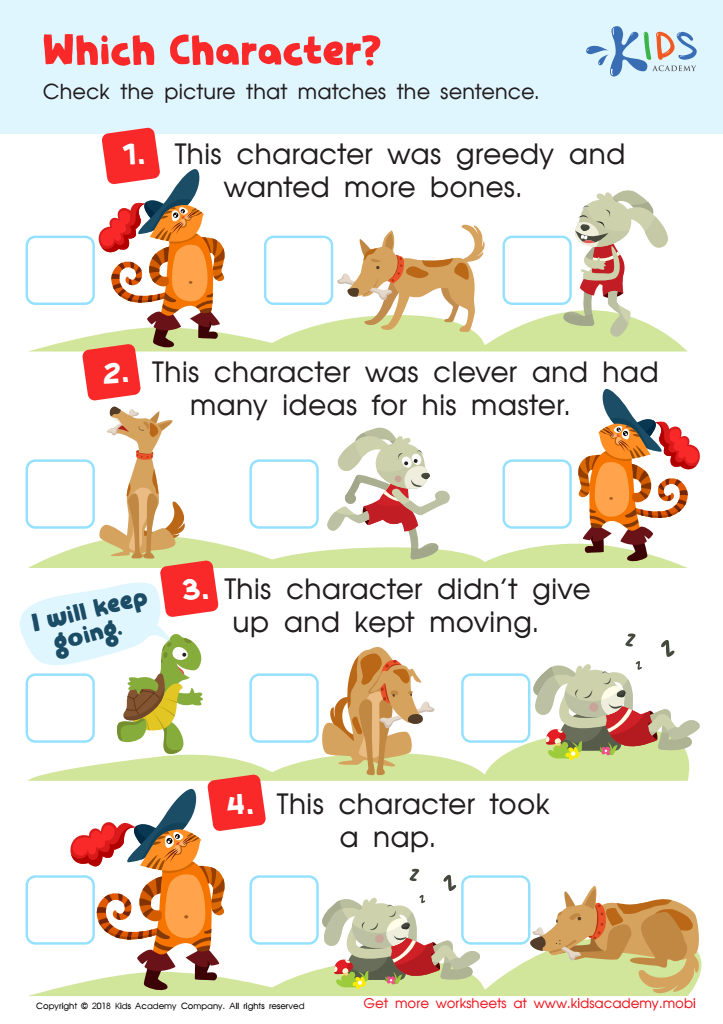
Which Character Worksheet
 Assign to My Students
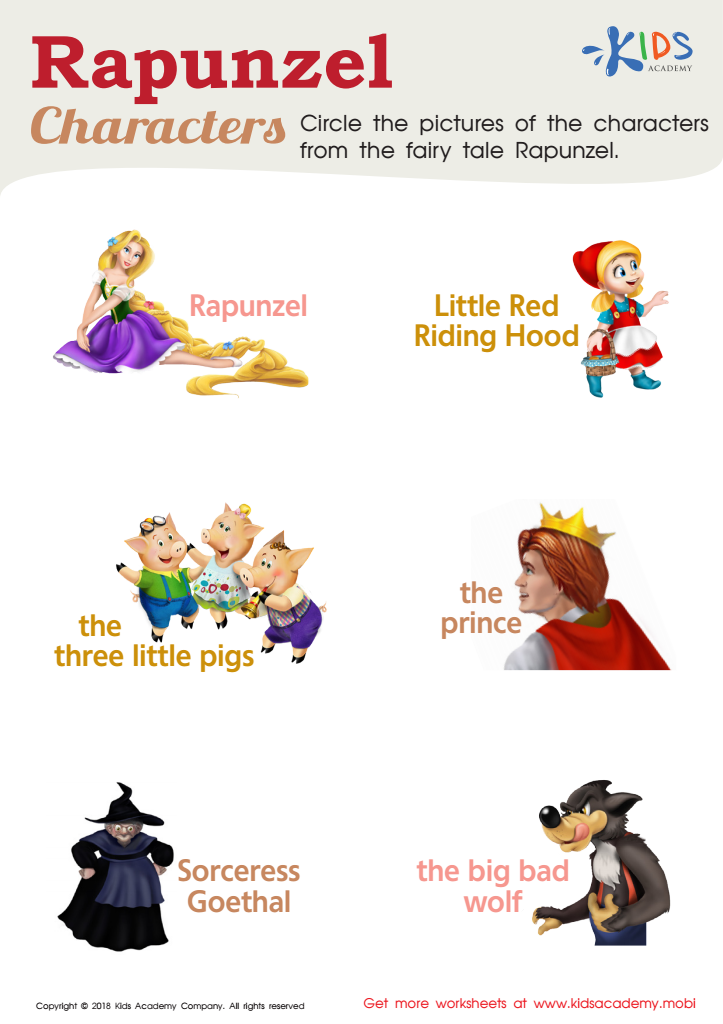
Rapunzel Characters Worksheet
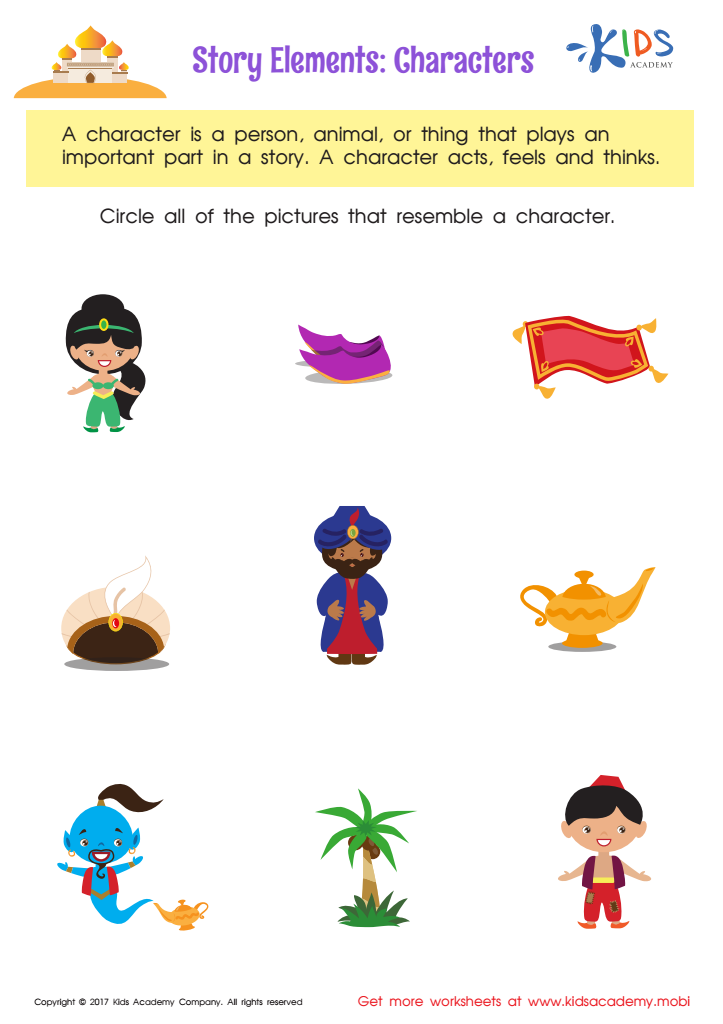
Story Elements Printable








Character recognition is a crucial component of reading development for children aged 5-9. At this age, learners are laying the foundation for their literacy skills, which can significantly impact their academic success and overall development. Understanding character recognition helps children decipher letters and words, essential for fluent reading. When parents and teachers prioritize this skill, they equip children with the ability to decode text more effectively, fostering a love of reading that can last a lifetime.
Moreover, developing strong character recognition skills enhances children's communication abilities. It enables them to express their thoughts and ideas clearly, both verbally and in writing. Playful activities, such as phonics games and reading aloud, can cultivate these skills in an engaging manner, making learning enjoyable.
Additionally, strong character recognition boosts children's confidence, allowing them to participate more fully in classroom discussions and enhance their social skills. As they gain awareness and recognize familiar words, they take pride in their progress, inspiring them to explore more stories. Ultimately, a focus on character recognition leads to improved reading comprehension, critical thinking skills, and a lifelong appreciation for literature – virtues that greatly benefit children as they grow and learn.








