
Enhance critical thinking Reading Worksheets for Ages 5-9
3 filtered results
Difficulty Level
Grade
Age
-
From - To
Subject
Activity
Standards
Enhance your child’s critical thinking skills with our curated Reading Worksheets for Ages 5-9. Designed by educational experts, these engaging and interactive worksheets encourage children to delve deeper into texts, ask thoughtful questions, and develop key analytical skills. Ideal for both classroom and at-home learning, the worksheets feature diverse reading materials and activities that improve comprehension and foster a lifelong love of reading. Through fun exercises and creative tasks, children learn to interpret information, make connections, and solve problems, setting a strong foundation for academic success. Help your child excel with our innovative critical thinking reading resources.
Favorites
With answer key
Interactive
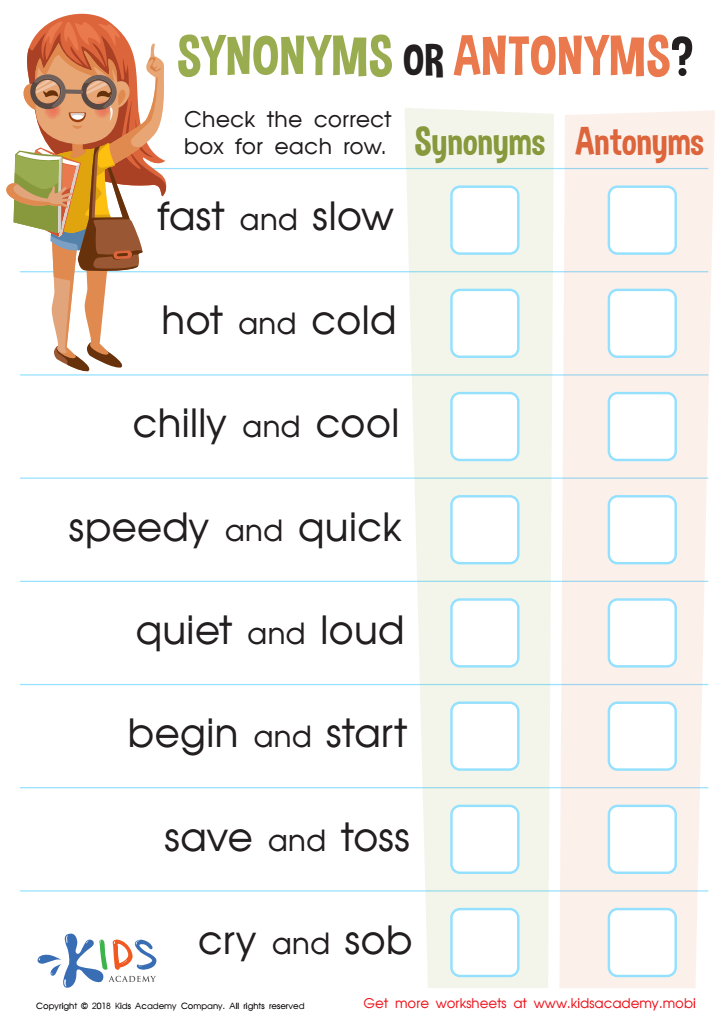
Synonyms or Antonyms: Assessment Worksheet
Test your child's knowledge with this fun worksheet! Ask them to read the words and select if they are synonyms or antonyms - e.g. 'happy' is a synonym and 'bad' is an antonym. For an extra challenge, ask them to provide two synonyms and two antonyms for each word.
 Assign to My Students
Synonyms or Antonyms: Assessment Worksheet
Worksheet
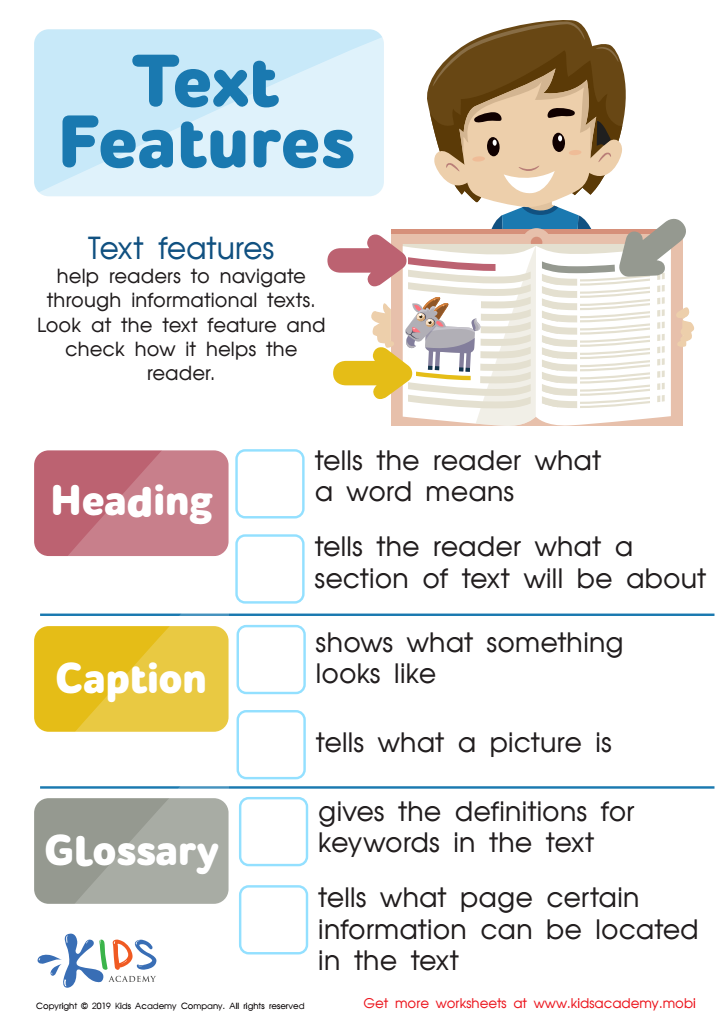
Text Features Worksheet
Help your kids get better at processing and analyzing texts by getting them to practice. Our worksheet with text features will help them find their way. This will help them understand how the features assist in finding information. Encourage practice, and they'll be able to improve quickly.
Text Features Worksheet
Worksheet
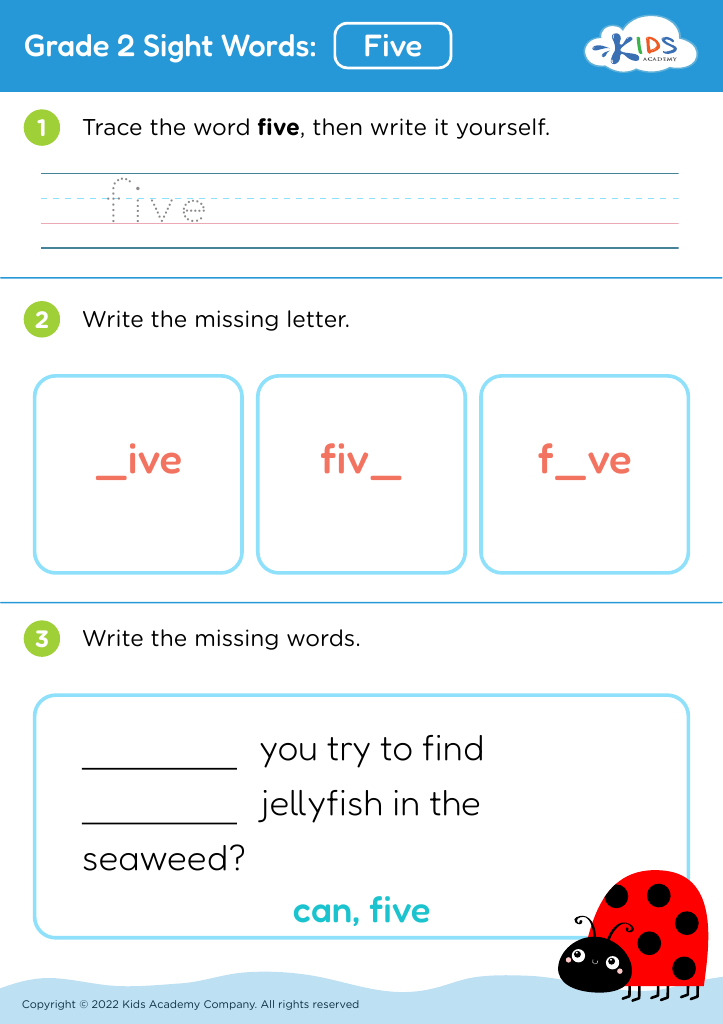
Join Kids Academy for Free
Who is primarily going to use this learning content?








Enhancing critical thinking through reading for children aged 5-9 is essential for several reasons. First, this developmental stage is crucial because children's brains are highly adaptable and capable of absorbing a vast array of information. Engaging children with literature that stimulates critical thinking helps them become active rather than passive learners. They learn to question, analyze, and make connections within texts, fostering a deeper understanding and retention of the material.
Critical thinking in reading encourages curiosity and creativity. When children are prompted to ask questions and think critically about stories, characters, and settings, they engage more deeply with the text and explore various viewpoints and solutions. This skill is fundamental across all areas of learning and life, as it equips children to problem-solve and approach unfamiliar or challenging situations with confidence and resourcefulness.
Additionally, these skills lay a sturdy foundation for future academic achievement. Students with well-developed critical thinking abilities tend to perform better in subjects beyond reading, including math, science, and social studies. Finally, fostering these fundamental skills at an early age prepares children to navigate a world filled with vast amounts of information, empowering them to distinguish between fact and fiction and make informed decisions. Consequently, nurturing critical thinking through reading helps cultivate well-rounded, discerning individuals.








