
Grammar skills improvement Reading Worksheets for Ages 5-9
5 filtered results
Difficulty Level
Grade
Age
-
From - To
Subject
Activity
Standards
Transform young learners into grammar wizards with our engaging "Grammar Skills Improvement Reading Worksheets" tailored for ages 5-9. These expertly designed sheets boost reading and grammar prowess through fun, educational activities. Each worksheet focuses on essential grammar elements like sentence structure, punctuation, verb tenses, and more, ensuring kids grasp and apply key concepts effectively. Our age-appropriate exercises ignite curiosity, making learning enjoyable and rewarding. Whether reinforcing classroom lessons or enhancing homeschool curricula, our worksheets adapt seamlessly to various learning styles. Start your child's language journey today with our Grammar Skills Improvement Reading Worksheets and watch them thrive!
Favorites
With answer key
Interactive
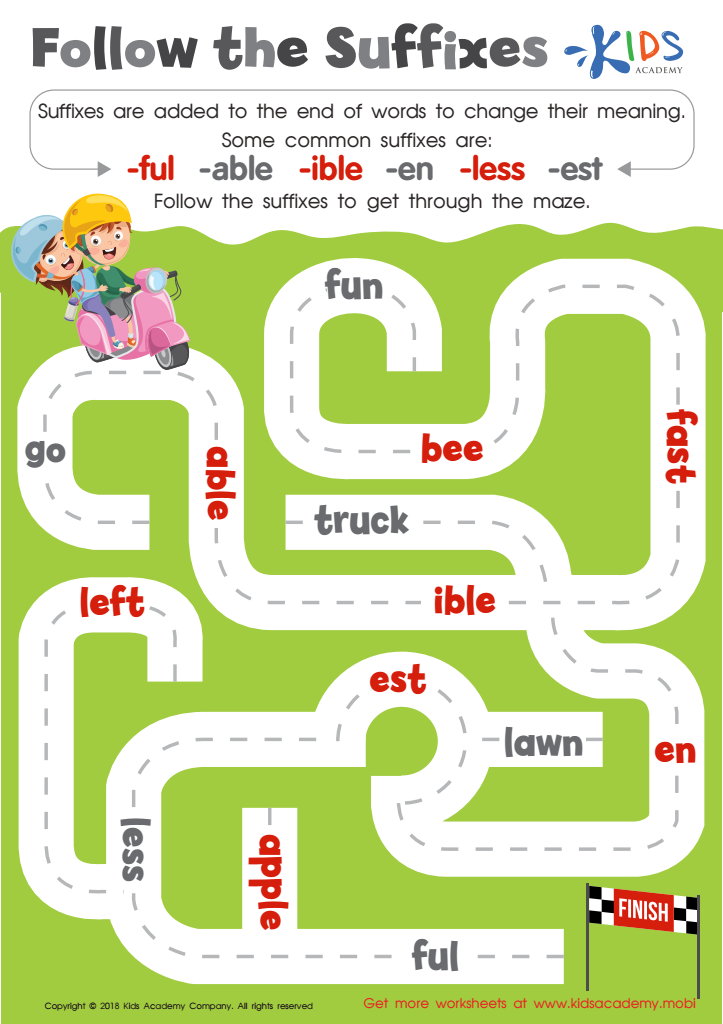
Reading: Follow the Suffixes Worksheet
Students use suffixes to find the right way through a maze in this enjoyable activity! Understanding suffixes helps kids decode and comprehend more words, leading to better reading fluency. A great addition to your reading classes, keep this printable close!
 Assign to My Students
Reading: Follow the Suffixes Worksheet
Worksheet
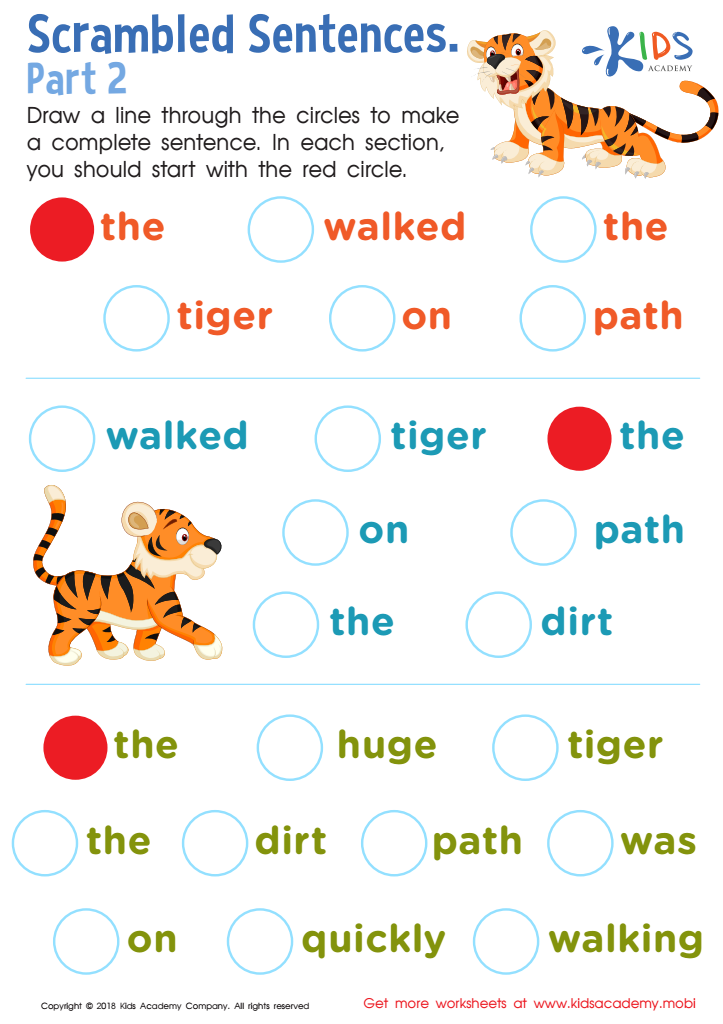
Scrambled Sentences Part 2 Worksheet
This printable worksheet helps kids construct simple, correct sentences. Introduce them to making sentences if they're new to it. Have them draw a line through the circles to form a sentence, starting with the red circle. After completing this exercise, they'll be able to craft short sentences with confidence.
Scrambled Sentences Part 2 Worksheet
Worksheet
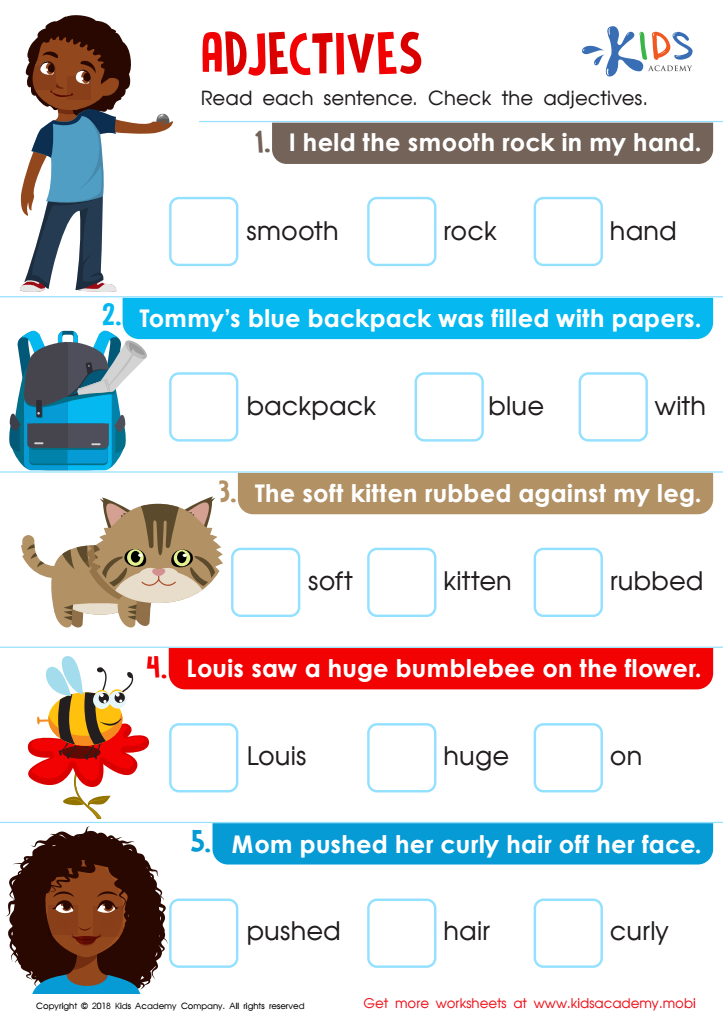
Adjectives Worksheet
Adjectives are words that describe a noun. Examples include "beautiful" and "good". Ask your students to use these adjectives in a sentence and have them identify the adjectives in five sentences on a worksheet. Point out that adjectives are essential to understand, and have them check their answers.
Adjectives Worksheet
Worksheet
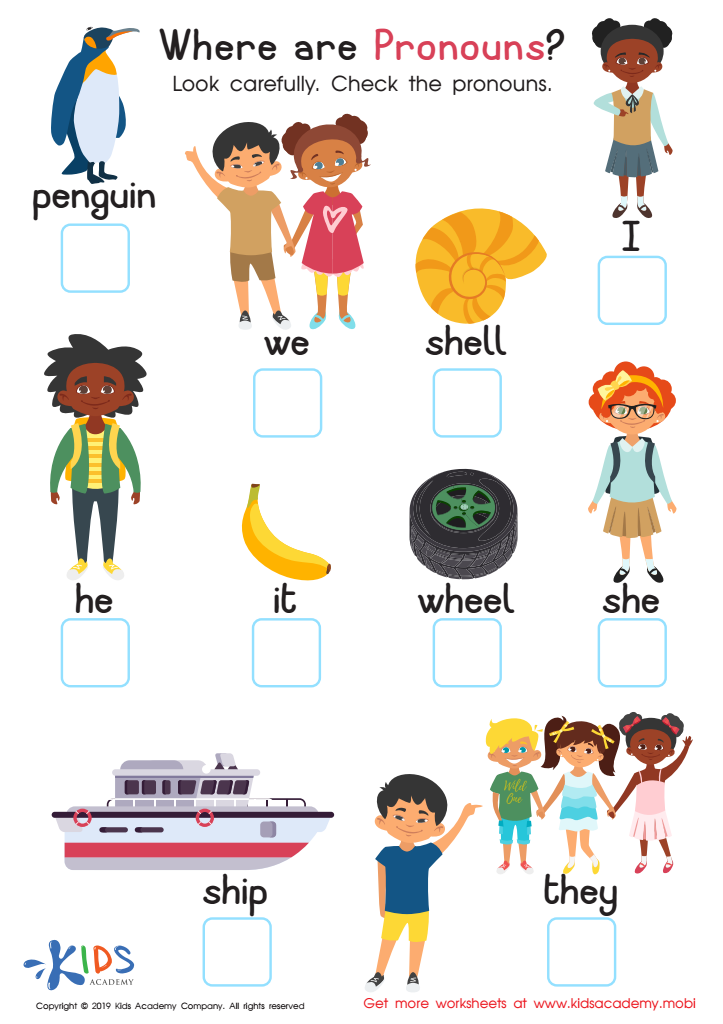
Where Are Pronouns? Worksheet
Pronouns make language flow, substituting "he" or "she" for names. Kids know and use them in their speech, but identifying pronouns in grammar helps build writing skills. This worksheet challenges kids to pick out pronouns from other nouns. Go through the worksheet, view the pictures and read the words. Ask kids to check boxes in front of pronouns to mark answers.
Where Are Pronouns? Worksheet
Worksheet
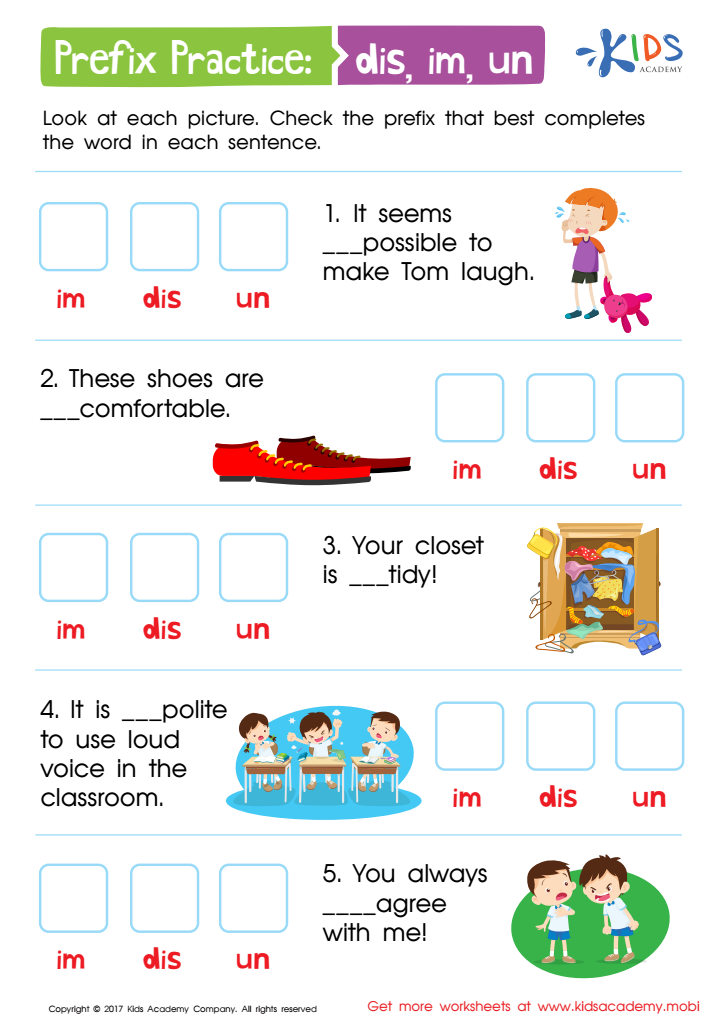
Prefix Practice Worksheet: DIS, IM, UM
This PDF worksheet entertains while helping kids build language skills! Using funny illustrations and context clues, they'll pick the right prefix (DIS, IM, UN) to complete the root words. It's a fun way to practice and expand your child's vocabulary.
Prefix Practice Worksheet: DIS, IM, UM
Worksheet
Join Kids Academy for Free
Who is primarily going to use this learning content?







.jpg)
Parents and teachers should prioritize grammar skill development in children aged 5-9 due to its critical role in foundational learning and cognitive development. Strong grammar skills help children articulate their thoughts clearly and effectively, aiding in better communication. When children understand basic grammar rules, they can structure sentences more accurately, which boosts their confidence in speaking and writing.
Improved grammar skills also enhance reading comprehension. A child who grasps sentence structures and grammar nuances can better understand the texts they read. This early proficiency enriches their vocabulary and encourages a love for reading, contributing to overall academic success. Moreover, early mastery in grammar fosters cognitive skills such as critical thinking and problem-solving as children learn to construct and deconstruct sentences logically.
For teachers, focusing on grammar skill improvement ensures that subsequent learning in other subjects can proceed smoothly, as language is fundamental to all areas of education. For parents, this means equipping their child with essential tools for lifelong learning and communication. Effective grammar instruction at this formative stage sets the stage for academic achievement and helps young learners develop into articulate, literate individuals.








