Moral understanding Reading Worksheets for Ages 5-9
6 filtered results
-
From - To
Help children develop a strong sense of right and wrong with our Moral Understanding Reading Worksheets designed for ages 5-9. Through engaging stories and relatable scenarios, kids learn essential values like honesty, kindness, and respect. These worksheets not only improve reading comprehension but also encourage thoughtful discussions about ethical behavior. Boost your child's moral development with captivating exercises that make learning about integrity and empathy enjoyable. Download our printable worksheets from Kids Academy today and watch young minds grow into responsible, thoughtful individuals. Perfect for parents and educators aiming to nurture good character and strong social skills in children.
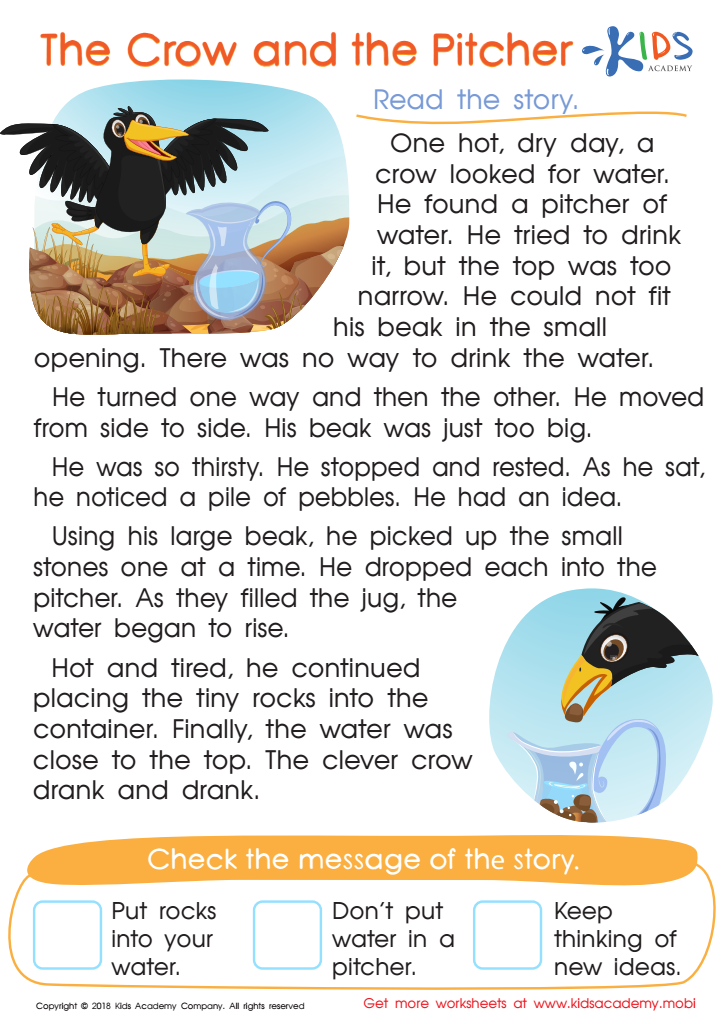
The Crow and the Pitcher Worksheet
 Assign to My Students
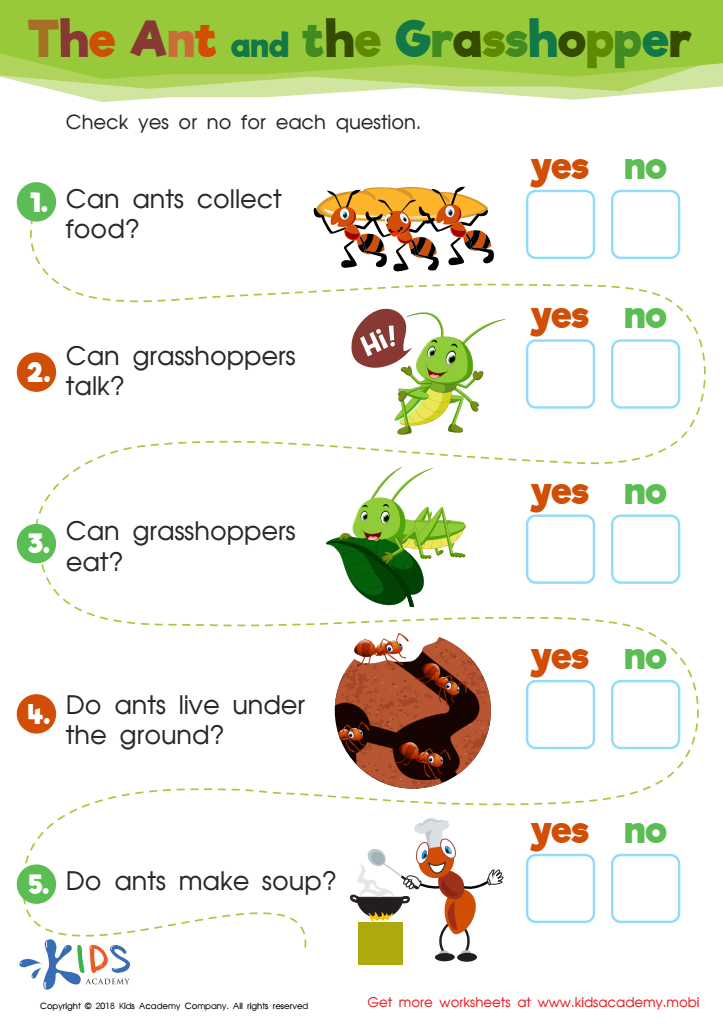
The Ant and The Grasshopper Worksheet
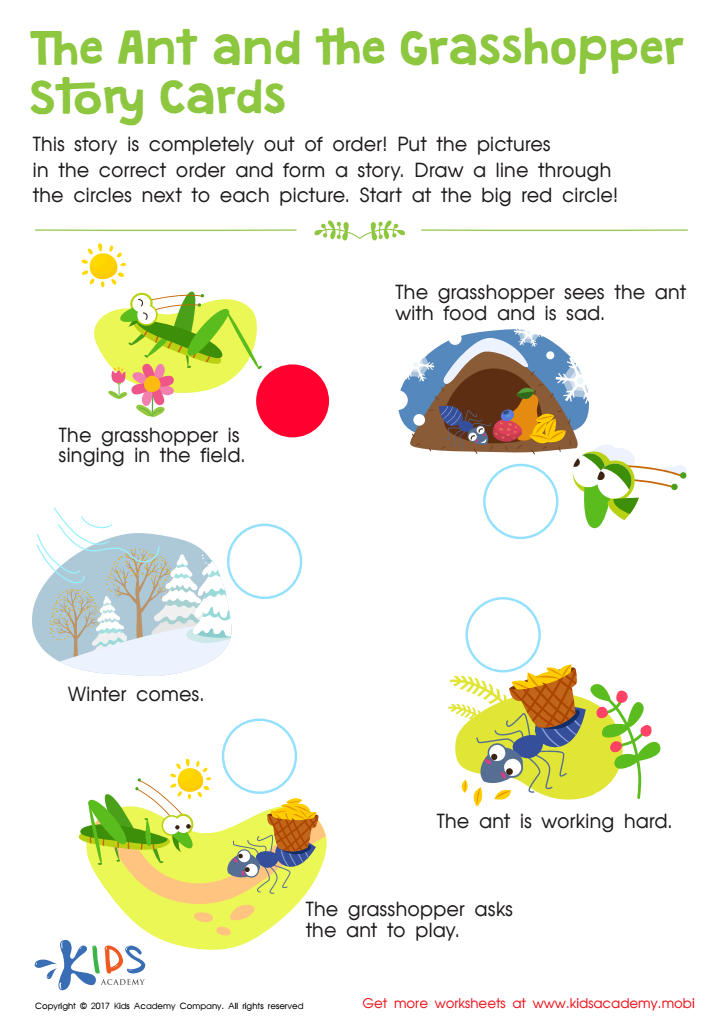
The Ant and The Grasshopper Worksheet
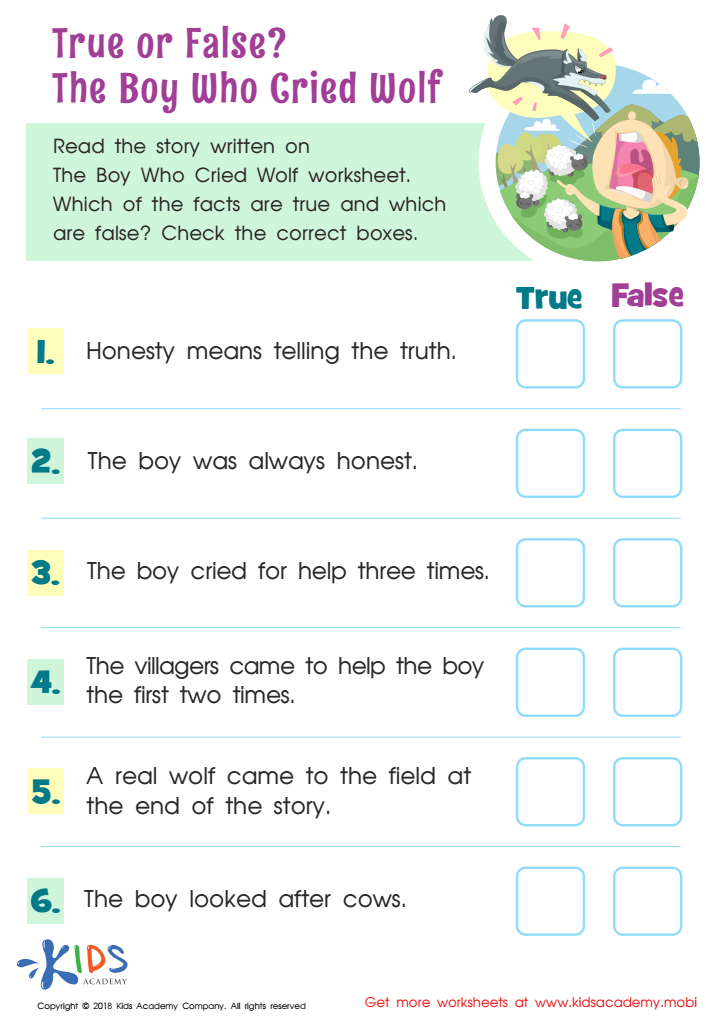
True or False? The Boy Who Cried Wolf Worksheet
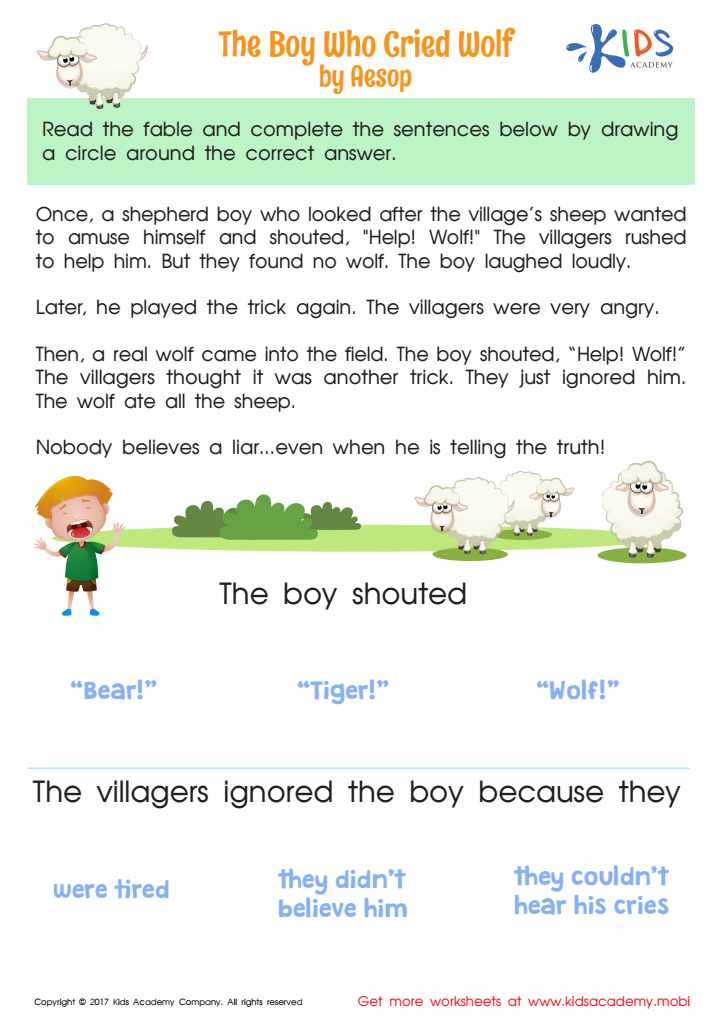
The Boy Who Cried Wolf Worksheet
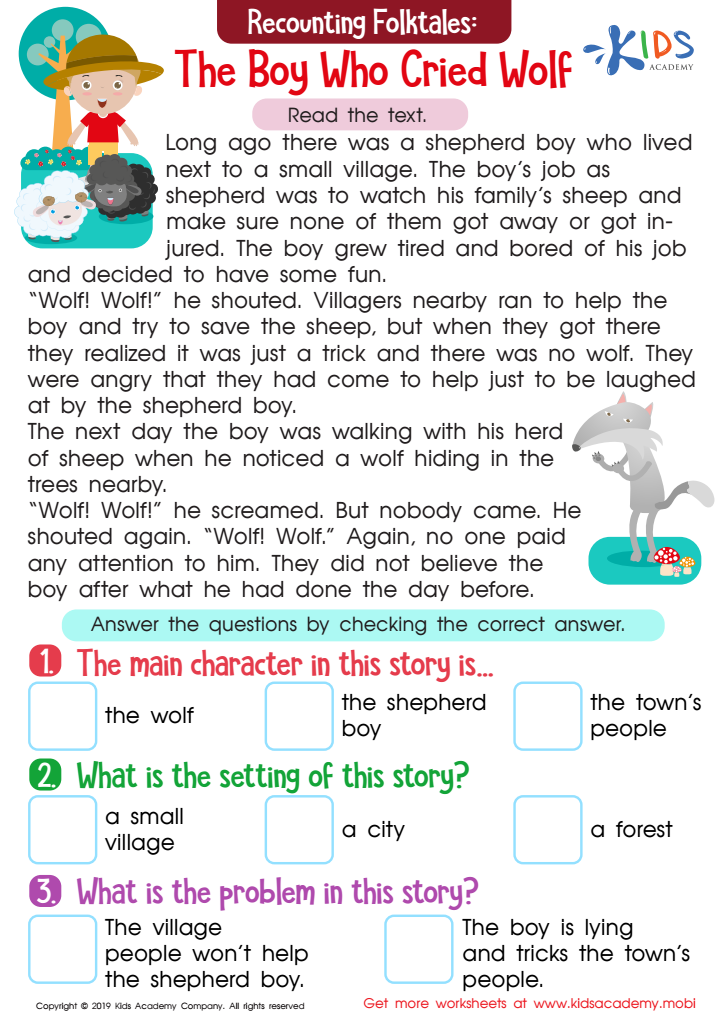
The Boy Who Cried Wolf Part 1 Worksheet







.jpg)
Ensuring young children ages 5-9 engage in moral understanding reading is paramount for parents and teachers. During these formative years, children's cognitive and emotional development sets the foundation for their future ethical and social behavior. Moral stories help children differentiate between right and wrong, instilling core values like honesty, kindness, empathy, and fairness. These narratives often include relatable characters and situations, enabling children to internalize these concepts and apply them to their own lives.
Children in this age group are naturally curious and impressionable. Regular exposure to moral-themed reading also enhances their empathy, allowing them to understand and share the feelings of others. This emotional intelligence is crucial for building positive relationships and being a contributing member of the community. Furthermore, discussing moral dilemmas in stories encourages critical thinking and decision-making skills.
Moreover, such reading experiences foster a love for literature and improve language and comprehension skills. Storytime can also serve as a bonding opportunity, strengthening the relationship between child and caregiver or educator. By integrating moral understanding into reading, parents and teachers not only contribute to a child's character development but also nurture a well-rounded, empathetic, and thoughtful individual.








