
Phonics recognition Reading Worksheets for Ages 5-9
7 filtered results
Difficulty Level
Grade
Age
-
From - To
Subject
Activity
Standards
Discover our engaging Phonics Recognition Reading Worksheets tailored for children aged 5-9! These interactive resources are designed to enhance your child's reading skills through fun, phonics-focused activities. With a range of worksheets, including letter recognition, sound matching, and word formation exercises, your child will build a strong foundation in phonics. Perfect for home practice or classroom use, our worksheets encourage independent learning while reinforcing essential literacy skills. Nurture a love for reading and boost your child's confidence with these engaging and pedagogically sound materials! Start their journey to reading success today with our phonics recognition worksheets!
Favorites
With answer key
Interactive
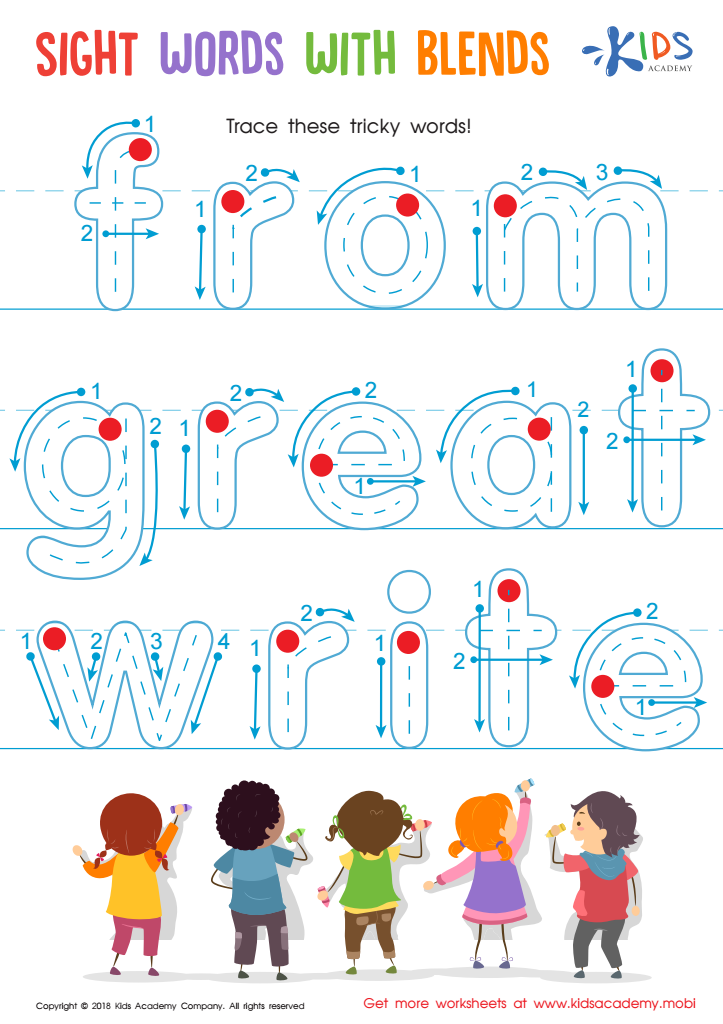
Sight Words with Blends Worksheet
This free PDF lets your children trace and write sight words with tricky blends. The guide numbers help them start from the top, building fine motor skills and enhancing sight word vocab. It's a great way to give your kids a solid foundation for reading!
 Assign to My Students
Sight Words with Blends Worksheet
Worksheet
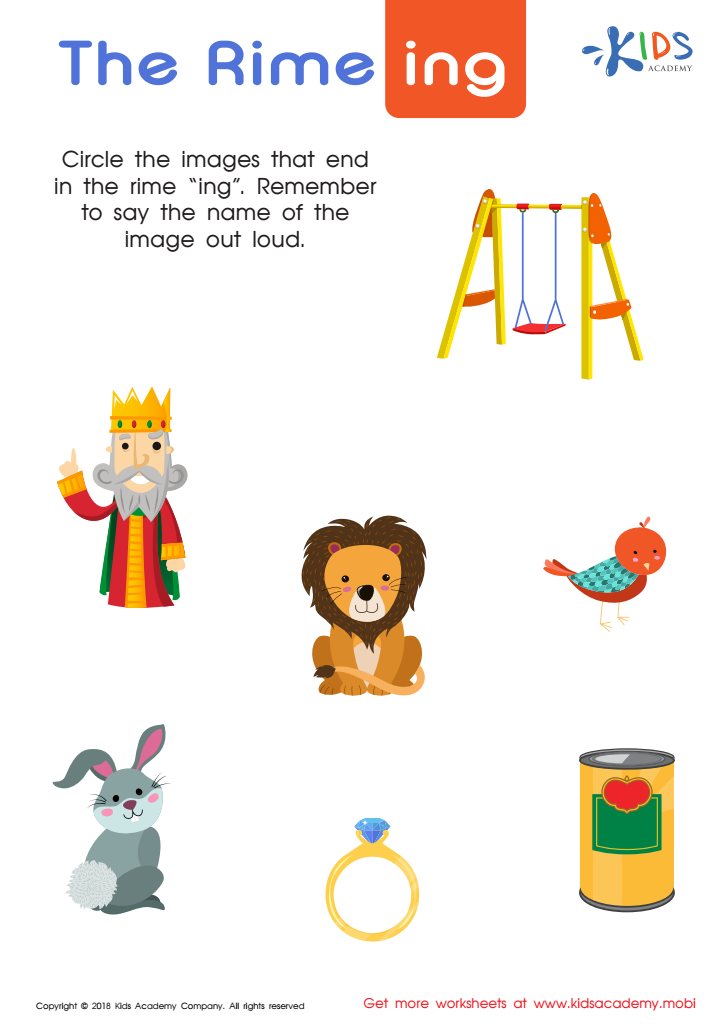
The Rime "ing" Worksheet
Teach children about word families and build their spelling and writing strategies with this colorful PDF worksheet. It features familiar pictures for children to name, encouraging them to circle those that end in "ing". This engaging activity will help develop reading skills in a fun way.
The Rime "ing" Worksheet
Worksheet
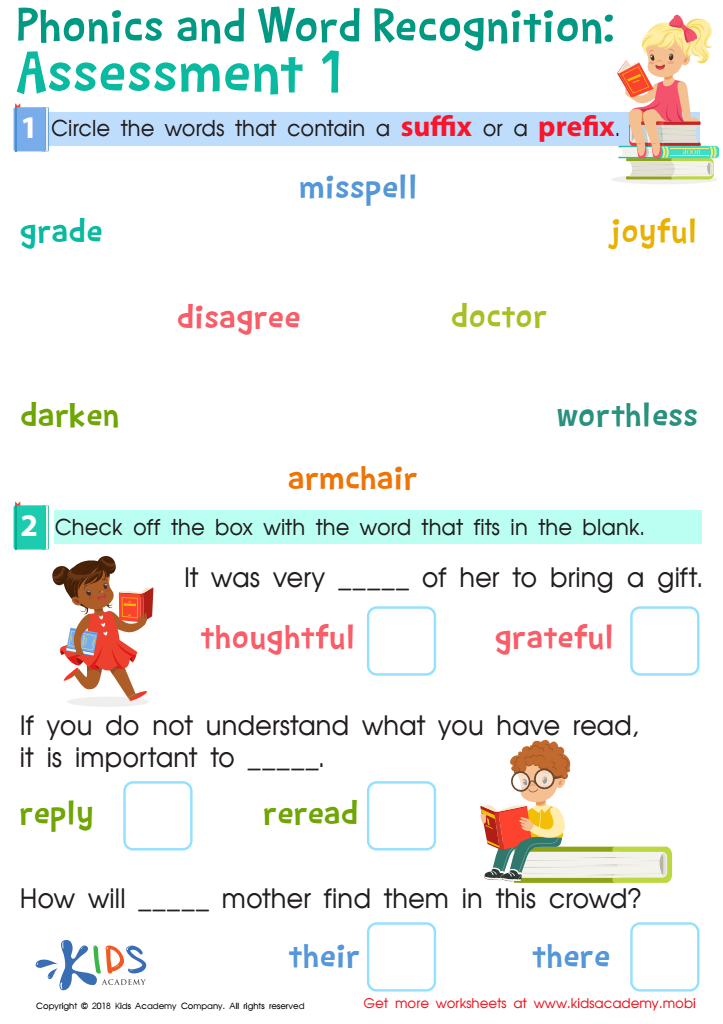
Phonics and Word Recognition: Assessment 1 Worksheet
Explain prefixes (words added to start of another word to give it a new meaning) and suffixes (added to end of word to change its meaning) to your kids with examples like 'unhappy' (prefix) and 'forgetful' (suffix). Now, help your child complete this worksheet, including circling words and checking boxes.
Phonics and Word Recognition: Assessment 1 Worksheet
Worksheet
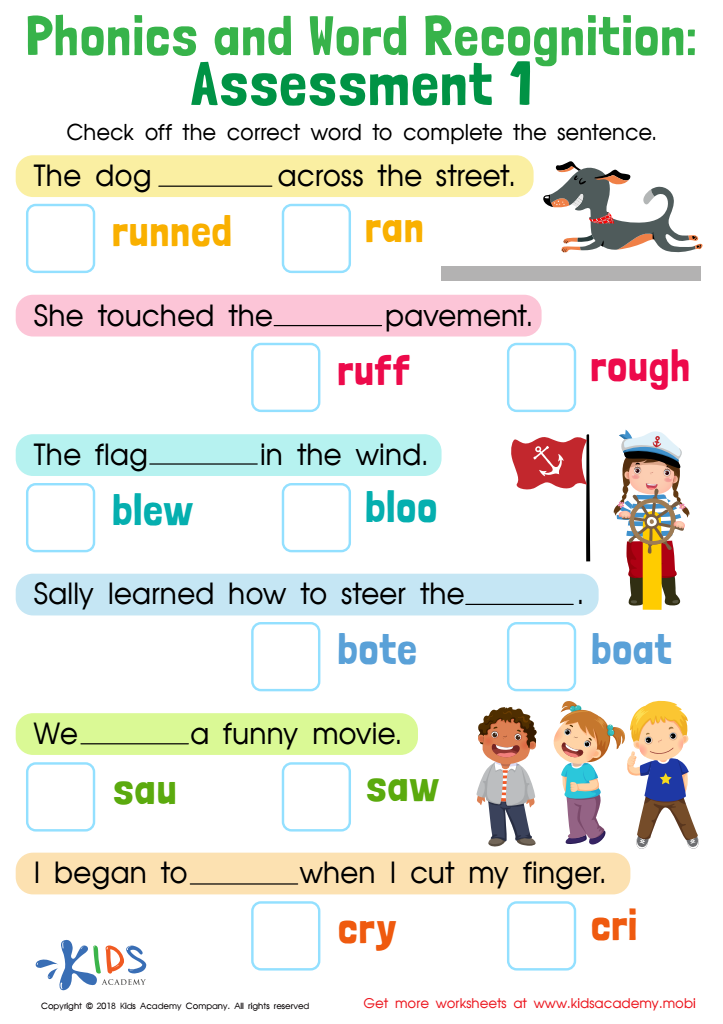
Phonics and Word Recognition: Assessment 1 Worksheet
This worksheet tests phonetics and word recognition. Students should be familiar with past tense verbs. Read incomplete sentences, then read multiple options and help students select the correct one.
Phonics and Word Recognition: Assessment 1 Worksheet
Worksheet
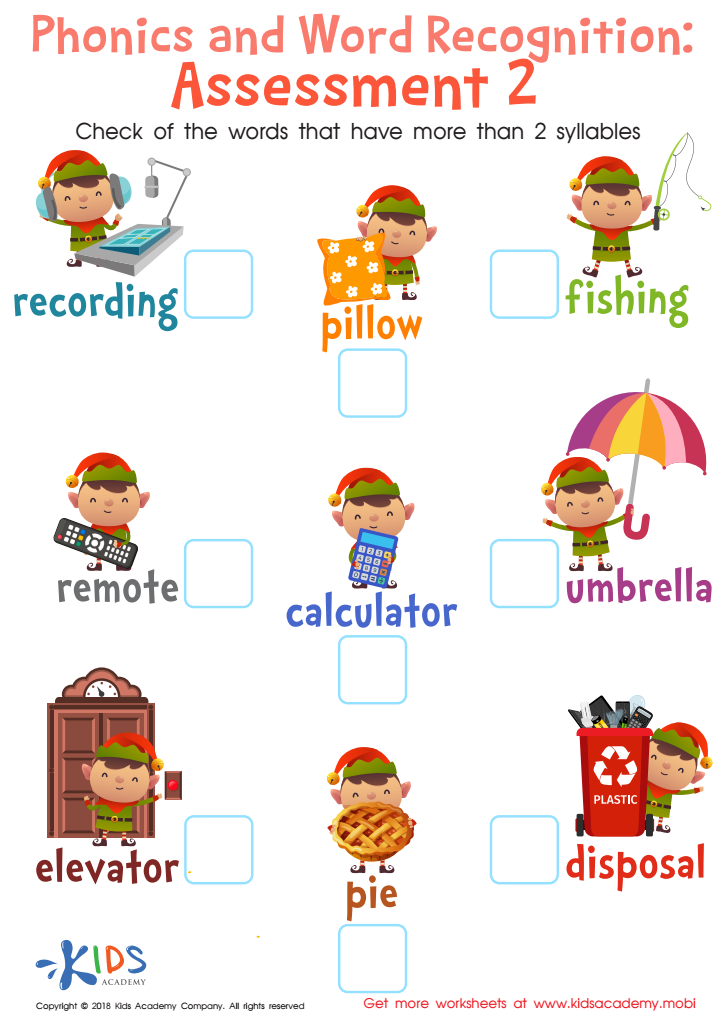
Phonics and Word Recognition: Assessment 2 Worksheet
Help your kids learn proper pronunciation by counting syllables. Most words they'll encounter have 1-3 syllables, making them simple to say. Have them repeat the words in your worksheet after you. Focus on longer words with more than two syllables.
Phonics and Word Recognition: Assessment 2 Worksheet
Worksheet
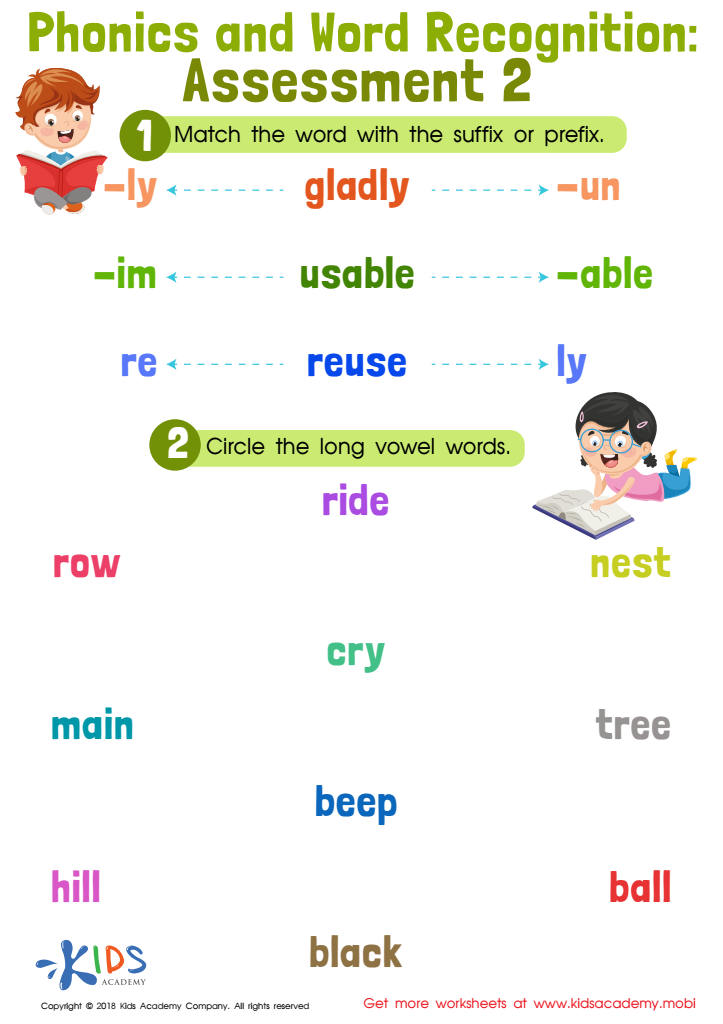
Phonics and Word Recognition: Assessment 2
Give kids common examples of suffixes and prefixes, such as "un-," "unhappy," "ness," "happyness." Ask them to match each word in the word recognition exercise to the correct suffix or prefix. Test phonetic understanding by having them circle the long vowel sounds.
Phonics and Word Recognition: Assessment 2
Worksheet
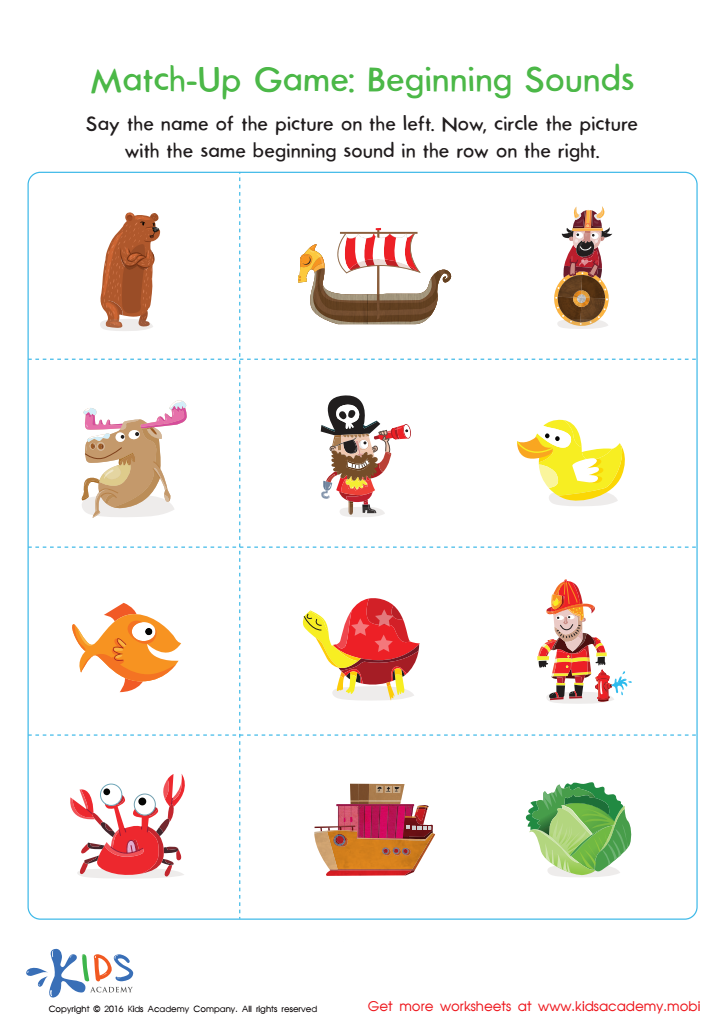
Match–Up Game: Beginning Sounds Worksheet
Start today with this beginning sounds match-up printable!
Teach your child to solve problems mentally with this beginning sounds match-up printable. They'll learn to categorize pictures based on phonics rules, developing mental stamina and focus. It's an important step for recognizing sounds and letters in print, building a foundation for reading and spelling. Start today and take your child's skills to the next level!
Match–Up Game: Beginning Sounds Worksheet
Worksheet
Join Kids Academy for Free
Who is primarily going to use this learning content?








Phonics recognition is a fundamental component of reading development for children ages 5-9. It involves the connection between letters and their corresponding sounds, enabling young learners to decode and spell words effectively. Parents and teachers should prioritize phonics for several important reasons.
Firstly, phonics provides the foundation for reading fluency. Children who grasp phonics can sound out unknown words, which empowers them to engage with a variety of texts, thereby enhancing their vocabulary and comprehension. Proficient reading skills foster a love for learning, allowing children to explore new concepts across different subjects.
Secondly, early phonics instruction contributes to lifelong literacy skills. Mastering phonics by age nine aids in preventing future reading difficulties, promoting confidence in academic settings. Students with solid phonics knowledge are more likely to excel in standardized tests and overall school performance.
Furthermore, parents and teachers who emphasize phonics can help bridge the gap for struggling readers. Incorporating phonics-based activities into everyday learning can support at-risk students, ensuring inclusivity in education.
In summary, phonics recognition is critical for building strong reading abilities in young children—encouraging academic success, boosting self-esteem, and nurturing a passion for reading that lasts a lifetime.








