
Identifying story elements Reading Comprehension Worksheets for Ages 5-9
4 filtered results
Difficulty Level
Grade
Age
-
From - To
Subject
Activity
Standards
Introduce young readers to the foundational aspects of storytelling with our "Identifying Story Elements Reading Comprehension Worksheets for Ages 5-9". Perfectly designed for early learners, these worksheets help children grasp the key parts of a narrative, including setting, characters, plot, conflict, and resolution. Engaging exercises and illustrations make learning enjoyable, ensuring kids can easily identify and understand story structure. Boost their reading comprehension and critical thinking skills while fostering a love for literature. Ideal for classroom settings or supplemental at-home practice, these tools lay the groundwork for proficient and enthusiastic readers.
Favorites
With answer key
Interactive
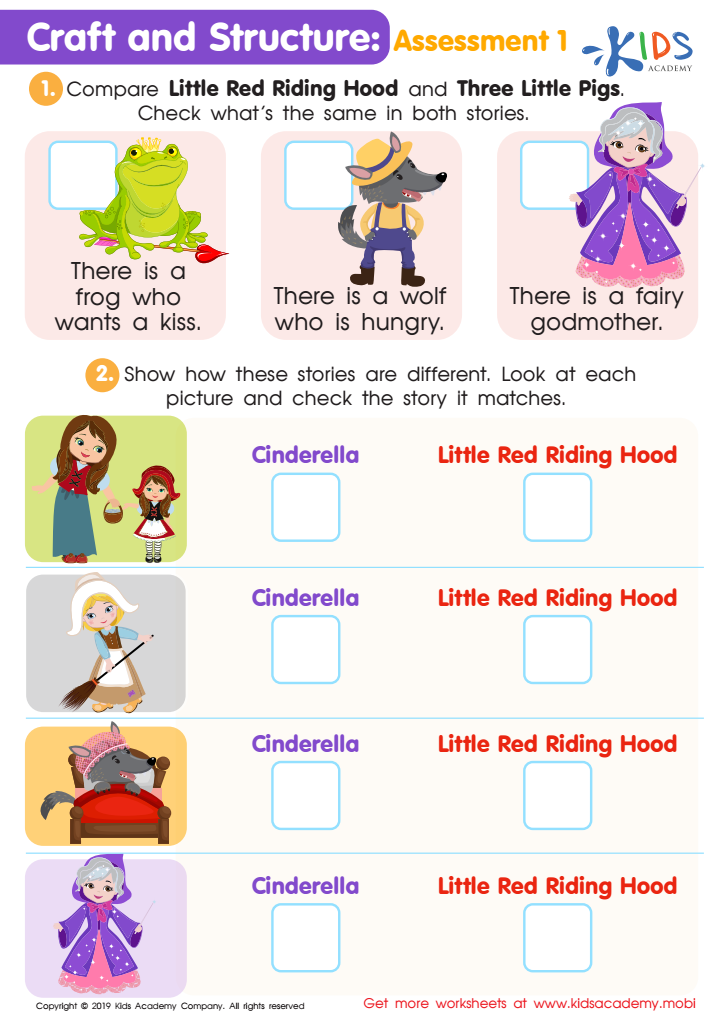
Craft and Structure: Assessment 1 Worksheet
Fairytales are a great way to bond with your kids while teaching them. Popular stories include Little Red Riding Hood and Three Little Pigs. Test how well they understood these two with this assessment worksheet. Ask them to compare the two stories and check what is the same. Doing this will help kids learn new words and sentence construction, as well as teaching them life lessons.
 Assign to My Students
Craft and Structure: Assessment 1 Worksheet
Worksheet
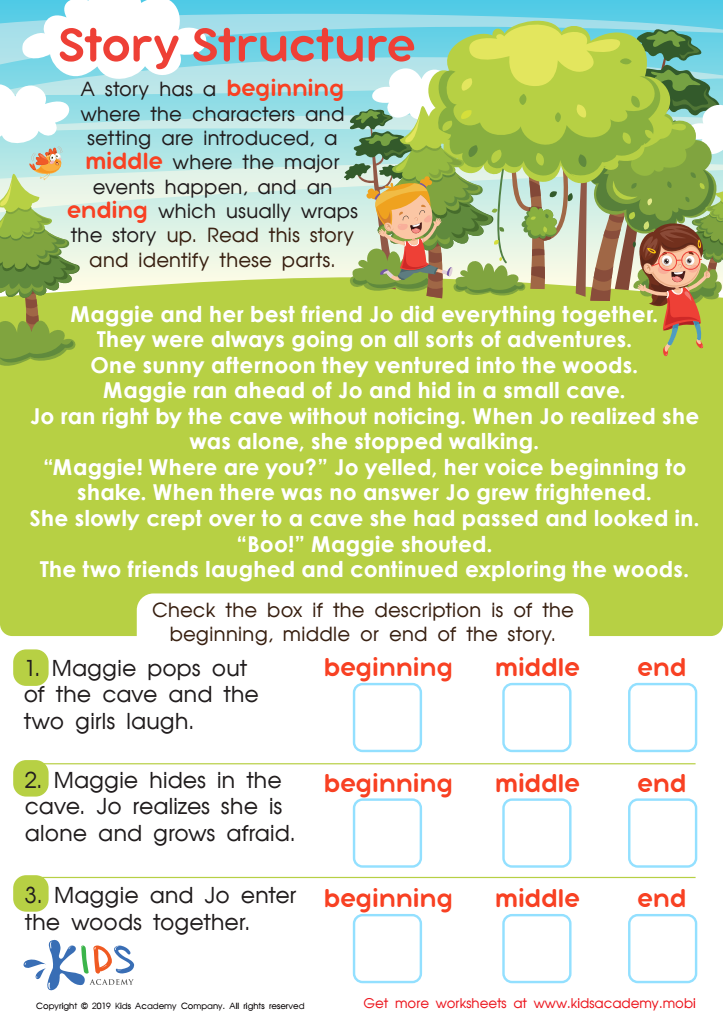
Story Structure Worksheet
Help your students read and identify the parts of the story in this worksheet: the beginning (characters and setting), middle (major events), and ending (events are resolved). Show them how to structure a story for clarity.
Story Structure Worksheet
Worksheet
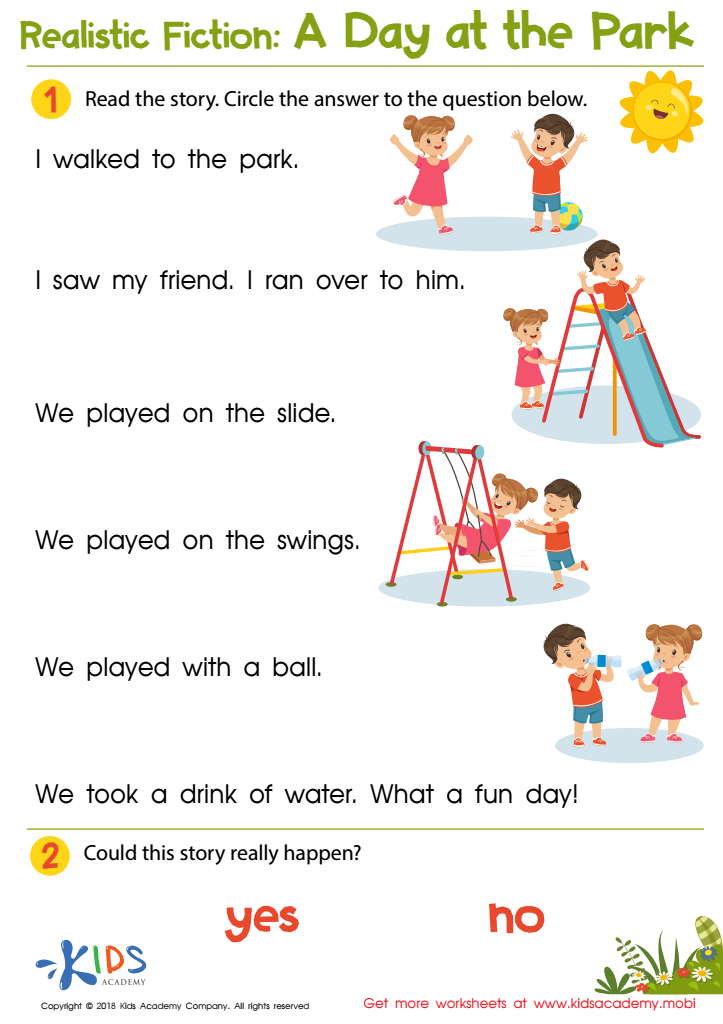
A Day at the Park Worksheet
Kids as young as preschool-age can be taught to evaluate stories! Use this fun worksheet about a day at the park. Read each sentence aloud, looking at the pictures. Ask your child if the events in the story could happen in real life - if yes, circle yes, otherwise circle no. When finished, discuss with them the genre, realistic fiction.
A Day at the Park Worksheet
Worksheet
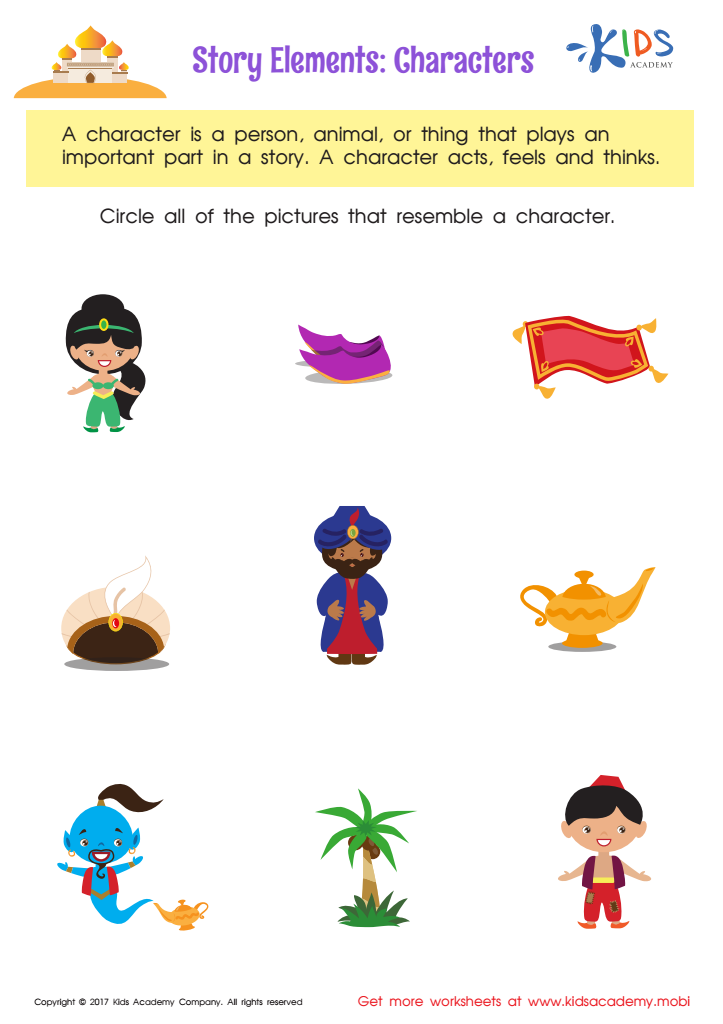
Story Elements Printable
Read the text and review the characters, settings and plot in a guided discussion.
Take your child on a journey to the Middle East and review the characters, settings and plot of their favorite childhood stories with this Aladdin-themed worksheet! It'll help them master early analysis skills and learn about characterization. Enjoy a fun, guided discussion with your child as you review important story elements.
Story Elements Printable
Worksheet
Join Kids Academy for Free
Who is primarily going to use this learning content?








Identifying story elements is foundational to developing strong reading comprehension skills in children aged 5-9. When parents and teachers emphasize understanding the main characters, setting, plot, conflict, and resolution, they help young readers make sense of the story’s structure and deepen their engagement with the text.
For children in this age group, recognizing story elements enhances their ability to recall details and fosters critical thinking. By identifying who did what and where, children start to piece together the narrative and become better at predicting outcomes and inferring meanings. This improved comprehension translates to a more enjoyable and rewarding reading experience.
Additionally, early mastery of story elements serves as a stepping stone for more advanced literary analysis in later years. It builds a foundation for analyzing more complex texts and instills a love for reading by making stories more accessible and engaging.
For parents and teachers, fostering this skill means engaging with children through guided questions and discussions about stories read together. This interaction not only strengthens the child's understanding but also builds a strong parent-child or teacher-student bond. Overall, focusing on story elements in early literacy supports academic success and nurtures lifelong readers.








