Moral understanding Reading Comprehension Worksheets for Ages 5-9
5 filtered results
-
From - To
Introduce your young reader to the world of values and ethics with our "Moral Understanding Reading Comprehension Worksheets for Ages 5-9". These beautifully illustrated worksheets are designed to enhance children's reading skills while teaching important moral lessons. Each captivating story is tailored to engage young minds and encourage critical thinking. As children work through the exercises, they'll learn to understand and reflect on themes such as honesty, empathy, and kindness. Perfect for both classroom and home use, these worksheets are a wonderful tool to foster a strong moral foundation alongside literacy development. Download today to inspire ethical awareness and literacy growth!
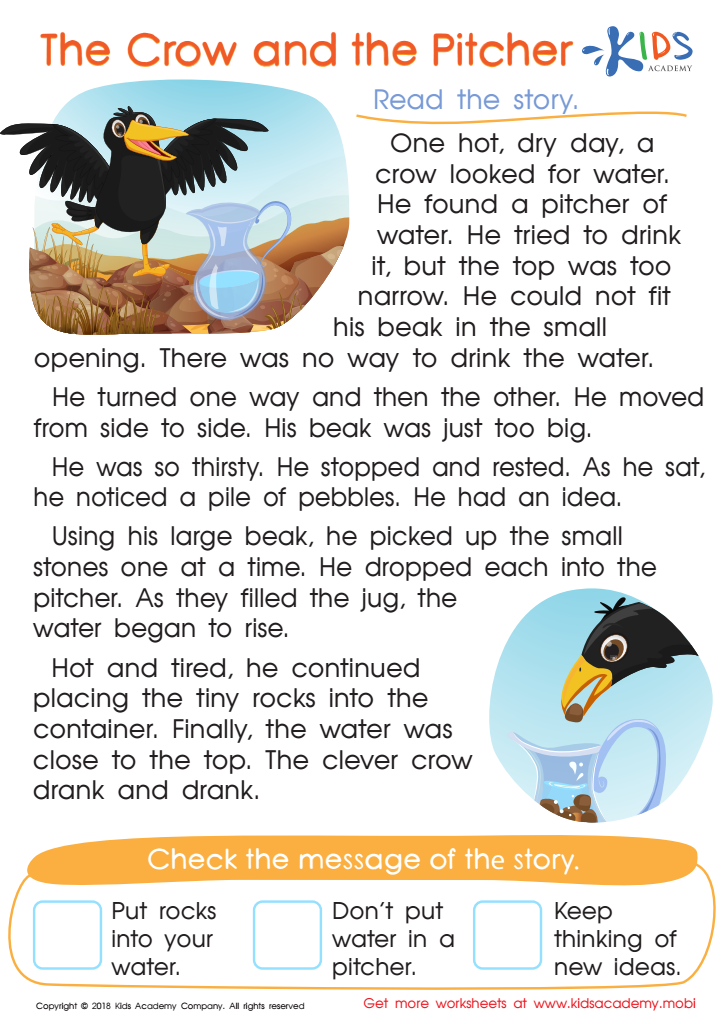
The Crow and the Pitcher Worksheet
 Assign to My Students
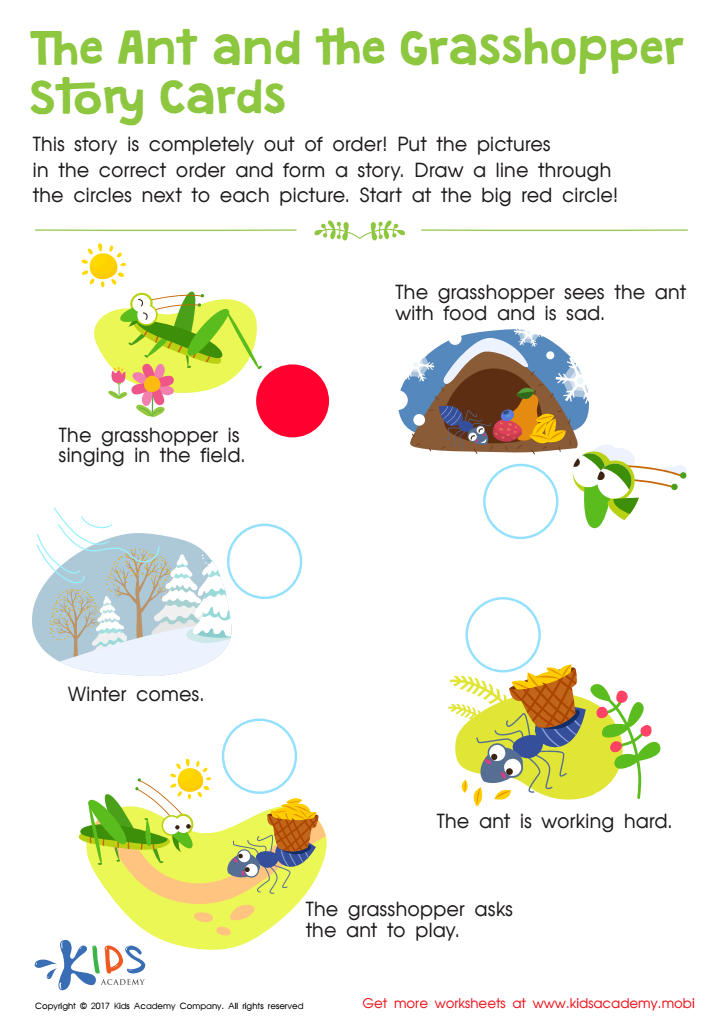
The Ant and The Grasshopper Worksheet
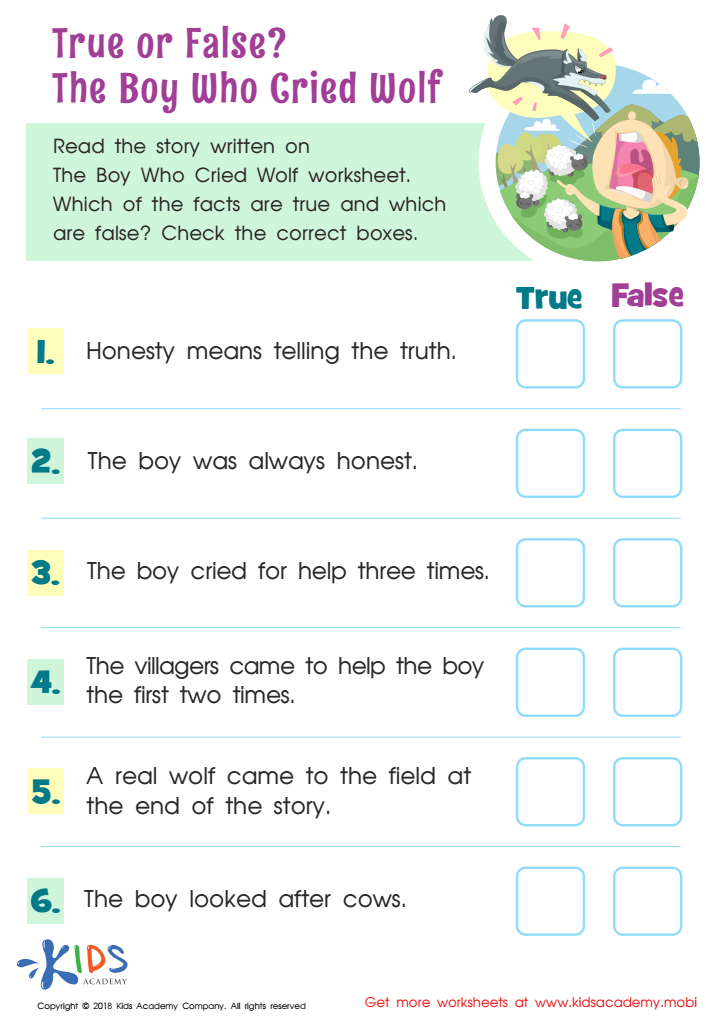
True or False? The Boy Who Cried Wolf Worksheet
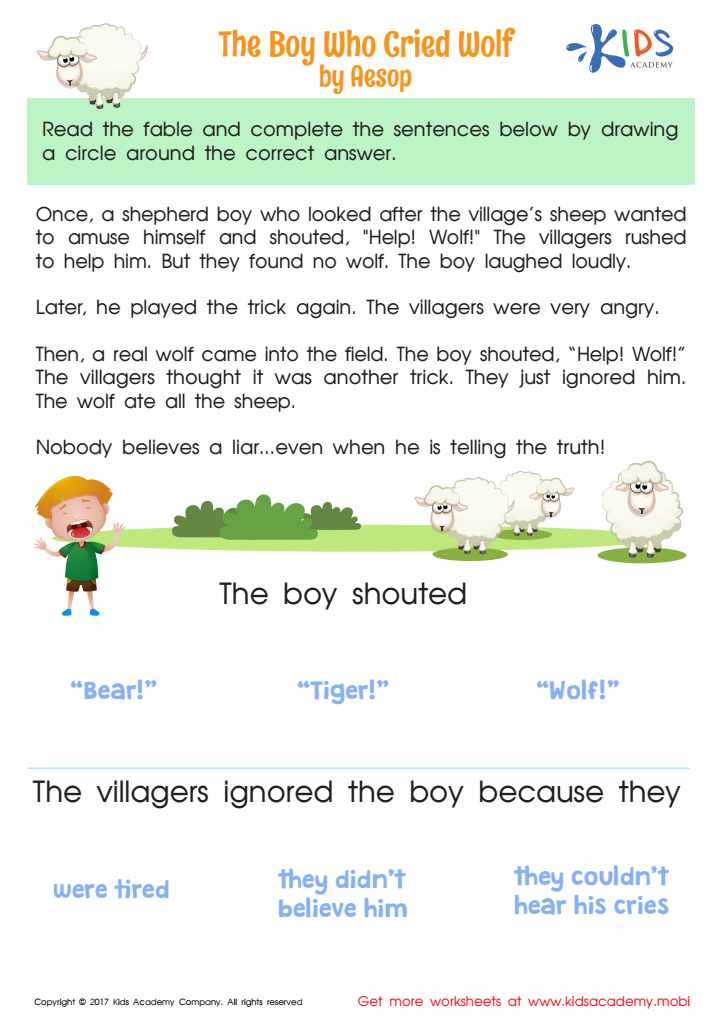
The Boy Who Cried Wolf Worksheet
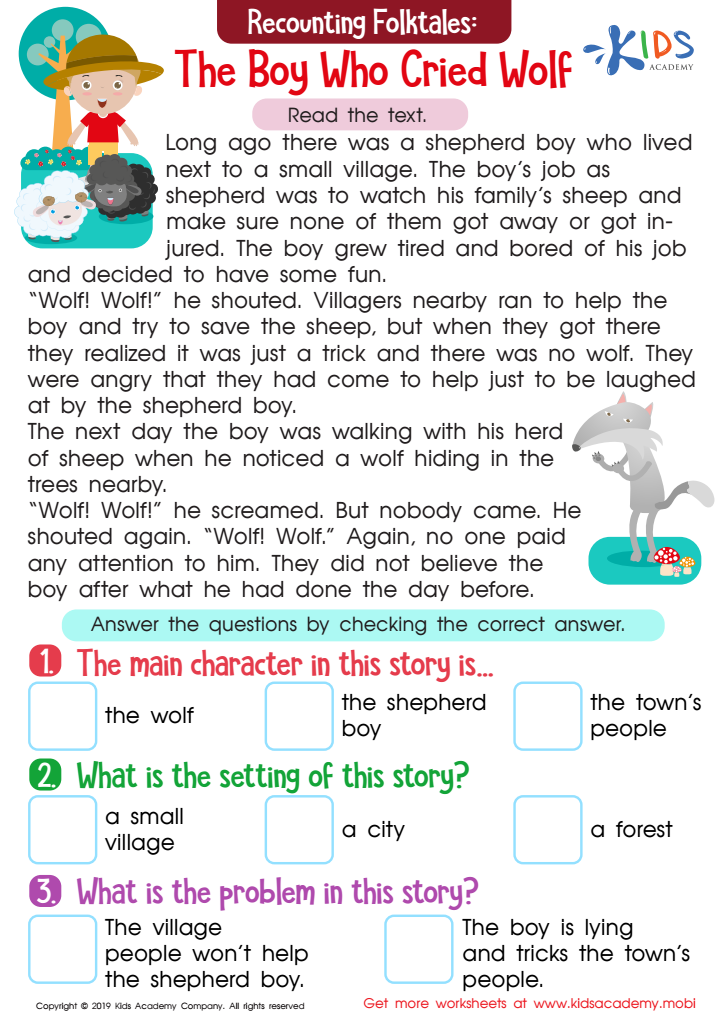
The Boy Who Cried Wolf Part 1 Worksheet








Moral understanding and reading comprehension are crucial components of early childhood education for children ages 5-9, serving as foundational pillars for individual growth and societal contribution. During these formative years, children begin to grasp concepts beyond rote memorization and develop critical thinking skills, empathy, and ethical reasoning.
When parents and teachers emphasize moral understanding, they are equipping children with the tools to navigate social interactions and react appropriately in various situations. Learning morals through stories allows children to see the perspectives of different characters, creating opportunities to discuss right and wrong, fairness, and kindness.
Reading comprehension is equally important because it facilitates overall cognitive development, leading to improved problem-solving and communication skills. Children who comprehend what they read can engage more deeply with the material, make connections to their own lives, and retain information more effectively.
Combining moral understanding with reading exercises ensures that children not only grasp the mechanics of reading but also appreciate the content's deeper meaning. This integration promotes empathy, respect, and a well-rounded character. Ultimately, fostering these skills prepares children for lifelong learning and molds them into conscientious members of society, capable of making thoughtful, ethical decisions. Parents and teachers play a vital role in nurturing these aspects to build strong, morally aware, and literate future generations.








