
Visual interpretation Reading Comprehension Worksheets for Ages 5-9
6 filtered results
Difficulty Level
Grade
Age
-
From - To
Subject
Activity
Standards
Discover engaging Visual Interpretation Reading Comprehension Worksheets tailored for ages 5-9 at Kids Academy. These vibrant, kid-friendly resources enhance understanding through pictures, ensuring young learners easily grasp story elements, sequences, and key details. Each worksheet transforms reading into an interactive adventure, promoting critical thinking and visual literacy. Perfect for early grade students, these activities align with educational standards, making reading fun and educational. Ideal for both classroom and home use, they foster a love for reading while developing essential comprehension skills. Visit Kids Academy to access these valuable tools and boost your child's reading journey today!
Favorites
With answer key
Interactive
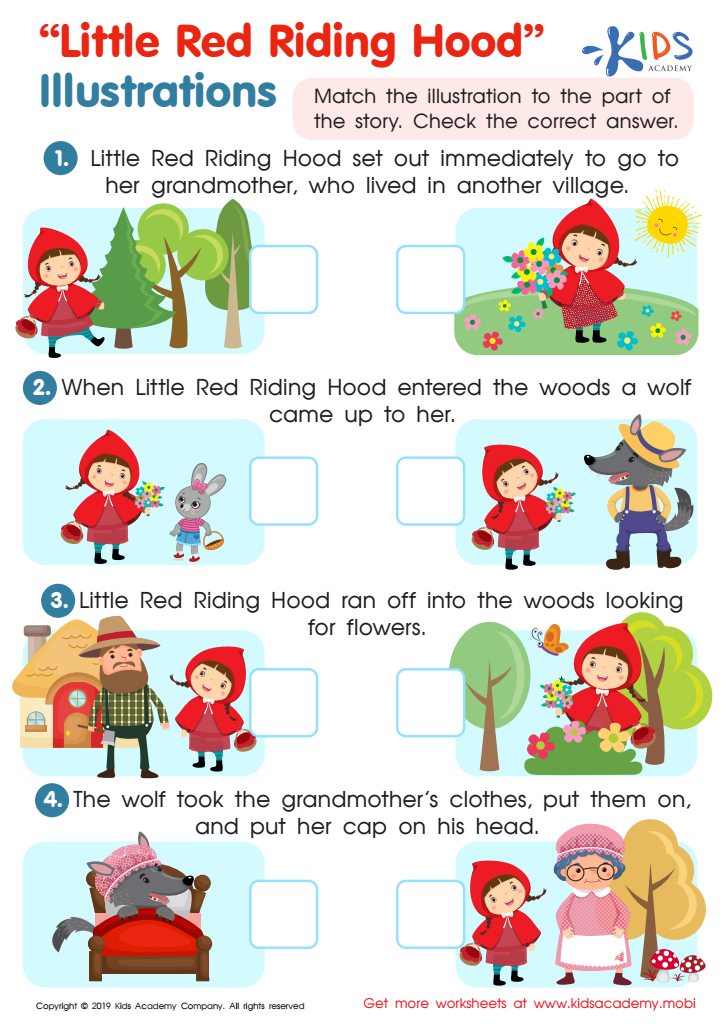
Little Red Riding Hood: Illustrations Worksheet
Comprehension is improved by having young readers recall and retell stories. This worksheet uses colorful illustrations of the fairytale Little Red Riding Hood. Children use their comprehension skills and strategy to match illustrations to the story parts, check off the appropriate boxes and use the pictures as clues.
 Assign to My Students
Little Red Riding Hood: Illustrations Worksheet
Worksheet
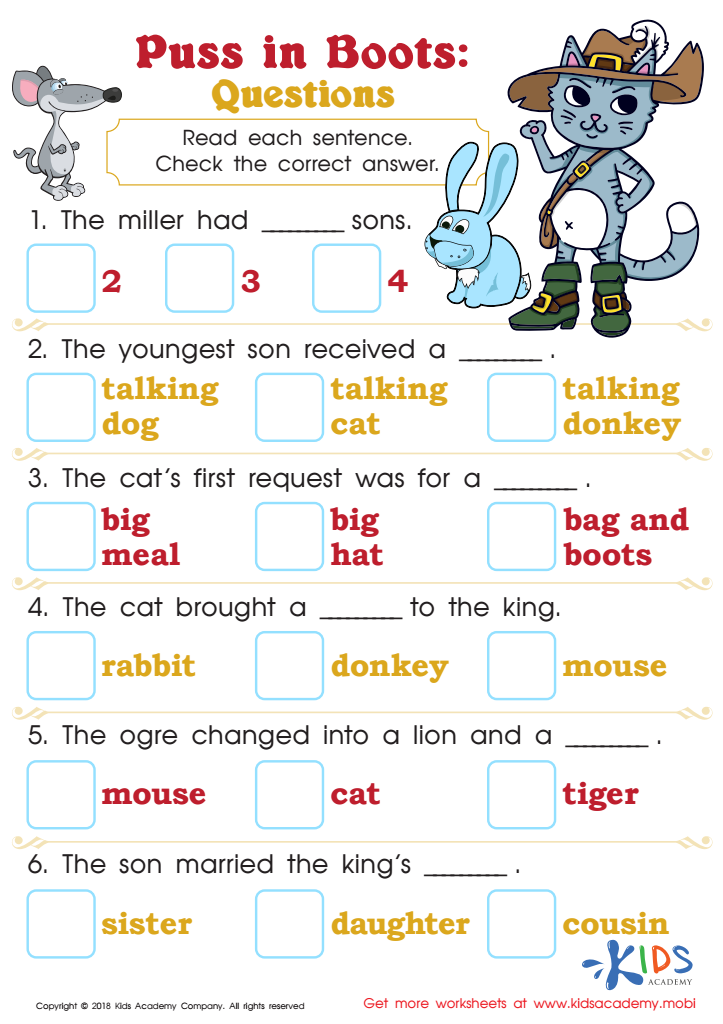
Puss in Boots: Questions Worksheet
This worksheet contains questions to be checked with boxes for the correct answers. It also has pictures of animals; ask kids to identify them, noting the objects with them. Read the questions and have kids provide the answers. Help them check the boxes for the right answer.
Puss in Boots: Questions Worksheet
Worksheet
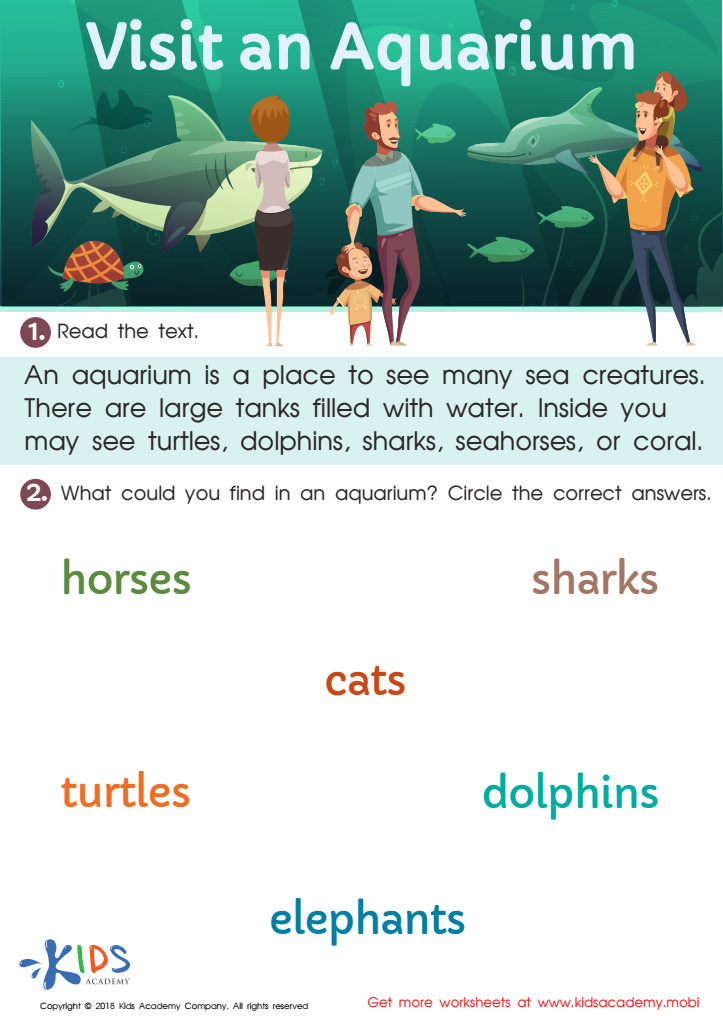
Visit an Aquarium Worksheet
Have your kids ever been to an aquarium? It's a great place to see a variety of sea creatures, like turtles, dolphins, sharks and fish. If they're fascinated by sea life, this worksheet is perfect! Help them circle the aquarium animals among the words in the picture.
Visit an Aquarium Worksheet
Worksheet
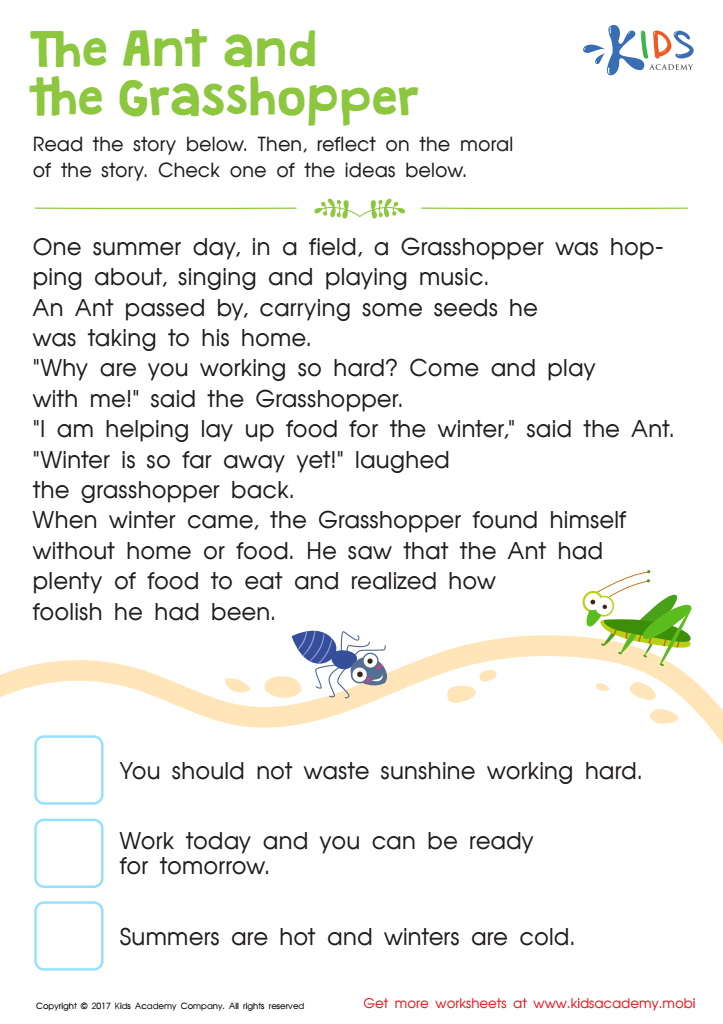
The Ant and The Grasshopper Printable
Aesop's fables have clear messages, which make them memorable and loved by children and adults. Use Kids Academy's ant and grasshopper worksheet to help your child reflect on stories and discover the life lesson.
The Ant and The Grasshopper Printable
Worksheet
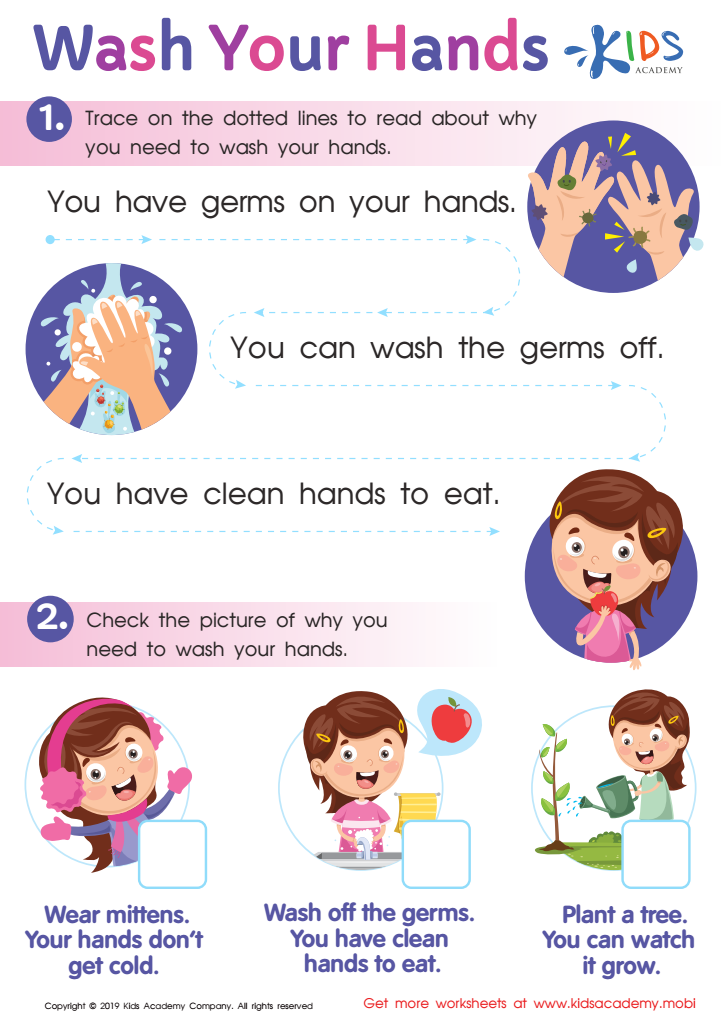
Wash Your Hands Worksheet
Kids learn best when they understand why they need to do something. This free worksheet uses traceable lines and pictures to teach them about germs and why washing hands is important. The child follows a left-to-right sequence and must check the correct picture to show they understand.
Wash Your Hands Worksheet
Worksheet
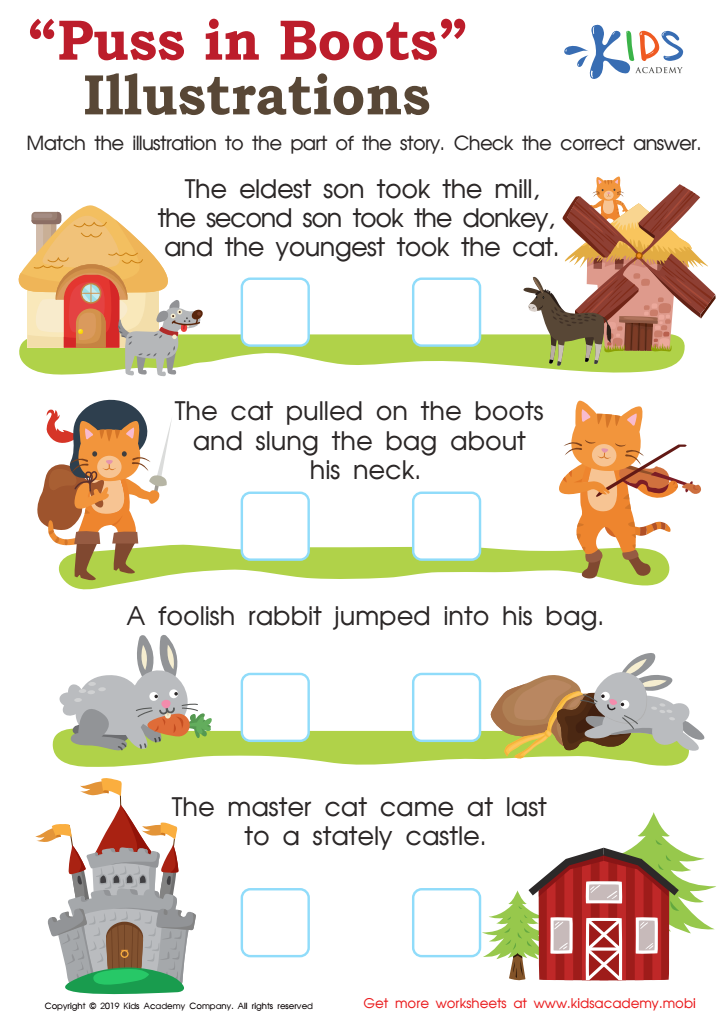
Puss in Boots Illustrations Worksheet
This Puss In Boots Illustrations worksheet is a great way to help kids learn about retelling stories. They'll match images to different parts of the story and check off the correct answer. As they recall events and put them in sequence they'll enjoy this fun and creative activity.
Puss in Boots Illustrations Worksheet
Worksheet
Join Kids Academy for Free
Who is primarily going to use this learning content?







Visual interpretation reading comprehension is crucial for young readers aged 5-9 because it lays the foundation for their overall literacy development. At this age, children's brains are highly receptive to visual stimuli, and integrating pictures with text helps them comprehend and retain the information better. When children connect images to words, it enhances their understanding of the story, vocabulary, and context.
For young learners, decoding text alone can be challenging. Illustrations act as valuable clues that support decoding by providing context and making abstract concepts more concrete. This visual support can be particularly beneficial for struggling readers or children with learning differences, as it reduces the cognitive load and makes reading more accessible and enjoyable.
Moreover, visual interpretation encourages critical thinking and creativity. As children discuss the images, predict plot developments, and infer emotions and actions of characters, they engage in deeper cognitive processes. This interaction fosters not only comprehension but also imagination and empathy, as children visualize and empathize with different perspectives.
Incorporating visual elements into reading can also make learning more engaging. Colorful pictures and engaging artwork capture children's attention and make reading a pleasurable activity, fostering a positive attitude towards reading from an early age. Ultimately, investing in visual interpretation reading comprehension supports children in becoming confident, skilled, and motivated readers.








