Categorization skills Science Worksheets for Ages 5-9
5 filtered results
-
From - To
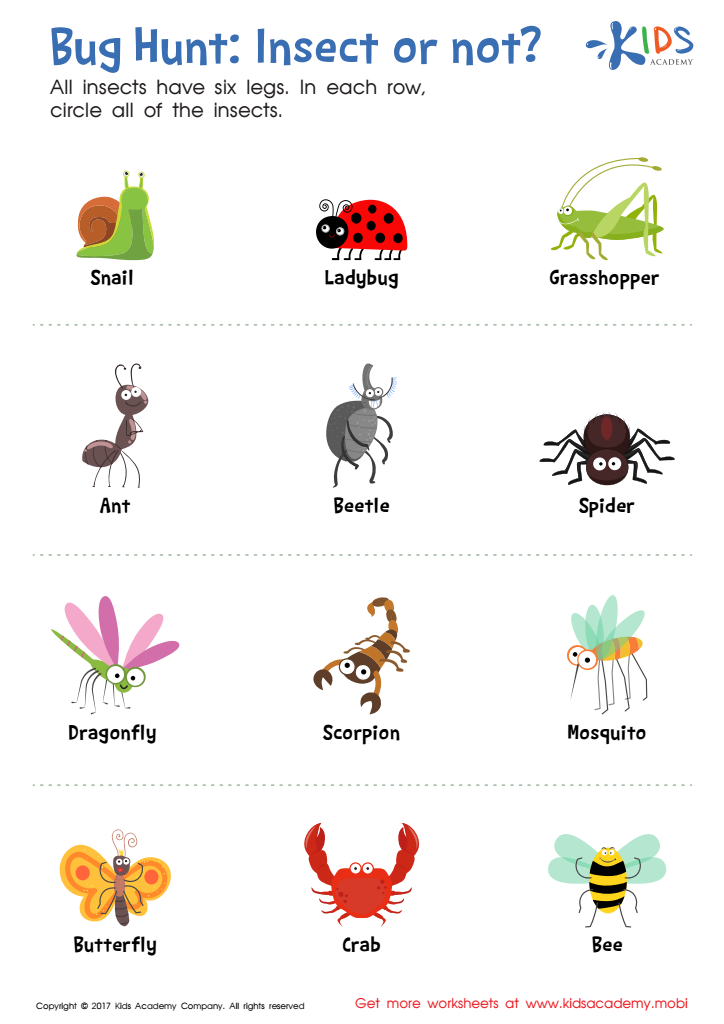
Enhance your child's science understanding with our engaging Categorization Skills Science Worksheets designed for ages 5-9. These printable worksheets from Kids Academy offer a fun and interactive way for young learners to improve their sorting and classifying abilities. Each worksheet features captivating activities, including grouping animals, sorting objects by their properties, and distinguishing between living and non-living things. With colorful illustrations and thought-provoking prompts, these resources not only boost critical thinking but also lay a solid foundation for future scientific exploration. Perfect for classroom use or at-home learning, our worksheets make mastering categorization exciting and effective!
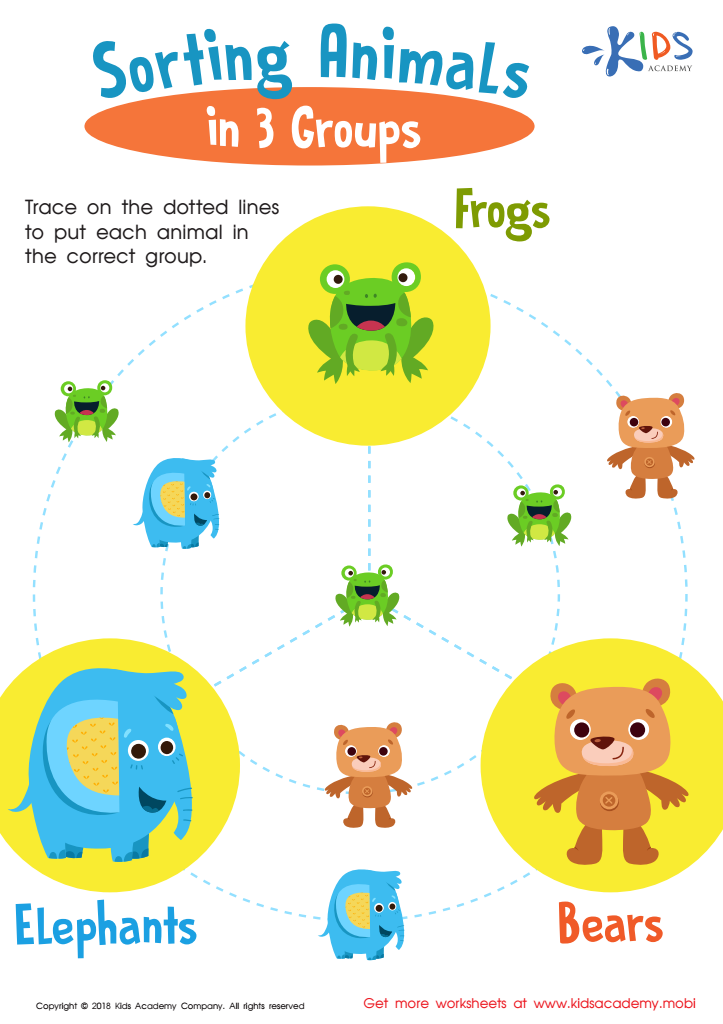
Sorting Animals in 3 Groups Worksheet
 Assign to My Students
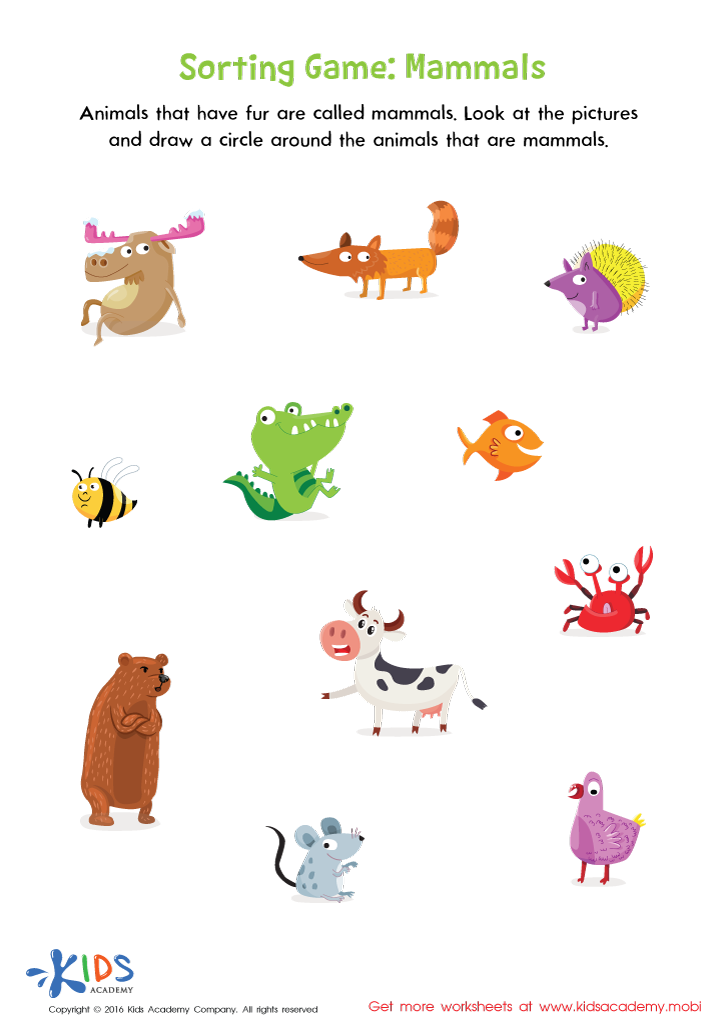
Mammals Sorting Worksheet
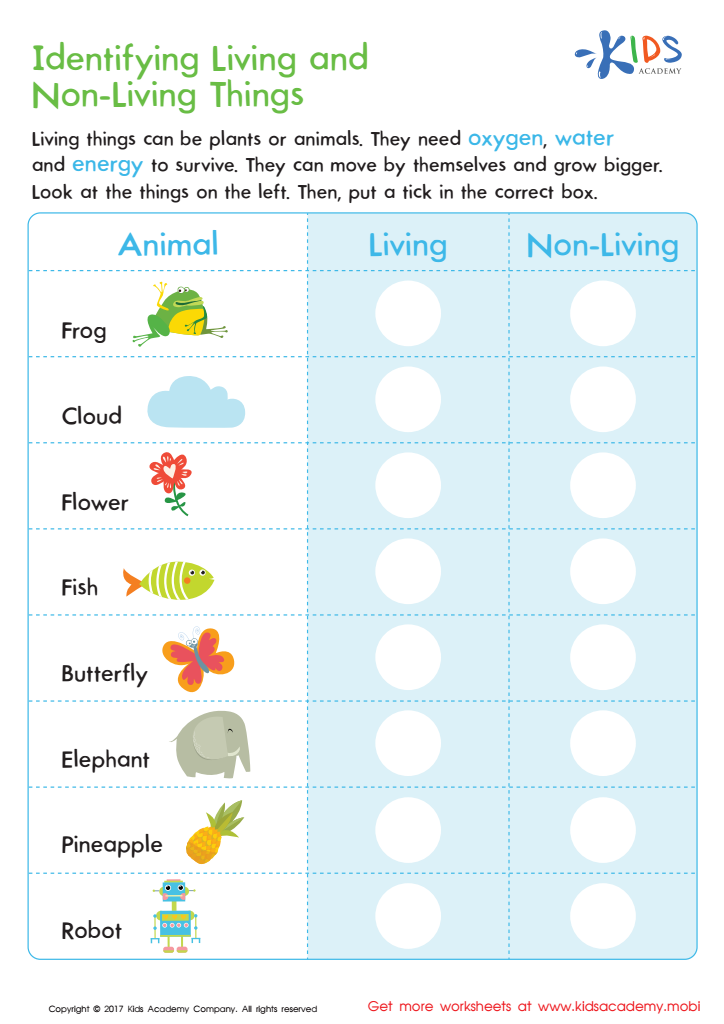
Identifying Living or Non–living Worksheet
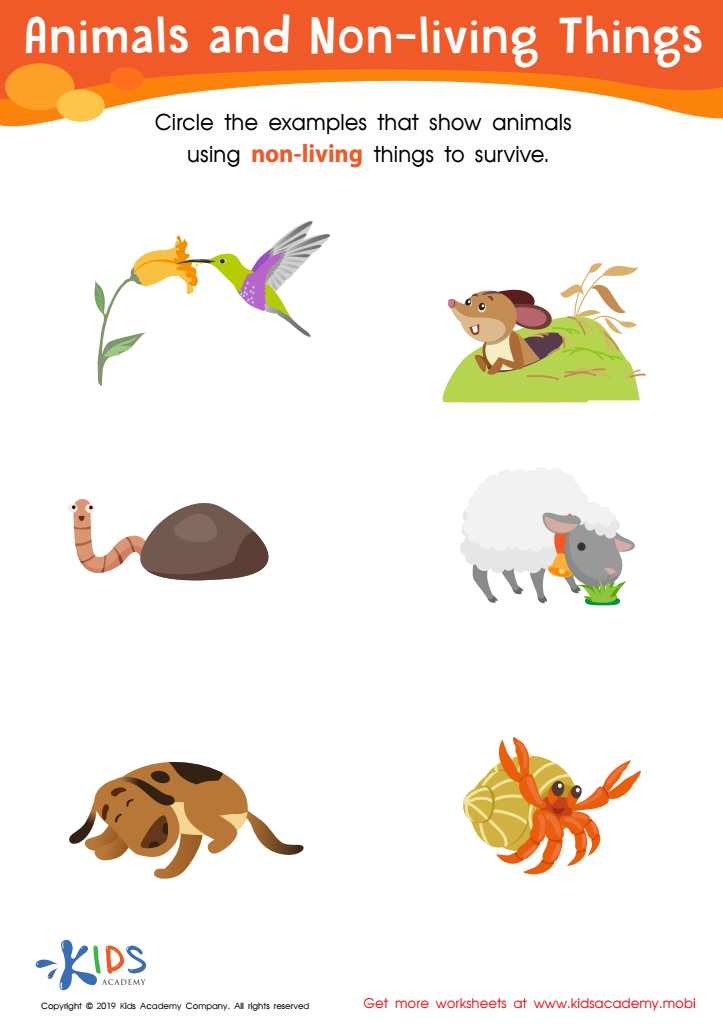
Animals and Non-Living Things Worksheet








Categorization skills are fundamental cognitive abilities that allow children, ages 5-9, to organize and make sense of the world around them. For both parents and teachers, fostering these skills is essential for several reasons.
Firstly, categorization is directly connected to language development. When children learn to group objects, they enhance their vocabulary and understanding of concepts, which is critical for reading comprehension and communication skills.
Secondly, these skills are foundational for scientific thinking. By sorting and classifying objects based on attributes such as size, shape, and color, children begin to employ observational and analytical skills. This early experience in scientific reasoning promotes curiosity and critical thinking skills, which are vital for more complex scientific learning as they grow older.
Furthermore, categorization aids in memory retention. When children group information into categories, it becomes easier to remember and retrieve when needed. This can improve their academic performance across various subjects, from math to social studies.
Lastly, social and emotional development can also benefit. When children learn to categorize emotions or social situations, they become better equipped to navigate interpersonal interactions and understand their own feelings.
Thus, nurturing categorization skills through play, exploration, and guided activities at home and in school is crucial for the holistic development of children in their formative years.







