Comparative analysis Science Worksheets for Ages 5-9
3 filtered results
-
From - To
Explore our comparative analysis science worksheets designed specifically for ages 5-9. These engaging, age-appropriate activities help young learners develop critical thinking and observational skills by comparing and contrasting various elements, organisms, and natural phenomena. Each worksheet is thoughtfully crafted to align with educational standards, making learning both fun and effective. Our resources cover a broad range of topics, from basic biology to earth sciences, ensuring a comprehensive understanding foundational for future scientific exploration. Perfect for both classroom and home learning, these printable worksheets support curious minds on their educational journey, encouraging lifelong love for science.
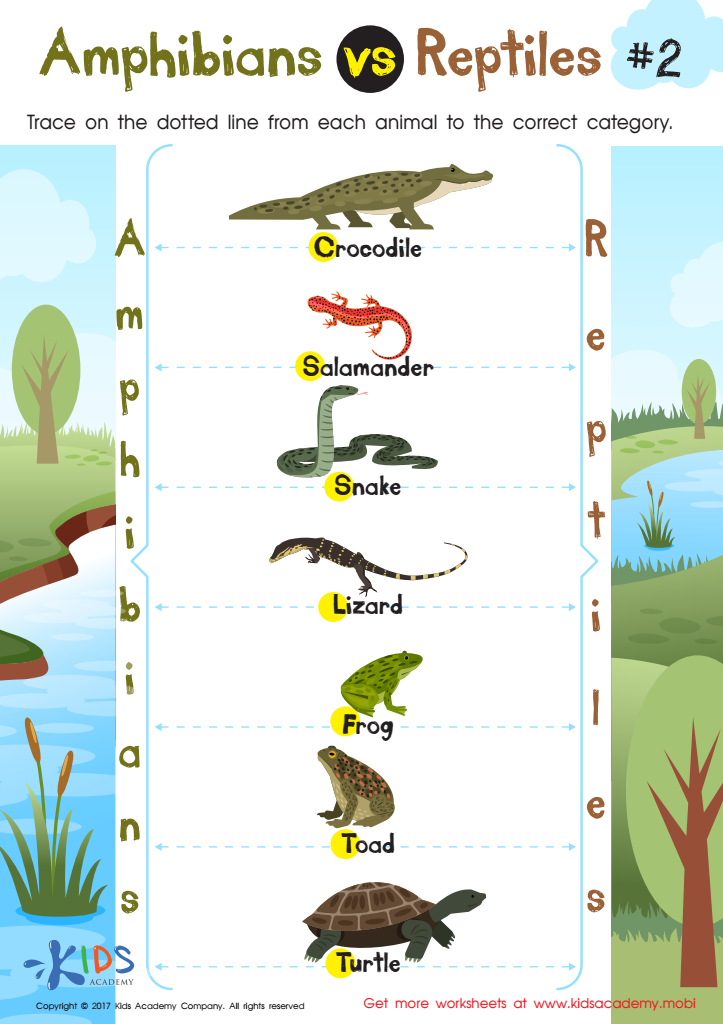
Amphibians vs Reptiles Worksheet for 3rd Grade
 Assign to My Students
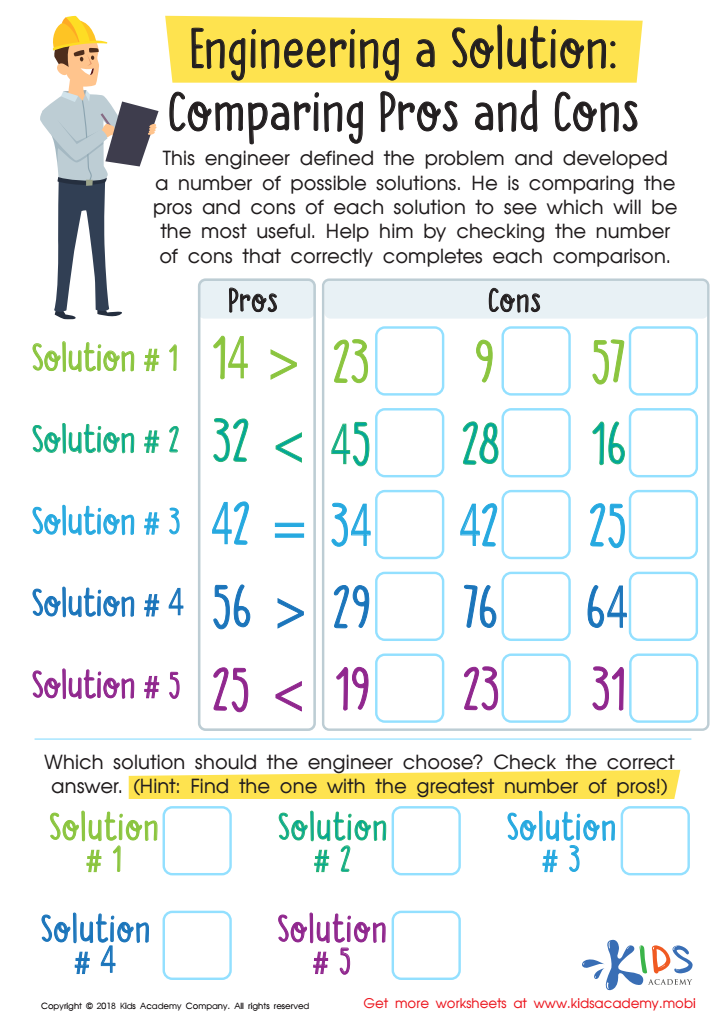
Engineering a Solution: Comparing Pros and Cons Worksheet
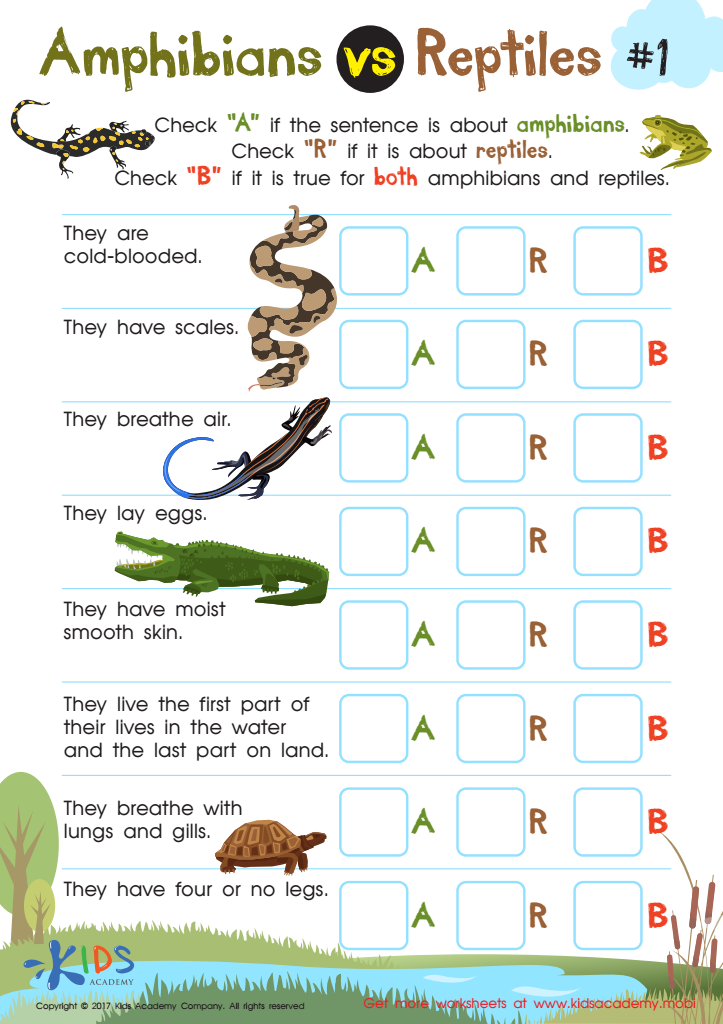
Amphibians vs Reptiles Worksheet








Parents and teachers should care about introducing comparative analysis in science for children aged 5-9 as it lays a critical foundation for cognitive development, analytical thinking, and a lifelong love of learning. At this stage, children's brains are incredibly malleable and eager to absorb new information. Comparative analysis enables young learners to observe, identify patterns, and make correlations, skills that are not only crucial in the realm of science but also in everyday problem-solving.
Moreover, this methodological approach nurtures curiosity and encourages children to ask "why" questions, enhancing their understanding of the world around them. Activities like comparing different types of leaves, animals, or materials encourage tactile learning and keep students engaged. By fostering habits of structured inquiry, children become adept at distinguishing similarities and differences, a skill indispensable across all areas of learning and living.
Incorporating comparative analysis addresses various learning styles – visual, kinesthetic, and auditory – ensuring inclusivity in the classroom. It also aligns with curricular goals and developmental milestones, setting a robust framework for more complex scientific studies in later years. Consequently, paying attention to comparative analysis science activities cultivates a broad set of skills that are fundamental for academic success and proficient day-to-day decision-making.







