Historical Knowledge Science Worksheets for Ages 5-9
5 filtered results
-
From - To
Discover our engaging "Historical Knowledge Science Worksheets for Ages 5-9," designed to help young learners explore the fascinating world of history and science. These worksheets emphasize critical thinking while covering essential topics like famous historical figures, ancient civilizations, and monumental inventions. Tailored for early learners, each activity combines fun with education, nurturing curiosity and a love for learning. Ideal for parents and educators, our resources support classroom instruction and home learning. Enrich your child's understanding of the past and its connection to science today with our vibrant, interactive worksheets, fostering a strong foundation for lifelong historical knowledge.
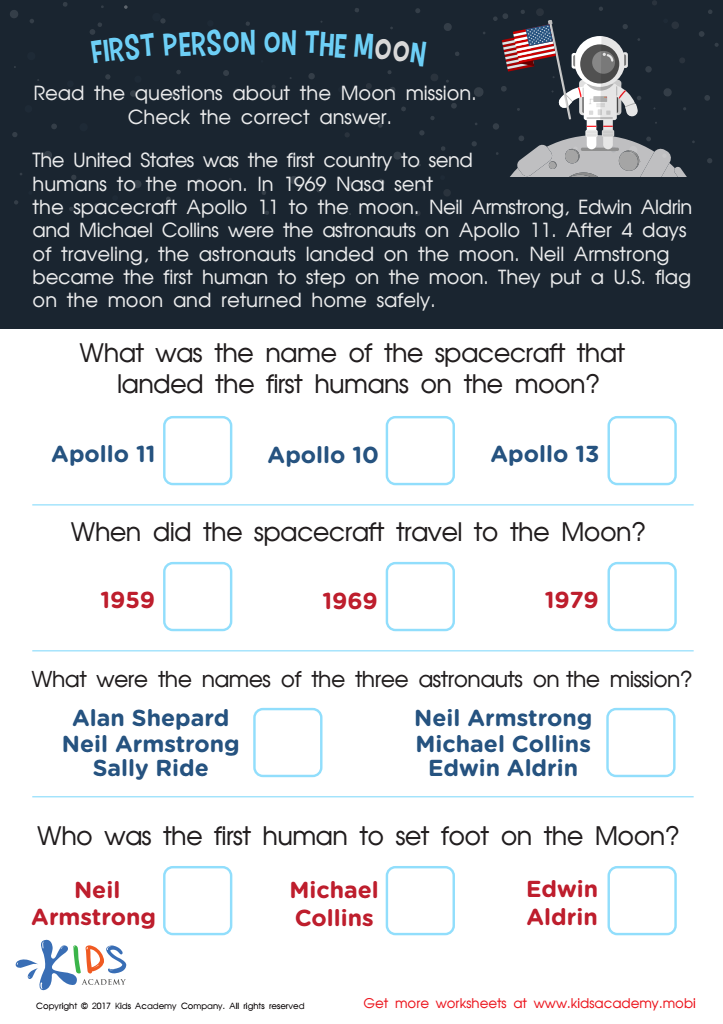
First Person on the Moon Worksheet
 Assign to My Students
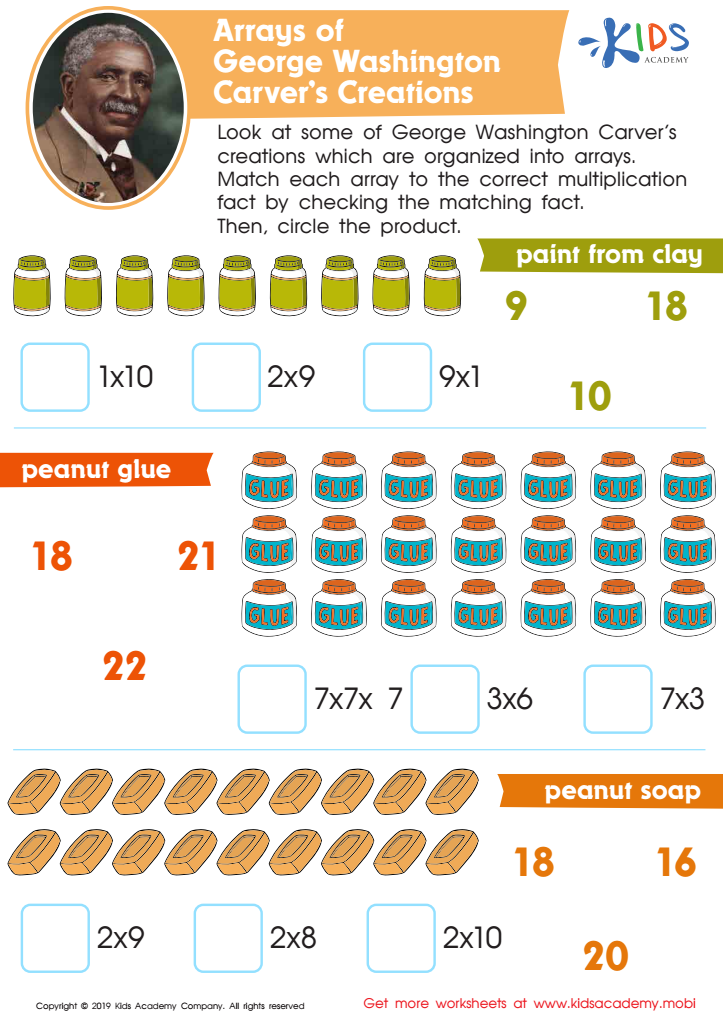
Arrays of George Washington Carver’s Creations Worksheet
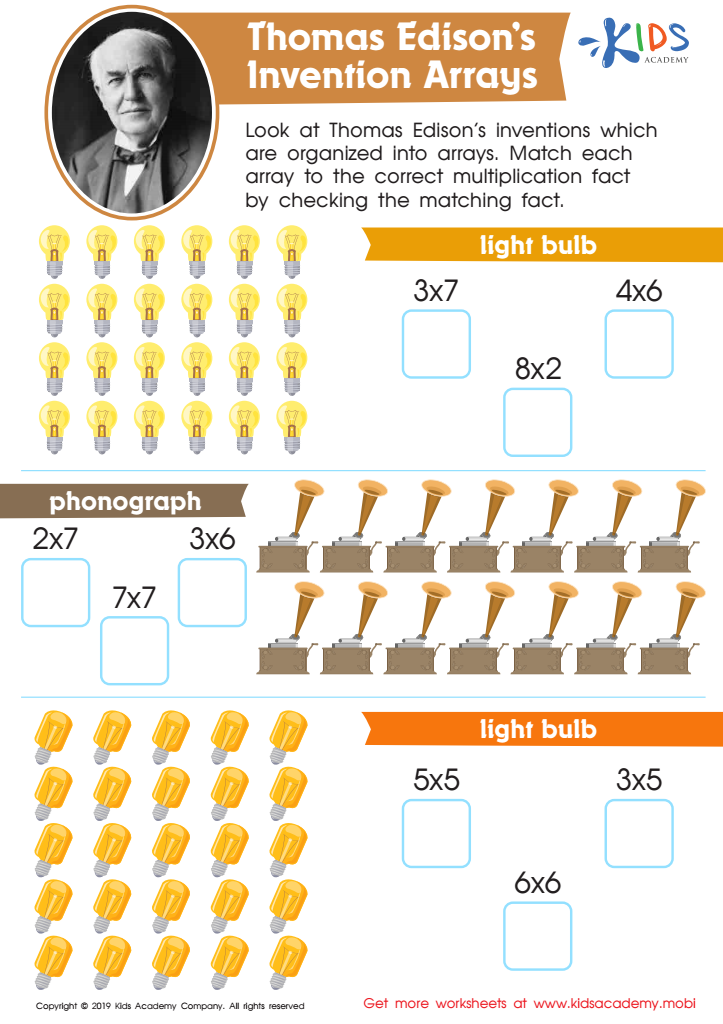
Thomas Edison’s Invention Arrays Worksheet
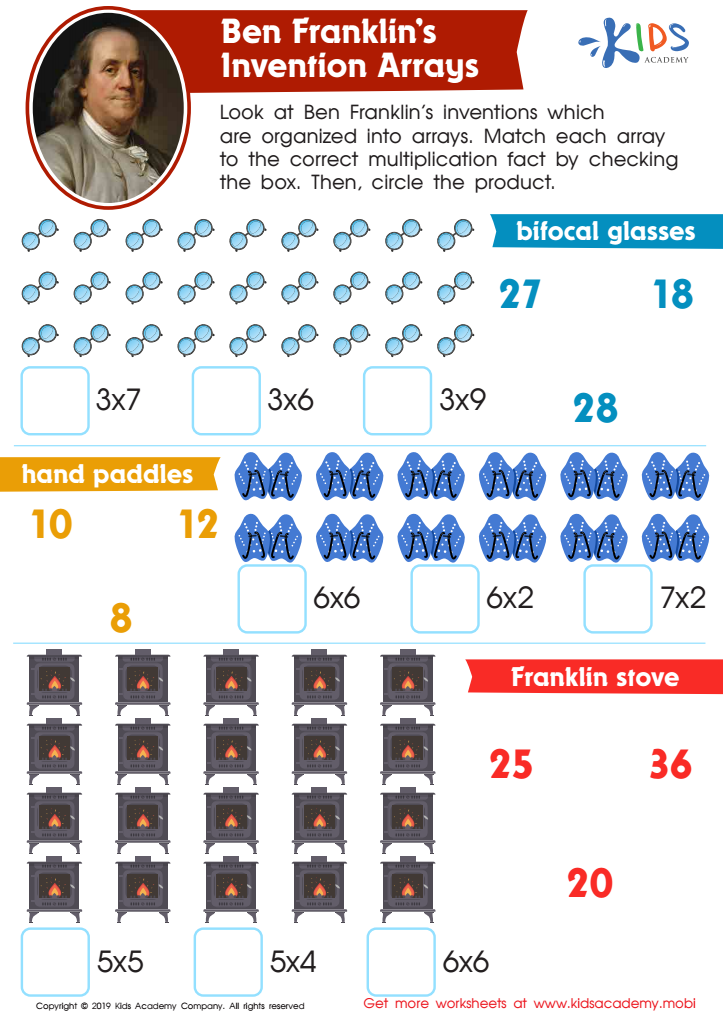
Ben Franklin’s Invention Arrays Worksheet
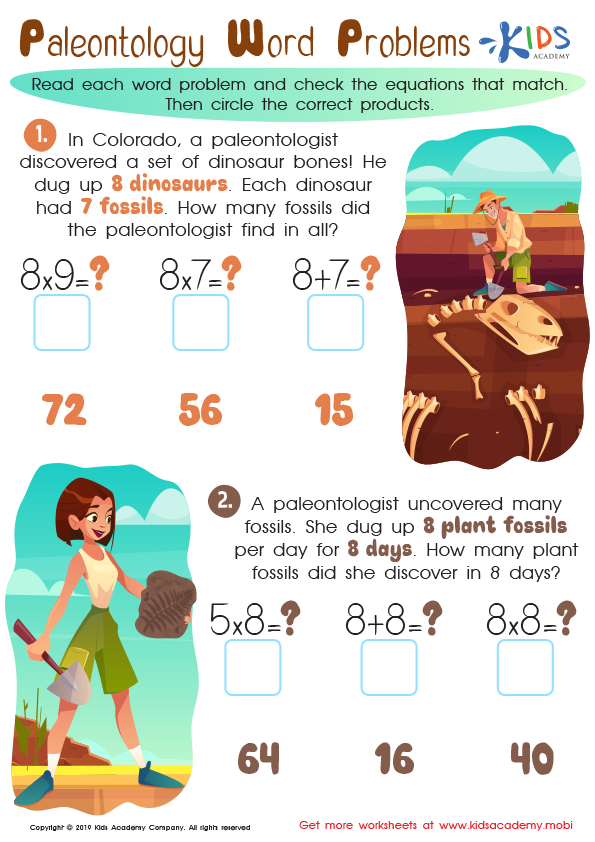
Archeology Word Problems Worksheet





.jpg)

Parents and teachers should care about Historical Knowledge Science for ages 5-9 because it lays the foundation for children's understanding of their world and promotes critical thinking skills. At this age, children are naturally curious and eager to learn about the past, which can foster an appreciation for diverse cultures, traditions, and significant events. Engaging them in historical inquiry helps them make sense of social contexts and understand how history shapes their present and future.
Moreover, teaching Historical Knowledge Science encourages children to explore cause-and-effect relationships, inspiring them to ask questions and develop analytical skills. These competencies not only contribute to their academic success but also promote informed citizenship, teaching kids the importance of empathy and respect for different perspectives.
Furthermore, integrating historical knowledge into their learning supports literacy development as students engage with stories from the past, thus enriching their vocabulary and comprehension. Overall, instilling an early love for history cultivates responsible, well-rounded individuals who are better equipped to engage with and contribute positively to society. By prioritizing Historical Knowledge Science, parents and teachers empower children to appreciate their heritage while equipping them with the tools to navigate an increasingly complex world.







