
Science vocabulary expansion Science Worksheets for Ages 5-9
4 filtered results
Difficulty Level
Grade
Age
-
From - To
Subject
Activity
Standards
Unlock the wonders of science with our Science Vocabulary Expansion Worksheets, expertly designed for children ages 5-9! These worksheets are designed to develop foundational science terminology and key concepts in young learners. Engaging activities provide a hands-on approach to learning, fostering curiosity and a love for discovery in subjects like biology, astronomy, and physics. Ideal for classrooms or at-home education, our science worksheets offer an exciting way to build knowledge and improve language skills simultaneously. Empower your child to become a confident and enthusiastic young scientist with Kids Academy’s Science Vocabulary Expansion worksheets!
Favorites
With answer key
Interactive
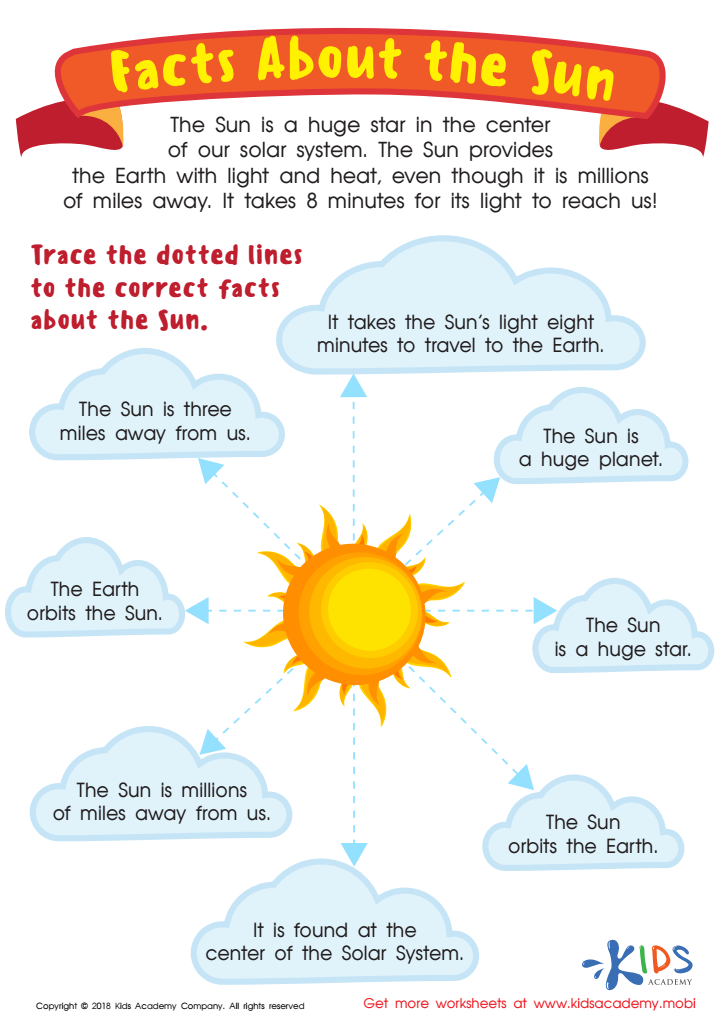
Facts About the Sun Worksheet
Long ago humans thought the Earth was the center of the solar system, but we now know it's really the sun! Use this science worksheet to review basic facts about the sun with your early learner. Have them recall prior knowledge about space before tackling the "true or false" questions. Trace from the sun in the center to the true facts in the clouds.
 Assign to My Students
Facts About the Sun Worksheet
Worksheet
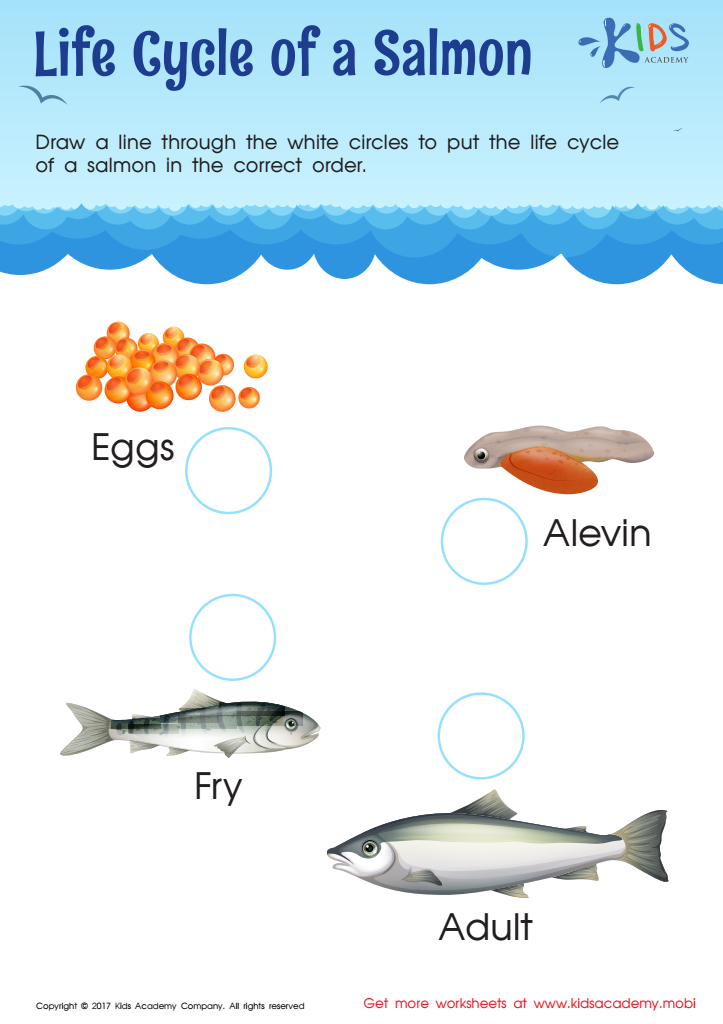
Cycle Of Salmon Worksheet
Explore the life cycle of a salmon with this grade 2 worksheet! Kids will learn by arranging the stages of the salmon's lifecycle in order. Science activities in this set cover a wide range of lifecycles in nature.
Cycle Of Salmon Worksheet
Worksheet
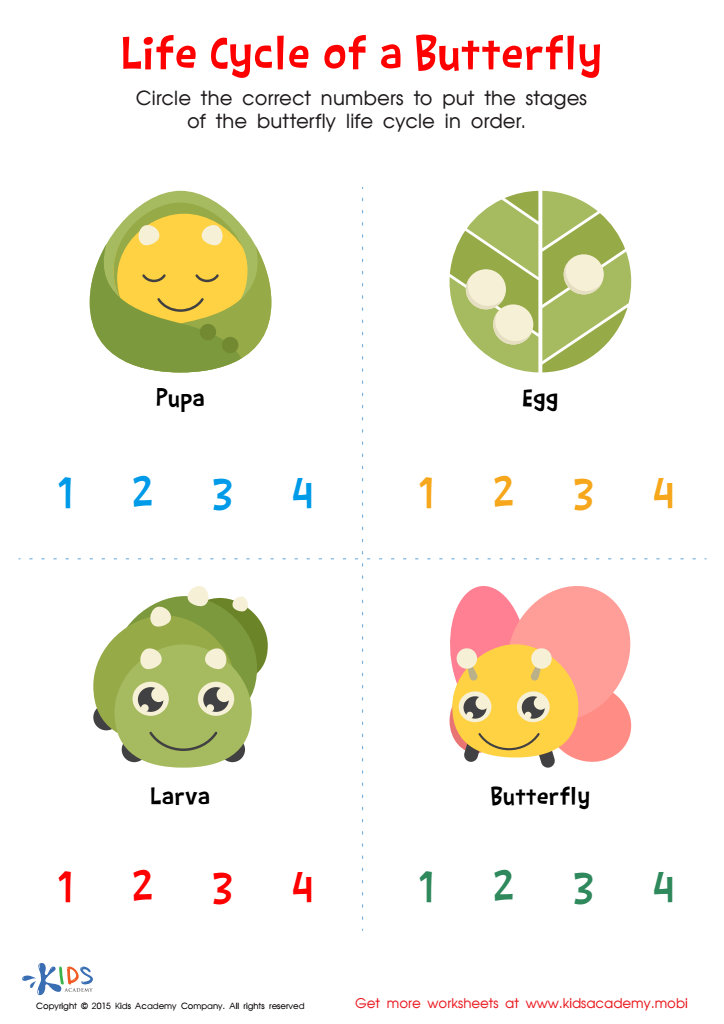
Life Cycle of Butterfly Printable
Kids and grownups alike marvel at the beauty of butterflies. With this printable worksheet, kids can review the life cycle of these favorite insects and strengthen cognitive and problem solving skills. From egg to butterfly, kids will order the stages and use the best strategy to solve it. Guide them as they work and they'll learn multiple skills.
Life Cycle of Butterfly Printable
Worksheet
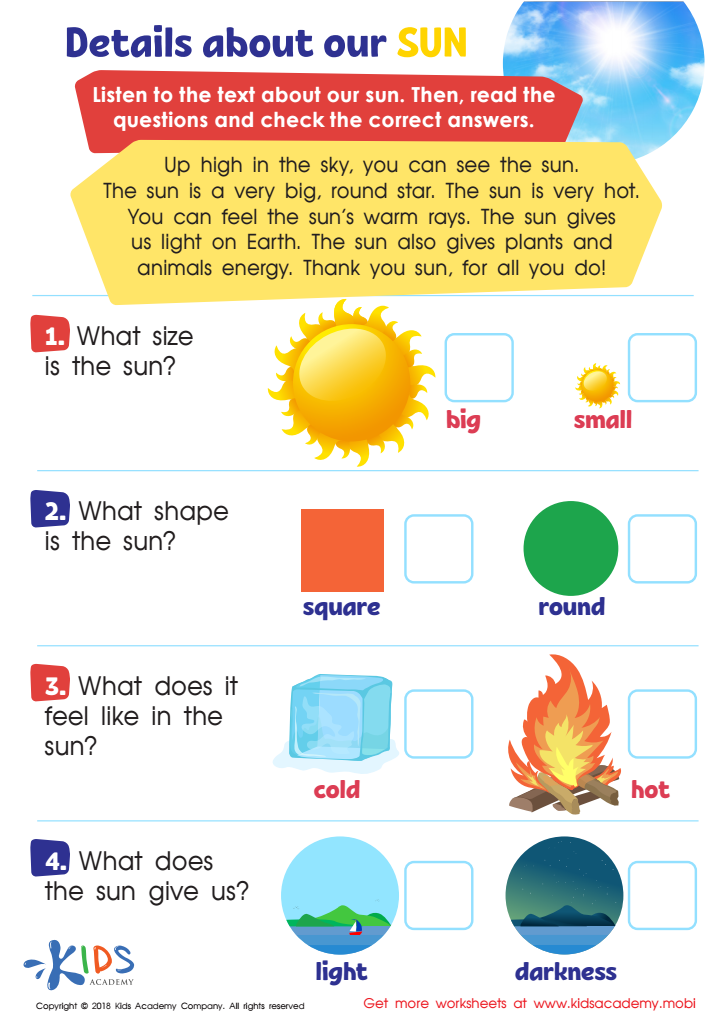
Details About Our Sun Worksheet
Teach your kindergartners about the sun with this worksheet. Read the informative text to them, then ask the questions and help them mark the right answers. Discover what your student knows about this big glowing ball of fire in the sky.
Details About Our Sun Worksheet
Worksheet
Join Kids Academy for Free
Who is primarily going to use this learning content?








Expanding science vocabulary in children aged 5-9 is crucial for fostering their cognitive and language development, as well as their overall curiosity about the world. At this pivotal stage, children are naturally inquisitive and absorb information rapidly. When parents and teachers prioritize science vocabulary, they lay the groundwork for scientific literacy, enabling children to understand basic concepts that shape their everyday lives.
A robust science vocabulary helps children describe phenomena accurately, ask better questions, and comprehend more complex ideas as they grow. Familiarity with terms like "gravity," "habitat," "evaporation," or "energy" can transform how they observe and interact with the world. For example, understanding "habitat" helps them recognize the importance of ecosystems, thereby encouraging a sense of environmental stewardship.
Moreover, integrating science vocabulary into early education supports interdisciplinary learning. Literacy and numeracy skills improve when children apply their reading, writing, and counting abilities to scientific contexts. This holistic approach nurtures critical thinking and problem-solving skills.
Ultimately, an early focus on science vocabulary empowers children, instilling confidence and a sense of competence. It equips them to explore more sophisticated scientific subjects later on and to participate actively in a society where science and technology play a significant role. Investing in this aspect of education sets children on a path of lifelong learning and curiosity.







