Sequencing skills improvement Science Worksheets for Ages 5-9
3 filtered results
-
From - To
Enhance your child's sequencing skills with our engaging Science Worksheets tailored for ages 5-9. Our expertly designed materials help young learners grasp the concept of sequences while exploring fascinating science topics. Each worksheet encourages problem-solving, logical thinking, and understanding of order through fun, interactive exercises. Perfect for younger children, these resources promote critical thinking and foster a love for learning by seamlessly blending educational content with enjoyable activities. Boost your child's cognitive development and scientific curiosity with our comprehensive sequencing skills improvement science worksheets. Ideal for use at home or in the classroom, these printables support effective, hands-on learning.
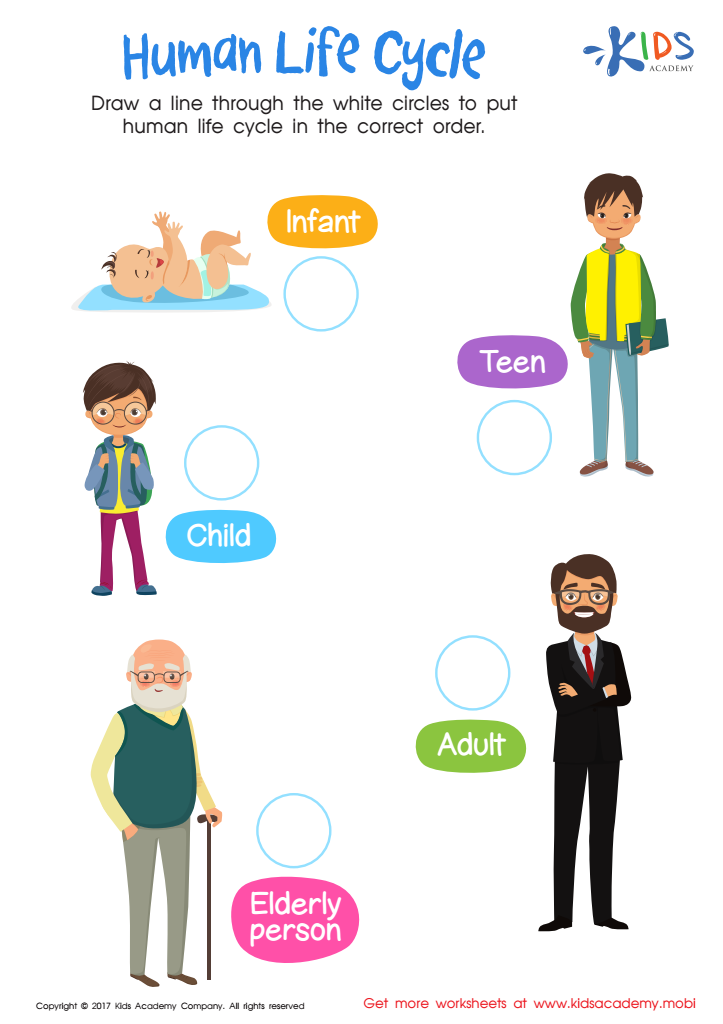
Human Life Cycle Worksheet
 Assign to My Students
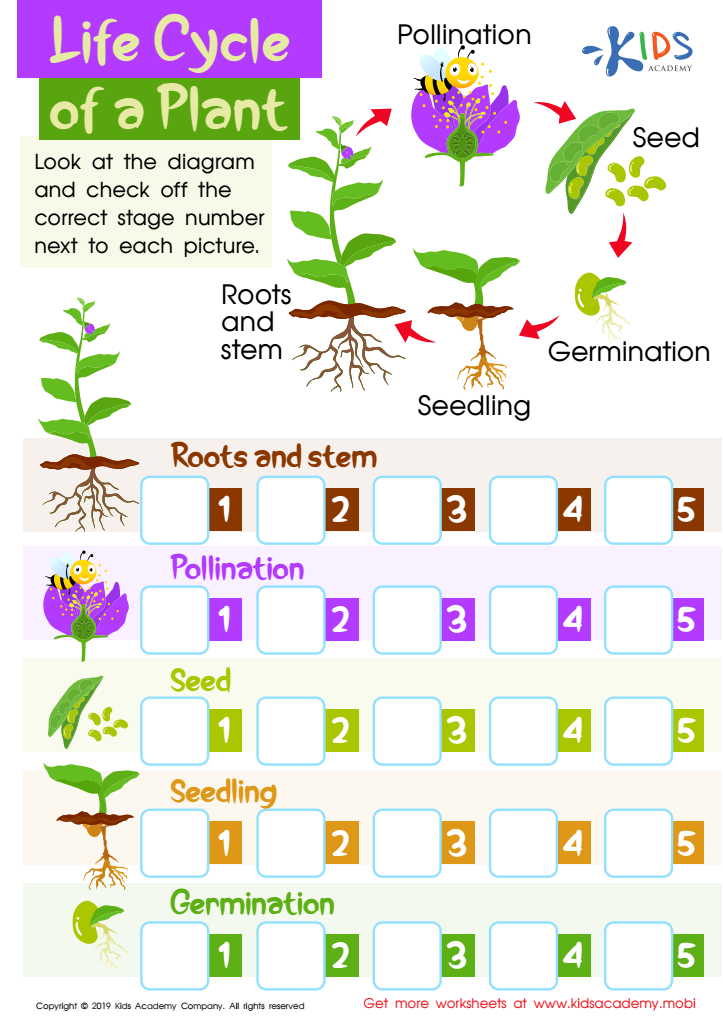
Life Cycle of a Plant Worksheet
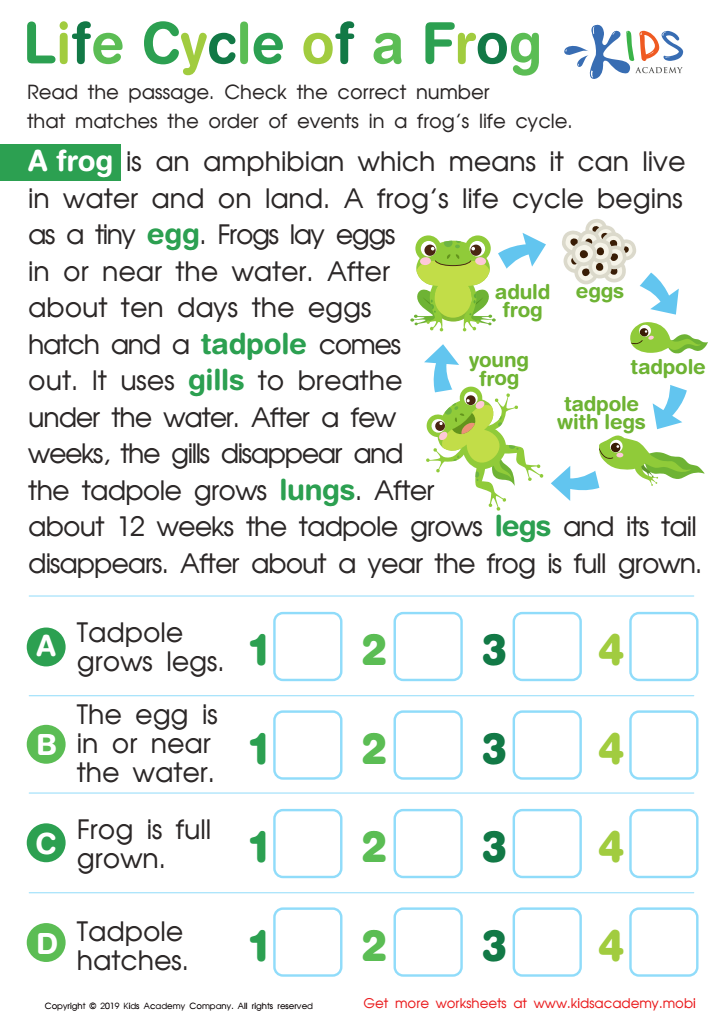
Life Cycle of a Frog Worksheet








Sequencing skills are essential for early childhood development, particularly in science education for children aged 5-9. These skills involve understanding the order of events or steps in a process, which can significantly impact a child’s ability to grasp scientific concepts and foster critical thinking. When children improve their sequencing skills, they become better equipped to follow scientific procedures, understand cause-and-effect relationships, and make predictions based on prior knowledge.
For parents and teachers, emphasizing sequencing skills offers numerous benefits. It helps children comprehend the logical flow of experiments, leading to more accurate observations and conclusions. For instance, if a child can sequence the steps of planting a seed correctly, they will better understand the plant’s growth stages and the conditions necessary for its survival. This foundational understanding encourages curiosity and a love for learning, both of which are crucial in early science education.
Improved sequencing skills also aid in other academic areas, such as reading comprehension and math. Being able to follow a narrative or solve a multi-step math problem requires the same sequential thinking. By nurturing these skills early on, parents and teachers are setting children up with a crucial toolkit that will aid in lifelong learning and problem-solving, ultimately empowering them to succeed in diverse fields of study.







