
Weather Vocabulary Science Worksheets for Ages 5-9
4 filtered results
Difficulty Level
Grade
Age
-
From - To
Subject
Activity
Standards
Introduce your young learners to the fascinating world of weather with our engaging Weather Vocabulary Science Worksheets, tailored for ages 5-9! Designed to blend fun and education, these interactive worksheets help children explore essential weather concepts, enhancing their vocabulary and comprehension skills. From identifying different weather patterns to understanding meteorological terms, each activity promotes critical thinking and creativity. Ideal for classroom use or at-home learning, these worksheets make science accessible and enjoyable. Equip your students with the knowledge they need to understand their environment while fostering a lifelong curiosity about the world around them. Download now and watch them thrive!
Favorites
With answer key
Interactive
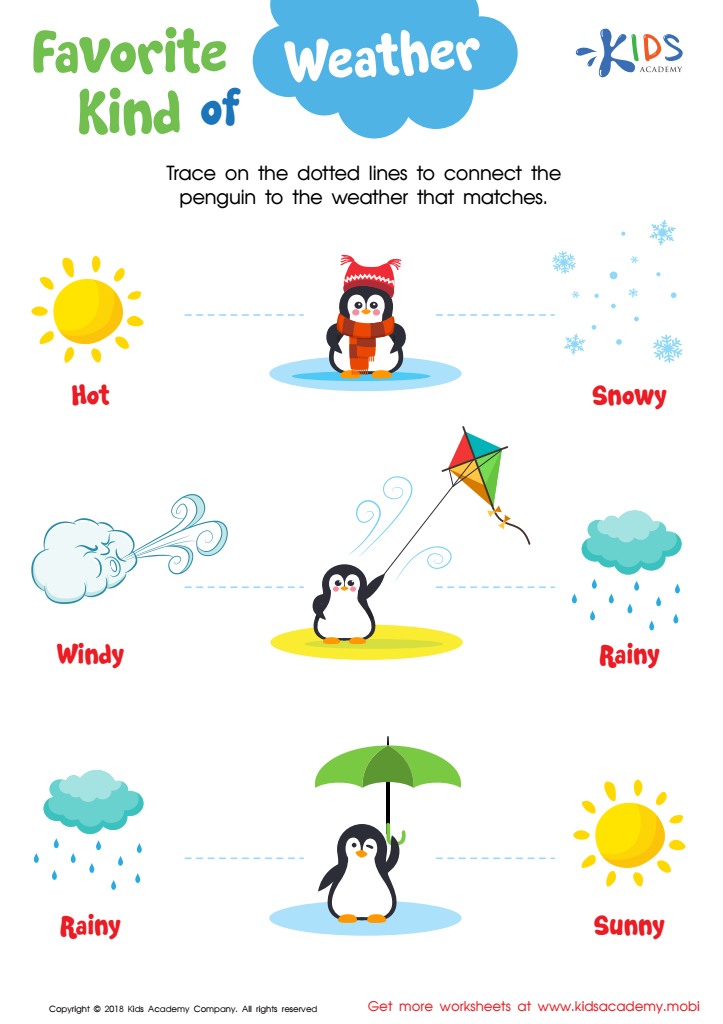
Favorite Kind of Weather Worksheet
!
Help your child understand weather and seasons with this fun worksheet featuring a cute penguin. They'll learn to recognize types of weather and associate them with seasons. To practice their fine motor skills, they'll trace lines to select the right seasons and weather. Kids will make a new friend while broadening their knowledge of nature.
Favorite Kind of Weather Worksheet
Worksheet
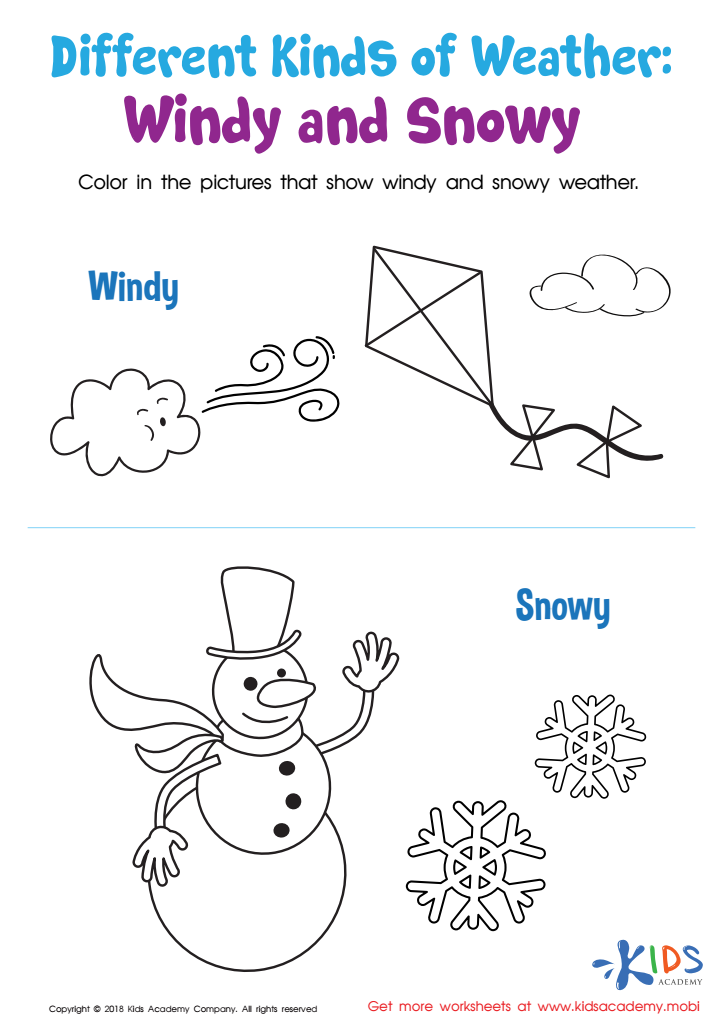
Different Kinds of Weather: Windy and Snowy Worksheet
Invite your little learner to practice their fine motor skills and learn about nature with this fun and charming PDF worksheet! Reinforce weather patterns and examine their environment as they color, giving them a foundation for understanding how weather affects them. No matter the weather, your learner will have a blast!
Download (PDF)
 Assign to My Students
Assign to My Students
Different Kinds of Weather: Windy and Snowy Worksheet
Worksheet
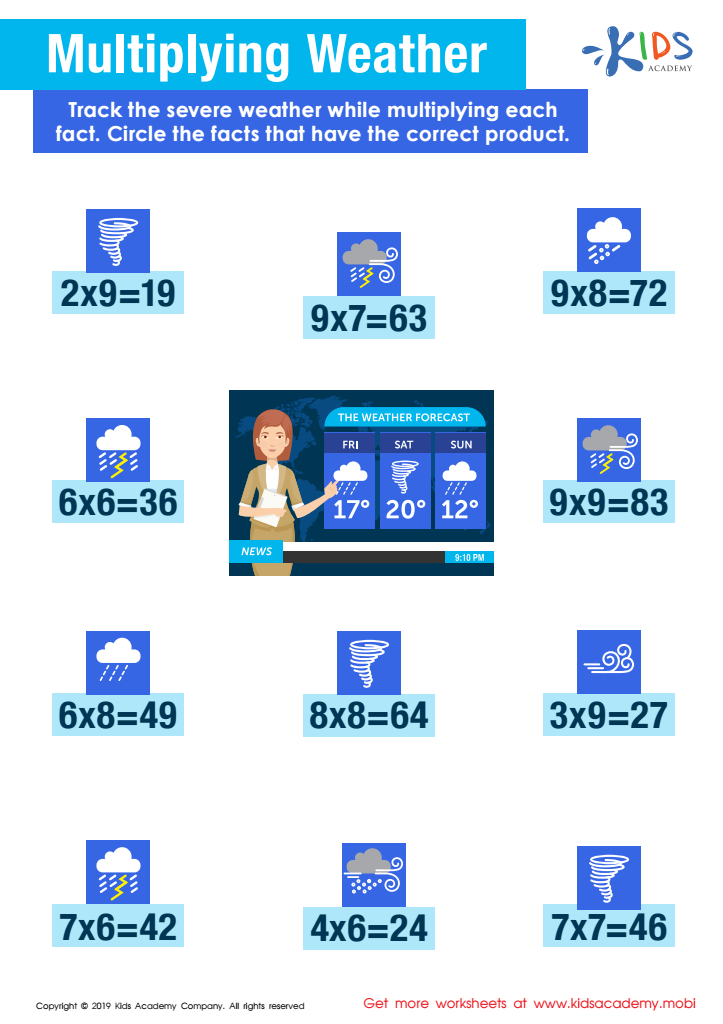
Multiplying Weather Worksheet
Most kids love playing outdoors, but weather can affect what we can do. Rain and snow can keep us from getting outside and even cancel school! Weather forecasters help us prepare for the day. In this worksheet, multiply facts to track severe weather and circle the ones with the right answer.
Multiplying Weather Worksheet
Worksheet
Join Kids Academy for Free
Who is primarily going to use this learning content?




%20(1).jpg)



Understanding weather vocabulary is essential for children aged 5-9, as it helps them develop a foundational knowledge of their environment and the world around them. By learning specific terms related to weather—such as "humidity," "precipitation," and "forecast"—children enhance their language skills and improve their ability to communicate about their daily experiences.
Weather is a topic of constant relevance; by cultivating kids’ fluency in weather vocabulary, parents and teachers help them make sense of observations they experience firsthand, whether it’s a sunny day, a rainy afternoon, or a snowstorm. Engaging with weather science promotes curiosity and critical thinking as children begin to ask questions like, "Why does it rain?" or "What makes thunder?"
Additionally, a solid grasp of weather vocabulary can foster safety and preparedness. Kids equipped with the right knowledge are more likely to understand weather warnings, comprehend natural disasters, and participate in discussions about climate change. Moreover, integrating weather science into learning encourages exploration, hands-on activities, and interactive lessons that make learning enjoyable. In summary, nurturing a child's understanding of weather vocabulary contributes significantly to their linguistic, cognitive, and social development, while empowering them to engage responsibly with their surroundings.







