Vocabulary expansion Our Planet and Environment Worksheets for Ages 5-9
6 filtered results
-
From - To
Enhance your child's learning with our engaging "Vocabulary Expansion: Our Planet and Environment" worksheets designed for ages 5-9. These carefully crafted worksheets introduce young learners to essential vocabulary related to Earth and environmental themes, fostering curiosity about the world around them. Through interactive activities, kids will explore concepts such as ecosystems, sustainability, and more. Each worksheet promotes language development while encouraging critical thinking about our planet's health. Perfect for at-home learning or classroom activities, these resources make expanding vocabulary fun and educational. Empower your child to communicate effectively about important environmental issues and instill a love for the Earth!
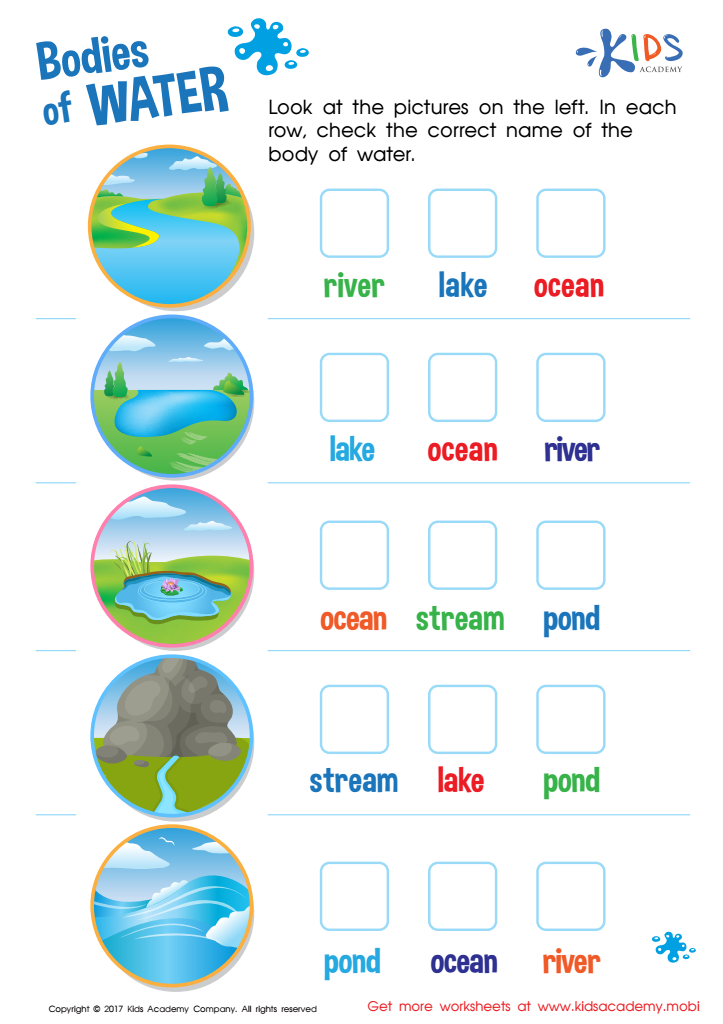
Bodies of Water Worksheet
 Assign to My Students
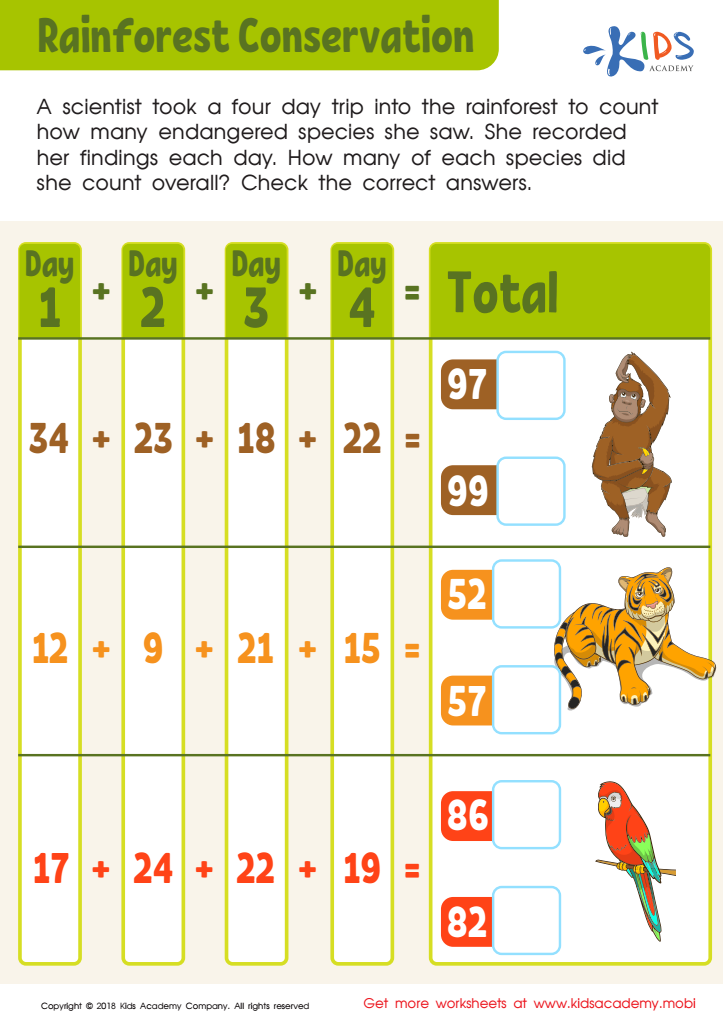
Rainforest Conservation Worksheet
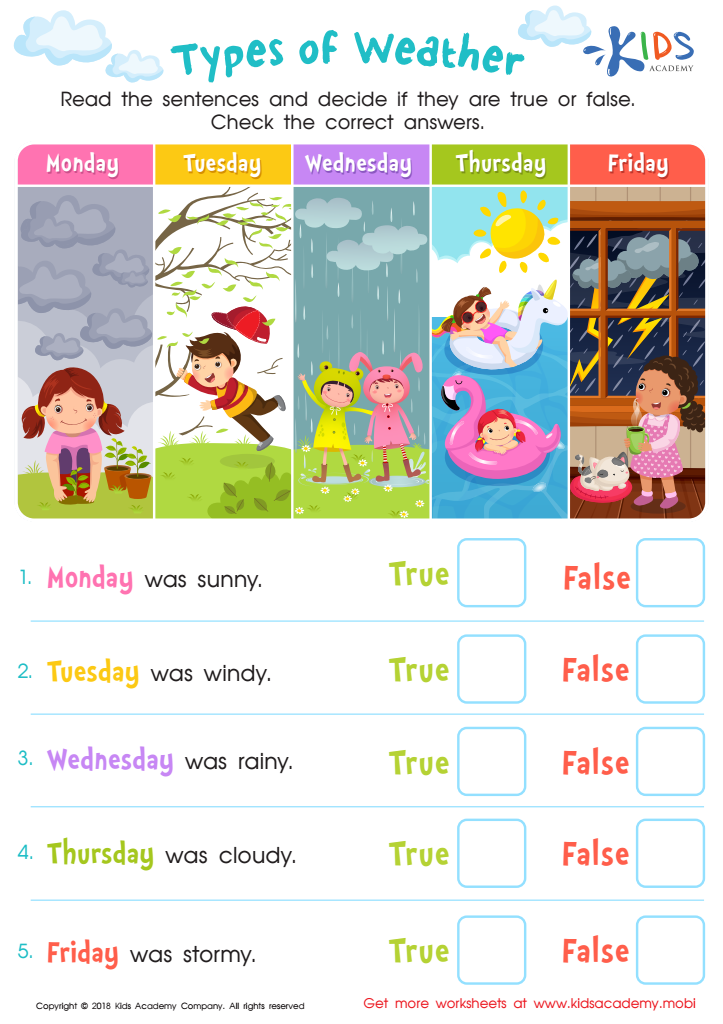
Types of Weather Worksheet
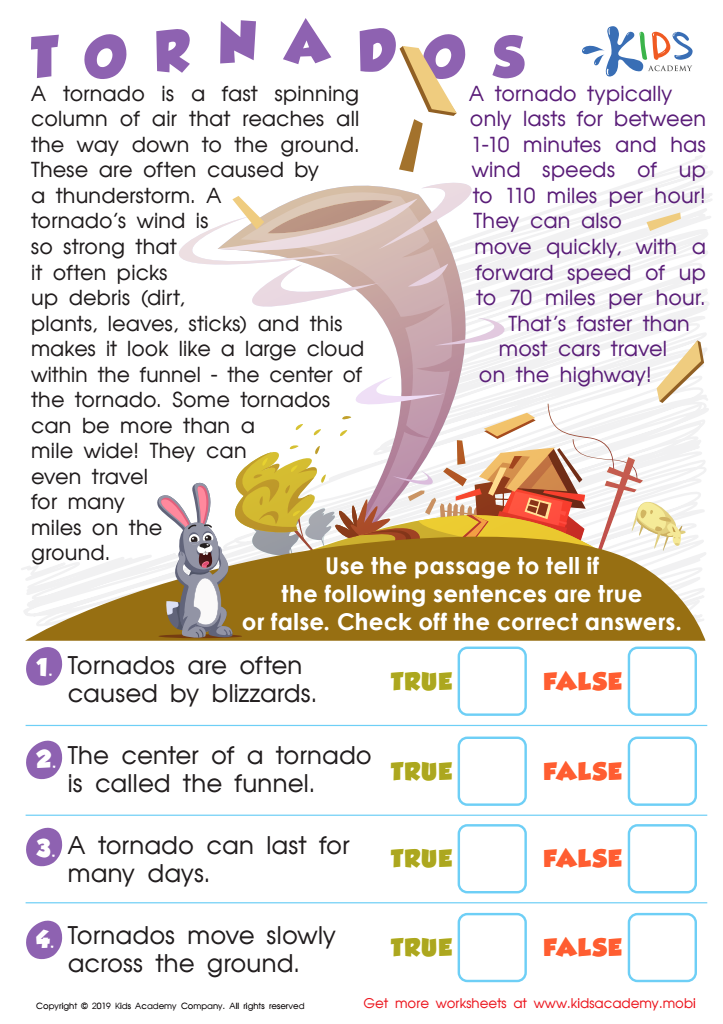
Tornados Worksheet
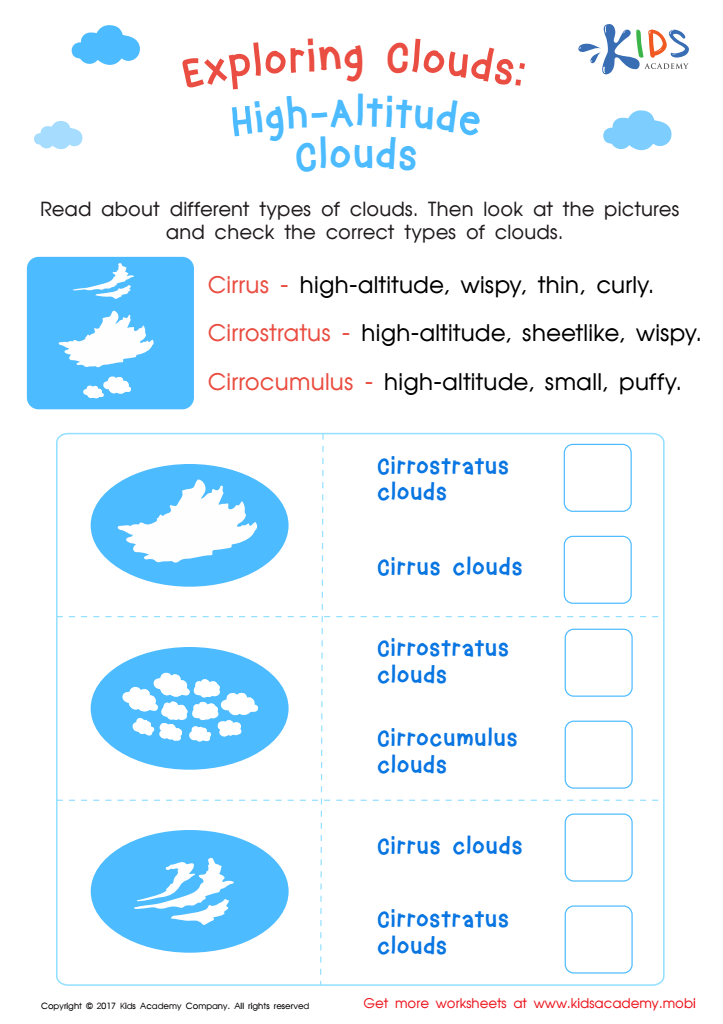
Exploring Clouds: High Altitude Clouds Worksheet
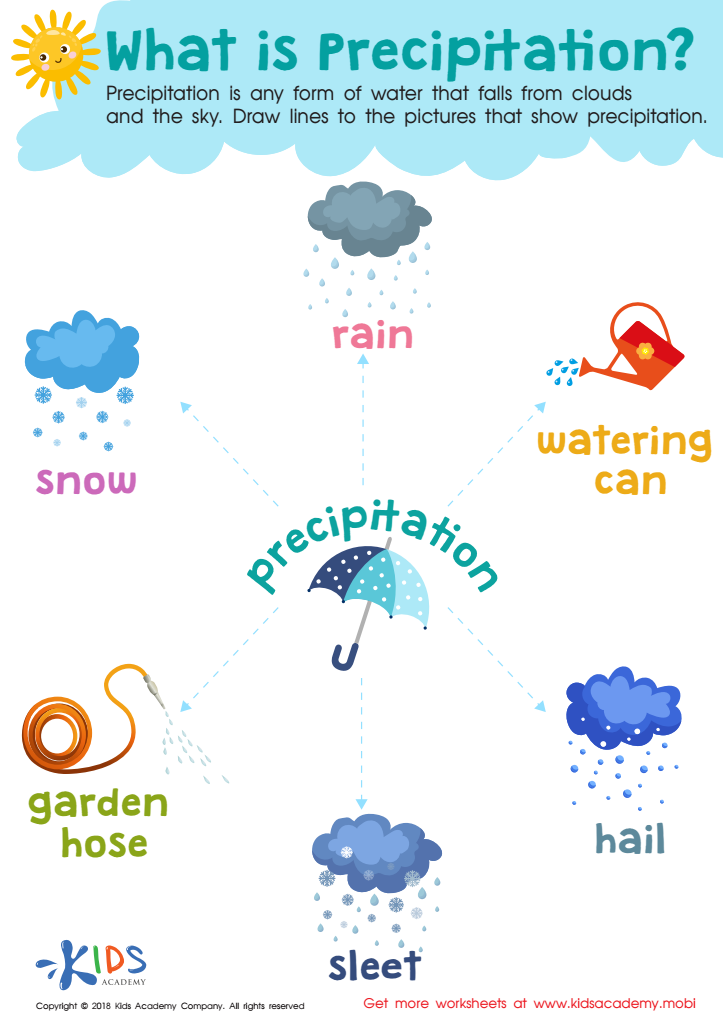
What Is Precipitation? Worksheet





Vocabulary expansion related to "Our Planet and Environment" is essential for children aged 5-9, as it directly impacts their understanding of the world around them. Early exposure to rich environmental vocabulary fosters curiosity, encourages critical thinking, and helps children articulate their thoughts about nature, sustainability, and ecological issues. This age group is naturally inquisitive, with a thirst for knowledge; providing them with specialized terms allows them to engage meaningfully with their surroundings.
Moreover, teaching vocabulary related to the environment not only enhances language skills but also instills a sense of responsibility and awareness about caring for our planet. Children who are well-versed in environmental terms are better equipped to discuss topics like recycling, conservation, and climate change, thus promoting environmentally conscious behavior from a young age.
Additionally, increased vocabulary strengthens literacy skills, enhancing reading and writing proficiency as children progress through their education. By incorporating environmentally-themed words into daily conversations, parents and teachers can provide children with tools to express their ideas, questions, and concerns about the earth, building a foundation for lifelong learning and stewardship of the environment. Ultimately, vocabulary expansion in this context enriches a child's educational journey and nurtures responsible future citizens.







