Historical Knowledge Social Studies Worksheets for Ages 5-9 - Page 2
26 filtered results
-
From - To
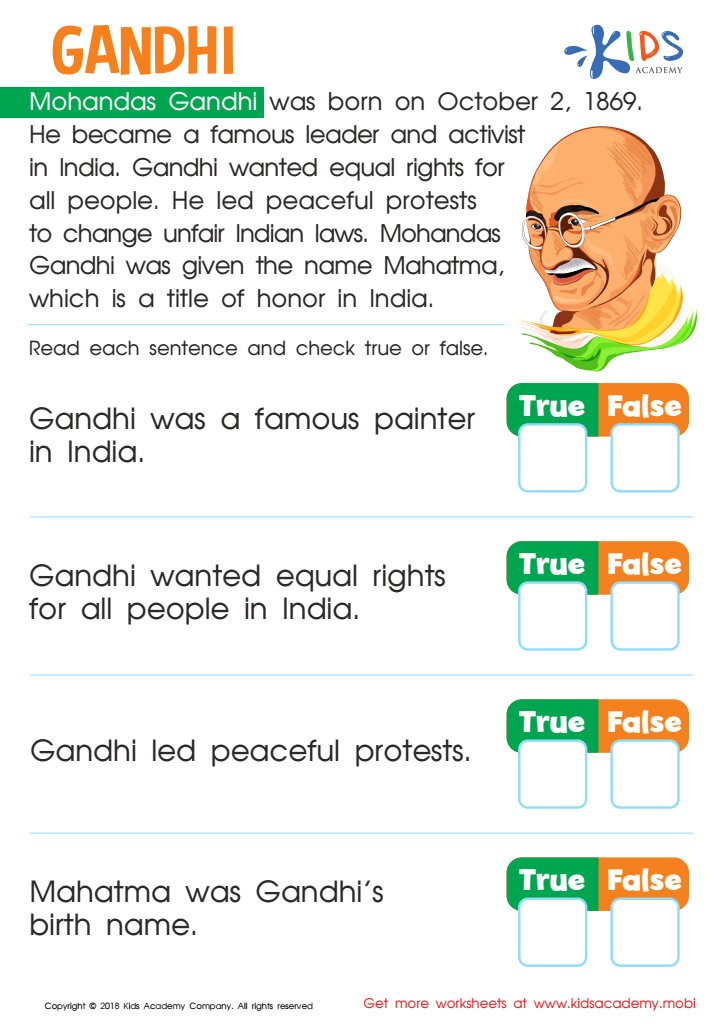
Gandhi Worksheet
 Assign to My Students
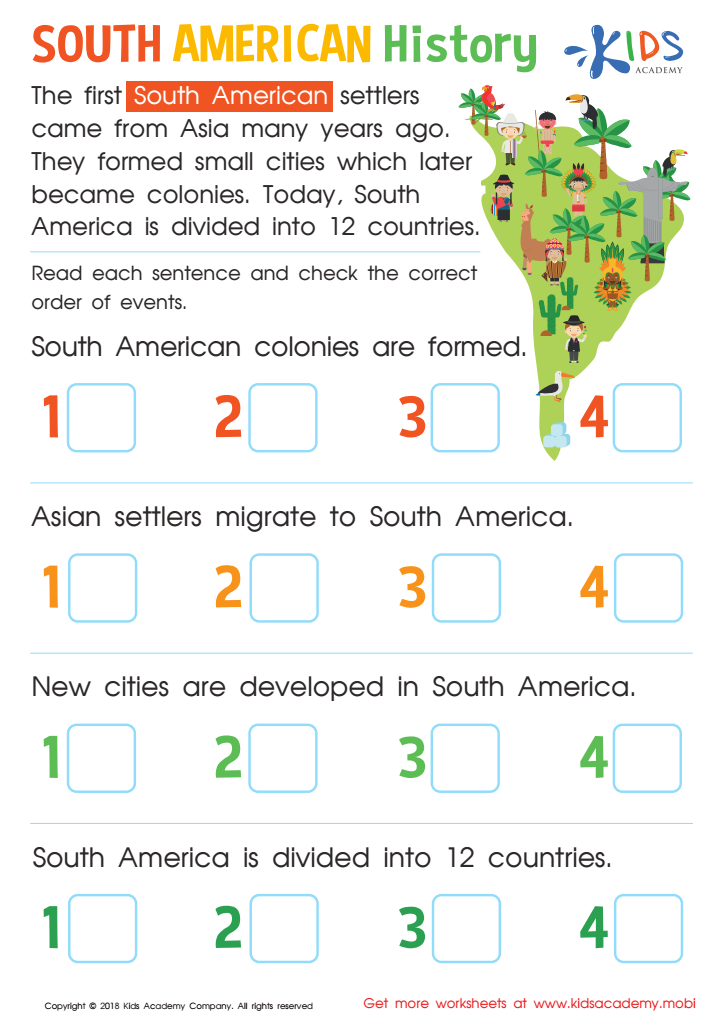
South American History Worksheet








Caring about historical knowledge in social studies for ages 5 to 9 is essential for several key reasons. Firstly, this early introduction helps children develop a sense of identity and belonging. By learning about historical events, cultures, traditions, and key figures, young minds begin to understand where they come from, promoting a stronger sense of self and community.
Secondly, early historical education enhances critical thinking skills. Children start to grasp cause-and-effect relationships, recognize patterns, and compare perspectives. Such skills are foundational for problem-solving and analytical thinking, which are valuable across all areas of learning.
Additionally, understanding history fosters empathy and tolerance. Learning about diverse cultures, times, and peoples can help children appreciate differences and commonalities, promoting social harmony and respect for others.
Social studies lessons also encourage active citizenship. By understanding historical contexts, children learn the importance of their roles in shaping the future, fostering responsible and informed future citizens.
Finally, early exposure to social studies can spark curiosity and a love of learning. Interesting stories from the past can inspire young learners to explore further, nurturing a lifelong passion for education. Overall, grounding children in historical knowledge equips them with essential life skills and paves the way for well-rounded personal development.








