Understanding citizenship Social Studies Worksheets for Ages 5-9
6 filtered results
-
From - To
Explore our engaging "Understanding Citizenship" Social Studies worksheets designed for ages 5-9. These printable resources help young learners grasp key concepts like community roles, national symbols, and civic responsibilities. Through interactive activities, kids will build foundational knowledge about what it means to be a good citizen. Parents and educators can use these worksheets to inspire interest in social studies, encouraging children to participate actively in their communities. Structured for different skill levels, our worksheets make learning about citizenship fun and accessible. Empower your child’s educational journey with materials that foster a sense of belonging and responsibility. Download now and start exploring!
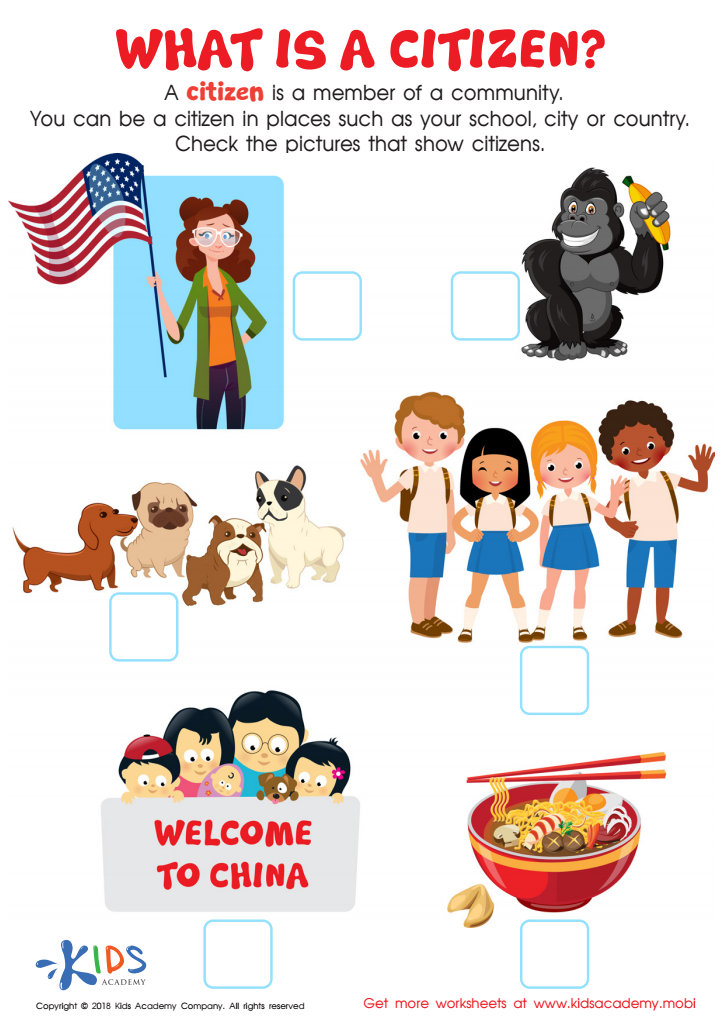
What is a Citizen? Worksheet
 Assign to My Students
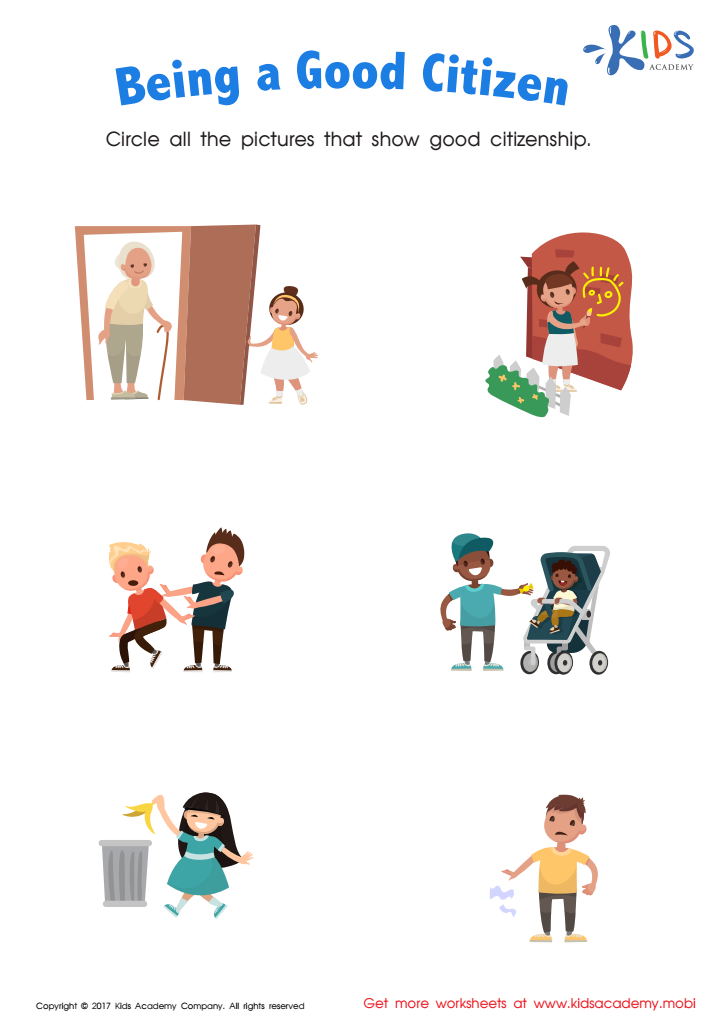
Being a Good Citizen Printable
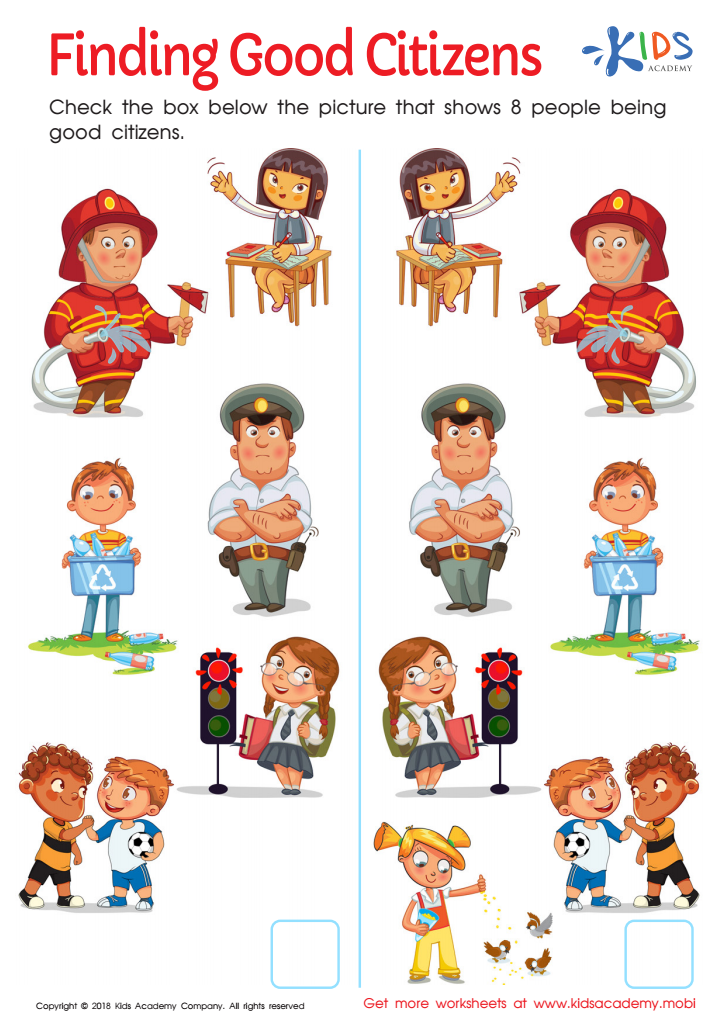
Finding Good Citizens Worksheet
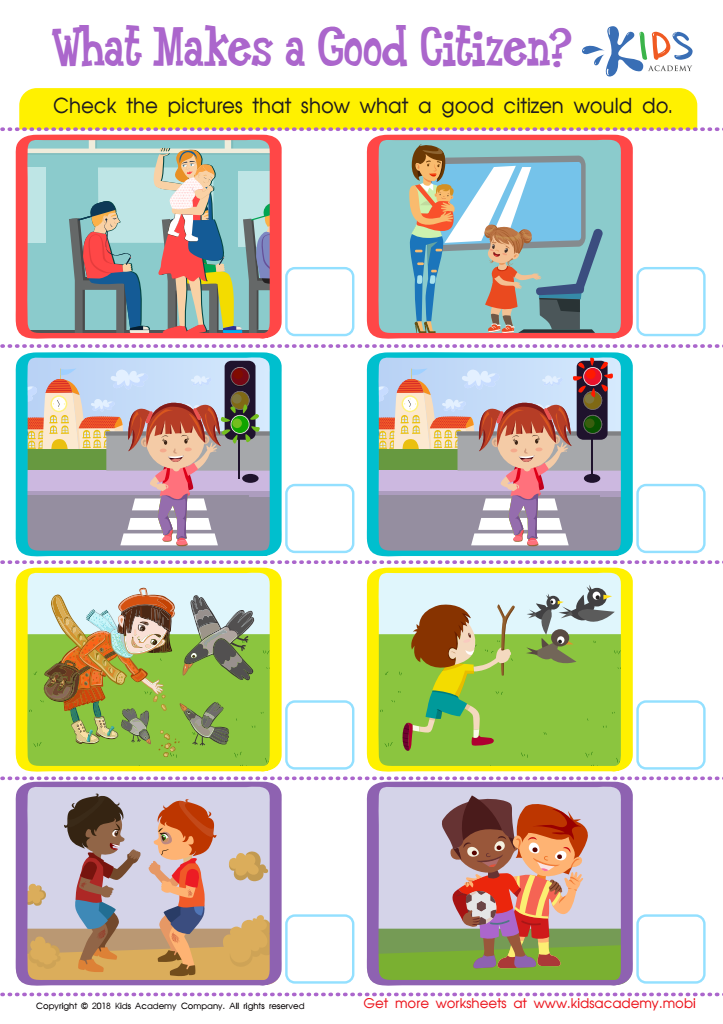
What Makes a Good Citizen? Worksheet
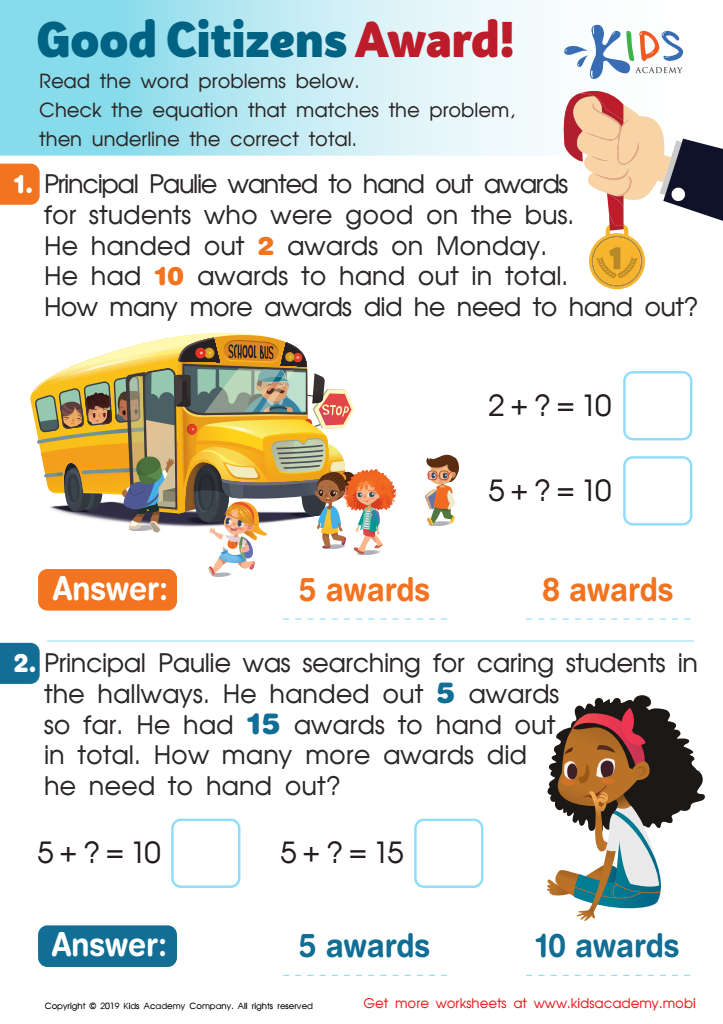
Good Citizens Award! Worksheet
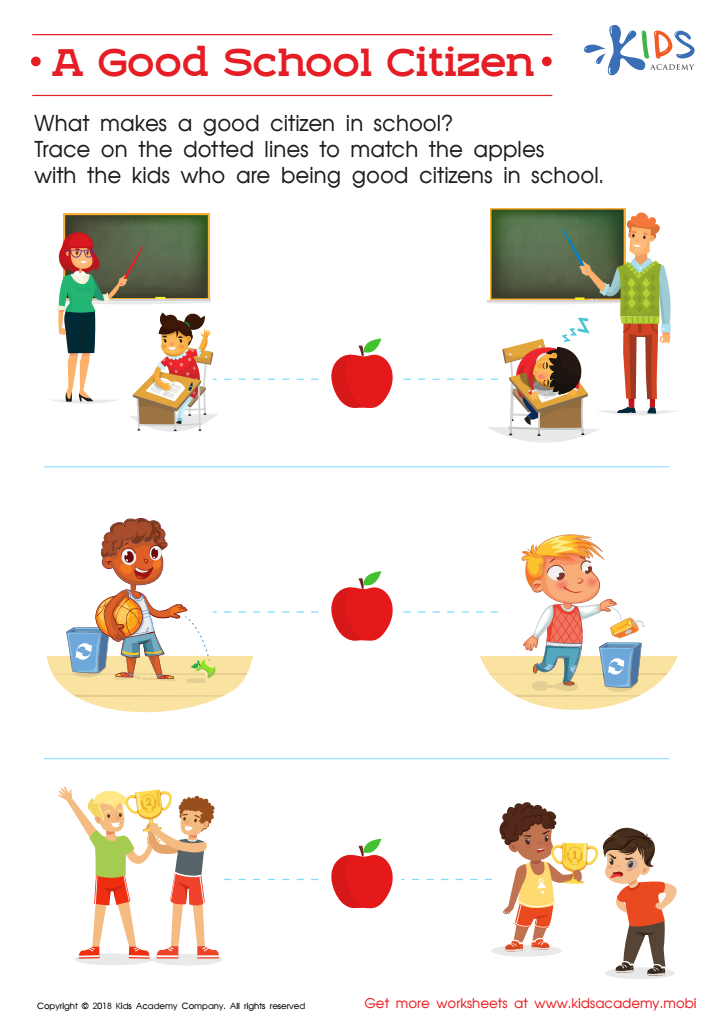
A Good School Citizen Worksheet








Understanding citizenship through social studies at an early age, such as between 5 and 9, lays a vital foundation for children's future roles in society. Parents and teachers should care deeply about this for several key reasons:
First, it fosters an understanding of community. Children learn about diverse cultures, family structures, and community roles, which helps them appreciate and respect differences. This early exposure to diversity can reduce prejudice and promote inclusivity, forming compassionate and open-minded adults.
Second, it teaches responsibility. Citizenship education instills a sense of duty towards others and towards the environment. Kids learn about good behavior, making rules, and the importance of voting and civic participation, which are crucial for democratic societies.
Third, it enhances critical thinking. Children become better problem-solvers by learning how different societies function and why rules exist. They start to ponder the consequences of actions and develop empathy by understanding others' viewpoints.
Lastly, it prepares them for active citizenship. Teaching social studies at a young age equips children with knowledge about their rights and responsibilities. It prepares them to make informed decisions and be proactive in addressing societal issues as they grow.
By investing in understanding citizenship early on, parents and teachers help cultivate conscientious, informed, and active members of society, which benefits everyone.








