
Visual recognition Social Studies Worksheets for Ages 5-9
6 filtered results
Difficulty Level
Grade
Age
-
From - To
Subject
Activity
Standards
Discover our engaging Visual Recognition Social Studies Worksheets designed specifically for children ages 5-9! These worksheets are perfect for young learners to develop essential skills while exploring their surroundings and understanding social concepts. Packed with vibrant images and interactive activities, your child will enjoy identifying objects, recognizing patterns, and connecting visuals to real-world contexts. Our thoughtfully crafted resources align with foundational learning objectives, ensuring children not only enhance their visual recognition abilities but also gain a deeper understanding of their communities and cultures. Spark your child's curiosity and make learning fun with our dynamic visual recognition worksheets today!
Favorites
With answer key
Interactive
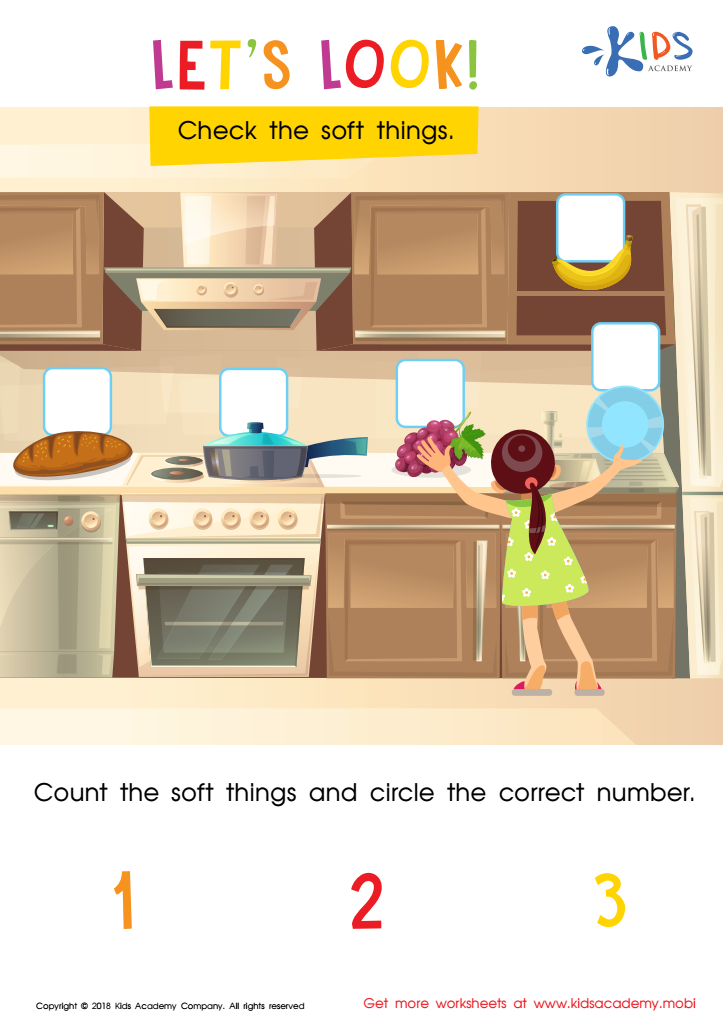
Let's Look! Assessment Worksheet
Have your child look at the picture in the printout and name the objects. Ask which ones are soft and hard and have them count the soft objects and circle the number. This worksheet will engage your child's thinking and teach them about texture.
 Assign to My Students
Let's Look! Assessment Worksheet
Worksheet
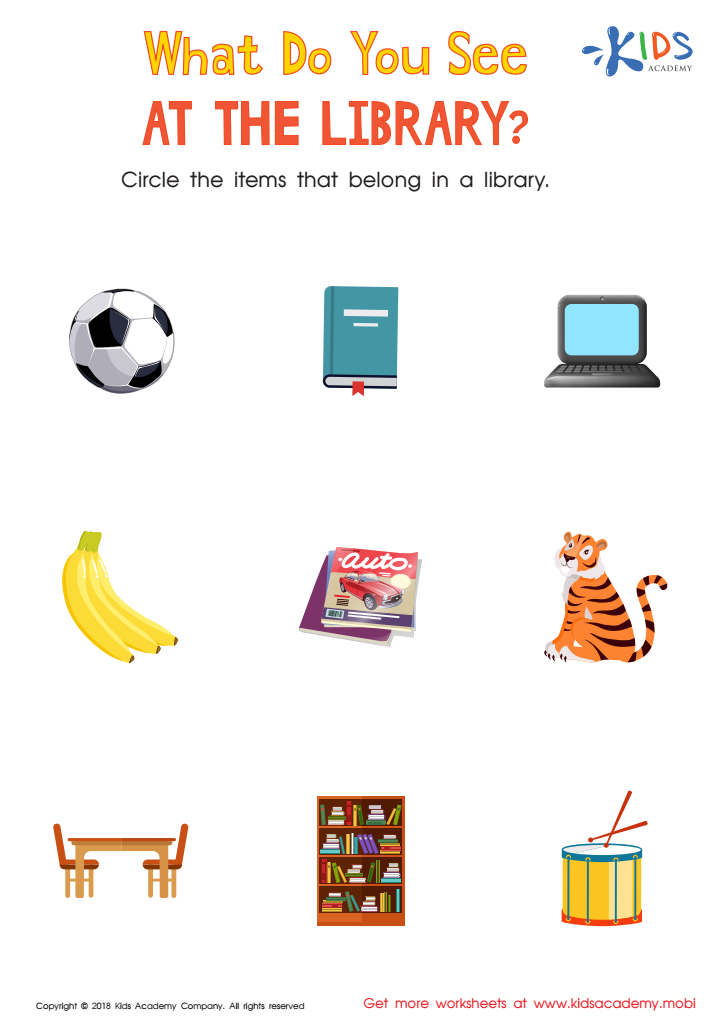
What Do you See at the Library? Worksheet
Let your kids look at the worksheet with pictures of objects found in libraries and those that don't. Ask them to list some, then circle the ones that belong in a library. Can they identify them? See if you can spot any they miss!
What Do you See at the Library? Worksheet
Worksheet
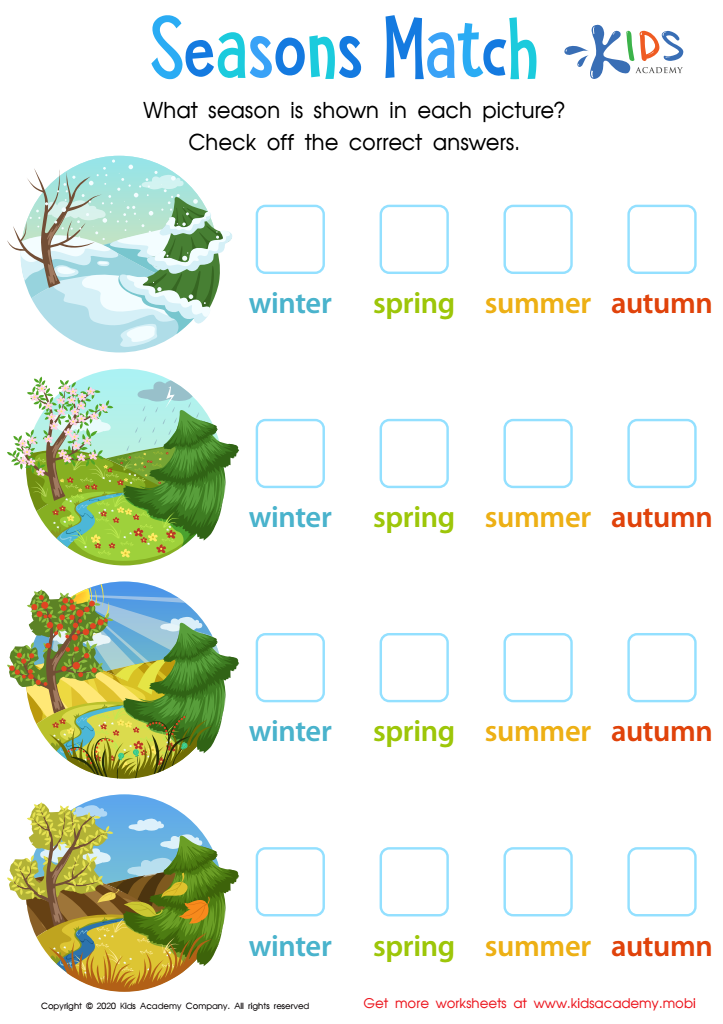
Seasons Match Worksheet
Preschoolers should begin learning about seasons and weather early. Most can tell what season it is by upcoming holidays or school activities. Test their knowledge with a printable PDF worksheet. It asks them to match each image with its corresponding season!
Seasons Match Worksheet
Worksheet
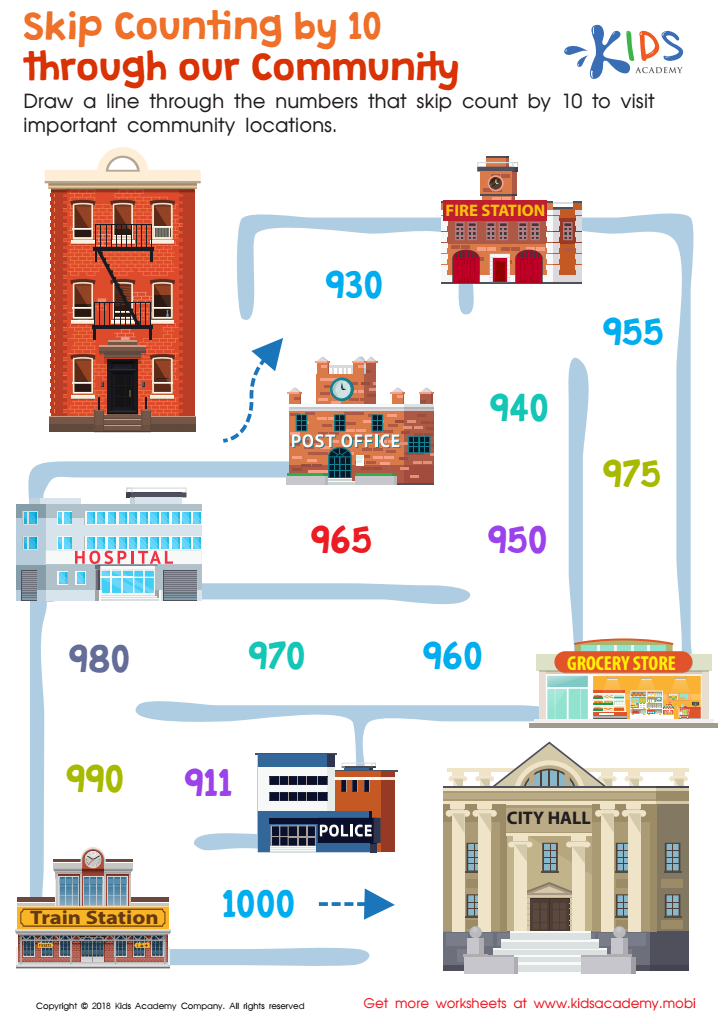
Skip Counting by 10 Through Our Community Worksheet
Our kids need to 'make a ten' and skip count by tens to boost their speed and accuracy in math. This cool, free worksheet takes them on a journey through their local community to practice counting by tens. They'll work on social studies and fine motor skills while having fun with the maze they get to count by tens in!
Skip Counting by 10 Through Our Community Worksheet
Worksheet
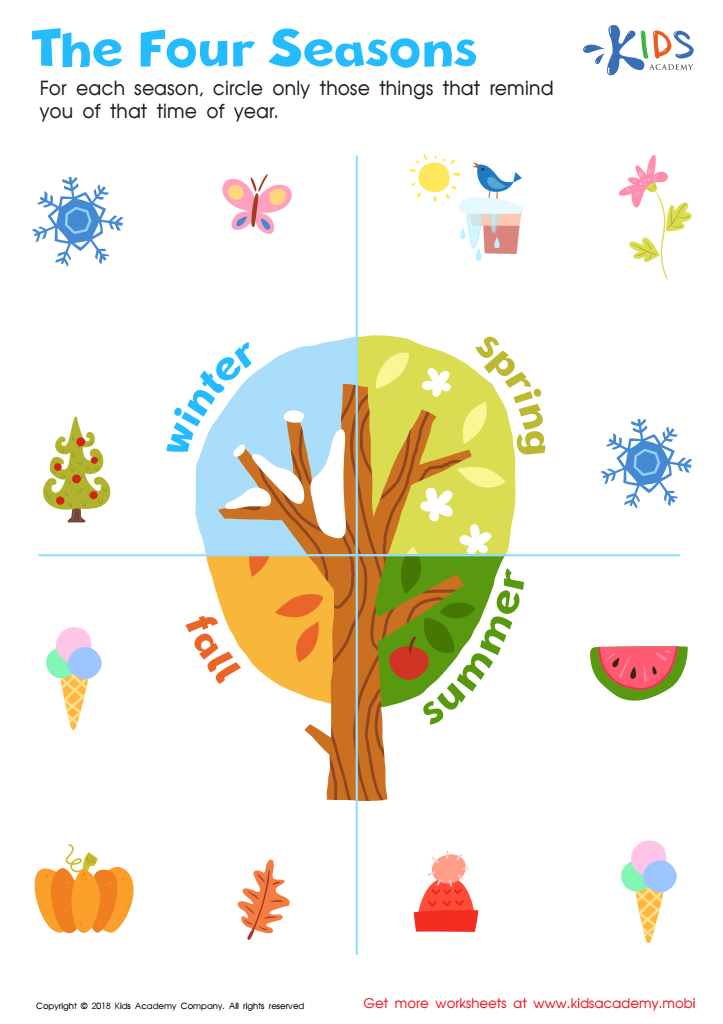
The Four Seasons Worksheet
Tell your child to circle things that remind them of each season. The tree has four squares, one for each season. Some things in each square match the season, others don't. Ask if any are out of place. Help them circle only items that remind them of that season.
The Four Seasons Worksheet
Worksheet
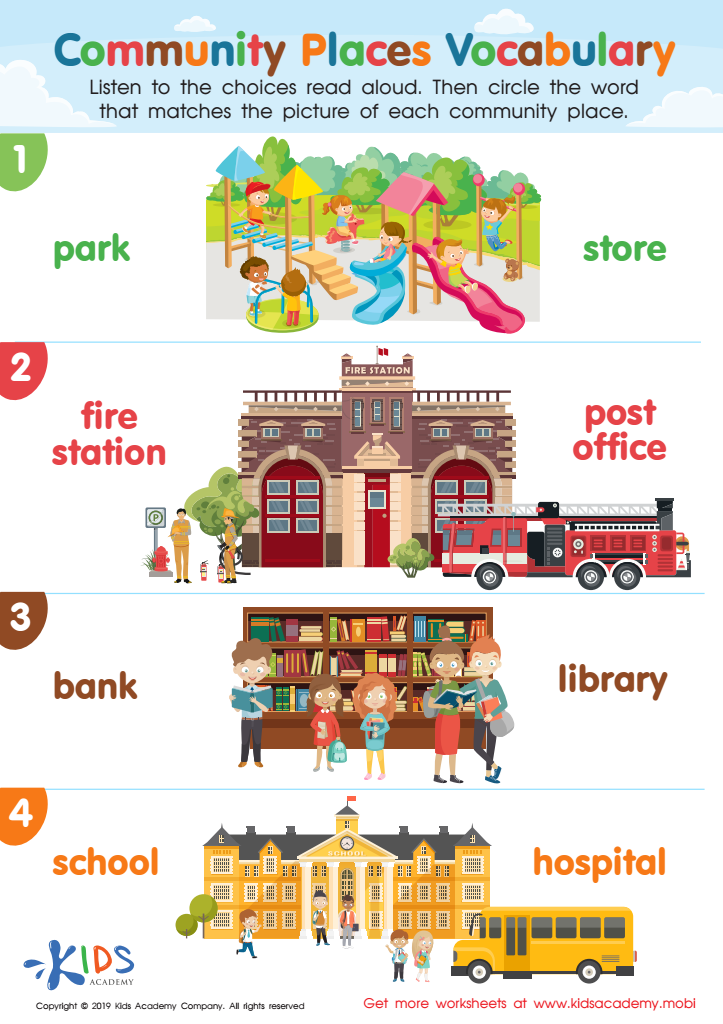
Community Places Vocabulary Worksheet
Help your kids identify community places with this fun worksheet. Ask them to listen to the choices read aloud and circle the word that matches the picture. This activity encourages dialogue about different people, places, and things in their community and the places they love to visit.
Community Places Vocabulary Worksheet
Worksheet
Join Kids Academy for Free
Who is primarily going to use this learning content?








Visual recognition is a crucial aspect of social studies for children aged 5-9 as it forms the foundation for their understanding of cultural, historical, and geographical concepts. At this age, children are naturally curious and often learn through observation, making visual materials essential tools. Engaging with visuals such as maps, photographs, charts, and illustrations helps children develop critical thinking skills and improves their ability to process and interpret information.
Parents and teachers should care about visual recognition in social studies because it promotes active learning. By interacting with visual content, students can relate concepts to their own experiences, enhancing their engagement and retention. Furthermore, visual recognition fosters early literacy skills and vocabulary development, enabling children to articulate their understanding of complex ideas more adeptly.
Incorporating visual elements into social studies not only makes learning more enjoyable but also supports diverse learning styles. Some children may grasp concepts better when they are presented visually, making it essential for inclusivity in any educational setting. By prioritizing visual recognition, parents and teachers can help children cultivate a deeper appreciation for their world and build a strong foundation for lifelong learning.








