Hand-eye Coordination Addition & Subtraction Worksheets for 5-Year-Olds
21 filtered results
-
From - To
Enhance your 5-year-old’s math skills with our engaging Hand-eye Coordination Addition and Subtraction Worksheets! These fun, interactive worksheets are designed to simultaneously improve essential math concepts and fine motor skills. Children will practice basic addition and subtraction problems while engaging in visually stimulating activities that promote hand-eye coordination. Each worksheet includes colorful illustrations and straightforward instructions, making learning enjoyable and effective. Perfect for parents and educators alike, these worksheets help young learners develop confidence in their math abilities while honing their physical skills. Explore our collection today and watch your child's skills soar!
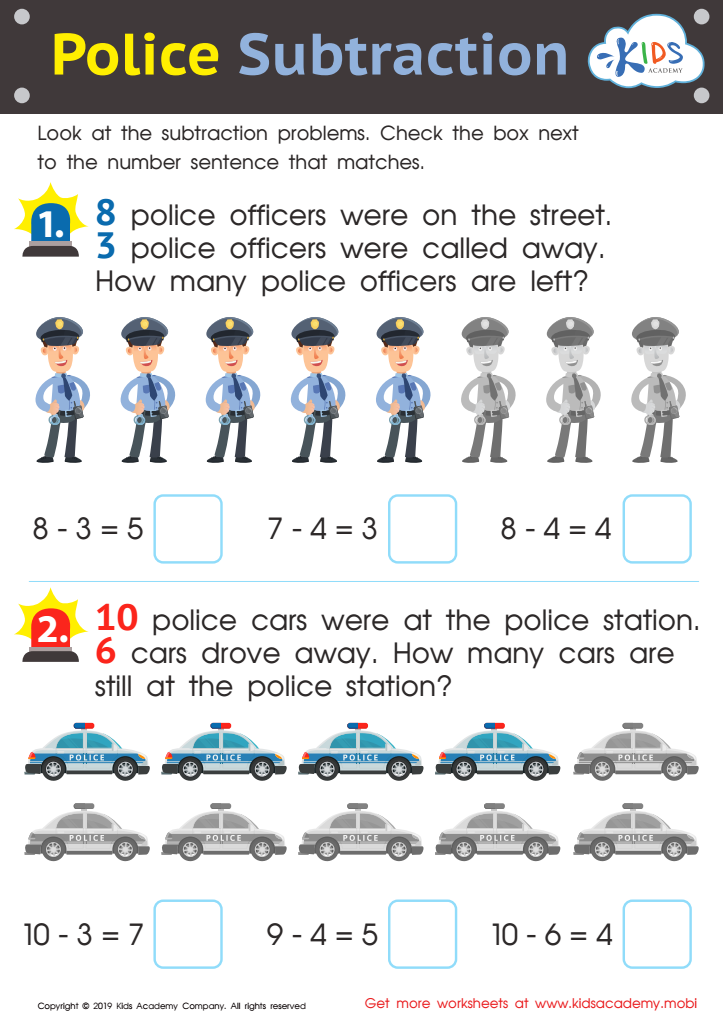
Police Subtraction Worksheet
 Assign to My Students
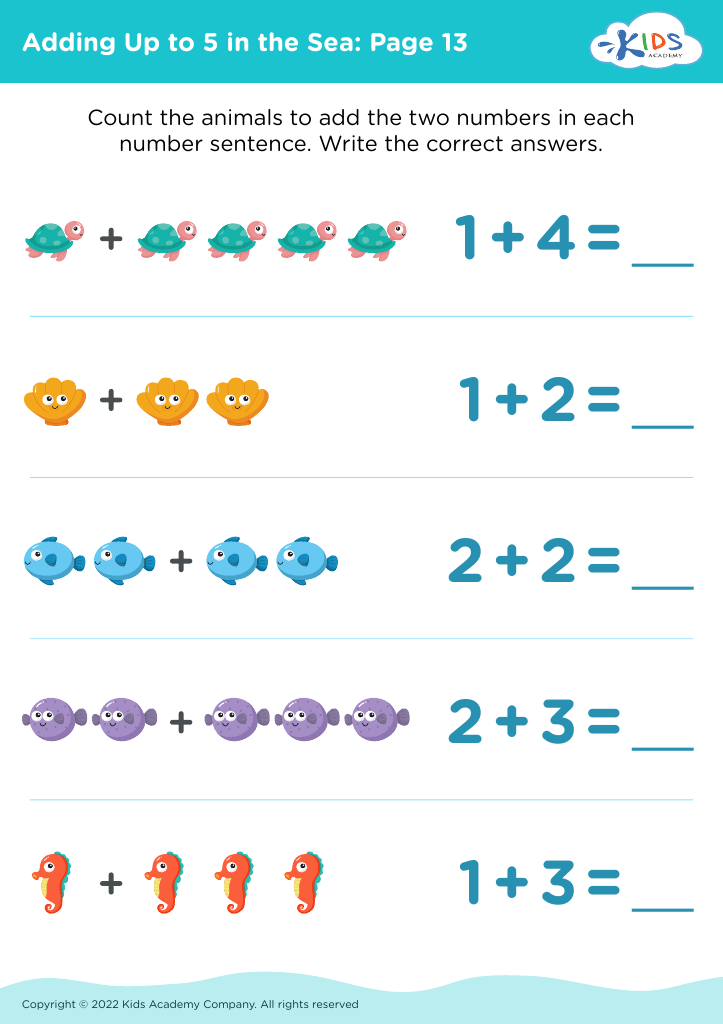
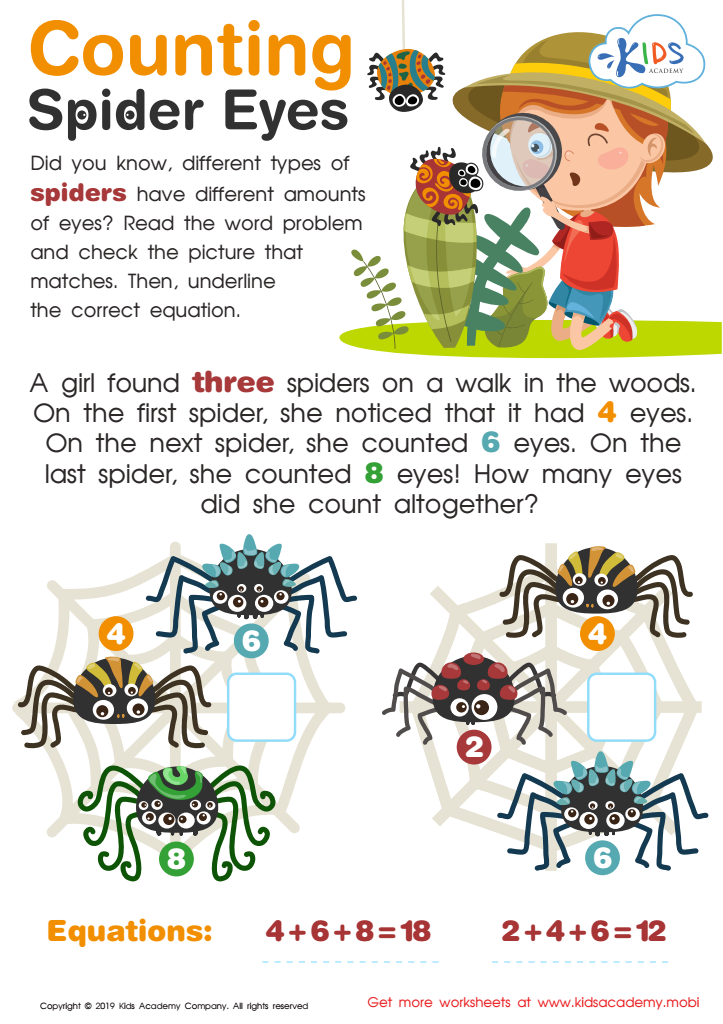
Counting Spider Eyes Worksheet
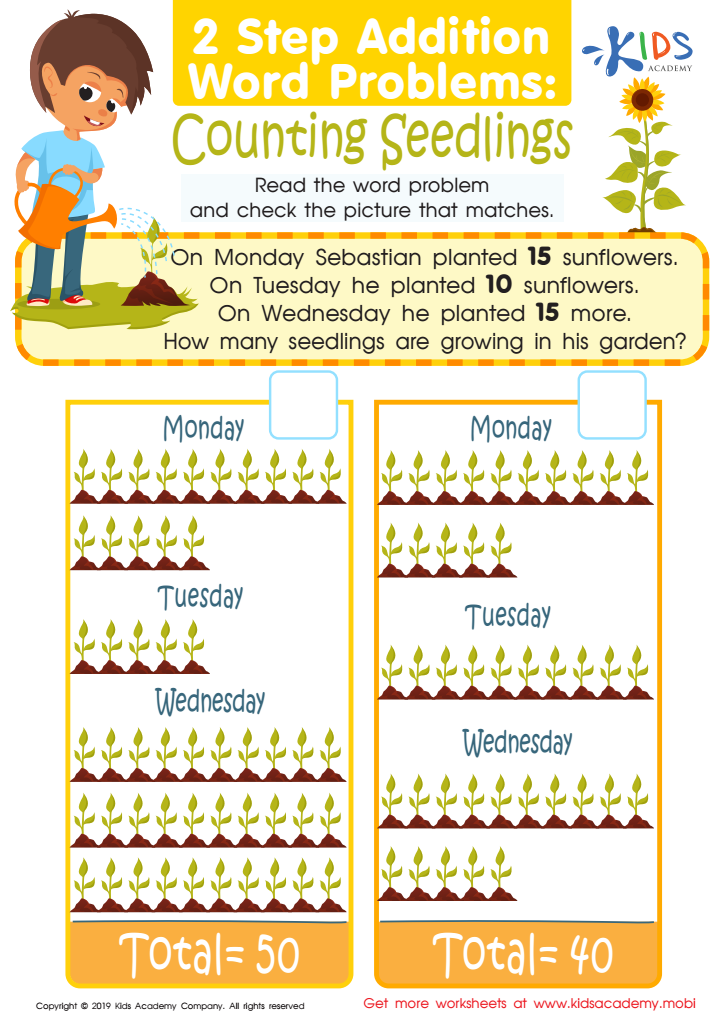
Counting Seedlings Worksheet
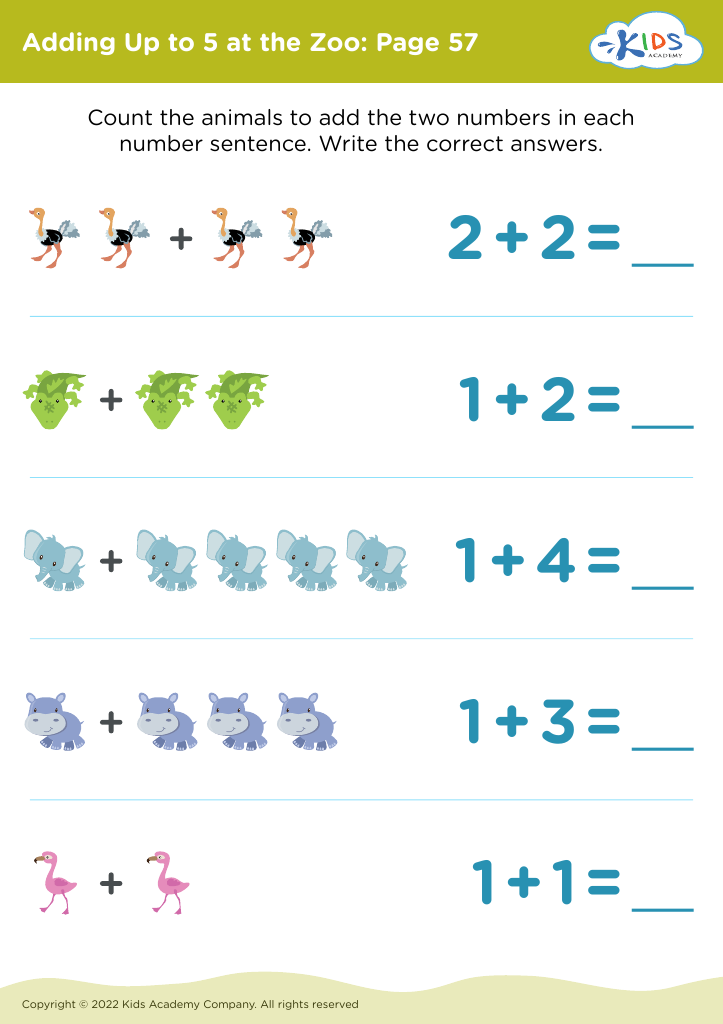
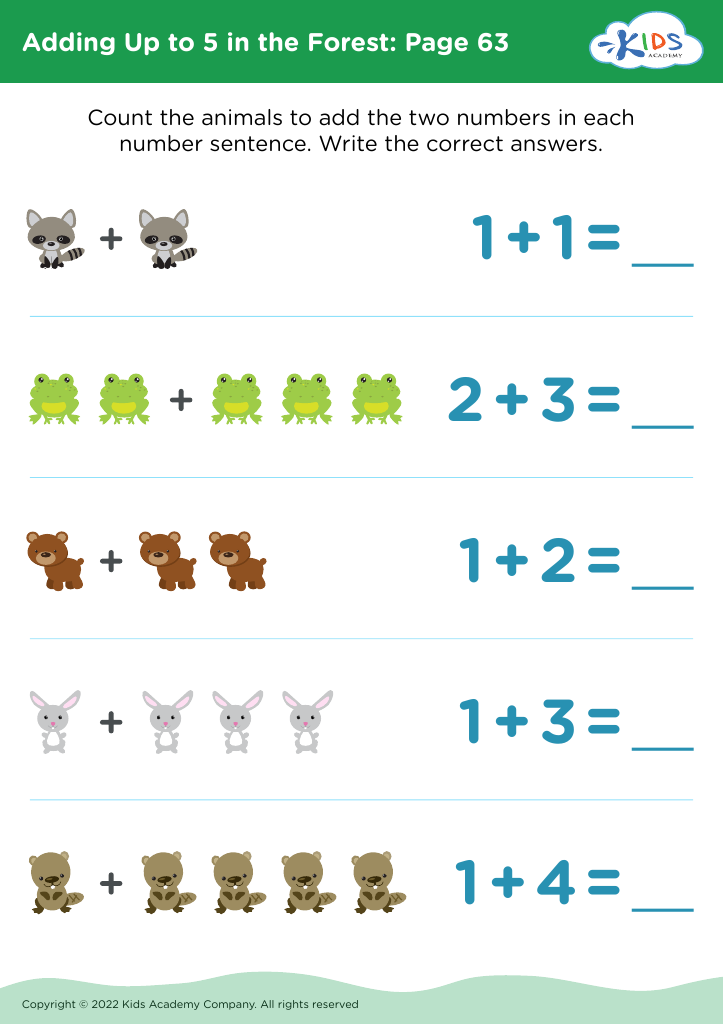
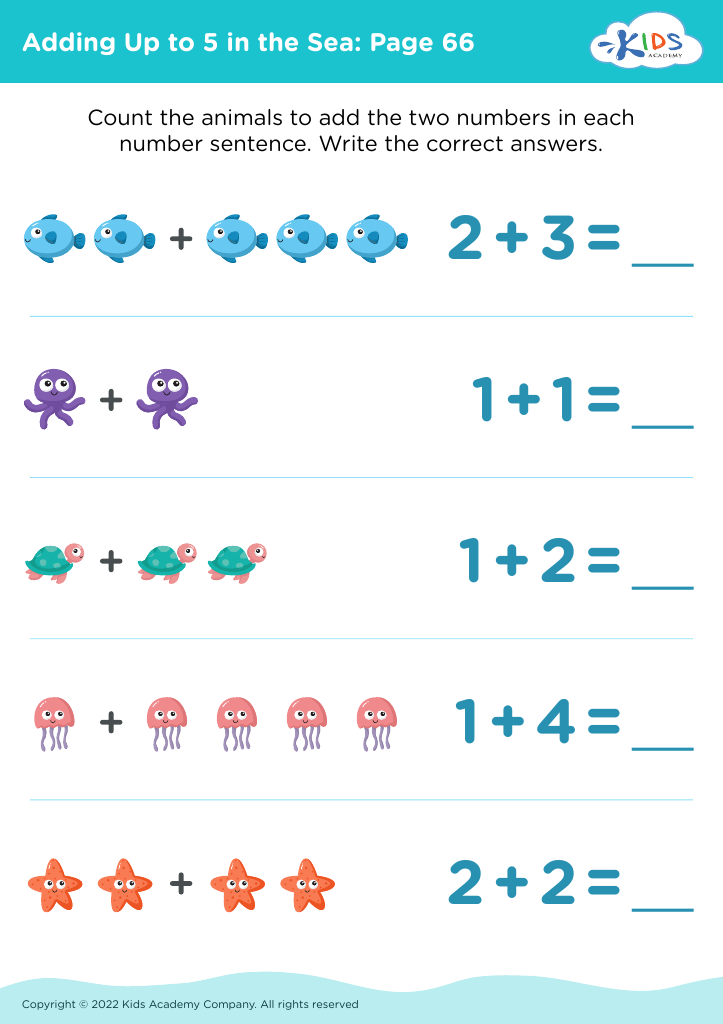
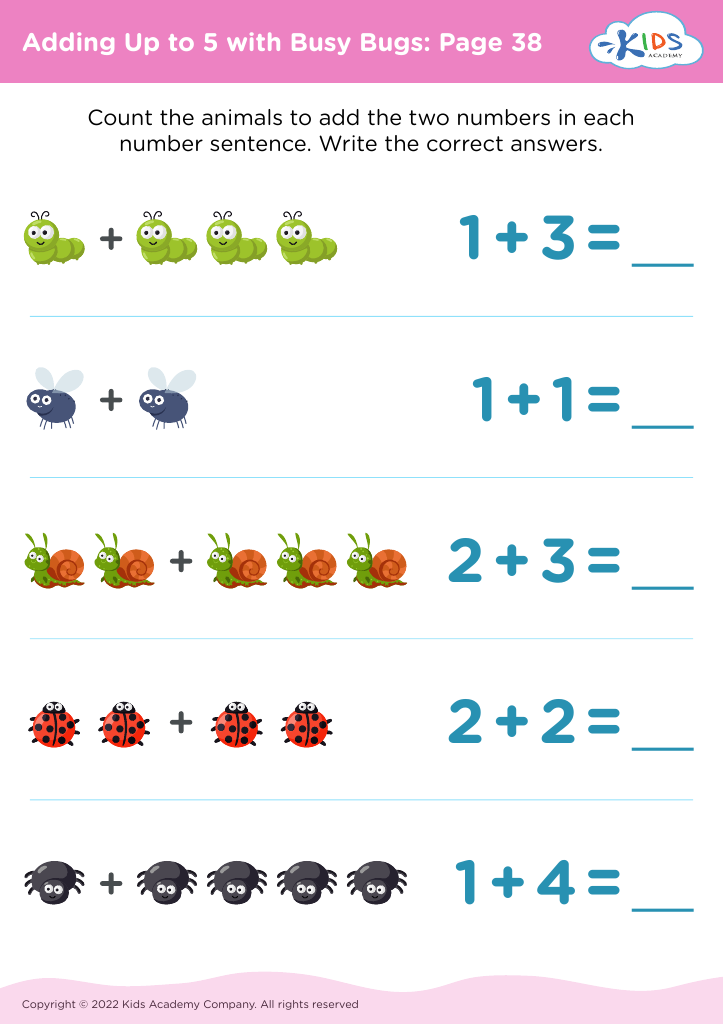
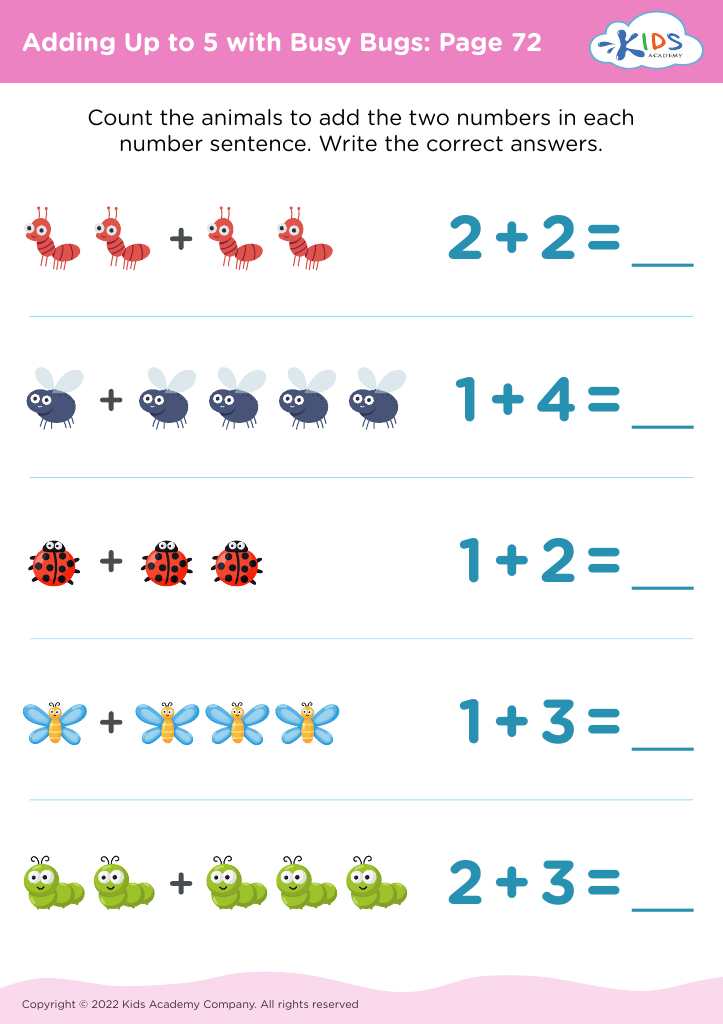
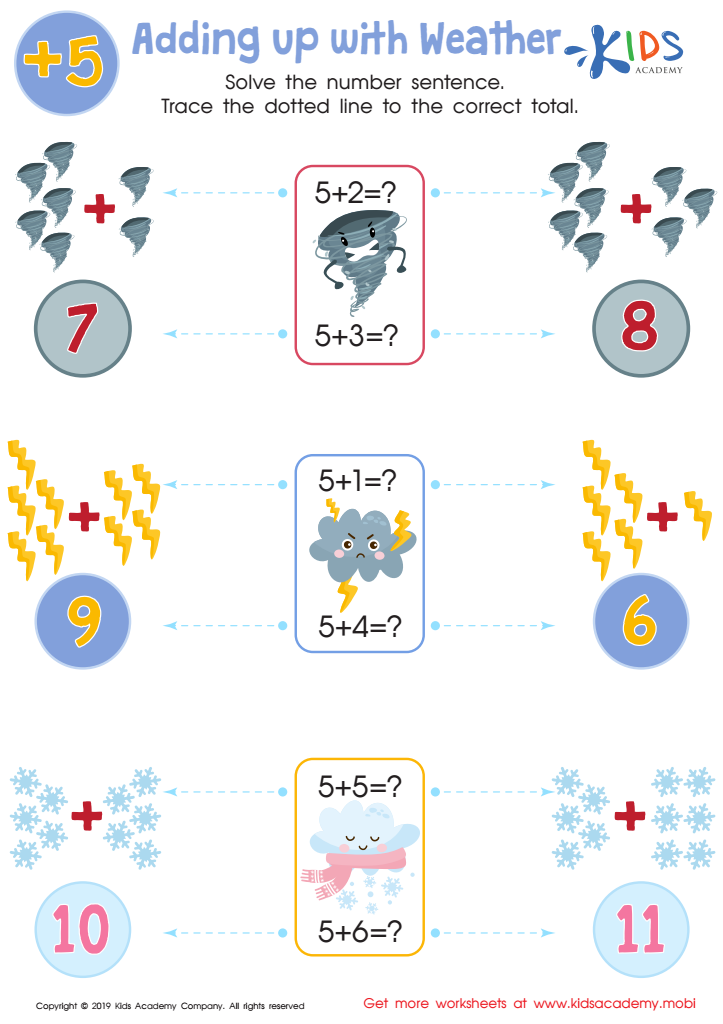
Adding up With Water Worksheet
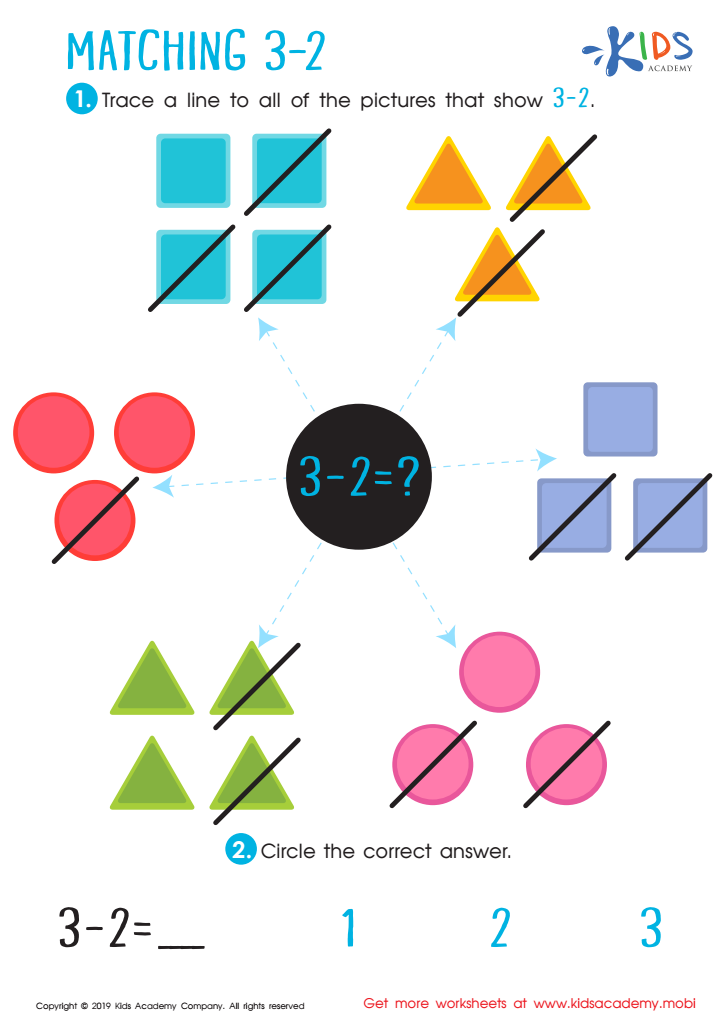
Matching 3-2 Worksheet
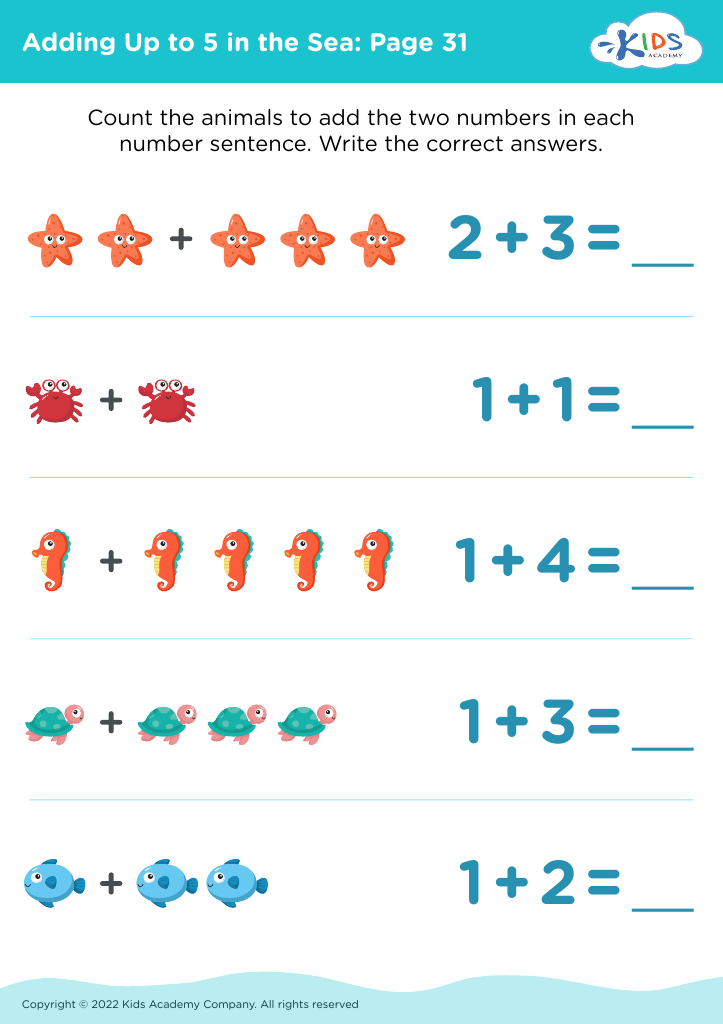
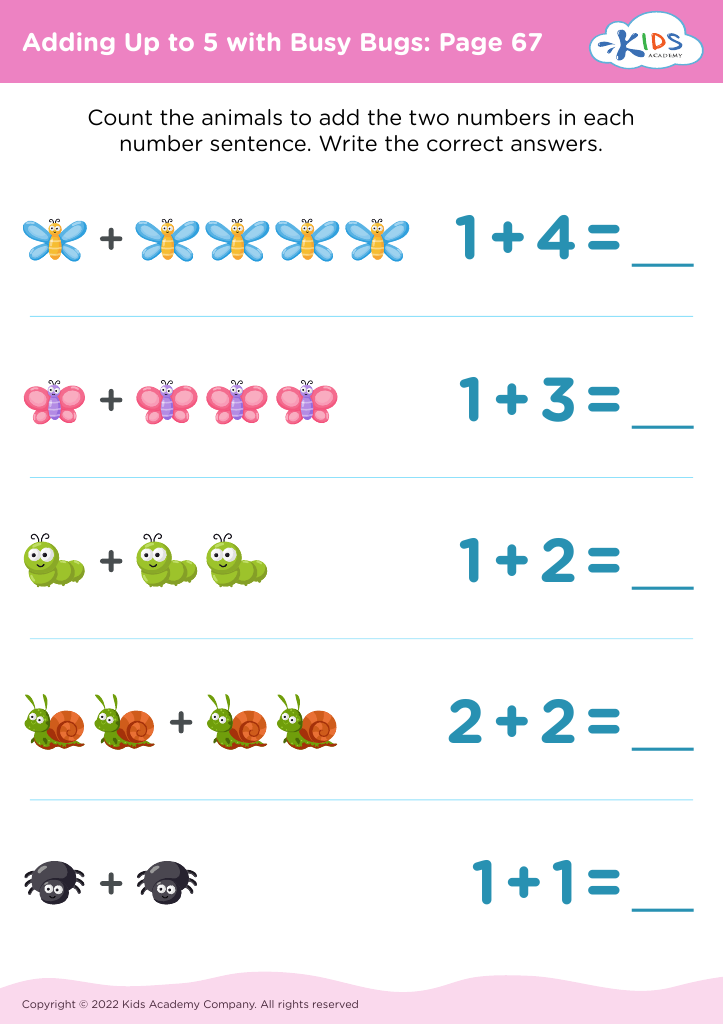
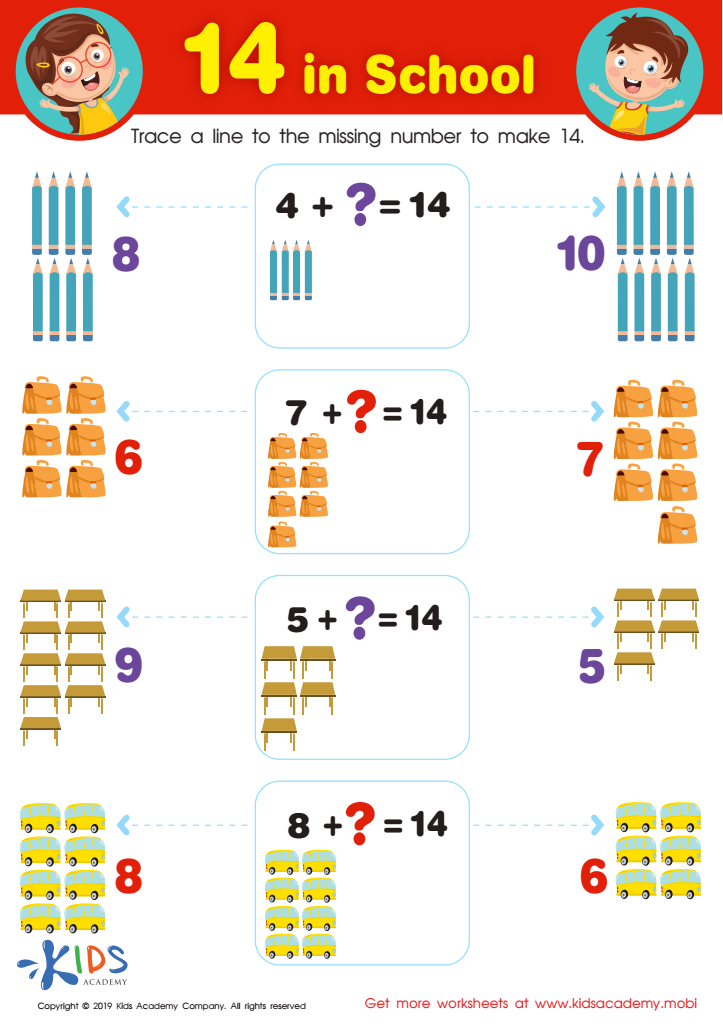
14 in School Worksheet
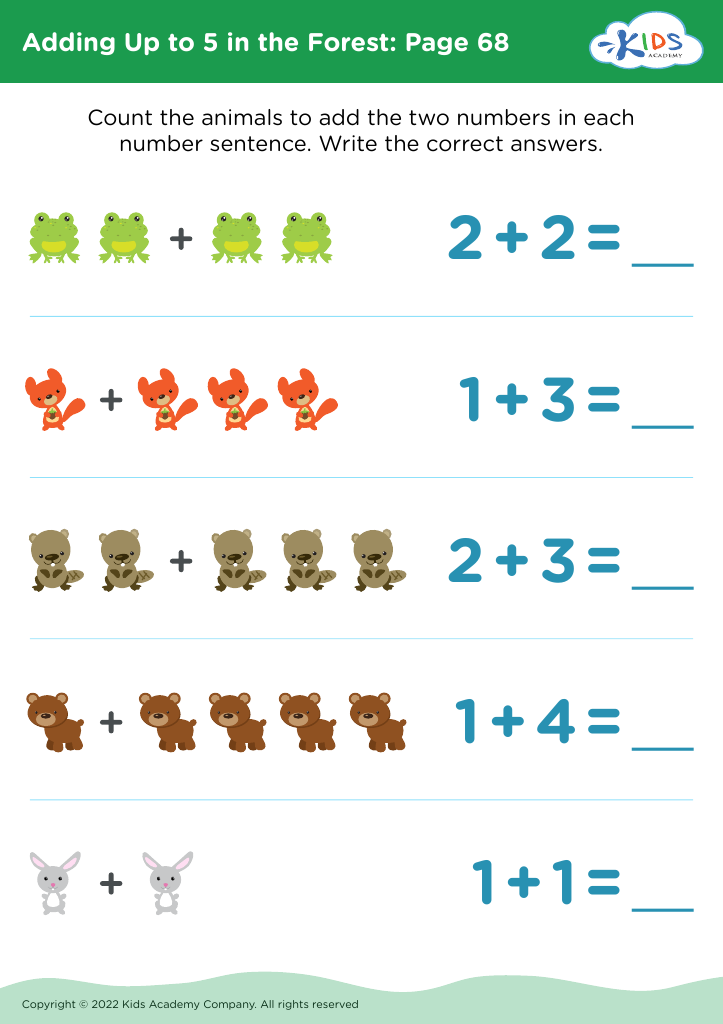
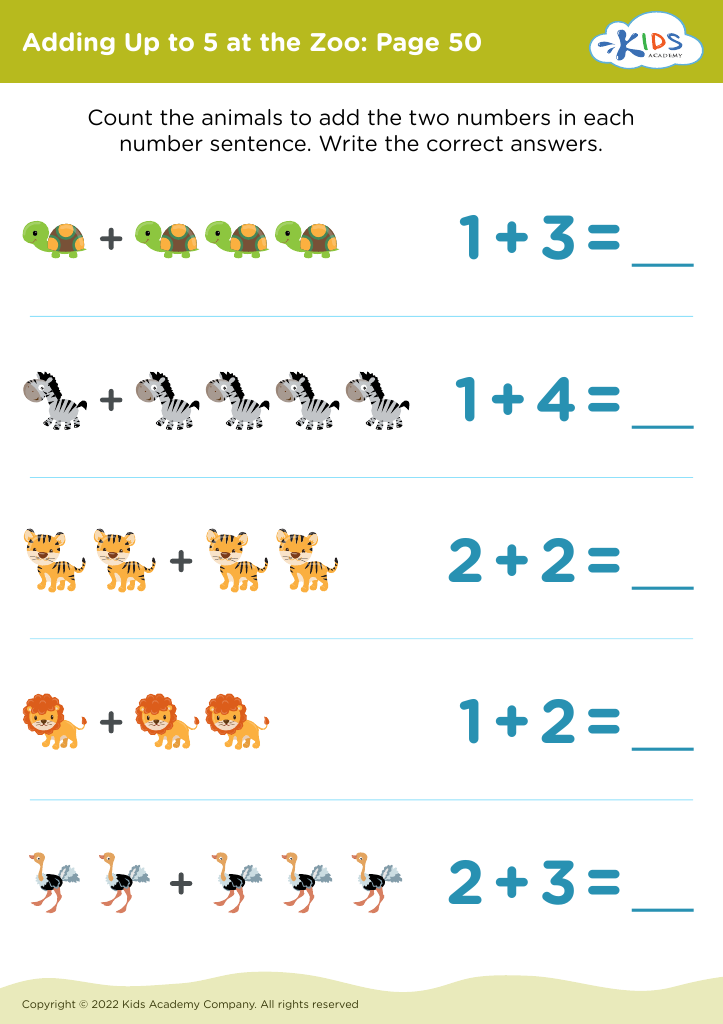








Hand-eye coordination is a crucial skill that combines visual input with motor skills, allowing children to perform tasks efficiently. For 5-year-olds, developing this ability is particularly important as it lays the foundation for future learning. When applied to addition and subtraction activities, hand-eye coordination plays a significant role. For example, using objects like blocks or counting beads allows children to physically manipulate math concepts, enhancing their understanding.
By engaging in exercises that integrate hand-eye coordination with math, such as counting with tactile materials or drawing shapes and numbers, children develop both their cognitive and physical skills. This dual focus promotes better focus, fine motor skills, and confidence in their mathematical abilities.
Parents and teachers should prioritize this integrated learning approach. It not only supports academic development but also encourages children to explore problem-solving in enjoyable, hands-on ways. Moreover, fostering these skills at an early age can significantly enhance a child’s readiness for more complex tasks in both math and everyday situations. By making math fun and interactive, we can help children form a positive relationship with learning that will benefit them throughout their education. Engaging children in this manner is essential for holistic development and lifelong learning.








