
Basic geometry understanding Geometry Worksheets for 5-Year-Olds
6 filtered results
Difficulty Level
Grade
Age
-
From - To
Subject
Activity
Standards
Introduce your child to the fascinating world of shapes and space with our "Basic Geometry Understanding" worksheets tailored for 5-year-olds. These engaging, easy-to-follow worksheets help young learners grasp essential geometry concepts through fun, interactive activities. Kids will explore shapes, patterns, symmetry, and spatial relationships while developing critical thinking and problem-solving skills. Perfect for both in-classroom and at-home learning, our worksheets are designed to build a strong foundation in early math. Boost your child’s confidence and curiosity in geometry with exercises that make learning enjoyable and effective. Start the geometrical journey today!
Favorites
With answer key
Interactive
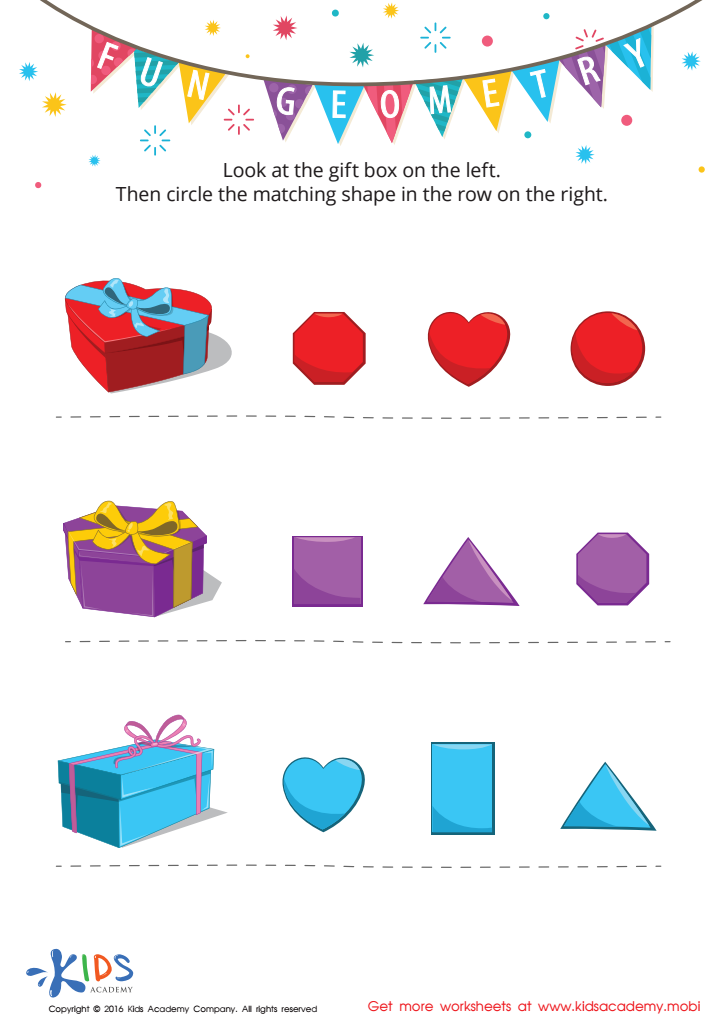
Fun Geometry Worksheet
Give your child the gift of learning with this fun and educational geometry matching worksheet! It'll help them develop essential matching and problem-solving skills while having fun. Vibrant pictures will excite them to complete it and get a better grasp of the world around them.
 Assign to My Students
Fun Geometry Worksheet
Worksheet











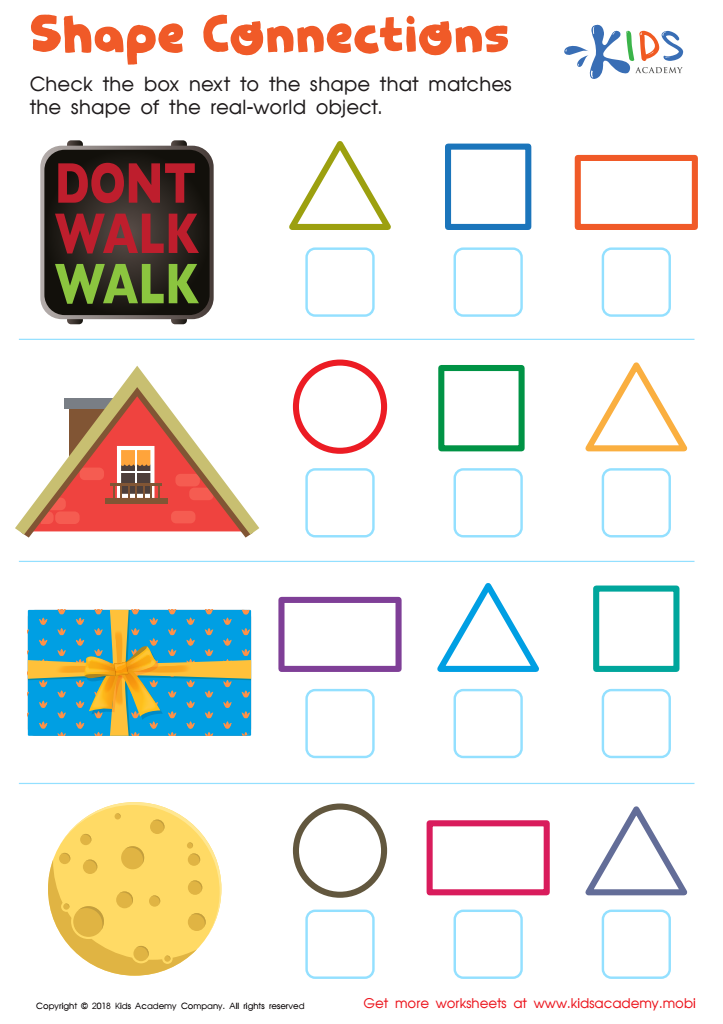
Shape Connections Worksheet
Geometric shapes are all around us and this fun worksheet brings it to life. Kids will match real-world pictures with the corresponding basic shapes, connecting how math is used in various aspects of daily life. A great way to reinforce these concepts!
Shape Connections Worksheet
Worksheet
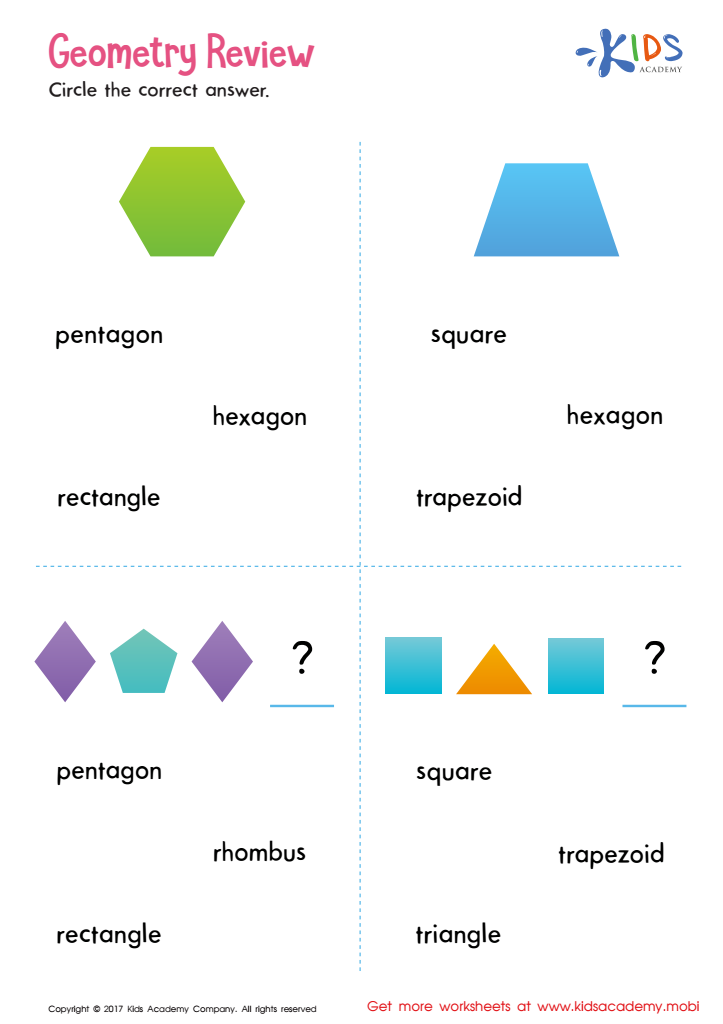
Geometry Review Printable
Repetition is key to success; give your child the practice they need with this geometry worksheet.
Geometry Review Printable
Worksheet
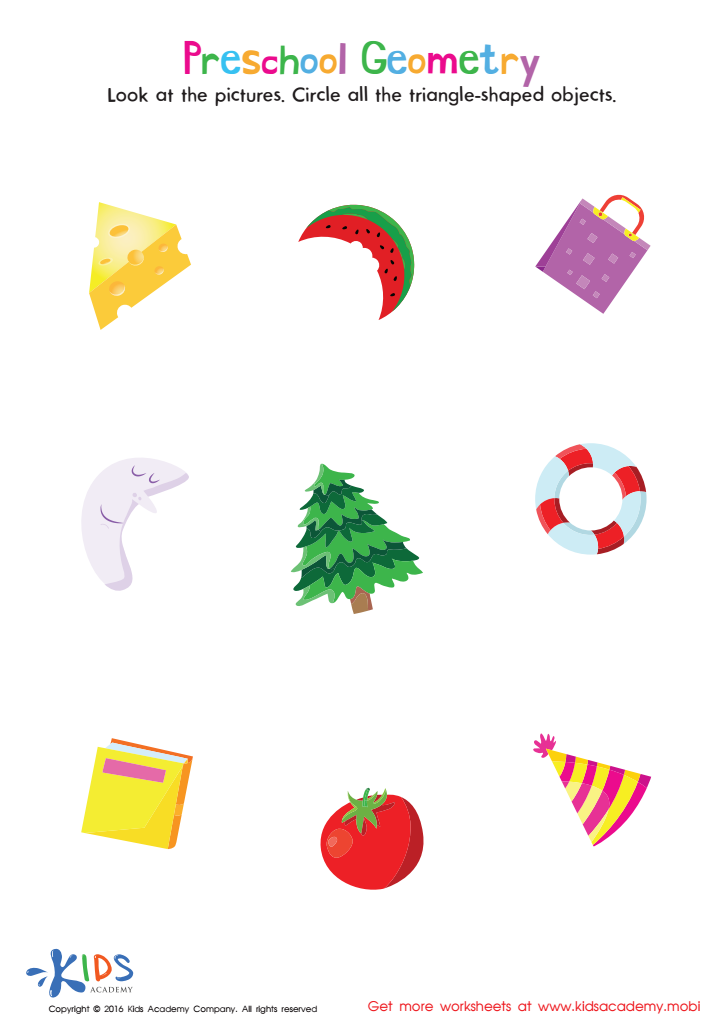
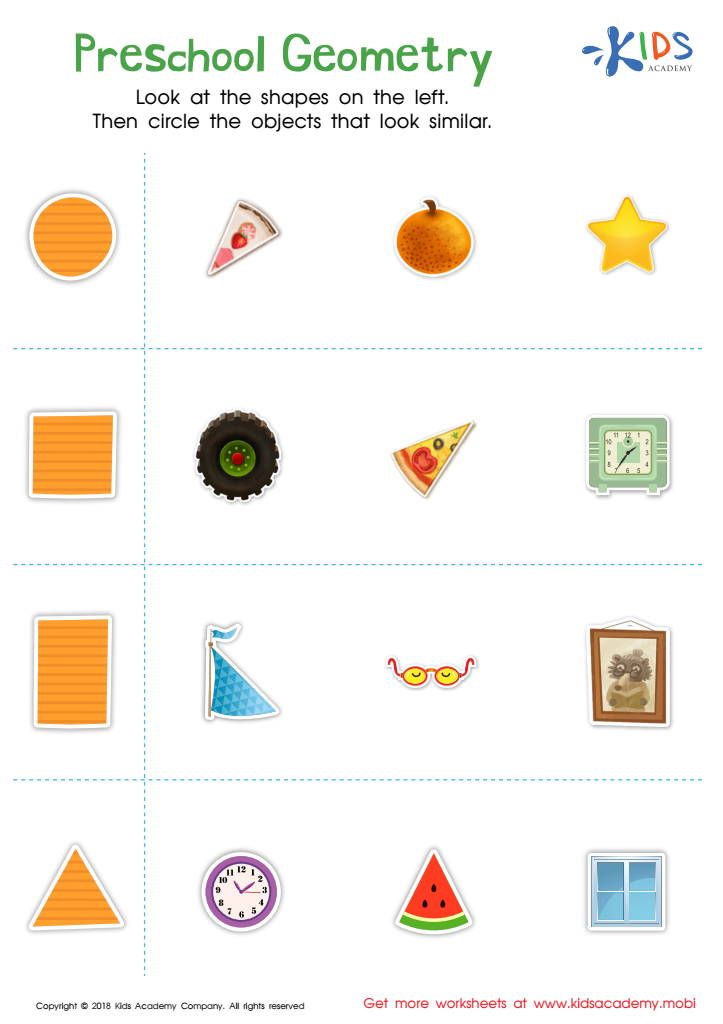
Preschool Geometry Worksheet
This worksheet gives 3rd graders the basics of geometry. Kids match everyday objects to shapes they know, e.g. an orange to a circle, a square to a slice of watermelon and a rectangle to a picture frame. It's a fun way to give them confidence to tackle more complex geometry in the future.
Preschool Geometry Worksheet
Worksheet
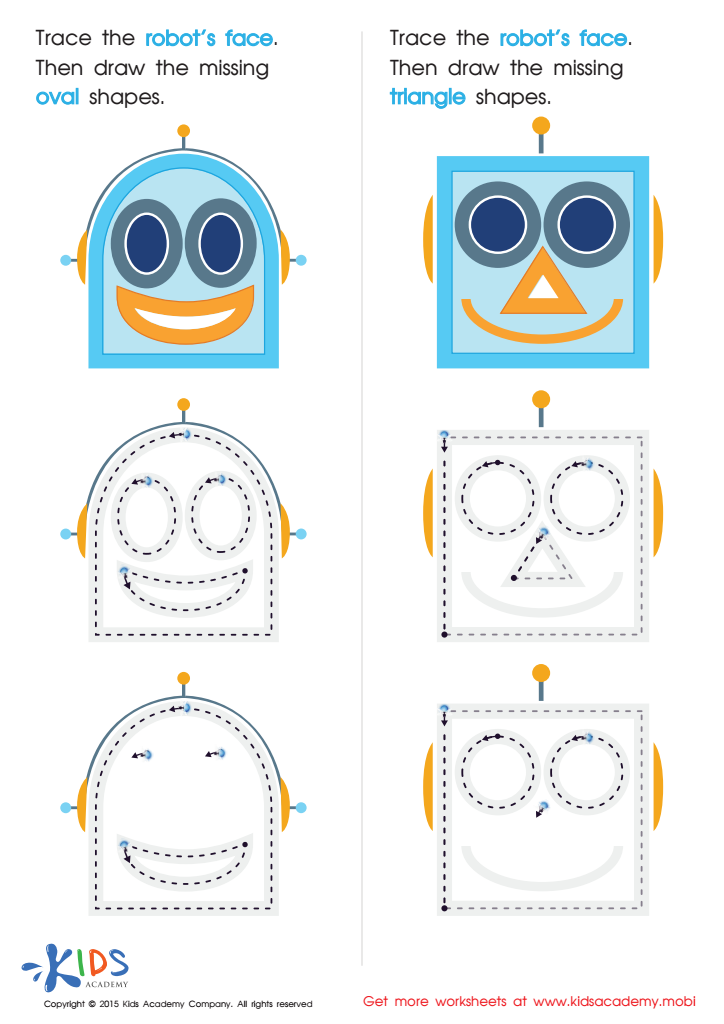
Drawing Ovals And Triangles with Fun Printable
Trace the face and draw missing ovals and triangles. Test your memory and recall shapes' names. Check if you remember how to draw them!
Drawing Ovals And Triangles with Fun Printable
Worksheet
Join Kids Academy for Free
Who is primarily going to use this learning content?








Basic geometry is fundamental for young children's cognitive development and is essential for several compelling reasons. First, basic geometry introduces critical reasoning skills. When 5-year-olds grasp the concepts of shapes, sizes, and spatial relationships, they develop the ability to categorize and analyze their environment. This makes them better problem solvers.
Second, it improves their mathematical foundation. Early exposure to geometry helps reinforce numerical concepts such as counting, measurement, and spatial awareness, which are crucial for later learning in math.
Third, understanding geometry can boost a child's confidence and curiosity in learning. By mastering simple shapes and their properties, children often feel more accomplished and are more likely to engage enthusiastically with broader mathematical problems.
Also, geometry has practical applications. From navigating through a physical space to understanding the layout of daily ''tools and objects, geometry helps kids make sense of the world around them.
Lastly, early geometry training familiarity encourages creative thinking. Playing with shapes and patterns can inspire a 5-year-old's imagination leading to innovative problem-solving techniques and artistic expressions.
In summary, investing in a child's basic geometry understanding lays a foundation for complex mathematical skills, enhances reasoning abilities, fosters confidence, creativity, and prepares them for everyday interactions with their environment.








