Critical Thinking Geometry Worksheets for 5-Year-Olds
5 filtered results
-
From - To
Enhance your child's early learning journey with our Critical Thinking Geometry Worksheets for 5-Year-Olds! Specially designed to cultivate young minds, these engaging activities blend fun and education seamlessly. Through colorful shapes, patterns, and puzzles, children develop essential skills such as spatial awareness, logical reasoning, and problem-solving. Tailored for curious young learners, our worksheets proffer a solid foundation in geometry while fostering critical thinking. Perfect for home or classroom use, they ensure an enjoyable and productive learning experience, setting the stage for future math success. Discover the magic of learning with our captivating geometry worksheets today!
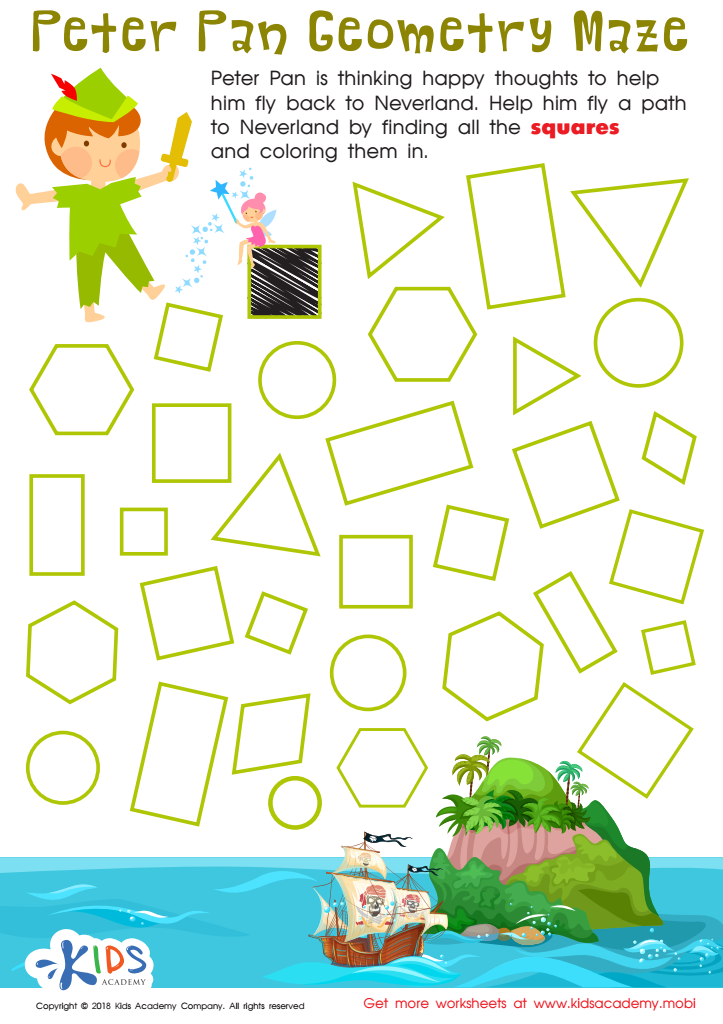
Peter Pan Worksheet
 Assign to My Students











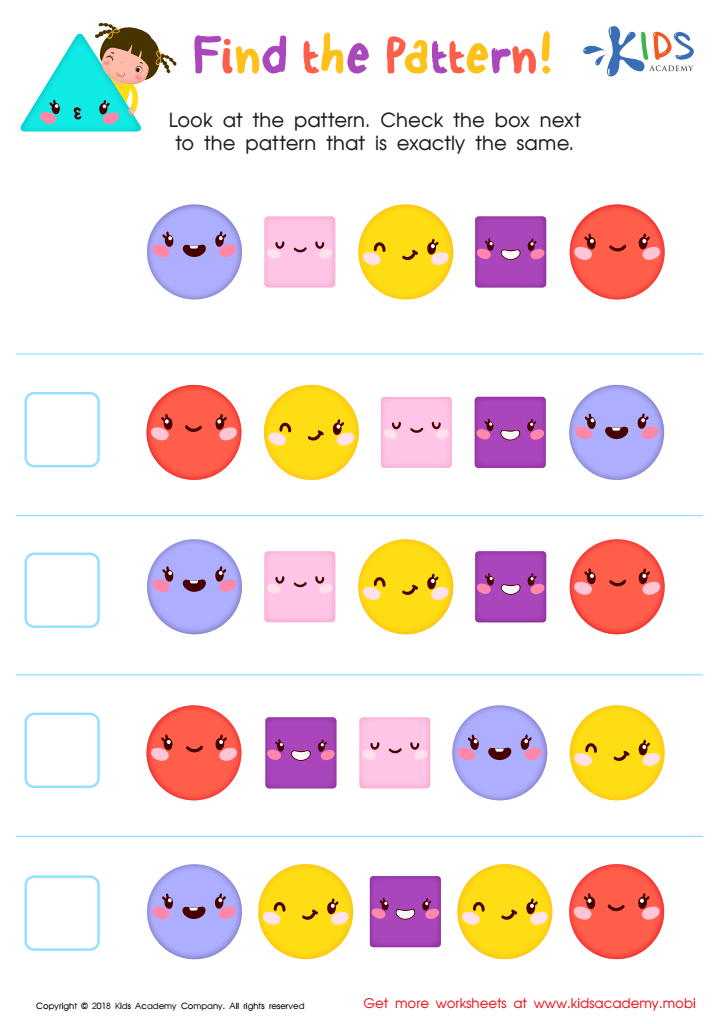
Find the Pattern Worksheet
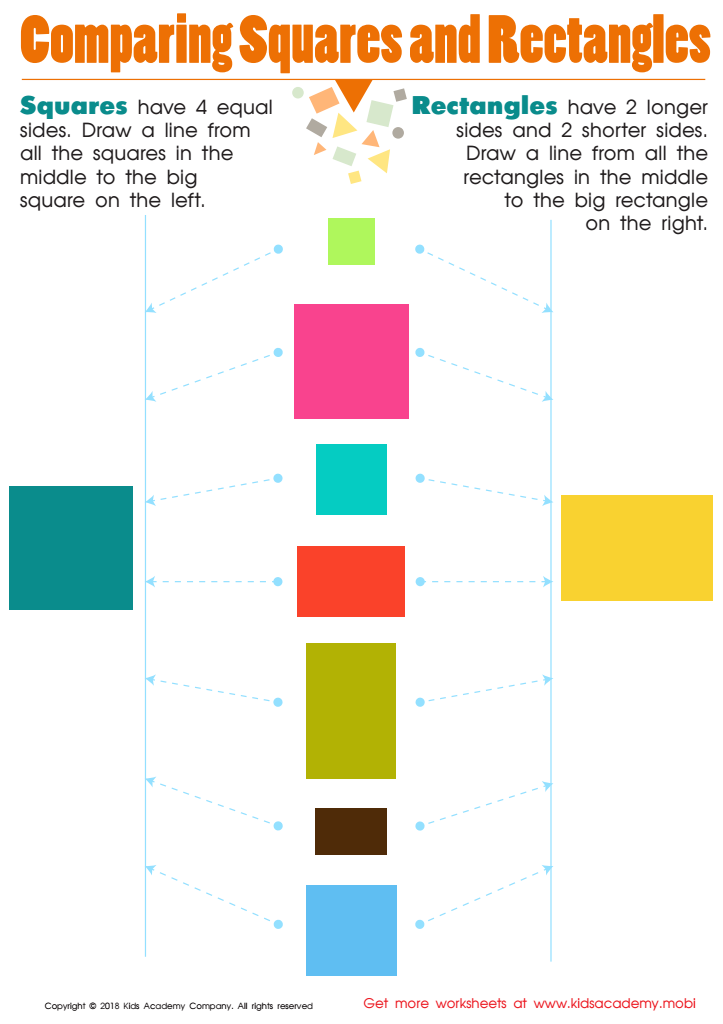
Comparing Squares Rectangles Worksheet
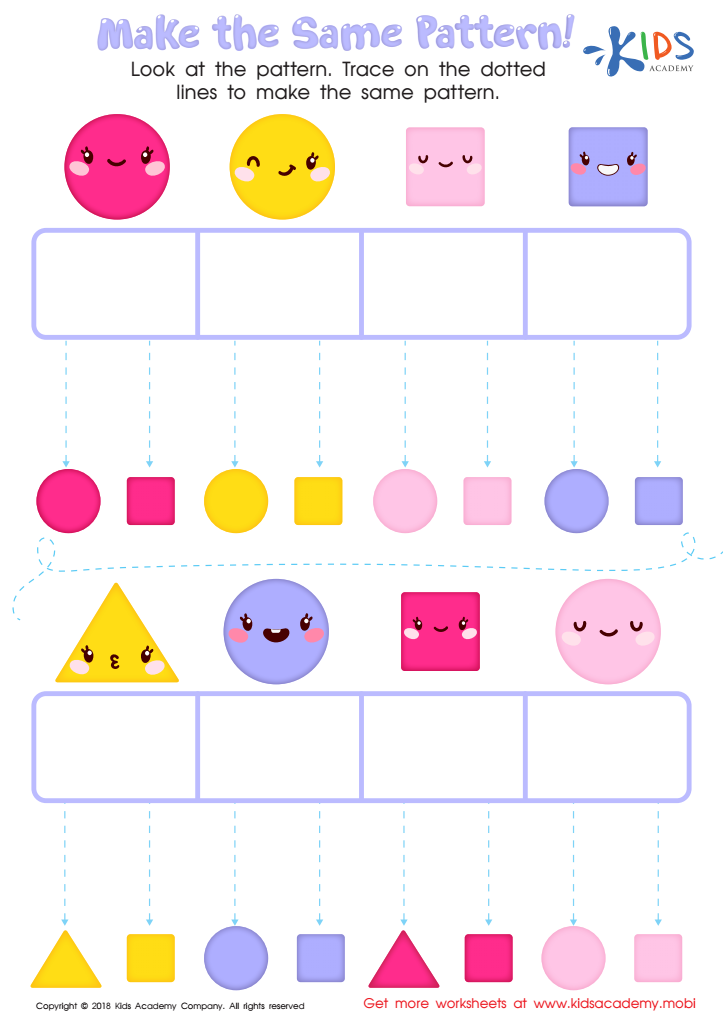
Make the Same Pattern Worksheet
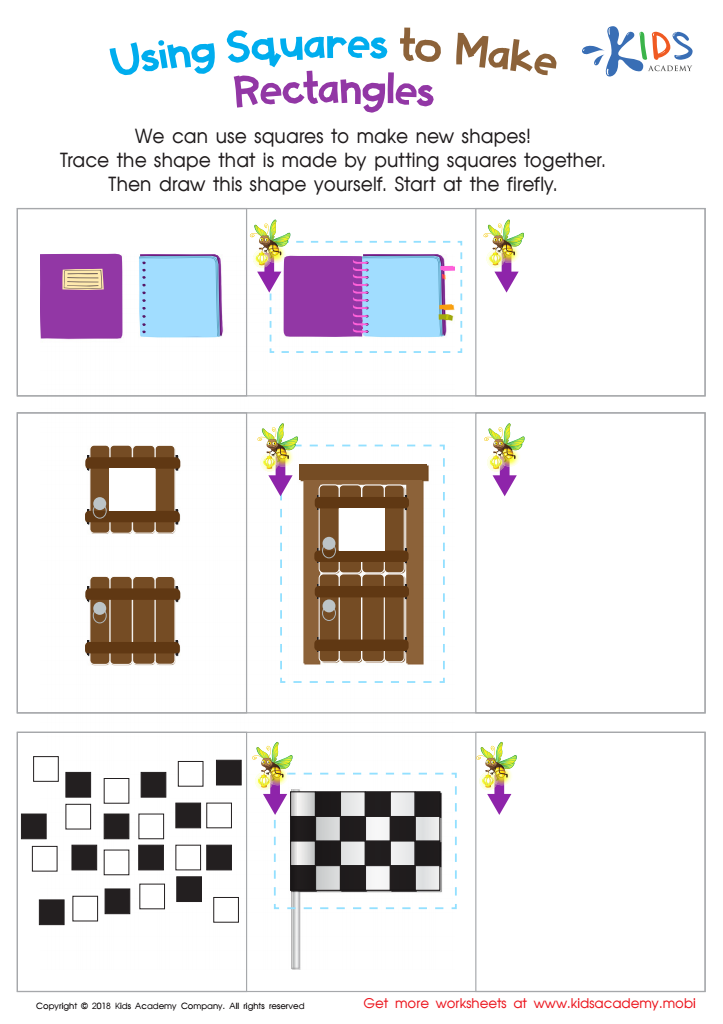
Using Squares to Make Rectangles Worksheet








Critical thinking in geometry for 5-year-olds is a vital part of early childhood education, fostering both cognitive development and essential life skills. First, exposing children to basic geometric concepts helps them understand and navigate the world around them. Shapes, sizes, and spatial reasoning are foundational elements in activities such as sorting toys, drawing, and building blocks, making everyday tasks easier and more engaging.
Introducing critical thinking in geometry at this age nurtures a child’s problem-solving abilities and analytical skills. It encourages curiosity, allowing them to ask questions, make predictions, and identify patterns. These skills are crucial not only for mathematical proficiency but for all subjects, promoting a well-rounded academic foundation.
Moreover, engaging with geometry helps develop fine motor skills and hand-eye coordination. Activities like tracing shapes, playing with puzzles, and crafting enhance these physical abilities while simultaneously building cognitive connections.
Building a solid base in geometry will benefits will be seen in future academic success and general competence in life skills such as map reading and understanding graphs. By caring about critical thinking in geometry for young children, parents and teachers can boost free expressinality and logical thinking ability, setting them on the path to become confident learners and thoughtful individuals throughout their lifetimes.








