Matching skills Math Worksheets for 5-Year-Olds
14 filtered results
-
From - To
Introduce your child to the fun world of math with our Matching Skills Math Worksheets designed specifically for 5-year-olds! These engaging activities help young learners develop essential math skills like pattern recognition, number matching, and basic counting through colorful and interactive exercises. Perfect for preschoolers and kindergarteners, our worksheets make learning enjoyable and help build a strong foundation in mathematics. Whether at home or in the classroom, these printable resources are user-friendly and tailored to captivate the curiosity of young minds. Ignite their passion for math today with our expertly crafted matching skills worksheets!
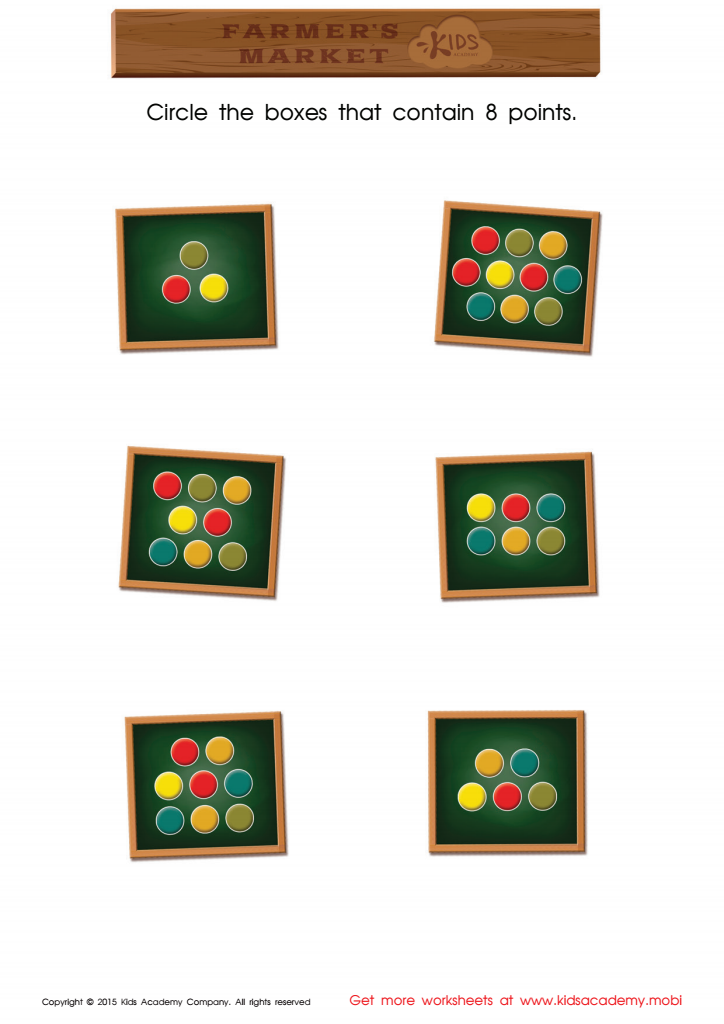
Count and Match Points 8 Math Worksheet
 Assign to My Students
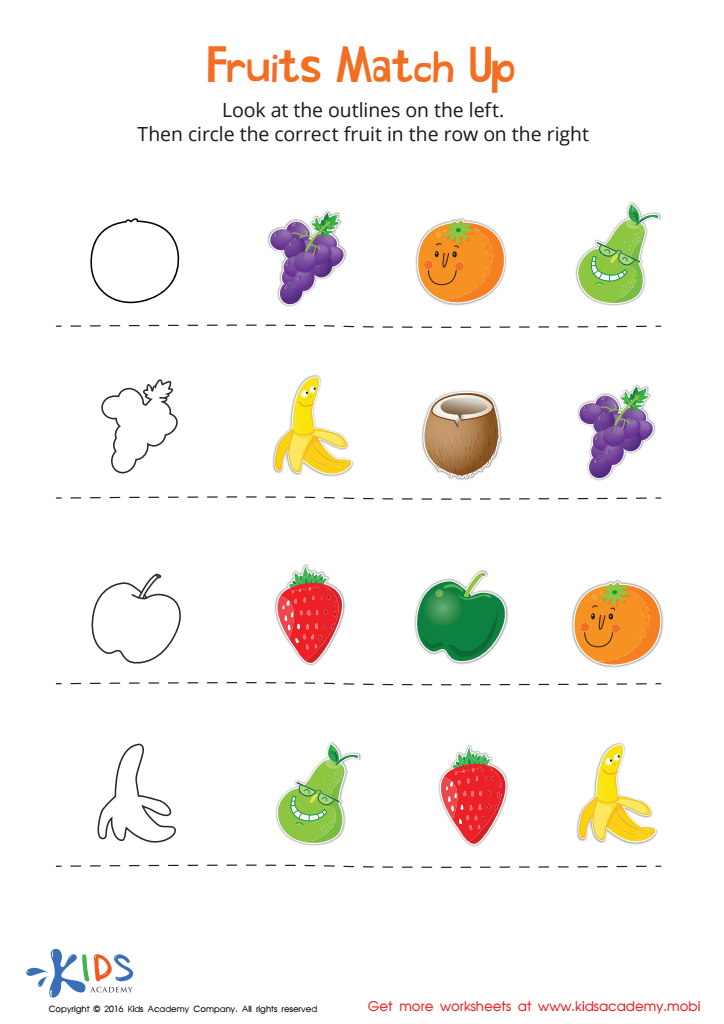
Fruits Match Up Worksheet
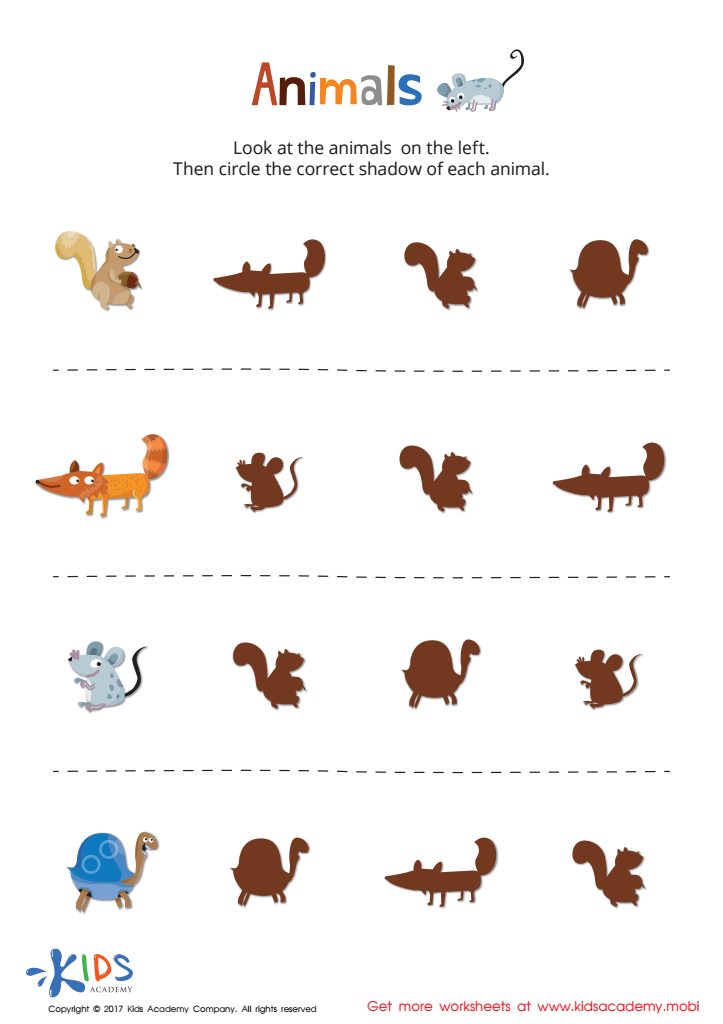
Animal Shadows Sorting Worksheet
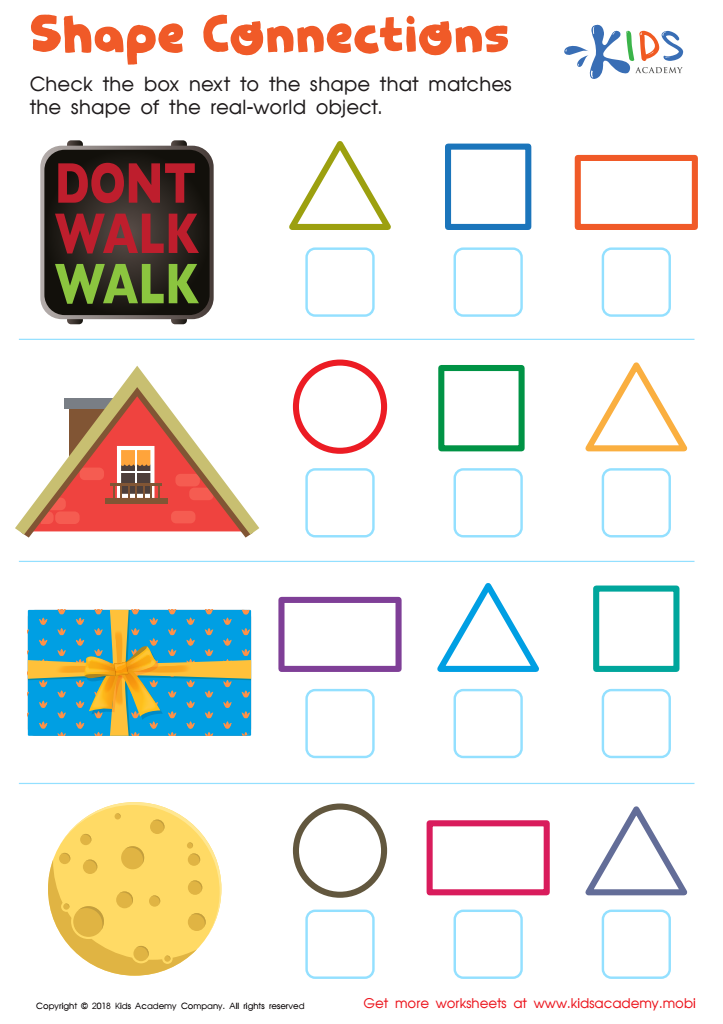
Shape Connections Worksheet
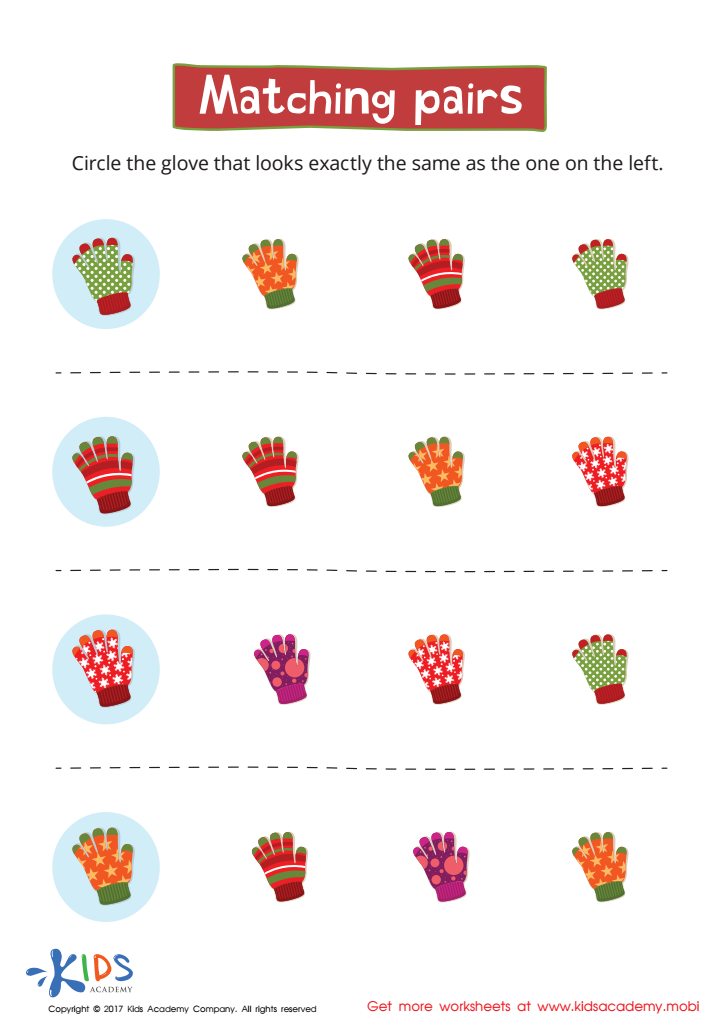
Matching: Matching Pairs Worksheet
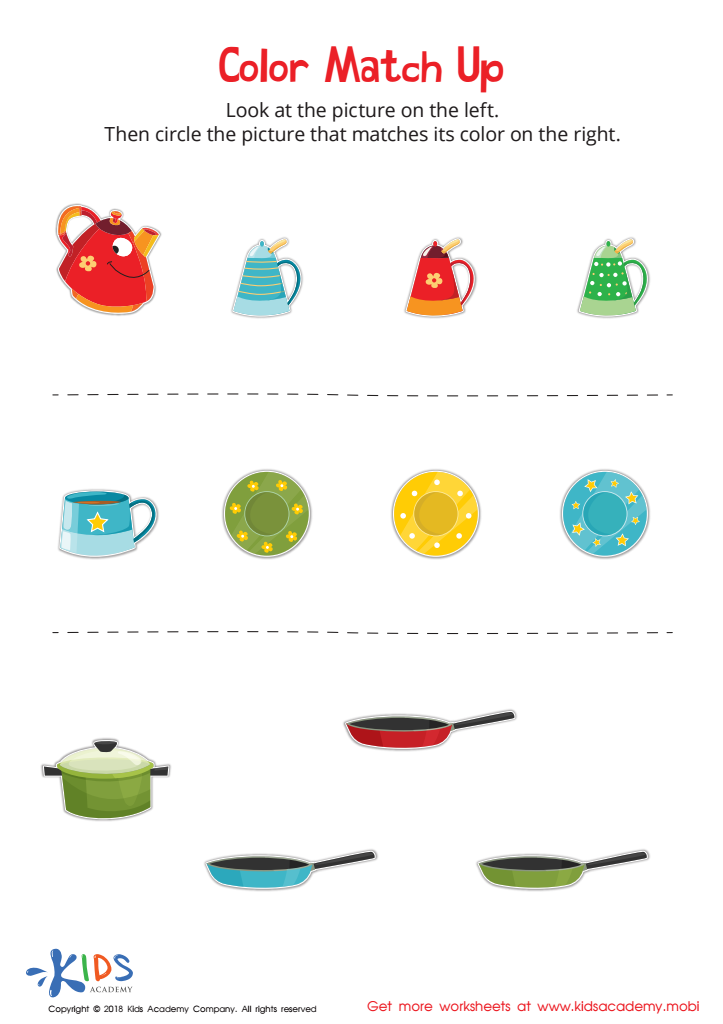
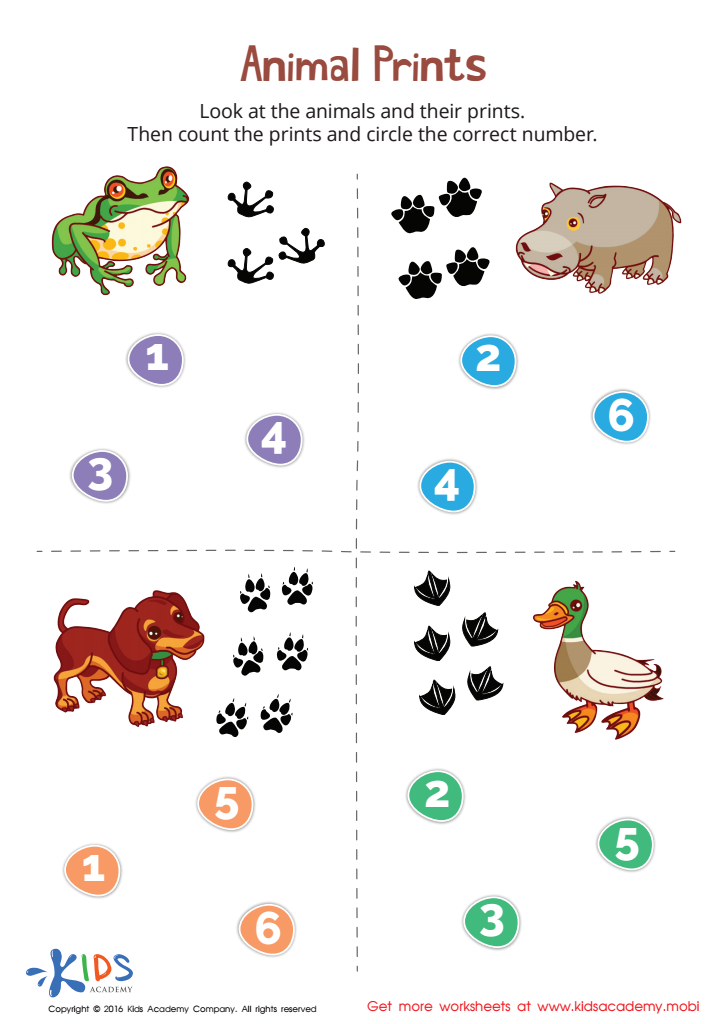
Animal Prints Match-Up Worksheet
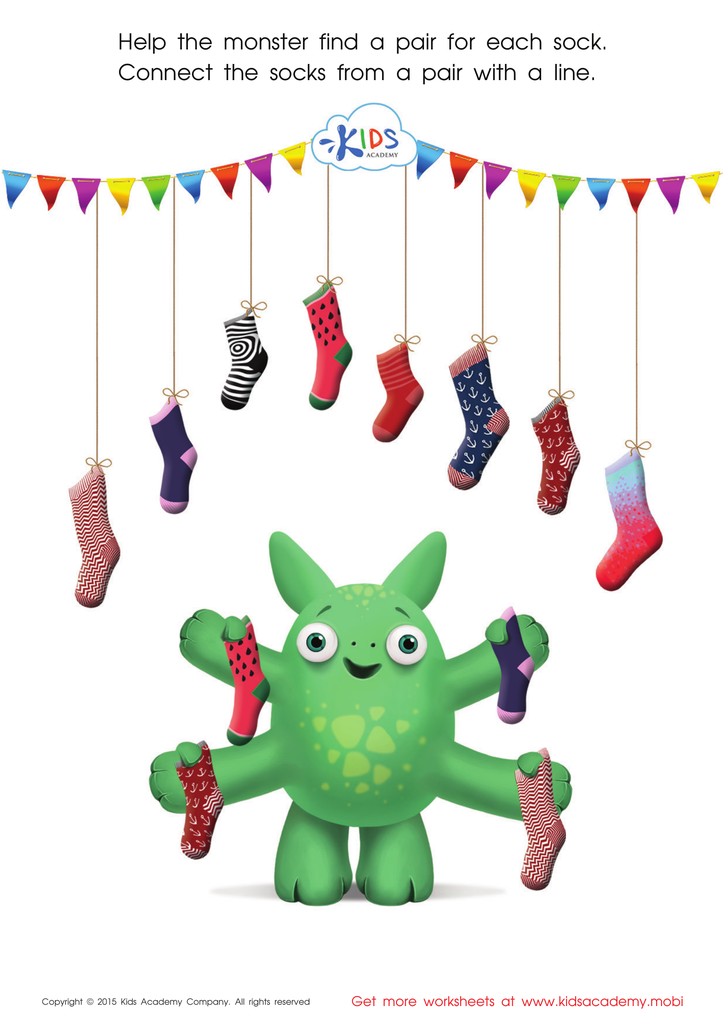
Math Matching Game: Monsterв's Socks Worksheet
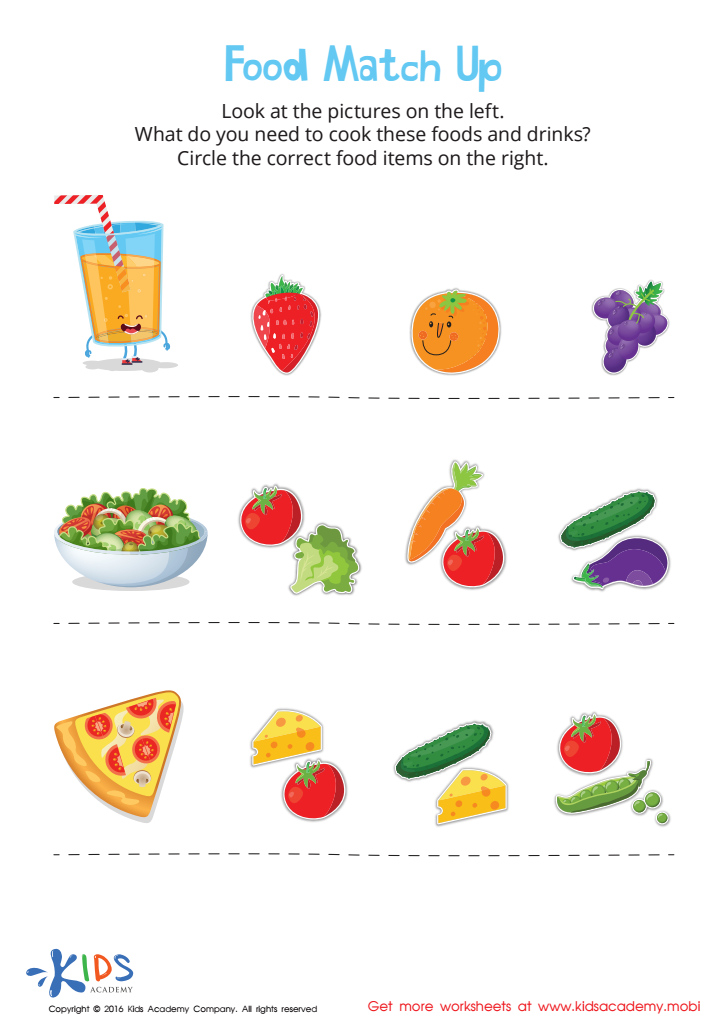
Food Match Up Worksheet
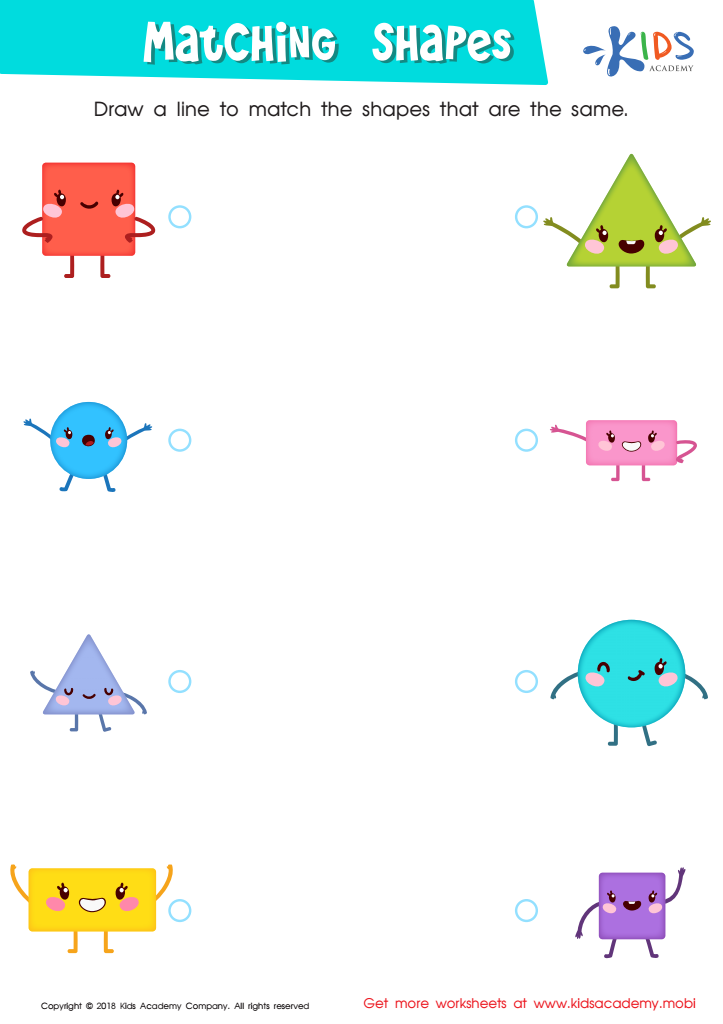
Matching Shapes Worksheet
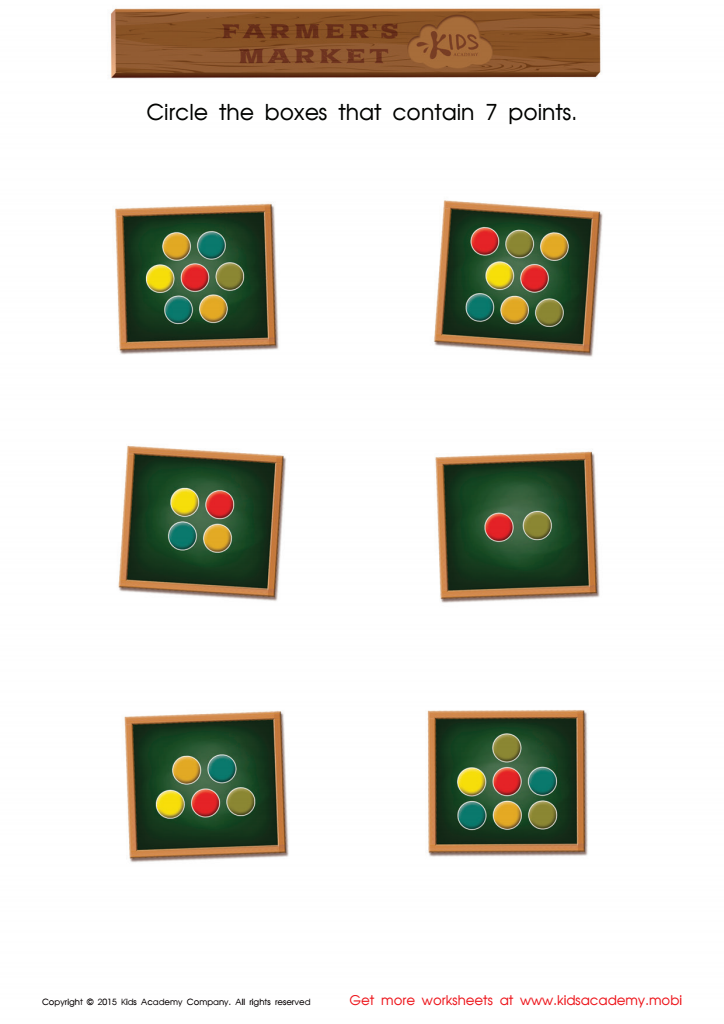
Count and Match Points 7 Math Worksheet
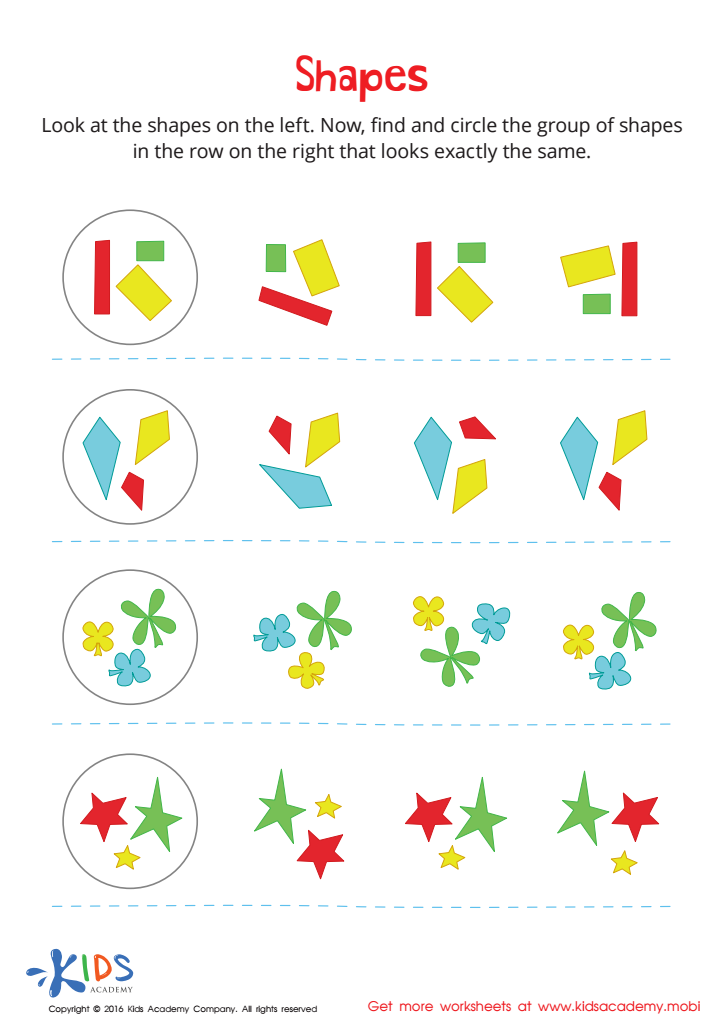
Shapes Worksheet
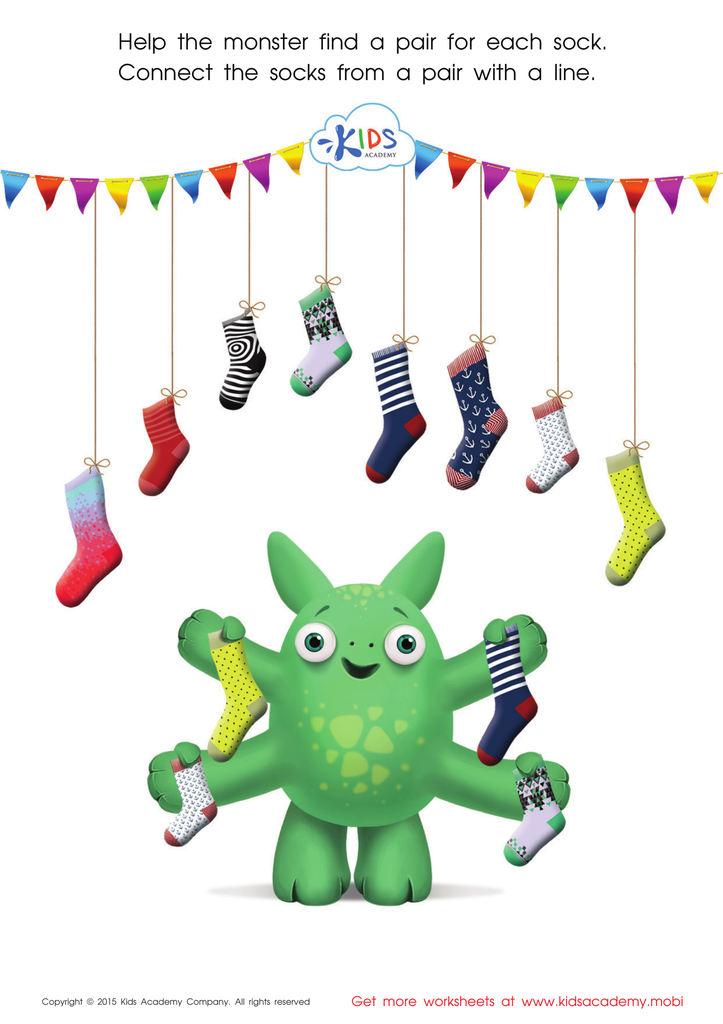
Math Matching Pairs Game: Monsterв's Socks Worksheet
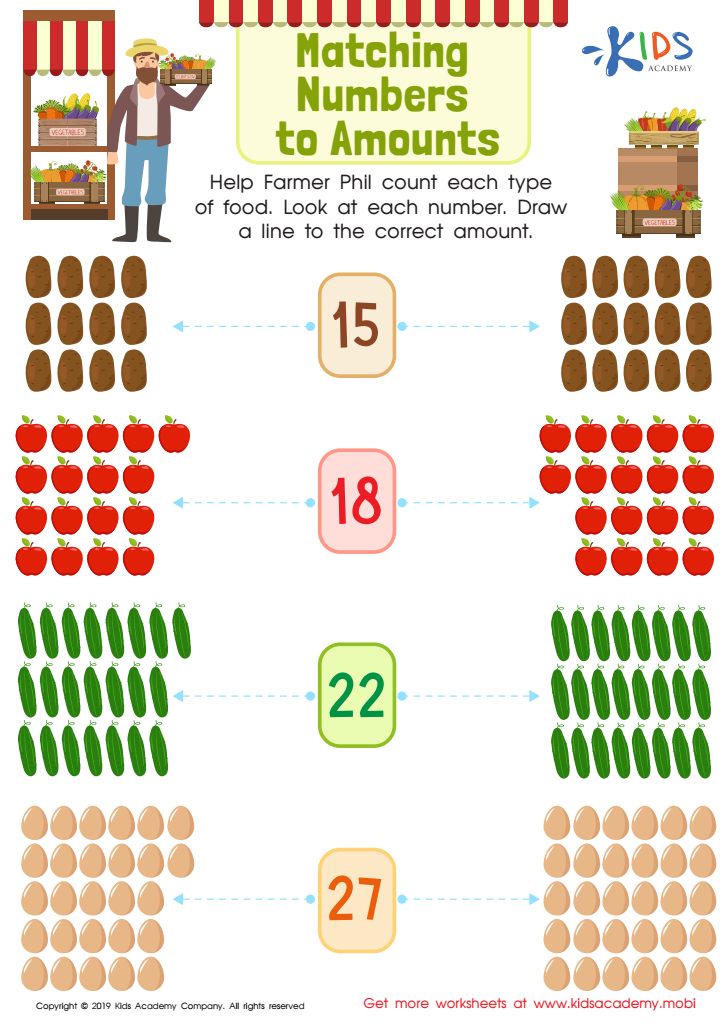
Matching Numbers to Amounts Worksheet







Matching skills in math are foundational for 5-year-olds, acting as building blocks for more advanced mathematical concepts and cognitive development. As parents and teachers, fostering these skills is crucial because they enhance a child's ability to recognize and establish relationships between different objects, numbers, or patterns, thereby laying the groundwork for critical thinking and problem-solving.
Firstly, matching tasks help in developing a child’s observation and comparison abilities. By engaging in exercises that require distinguishing similarities and differences, children improve their attention to detail, a skill that’s essential not only in math but in everyday decision-making. Moreover, matching builds their understanding of classification and categorization, which are pivotal for organizing information logically.
Furthermore, matching games and activities bolster memory and concentration. The act of recalling and comparing information to make correct matches aids in enhancing a child’s cognitive load management. This is beneficial for tasks that demand sustained mental effort, such as reading comprehension and complex reasoning in later grades.
Socially, collaborative matching activities support the development of communication skills and teamwork. Children learn to articulate their thought processes and listen to others’ viewpoints, fostering an early understanding of cooperation and shared knowledge.
In conclusion, prioritizing matching skills for 5-year-olds equips them with essential cognitive, academic, and social tools, setting a robust foundation for comprehensive learning and development.








