Number Sequencing Numbers up to 100 Worksheets for 5-Year-Olds
4 filtered results
-
From - To
Unlock your child's potential with our engaging Number Sequencing worksheets designed for 5-year-olds! These printable activities focus on sequencing numbers up to 100, perfect for enhancing your child's foundational math skills. Our worksheets are tailored to promote number recognition, critical thinking, and problem-solving abilities while keeping learning fun and interactive. As children practice arranging numbers in order, they'll build confidence and fluency with early mathematical concepts. Ideal for classroom use or at-home learning, these resources make it easy for parents and educators to support young learners on their journey to mathematical mastery. Start your child's numbers adventure today!
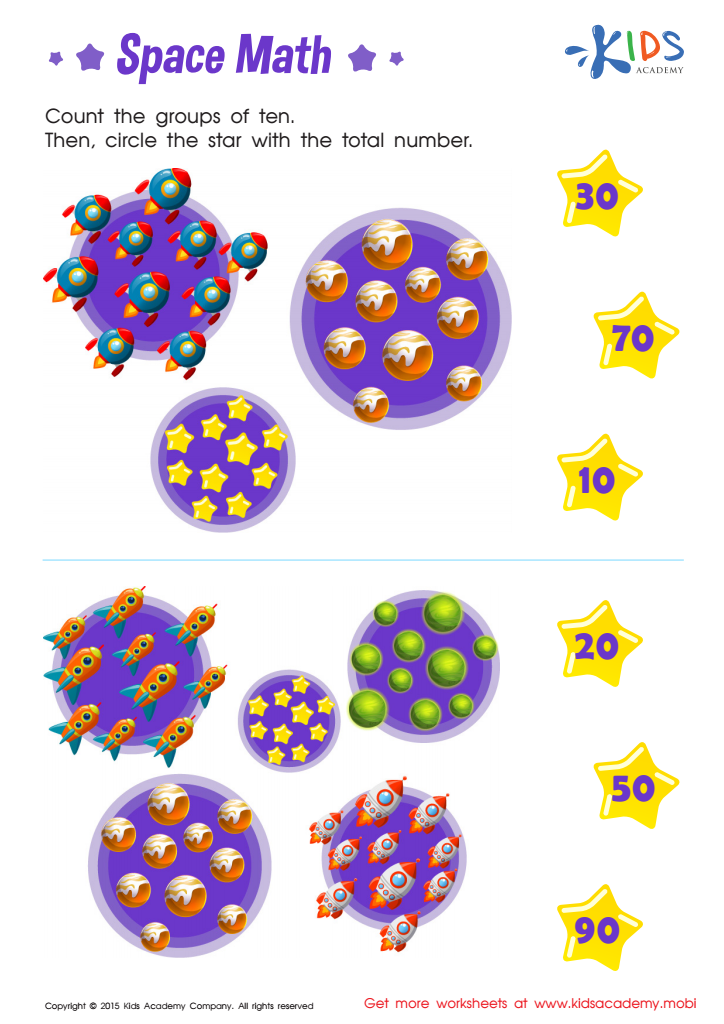
Learn dozens: Space math Worksheet
 Assign to My Students
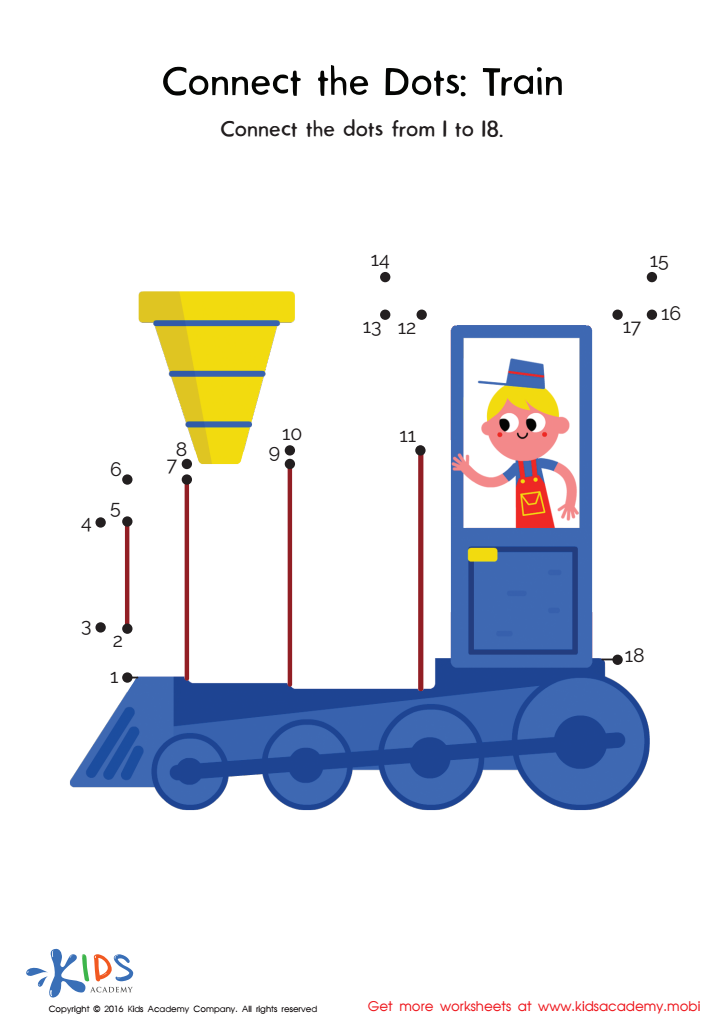
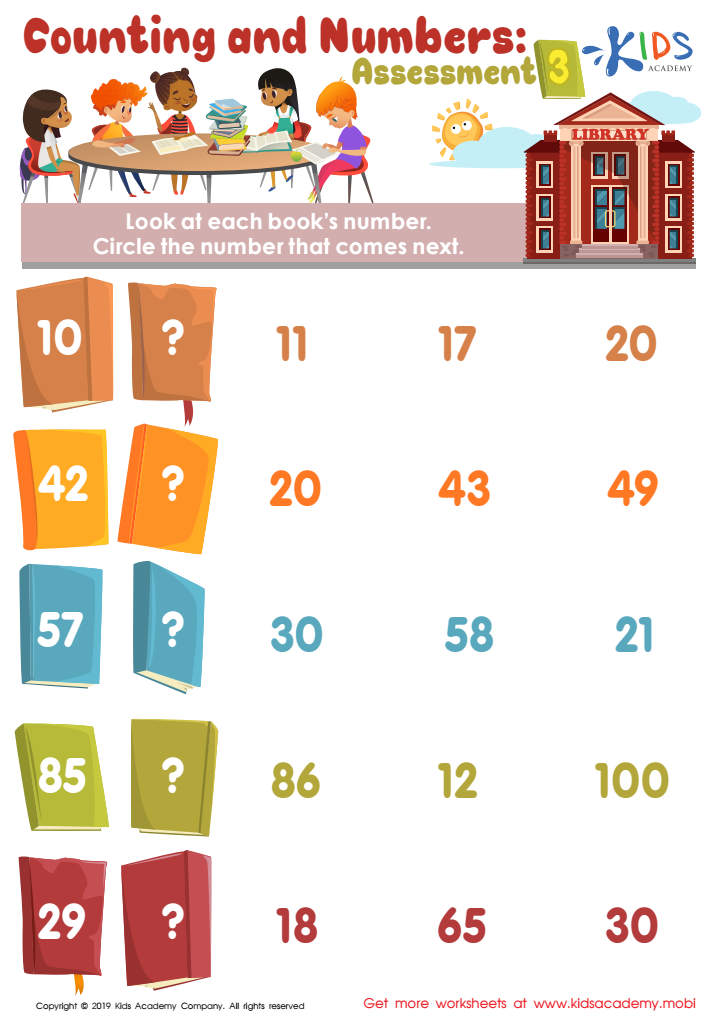
Counting and Numbers: Assessment Worksheet
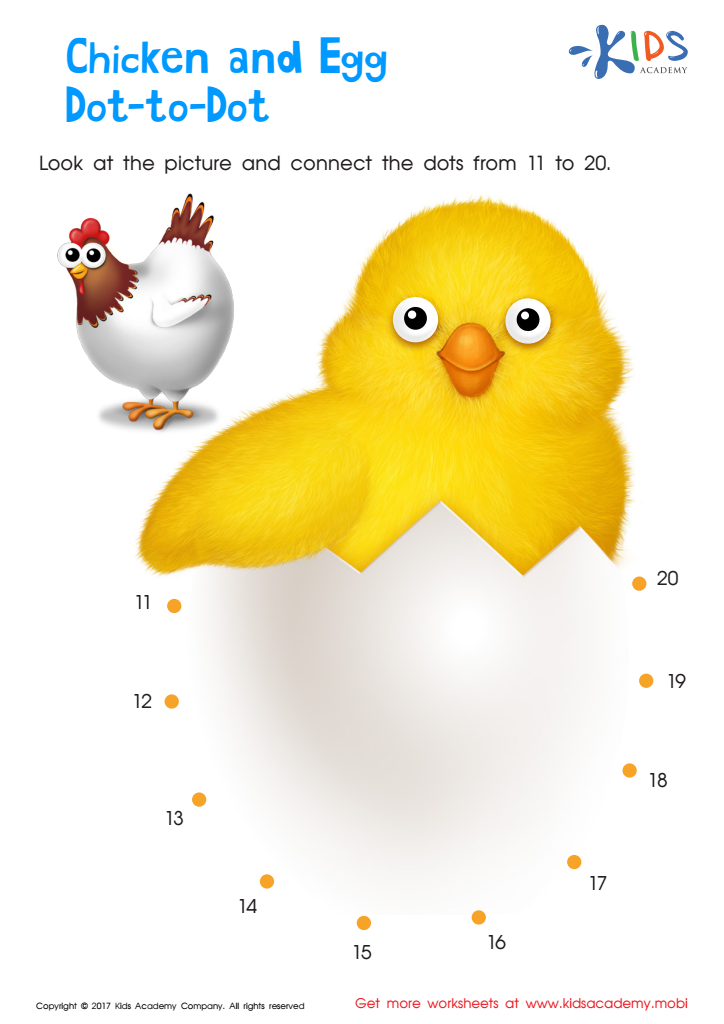
Ordering 11–20: Chicken & Egg Dot–to–dot Worksheet








Number sequencing, especially with numbers up to 100, plays a critical role in the early mathematical development of 5-year-olds. Parents and teachers should care about this foundational skill for several reasons.
First, number sequencing enhances a child’s understanding of order and patterns, which is essential for more complex math concepts later on. It helps them learn how to count, recognize number relationships, and identify missing numbers, all vital for developing confidence in mathematics.
Secondly, number sequencing lays the groundwork for foundational skills in arithmetic. Children need to understand sequences to grasp addition and subtraction effectively. By familiarizing themselves with how numbers relate to one another, children can more easily transition to advanced mathematical operations.
Additionally, engaging in number sequencing activities encourages problem-solving and critical thinking skills. It provides an avenue for children to explore and express their thoughts about numbers, reinforcing mathematical language and communication.
Lastly, mastering these concepts can significantly boost a child’s overall learning experience. A solid understanding of sequences in numbers not only empowers children academically but also builds their confidence and enthusiasm for learning. Therefore, caregivers should prioritize these activities to foster a love for math in children from an early age.








