Letter tracing skills Alphabet Worksheets for Ages 6-7
6 filtered results
-
From - To
Enhance your child's handwriting skills with our Letter Tracing Alphabet Worksheets, perfect for ages 6-7. Designed by educational experts, these worksheets offer engaging and structured activities that help young learners master each letter of the alphabet. Through fun tracing exercises, kids will improve their fine motor skills and letter recognition while building a solid foundation for reading and writing. Ideal for classroom or home use, these worksheets provide the practice essential for developing confident, legible handwriting. Watch your child’s skills grow as they enjoy learning the alphabet with our thoughtfully crafted resources. Start tracing today!
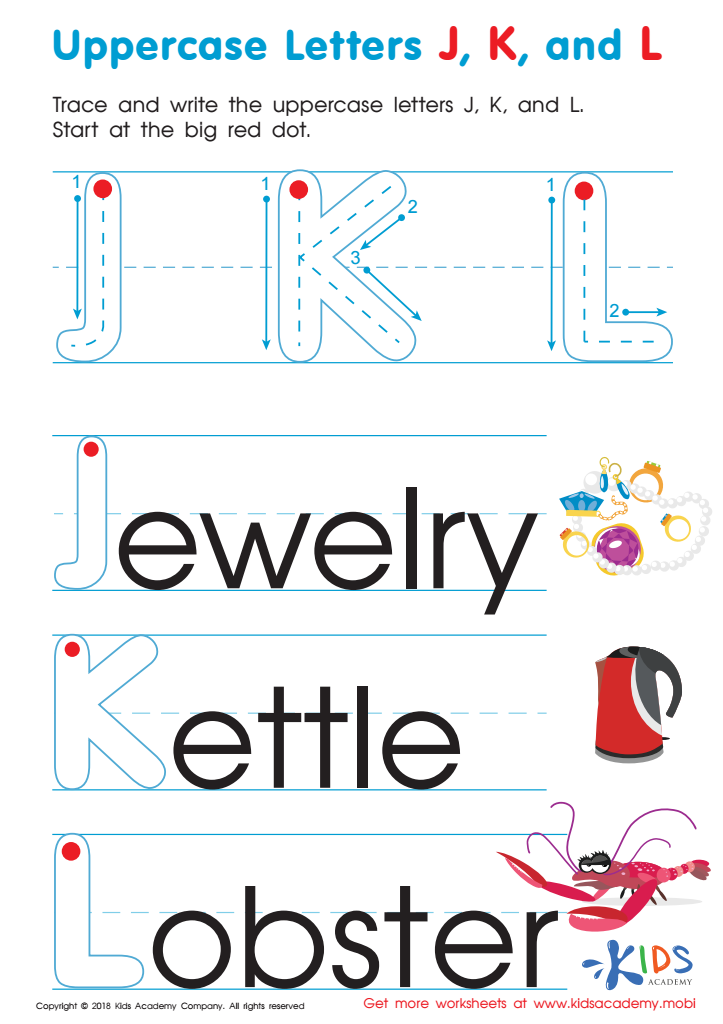
Uppercase Letters J, K, and L Worksheet
Letter T Coloring Sheet
 Assign to My Students
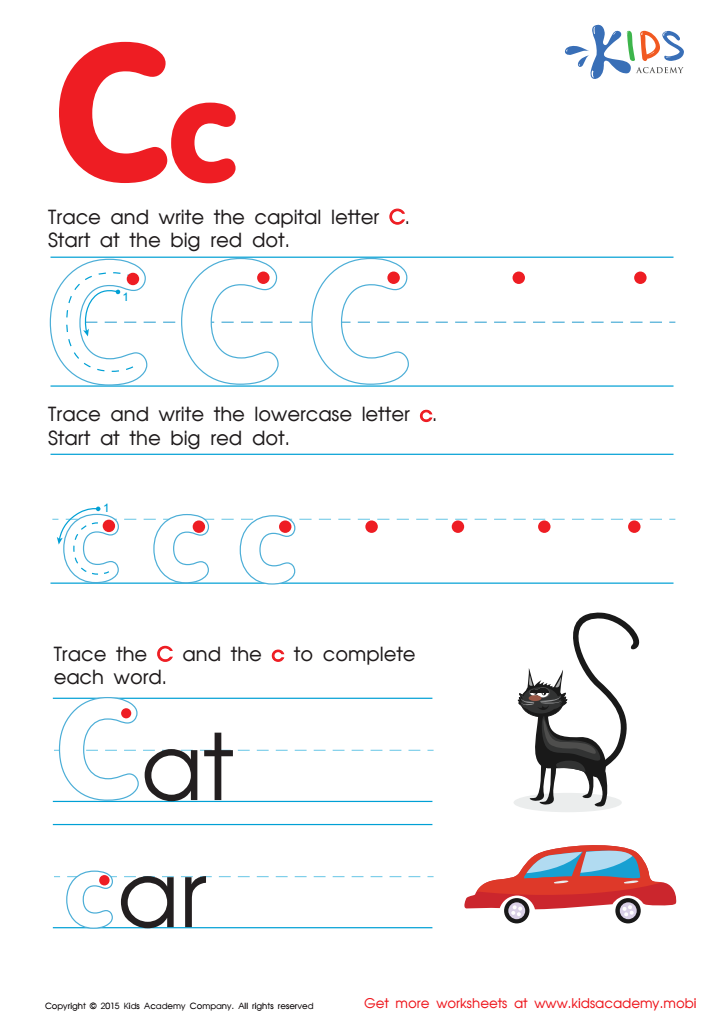
Letter C Tracing Page
Letter W Coloring Sheet
Assign to My Students
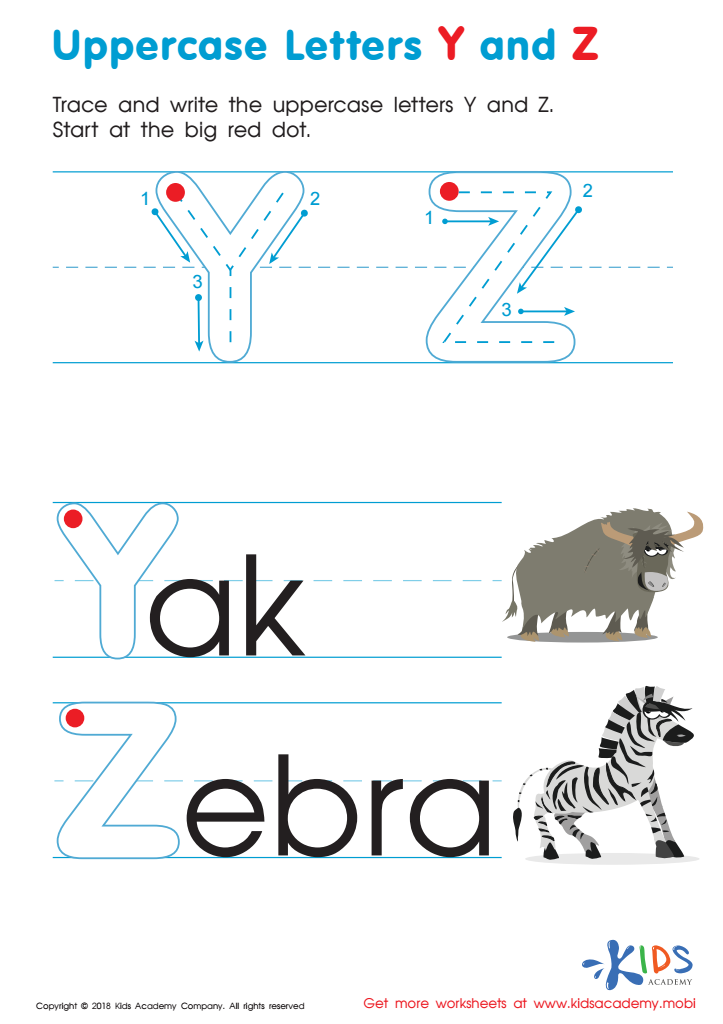
Uppercase Letters Y Z Worksheet
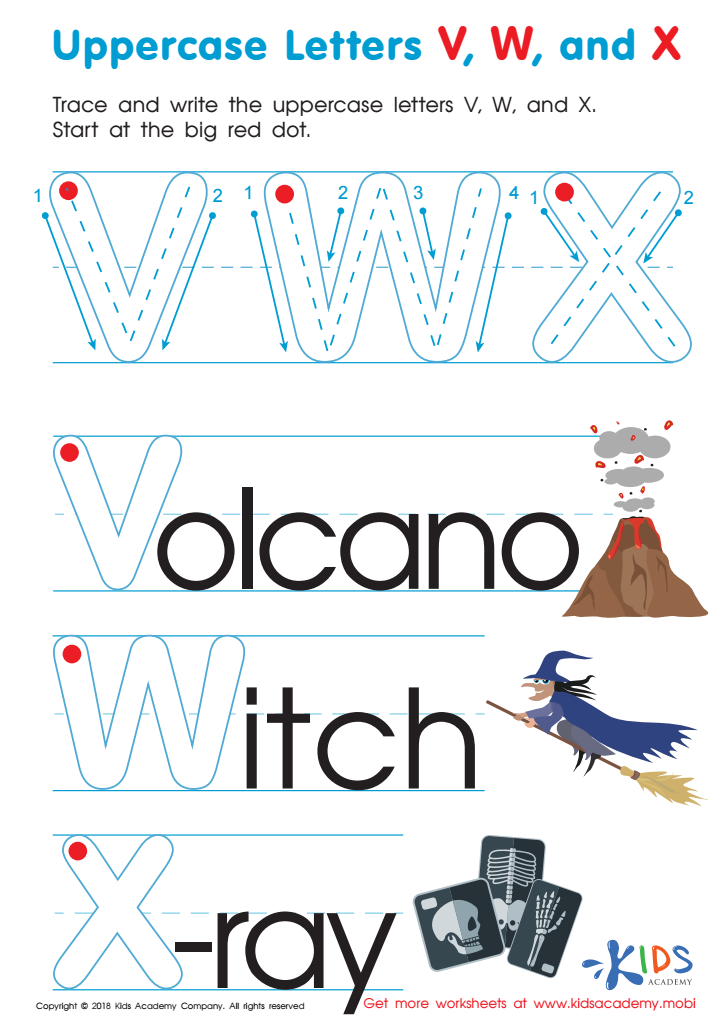
Uppercase Letters V, W, and X Worksheet








Letter tracing skills play a crucial role in early childhood education, especially for children aged 6-7. This developmental stage is pivotal for creating a strong foundation in reading and writing. Focusing on letter tracing helps in multiple ways.
Firstly, it enhances fine motor skills. As children practice tracing letters, they develop the hand-eye coordination necessary for writing legibly and efficiently. This skill is fundamental for future academic tasks that require precise motor control.
Secondly, letter tracing reinforces letter recognition. Recognizing letters accurately and quickly is essential for reading fluency. By repeatedly tracing letters, children become familiar with their shapes, which aids in recognizing and understanding them in different contexts, including books and written instructions.
Thirdly, it builds confidence and independence. Mastering the basics of writing ensures that children feel capable and confident in their abilities. This sets a positive tone for their educational journey and encourages a love for learning and literacy.
Lastly, it introduces consistency and structure. Letter tracing follows specific patterns that help children understand the importance of order and structure in writing. This early introduction to disciplined practice forms the basis for more complex literacy skills, such as spelling and sentence construction.
In essence, parents and teachers should prioritize letter tracing to ensure comprehensive development of fine motor skills, letter recognition, confidence, and structured learning.







